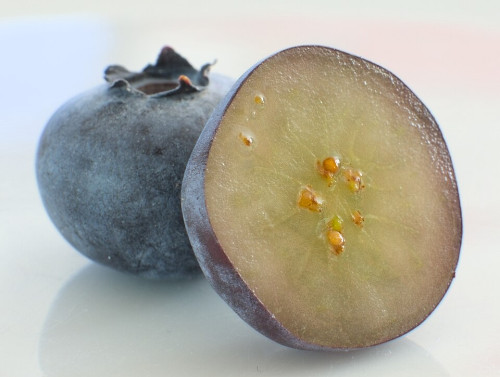
How Sorting Machines Detect Internal Damage in Blueberries
The journey of a blueberry from the field to the consumer's table is fraught with potential hidden perils. While surface blemishes are readily apparent, the most insidious defects often lurk unseen within the berry's delicate flesh. Modern blueberry sorting machines have evolved sophisticated, non-invasive methods to peer beneath the skin, ensuring that only berries with impeccable internal quality proceed to packaging. This capability is not merely an added feature; it is a fundamental shift in quality control that protects brand integrity and consumer trust. By employing advanced sensing technologies, these systems can identify problems like internal mold, freeze damage, or dehydration that would otherwise go undetected until the product fails on the shelf, leading to costly recalls and reputational damage. The integration of such internal inspection represents the pinnacle of automated fruit grading, moving beyond superficial assessment to a comprehensive evaluation of the berry's entire structure.
The Challenge of Hidden Defects
For packers and processors, the greatest quality assurance challenge has traditionally been the invisible defect. A berry can appear perfectly round, deeply colored, and flawless on the outside, yet harbor internal decay, fungal growth, or tissue damage from frost. These internal flaws are not just aesthetic issues; they directly impact taste, texture, nutritional value, and most critically, shelf life. A batch containing even a small percentage of internally compromised berries can accelerate the spoilage of surrounding fruit during transport and storage, leading to significant financial loss. Manual inspection is utterly incapable of addressing this challenge, as human graders cannot see inside the fruit. This fundamental limitation of human vision created a critical gap in quality control that only technology could bridge. The development of sensors capable of non-destructive internal analysis has therefore become a cornerstone of modern berry processing, transforming an opaque process into one of transparent, data-driven certainty.
Near-Infrared (NIR) Transmission Spectroscopy: Seeing Through the Skin
Near-Infrared (NIR) transmission spectroscopy has emerged as the leading industrial method for non-destructive internal inspection of blueberries. This technology operates on a simple yet powerful physical principle: certain wavelengths of light in the near-infrared spectrum can penetrate organic materials like fruit flesh. In a typical NIR sorter configuration, individual berries pass single-file between a powerful NIR light source and a highly sensitive detector. As the light beam passes through the berry, its intensity is modified by the internal chemical and structural composition of the fruit. Water, sugars, acids, and cell wall structures all interact with the NIR light in unique ways, absorbing specific wavelengths. The detector on the opposite side measures the spectrum of light that successfully transmits through the berry, creating a unique biochemical fingerprint. This spectral data contains a wealth of information about the berry's internal state, far beyond what any surface scan can reveal, enabling the system to act as a precise diagnostic tool for internal health.
How NIR Light Interacts with Blueberry Tissue
The interaction between NIR light and blueberry tissue is a complex dance of physics and chemistry. When NIR photons encounter a blueberry, several things can happen: they can be reflected off the surface, absorbed by molecules within the fruit, or transmitted through to the other side. For internal inspection, the transmitted light is the critical signal. Key internal components have strong absorption bands in the NIR region. For instance, water molecules absorb light strongly at specific wavelengths. A berry suffering from severe internal dehydration will therefore show a different transmission pattern compared to a plump, juicy one. Similarly, the breakdown of cell walls due to mold or mechanical damage alters the scattering of light within the tissue. Even subtle chemical changes, such as the conversion of starch to sugar during ripening or the onset of enzymatic browning from freeze damage, create distinct spectral signatures. The sorting machine's sensor captures this entire interaction, translating the complex play of light absorption and scattering into a digital profile that software can instantly analyze for signs of defect or quality deviation.
Identifying Specific Internal Flaws with Spectral Analysis
The true power of NIR technology lies in spectral analysis, the process of decoding the light transmission data to pinpoint exact internal issues. Advanced sorting systems are pre-loaded with vast spectral libraries that correlate specific light patterns with known internal conditions. When a berry passes the sensor, its captured spectrum is instantly compared against these reference models. Internal mold or decay, often starting at the stem scar, manifests as areas of broken-down tissue with higher water content and different light scattering properties, creating a recognizable spectral anomaly. Freeze damage, which causes internal browning without affecting the skin, is detected through spectral shifts associated with damaged cellular structures and enzymatic activity. Internal voids or air pockets, which can occur from improper growth or dehydration, change the density and homogeneity of the fruit, leading to atypical light transmission paths that the system flags. This granular analysis allows the machine to not just identify a "bad" berry, but to classify the specific type of internal defect, providing invaluable data for process improvement and quality tracking.
The Role of Advanced Algorithms in Real-Time Decision Making
Capturing the spectral data is only half the battle; making a reliable, high-speed sorting decision is where sophisticated algorithms take center stage. The raw data from the NIR sensor is a complex waveform. Machine learning algorithms, often based on principles like principal component analysis (PCA) or partial least squares (PLS) regression, are trained to extract the relevant features from this waveform that correlate with quality. These algorithms learn to distinguish the subtle spectral differences between a healthy berry, a slightly dehydrated berry, and one with incipient internal mold. Crucially, this decision-making happens in milliseconds as each berry travels at high speed on the conveyor. The algorithm assigns a quality score or a defect classification and immediately sends a command to the rejection system—typically a precise air jet—to divert any substandard berry off the main line. This seamless integration of sensing, data analysis, and mechanical action is what enables modern sorters to achieve remarkable accuracy at industrial throughput rates, ensuring that internal quality control is no longer a bottleneck.
Beyond the Surface: Key Internal Quality Indicators
While external size and color are important, the internal characteristics of a blueberry are the ultimate determinants of its eating quality, shelf stability, and market value. Sophisticated sorting machines now evaluate a suite of internal quality indicators that were once impossible to assess at scale. These indicators go far beyond simple binary "good/bad" judgments, providing a nuanced profile of each berry's condition. Understanding these parameters allows packers to create more consistent product lots, target specific market segments (like premium fresh fruit versus processing), and provide accurate shelf-life predictions to retailers. This shift from external to internal grading represents a fundamental change in how the berry industry defines and assures quality, moving the focus from how a berry looks to how it will perform for the consumer after purchase.
Internal Mold and Decay Detection
The detection of internal mold and decay is perhaps the most critical function of an advanced optical sorter. Fungal pathogens like Botrytis cinerea (gray mold) or Colletotrichum species (anthracnose) can infect berries in the field, often entering through the stem scar or minute injuries, and then develop internally during storage. Visually, the berry may appear perfect until the mold breaks through the skin, by which time it may have already sporulated and contaminated neighboring fruit. NIR transmission spectroscopy is exceptionally effective at identifying these issues early. As mold grows, it consumes the fruit's sugars, breaks down pectin in the cell walls, and increases localized water content. These biochemical changes create a distinct spectral signature that differs from healthy tissue. The sorter's system is calibrated to recognize the specific absorption patterns associated with fungal metabolism and cellular degradation. By removing these berries immediately after harvest, the machine drastically reduces the potential for post-harvest disease spread in clamshells or bulk bins, directly extending the marketable life of the entire lot and protecting the packer's brand from the severe reputational damage associated with moldy fruit reaching consumers.
Identifying Freeze Damage and Internal Browning
Freeze damage is a major concern for blueberry growers in many regions, as even a light frost can damage fruit without leaving visible external marks. Internally, freezing causes ice crystals to form within the cells, rupturing cell walls. Upon thawing, the damaged tissue undergoes enzymatic browning, turning a brownish color and developing a mushy, watery texture. This internal browning renders the berry unmarketable for fresh consumption, as it affects flavor and appearance when bitten into. Sorting machines equipped with NIR technology are adept at identifying this defect. The rupture of cell structures alters the way light scatters within the berry, while the browning pigments (products of polyphenol oxidase activity) have their own unique absorption characteristics in the NIR spectrum. The system can differentiate between the uniform, dense structure of a healthy berry and the disorganized, water-logged tissue of a freeze-damaged one. This allows packers to segregate frost-affected lots, potentially salvaging some fruit for processing (like purees or juices where color is less critical) while ensuring only top-quality, firm fruit is sent to the demanding fresh market, thereby maximizing the value of the harvest.
Detecting Internal Voids and Severe Dehydration
Internal voids, hollow centers, and severe dehydration are quality defects that affect the eating experience and weight yield. These conditions can arise from rapid growth, water stress during development, or over-maturity. A berry with an internal air pocket will have lower density and mass than a solid berry of the same size, leading to customer dissatisfaction and potential underweight packages. Severe dehydration results in a shriveled, rubbery texture. NIR and other sensing modalities can detect these flaws. The presence of an air void creates a stark interface between flesh and air, causing a significant change in how light is refracted and transmitted through the berry, which appears as an anomaly in the spectral data. Dehydration, on the other hand, reduces overall water content. Since water is a strong absorber of NIR light, a dehydrated berry will show higher transmission at water-absorption wavelengths compared to a juicy, turgid berry. By identifying and removing berries with these structural deficiencies, sorting machines help ensure that every packaged clamshell meets expected weight and texture standards, delivering consistent value and a superior sensory experience that encourages repeat purchases.
Integrating Internal Inspection with Other Sorting Technologies
The most powerful modern blueberry sorting machines do not operate their internal inspection systems in isolation. True grading excellence is achieved through sensor fusion—the intelligent integration of data from multiple inspection technologies. By combining the internal view provided by NIR spectroscopy with external visual data from high-resolution cameras and firmness assessments from acoustic sensors, the machine builds a comprehensive, multi-dimensional quality profile for every single berry. This holistic approach allows for far more nuanced sorting decisions than any single sensor could make. For instance, a berry might be slightly soft but have perfect internal and external color, making it ideal for immediate sale, while a firm berry with internal mold must be rejected regardless of its external appeal. The synergy between different technologies creates a system whose total capability is greater than the sum of its parts, enabling packers to implement complex, multi-tiered quality protocols that align perfectly with their specific market strategies and customer requirements.
Combining NIR Data with External Camera Analysis
The integration of Near-Infrared (NIR) internal data with high-resolution external camera analysis creates a complete "inside-out" picture of berry quality. While external RGB or multispectral cameras meticulously evaluate color uniformity, surface defects, size, and shape, the NIR sensor concurrently probes the hidden internal state. The sorting machine's central processing unit correlates these two data streams in real-time. This correlation is powerful. It allows the system to identify berries where the external appearance is deceptive. A berry might have a perfect, dark blue hue but the NIR reveals early internal decay, leading to rejection. Conversely, a berry with a slight superficial scar or a variation in color (like a green shoulder) might be internally perfect and firm; depending on the packer's settings, the system could be programmed to accept this berry for a lower-grade pack or for processing. This dual-perspective analysis drastically reduces both "false negatives" (bad fruit that looks good) and "false positives" (good fruit that looks atypical), optimizing yield and quality simultaneously. It transforms sorting from a judgment based on appearance to a diagnosis based on total condition.
Correlating Firmness Measurements with Internal Quality
Firmness, often measured acoustically or via micro-deformation, is a vital quality metric, but its meaning is greatly enriched when correlated with internal inspection data. A sorting machine that measures both can uncover important relationships. For example, a berry that is soft and also shows NIR signs of internal decay is clearly a reject. However, a berry that is slightly soft but shows a perfect, healthy NIR spectrum might simply be at peak ripeness with high sugar content, making it ideal for a premium "ready-to-eat" retail pack. Conversely, a very firm berry that shows spectral indications of internal water core or early freeze damage might be rejected despite its appealing texture. By analyzing firmness and internal data together, algorithms can create sophisticated sorting categories. This enables packers to separate fruit not just by size and color, but by "use-by" profiles: very firm, internally sound berries for long-distance export; perfectly ripe, softer berries for local markets; and firm berries with minor internal inconsistencies for fast-turnaround processing. This data-driven approach minimizes waste and maximizes the appropriate economic utilization of every berry in the harvest.
Case Study: A Multi-Sensor Approach for Premium Berry Packing
A leading berry cooperative sought to establish a brand known for exceptional shelf life and consistent quality in export markets. They implemented a multi-sensor sorting line that integrated high-speed size grading, multispectral external imaging, acoustic firmness analysis, and NIR transmission spectroscopy. The key to their success was the custom algorithm that weighted data from all sensors. For their top-tier "Premium" export pack, the system was programmed to only accept berries that met strict criteria across all dimensions: a precise size range, uniform dark blue color with no defects, high firmness readings, and—most importantly—a "green" signal from the NIR sensor indicating zero internal flaws. Beries that passed size and color but showed any internal anomaly or low firmness were automatically diverted to a domestic or processing line. This rigorous, multi-factor approach resulted in a documented 30% reduction in retail shrink (unsold spoiled fruit) for their export customers and allowed them to command a significant price premium. Their brand became synonymous with reliability, demonstrating how integrated sensor data, translated into smart sorting decisions, directly builds market reputation and profitability.
The Impact of Internal Quality Sorting on Berry Value
Investing in sorting technology capable of internal inspection is not merely a cost of operation; it is a strategic investment that amplifies the value of the entire berry crop. The impact reverberates across the supply chain, from the packhouse to the supermarket shelf and ultimately to the consumer's experience. By ensuring that internal defects are removed at the earliest possible stage, packers can make definitive guarantees about product longevity and consistency. This capability transforms blueberries from a perishable commodity subject to high loss rates into a reliably high-quality product that supports brand development, secures lucrative contracts with major retailers, and opens doors to demanding export markets with strict phytosanitary and quality standards. The value created is measured not just in reduced waste, but in enhanced reputation, market access, and customer loyalty.
Extending Shelf Life and Reducing Waste
The most direct and quantifiable impact of internal quality sorting is the dramatic extension of shelf life and reduction of post-harvest waste. A single berry with internal decay can act as an infection hub, producing ethylene gas and spores that accelerate the ripening and spoilage of surrounding berries in a closed package. By removing these "trojan horse" berries at the packing line, the overall microbial load and ripening catalyst within a clamshell or punnet are minimized. This results in fruit that stays firmer, looks fresher, and resists mold growth for several additional days. In practical terms, this can extend the practical shelf life by 2-4 days, which is critically important in long supply chains. For retailers, this means less shrink (product thrown away unsold) and fewer customer complaints. For the packer, it reduces costly claims and chargebacks from distributors. On a broader scale, this reduction in food waste represents a significant sustainability achievement, ensuring more of the harvested crop actually reaches consumers, which improves the environmental footprint of the berry industry and aligns with global food security goals.
Ensuring Consistent Quality for Retail and Export Markets
Consistency is the currency of trust in the fresh produce business. Large supermarket chains and export markets do not just buy fruit; they buy a promise of predictable quality and performance. Internal quality sorting is the technological foundation of that promise. Retailers, especially in premium segments, require fruit that will not develop internal issues during the 7-10 days it may spend in the distribution center, on the shelf, and in the consumer's home. By implementing NIR-based sorting, packers can provide verifiable data and guarantees about the internal soundness of their fruit. This is particularly crucial for export, where fruit may be in transit for weeks under controlled atmosphere. An importer needs certainty that the fruit will arrive in saleable condition. A sorting machine that has removed all internally damaged berries provides that certainty. This allows packers to consistently meet the stringent protocols of global certification schemes and private retailer standards, securing access to higher-margin markets and building long-term, stable business relationships based on demonstrated reliability rather than chance.
Building Brand Reputation for Superior Product Integrity
In an increasingly competitive market, a strong brand reputation for quality is a powerful differentiator. For a blueberry brand, that reputation is built one clamshell at a time, through countless positive consumer experiences. Nothing erodes trust faster than a customer biting into a seemingly perfect berry only to find it brown, moldy, or watery inside. Internal quality sorting acts as the ultimate guardian of the consumer experience. By virtually eliminating the chance of such an event, the technology directly protects and enhances the brand's image. Packers can confidently use terms like "Premium," "Guaranteed Sweet," or "Perfect Inside" on their packaging, knowing their sorting technology backs up the claim. This leads to higher customer satisfaction, repeat purchases, and positive word-of-mouth. Over time, this translates into brand equity—the intangible value that allows a company to command higher prices and foster customer loyalty. In essence, the sorting machine becomes a brand-building tool, ensuring that every product bearing the company's label delivers on the promise of superior integrity, from the surface right down to the core.
Advancements in Non-Destructive Internal Sensing
The field of non-destructive internal sensing for fruit and vegetables is in a period of rapid innovation. What began as slow, laboratory-based analytical techniques has been engineered into robust, high-speed systems capable of keeping pace with modern packing lines. The driving forces behind these advancements are the relentless demands for higher accuracy, faster throughput, and the ability to detect ever-more-subtle defects. Researchers and equipment manufacturers are exploring beyond the now-established NIR transmission spectroscopy, investigating technologies like hyperspectral imaging and even X-ray computed tomography (CT) for specific applications. The goal is to move from detecting defects to predicting quality attributes like sweetness (Brix) or antioxidant content, and from sampling to inspecting every single fruit on the line. These advancements promise to further blur the line between post-harvest processing and precise quality management, giving producers unprecedented control over their product's characteristics.
From Laboratory Tools to High-Speed Industrial Lines
The journey of internal sensing technology from the benchtop to the production floor is a story of remarkable engineering adaptation. Early NIR spectrometers were large, slow, and required careful sample preparation, making them useless for inline sorting. The breakthrough came with the development of high-intensity, stable LED or laser-based NIR light sources, and the miniaturization of high-speed spectrometers and detectors. Engineers then solved the critical challenge of presentation: designing singulation systems like cup conveyors or gentle rollers to present each berry perfectly aligned between the light source and sensor for a consistent, milliseconds-long reading. Furthermore, the data processing challenge was overcome by embedding powerful, specialized computing hardware directly into the sorter, capable of running complex chemometric models in real-time. This entire ecosystem—robust hardware, perfect presentation, and instant analysis—had to be created to transform a delicate scientific instrument into a machine that can reliably process 10 tons of blueberries per hour in a humid, vibrating packhouse environment. This transition is a key reason why internal quality control is now a standard expectation in modern berry packing rather than a futuristic concept.
Emerging Technologies: Hyperspectral Imaging and X-ray
While NIR transmission is the industry workhorse, emerging technologies are pushing the boundaries of what is possible in internal defect detection. Hyperspectral imaging (HSI) is one such technology gaining attention. Unlike a standard NIR sensor that takes a single spectrum of the whole berry, a hyperspectral camera captures a spatial map of spectra. It provides both spectral (chemical) and spatial (locational) information. This means it can not only tell *that* there is internal decay, but potentially *where* inside the berry it is located and how large the affected area is. This allows for incredibly precise grading decisions. Another technology under research and beginning niche commercial application is X-ray imaging, particularly micro-CT. X-rays are excellent at visualizing density differences. They can create detailed 3D images of a berry's interior, clearly revealing voids, insect infestation, or the density variations caused by core breakdown. However, the challenge for both HSI and X-ray is speed and cost. Capturing and processing the vast amount of data they generate is computationally intensive, and making the systems fast and affordable enough for high-volume sorting lines remains an active area of development and engineering innovation.
Comparing Sensitivity and Application Speed for Different Methods
Choosing the right internal sensing technology involves a careful balance between sensitivity, speed, and cost. NIR transmission spectroscopy offers an excellent balance, providing high sensitivity to a wide range of biochemical defects (mold, browning, dehydration) at speeds fully compatible with high-throughput commercial sorting lines, often exceeding 500 berries per second per lane. Its limitation is that it provides an average reading of the whole berry, so a very small, localized defect might be diluted in the overall signal. Hyperspectral imaging (HSI) provides superior sensitivity and spatial detail, capable of pinpointing tiny spots of decay. However, the data acquisition and processing for HSI is currently slower, making it more suitable for lower-speed lines or for final inspection of premium product where utmost accuracy is required. X-ray systems offer unmatched detail for structural defects like voids or insect damage but have limited sensitivity to early-stage biochemical changes like incipient mold. Their speed is also currently lower than NIR, and they involve more regulatory considerations. For the vast majority of industrial blueberry sorting applications today, NIR transmission provides the optimal combination of robust defect detection, proven reliability, and operational speed that matches the economic realities of fresh fruit packing.