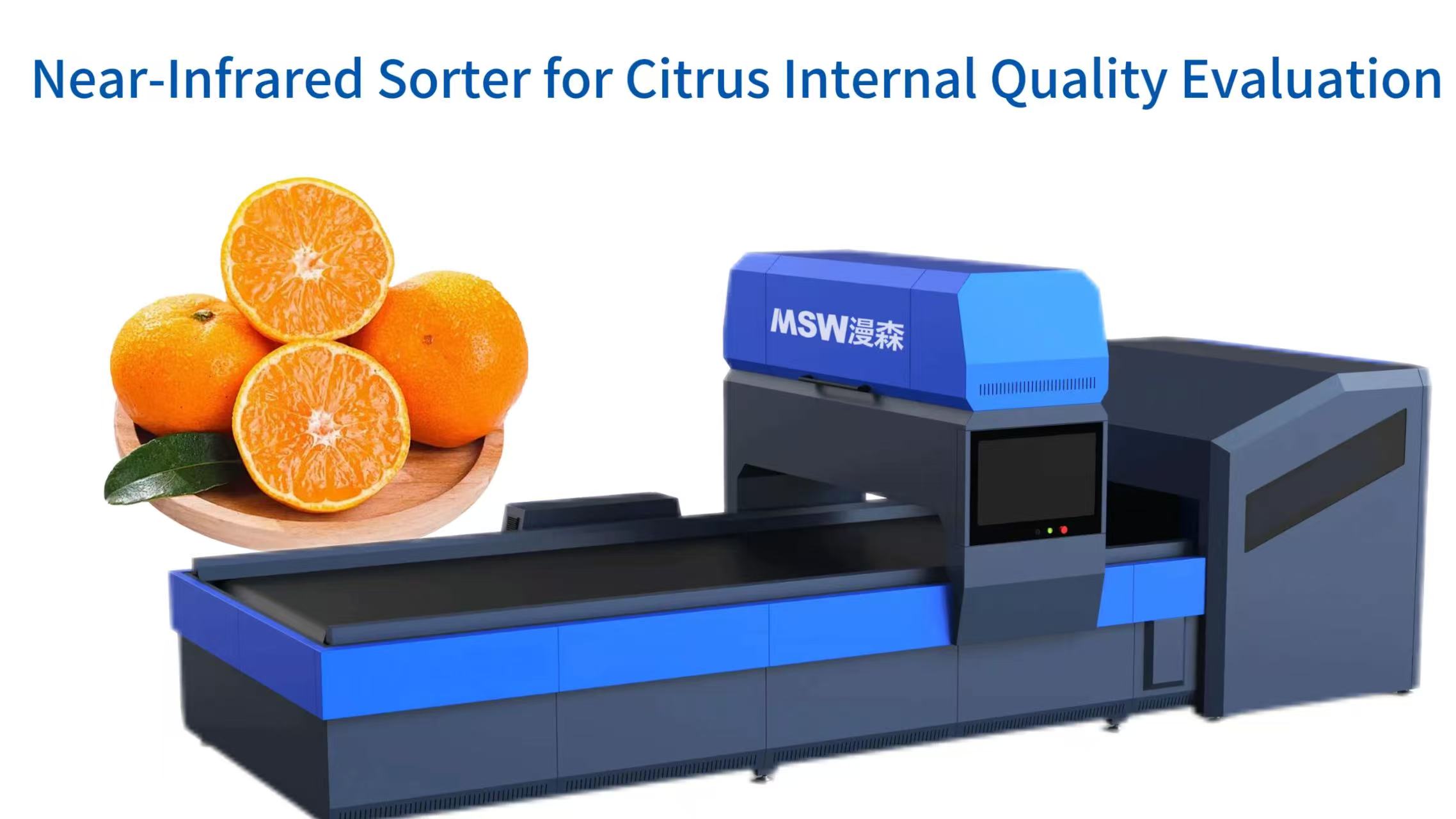
The global citrus industry is undergoing a profound transformation. Consumers today expect not only visually appealing fruit but also guaranteed internal quality—consisatent sweetness, optimal acidity, and absence of hidden defects. For packers and processors, this means moving beyond surface inspection to assess what lies beneath the peel. Traditional methods rely on destructive sampling, which is slow, wasteful, and cannot screen every fruit. Enter the near-infrared (NIR) sorter, a game-changing technology that non-destructively evaluates internal quality parameters at high speeds. By integrating NIR spectroscopy with advanced sorting mechanics, these machines enable citrus producers to deliver premium fruit consistently, reduce waste, and meet stringent export standards. This page explores how NIR sorters work, their core technologies, applications across citrus varieties, and the tangible benefits they bring to modern packing lines.
The Growing Demand for Internal Quality Assessment in Citrus Fruits
Key Metrics: Traditional vs NIR Sorting for Citrus
| Metric | Traditional Destructive Testing | NIR Sorting |
|---|---|---|
| Inspection Coverage | Small Sample (≤5%) | 100% of Fruit |
| Throughput (tons/hour) | ≤1 | 10-15 |
| Crop Value Loss (due to hidden defects) | 10-20% | ≤5% |
| Defect Detection Rate | Low (statistically unreliable) | ≥95% for severe defects |
Citrus fruits like oranges, mandarins, and lemons are traded globally, with quality expectations rising every year. Retailers demand uniformity in taste and internal appearance, while juice processors need precise sugar-to-acid ratios for consistent blends. This shift has made internal quality a key competitive differentiator. At the same time, consumers are increasingly educated about fruit attributes such as Brix levels and freshness, pushing producers to adopt technologies that guarantee every piece meets high standards. The challenge is magnified by the sheer volume of fruit handled daily—a single packing line can process dozens of tons per hour, making manual internal inspection impossible.
Traditional quality control relies on cutting samples from a small percentage of fruit, which is both destructive and statistically unreliable. It fails to detect internal issues like granulation, hollow core, or early decay that affect the majority of the crop. Moreover, this method cannot sort fruit in real time, leading to inconsistent batches and customer complaints. As a result, the citrus industry is rapidly turning to automated, non-destructive sensing solutions. Near-infrared sorters have emerged as the most effective answer, enabling 100 percent inspection without damaging the fruit, thereby ensuring that only fruit meeting internal quality criteria reaches the market.
Market trends driving quality expectations
Global citrus consumption continues to rise, with premium segments growing faster than commodity grades. Supermarkets now often specify minimum Brix levels for oranges and mandarins, and some even require certification of internal quality parameters. This trend is especially strong in export markets, where fruit travels long distances and must arrive with consistent eating quality. Packers who can guarantee internal attributes gain access to higher-value channels and build brand loyalty. The need to differentiate has never been more urgent.
In parallel, food safety and traceability regulations are becoming stricter. Buyers want proof that fruit has been screened for defects that could indicate spoilage or contamination. NIR technology, combined with data logging, provides a digital record of every fruit's quality metrics, supporting transparency and compliance. This data also helps growers optimize harvest timing and post-harvest handling, creating a feedback loop that improves overall crop quality year after year.
Limitations of traditional destructive testing
Cutting open a few fruit per batch has been the industry standard for decades, but its flaws are increasingly apparent. The sample size is too small to represent the variability within a grove or even a single bin. Defects often go undetected until they reach the consumer, leading to returns and reputational damage. Destructive testing also creates waste, as sampled fruit cannot be sold. In high-volume operations, the labor cost of manual cutting and assessment adds up without delivering reliable data.
Furthermore, destructive methods cannot sort fruit in real time. They provide a lagging indicator of quality, after the fruit has already been packed or processed. This reactive approach means that substandard fruit often slips through, while good fruit might be rejected based on misleading sample averages. The industry's move toward non-destructive sensing is therefore a logical response to these inefficiencies, allowing proactive, fruit-by-fruit quality management that aligns with modern quality assurance principles.
The need for non-destructive high-speed sorting
High-speed packing lines require decisions to be made in milliseconds. Only automated optical sorting can keep pace while inspecting every individual fruit. Non-destructive technologies like NIR, X-ray, and visible imaging have matured to the point where they can be integrated seamlessly into existing lines. NIR is particularly suited for internal quality because it probes beneath the skin using harmless light, measuring chemical bonds that correlate with taste and texture.
Speed is critical: modern NIR sorters can process up to 10–15 tons of citrus per hour, depending on fruit size and belt width. This throughput enables packers to maintain high productivity while achieving 100 percent inspection. The ability to reject defective fruit instantly, using precision air jets, ensures that only premium fruit continues downstream. For juice processors, NIR sorters can segregate fruit based on sugar content, optimizing yield and reducing the need for blending adjustments later.
How internal quality affects consumer satisfaction
A visually perfect orange that turns out to be dry or sour leads to disappointed customers and erodes trust in a brand. Internal quality directly drives repeat purchases and word-of-mouth recommendations. In the era of online reviews, a single bad experience can damage a producer's reputation significantly. By ensuring consistent internal quality, NIR sorters protect brand equity and foster customer loyalty. This is particularly important for direct-to-consumer marketing and farm shops where the producer's name is front and center.
Moreover, internal defects like granulation (a glassy, hard texture) or internal mold are invisible from the outside. These issues not only ruin the eating experience but can also pose health risks. NIR sorters can detect such defects by analyzing the light scattering and absorption patterns unique to compromised tissue. Removing affected fruit before packing ensures that only wholesome, delicious fruit reaches the table, enhancing overall consumer satisfaction and reducing the likelihood of returns or complaints.
Regulatory standards for citrus exports
Exporting citrus often involves meeting phytosanitary and quality standards set by importing countries. For example, some markets require that citrus be free from specific internal disorders or meet minimum Brix levels. NIR sorters provide objective, non-destructive measurements that can be documented for each batch, simplifying certification and reducing the risk of rejection at border inspections. This capability is becoming essential for exporters aiming to access lucrative markets like the European Union, Japan, or North America.
Compliance with these regulations is not just about passing inspections; it also protects the overall reputation of the exporting region. When a country consistently ships high-quality citrus, it builds a favorable image that benefits all producers. NIR sorting technology thus serves as both a compliance tool and a strategic asset for maintaining market access. As regulations evolve, having flexible sorting systems that can adapt to new criteria will give exporters a competitive edge.
The economic impact of internal defects
Internal defects cause significant economic losses throughout the supply chain. For growers, fruit that fails internal quality checks may be downgraded to juice, which sells at a fraction of fresh-market prices. For packers, defects that slip through lead to costly recalls or chargebacks from retailers. It is estimated that hidden internal issues can reduce the value of a citrus crop by 10–20 percent if not properly managed. NIR sorting directly addresses this by removing defective fruit early, maximizing the proportion of high-value pack-out.
Beyond direct losses, there are indirect costs such as reduced customer confidence and increased quality control labor. By automating internal quality assessment, packers can reallocate labor to more skilled tasks while reducing the risk of human error. The payback period for an NIR sorter is often less than two years, driven by waste reduction, premium pricing for consistent quality, and lower liability. This economic rationale is why more and more citrus operations are investing in advanced detection systems to safeguard their profitability.
What is a Near-Infrared (NIR) Sorter and How Does It Work?
NIR Citrus Sorter - Working Process
At its core, a near-infrared sorter is an optical sorting machine that uses light in the 700–2500 nanometer wavelength range to analyze the chemical composition of objects. In citrus applications, the sorter shines NIR light onto each fruit as it passes through a inspection zone. The light interacts with the fruit's internal tissues, and the reflected or transmitted light is captured by sensitive detectors. Different chemical components—such as sugars, acids, and water—absorb NIR light at specific wavelengths, creating a unique spectral fingerprint. By comparing this fingerprint to pre-calibrated models, the sorter can determine internal quality attributes like Brix, acidity, and the presence of defects.
The process is entirely non-destructive and incredibly fast, taking just milliseconds per fruit. Advanced algorithms, often incorporating machine learning, translate the spectral data into actionable decisions. If a fruit fails to meet the set criteria, a precisely timed jet of air ejects it from the product stream. The integration of NIR sensors with high-speed conveying and ejection mechanisms allows for continuous, real‑time sorting without interrupting the flow. This technology represents a leap forward from traditional color sorters, which only assess surface appearance, by revealing the hidden qualities that truly determine consumer satisfaction.
Basic principles of near-infrared spectroscopy
Near-infrared spectroscopy relies on the fact that molecules vibrate at specific frequencies when exposed to light. Organic compounds like sugars, acids, and water absorb NIR energy at characteristic wavelengths due to overtones and combinations of fundamental molecular vibrations. By measuring the intensity of absorbed light across a range of wavelengths, a spectrometer captures a spectral signature that correlates with the concentration of these compounds. For citrus, the regions around 770 nm, 840 nm, and 910 nm are particularly sensitive to sugar content, while water absorption bands near 970 nm and 1450 nm indicate moisture levels and potential dehydration.
Calibration is key: to convert spectral data into meaningful quality metrics, the sorter must be trained using fruit samples with known attributes measured by traditional destructive methods (like refractometers for Brix). Chemometric techniques such as partial least squares regression create predictive models that the sorter applies in real time. Once calibrated, the system can estimate internal quality for every fruit with high accuracy, typically within ±0.5° Brix for sugar content. This scientific foundation makes NIR sorting a reliable tool for objective, non-destructive quality assessment.
The role of NIR in detecting internal citrus attributes
Citrus fruits present unique challenges for internal inspection due to their thick peel and varied internal structure. NIR light can penetrate several millimeters into the flesh, providing information about the edible portion. By analyzing the spectral response, the sorter can estimate soluble solids content (Brix), titratable acidity, and the Brix-to-acid ratio—a key flavor indicator. It can also detect physiological disorders such as granulation (where juice sacs become hard and dry) or segment dryness, which alter the light scattering properties. Even early signs of internal mold or rot can be flagged due to changes in water distribution and cell structure.
The ability to detect these attributes non-destructively is transforming how citrus is graded. For example, a load of oranges destined for fresh consumption can be sorted to ensure that only fruit with Brix above 10 and no granulation are packed as premium. Fruit falling below the threshold can be diverted to juice, where it still has value but does not disappoint fresh-market consumers. This precision grading maximizes overall returns while protecting brand reputation. As NIR technology advances, the range of detectable attributes continues to expand, making sorters even more versatile.
How the sorter integrates with conveyor systems
Practical integration is critical for adoption. NIR sorters are typically designed to slot into existing packing lines without major modifications. Fruit is singulated and fed onto a high-speed belt or through a chute, ensuring that each piece passes the sensor array individually. The inspection zone is enclosed to shield ambient light, and the sensors are positioned above and sometimes below the fruit to capture optimal spectra. After analysis, fruit continues on the conveyor until it reaches the ejection zone, where air jets divert defective or off-grade fruit into separate channels.
Belt-type configurations are common for larger citrus like oranges and grapefruits, providing stable transport and accurate positioning. Chute-type designs, where fruit slides down an inclined plane, are often used for smaller varieties like mandarins, enabling higher speeds and compact footprints. In both cases, the sorting decision is synchronized with the fruit's position using encoder feedback, ensuring precise ejection. Modern systems also offer user-friendly interfaces for adjusting parameters, monitoring performance, and logging data, making them easy to operate within a busy packing environment.
From light absorption to data: sensors and algorithms
The heart of an NIR sorter is its sensor suite, typically comprising a spectrometer or hyperspectral imaging camera. These devices capture dozens or even hundreds of wavelength bands per fruit. The resulting data stream is massive, requiring powerful onboard processors and sophisticated algorithms to extract meaningful information in real time. Machine learning models, trained on thousands of fruit samples, classify each piece based on its spectral fingerprint. The algorithms can compensate for variations in fruit size, temperature, and peel thickness, which all affect the spectral signal.
Real-time decision making is achieved through a combination of hardware acceleration and optimized software. Once the model determines that a fruit is below grade, a signal is sent to the ejection system within milliseconds. The entire cycle—from illumination to ejection—takes less than 50 milliseconds, allowing throughputs of up to 15 tons per hour. Continuous learning capabilities in some systems enable the model to be refined over time, improving accuracy as more data is collected. This synergy of optics, electronics, and artificial intelligence is what makes modern NIR sorters so powerful.
Real-time decision making and ejection mechanisms
Speed and precision are paramount. After spectral analysis, the control unit must decide instantly whether the fruit meets quality thresholds. This decision is based on user-defined settings—for example, reject any fruit with Brix below 9.5 or with internal defect probability above 5 percent. The ejection mechanism, typically an array of high-speed solenoid valves, fires jets of compressed air to gently push the rejected fruit out of the main stream. The timing must be perfect, accounting for the distance between the sensor and the ejector, as well as the fruit's velocity.
Modern high-speed ejection systems can operate at frequencies exceeding 600 Hz, allowing them to target individual fruit even at high line speeds. The air jets are adjustable to minimize damage to soft citrus while still providing enough force to divert the fruit. Multiple ejection channels can be used to sort into several quality grades—for example, premium, standard, and juice. This flexibility enables packers to maximize value by directing fruit to the most profitable outlet based on internal quality.
Differentiating NIR from other optical sorters
It is important to distinguish NIR sorters from conventional color sorters or visible-light cameras. While color sorters assess external attributes like peel color, blemishes, and size, they cannot see inside the fruit. NIR sorters add an entirely new dimension by evaluating internal chemistry. Some advanced systems combine both technologies, using visible cameras for external defects and NIR for internal quality, providing a complete picture. Another related technology is X-ray sorting, which can detect density differences but is less sensitive to chemical composition.
NIR is uniquely suited for measuring taste-related parameters because it directly probes the molecular bonds of sugars and acids. It is also harmless and does not involve ionizing radiation, making it safe for food applications. Compared to manual inspection or destructive sampling, NIR sorters offer unparalleled speed and consistency. For citrus packers aiming to deliver guaranteed internal quality, NIR is the technology of choice, and it is often integrated into multi-sensor platforms available from leading optical sorter manufacturers.
Key Components and Technology Behind NIR Citrus Sorting
NIR Sorter Core Components & Specifications
| Component | Key Specifications | Role |
|---|---|---|
| NIR Light Source | 700-1700 nm (tungsten-halogen/LED) | Provide stable broad-spectrum illumination |
| Spectrometer/Detector | InGaAs (900-1700nm), ≤μs readout speed | Capture spectral fingerprint of fruit |
| Ejection System | ≤800 Hz solenoid valves, adjustable air pressure | Precisely divert defective fruit |
| Chemometric Models | PLS/PCR/SVM, ±0.5° Brix accuracy | Translate spectral data to quality metrics |
| User Interface | Touchscreen, cloud monitoring, data logging | Control, monitor & trace quality data |
A typical NIR sorter for citrus is a complex assembly of optical, mechanical, and electronic subsystems. Each component must work in harmony to achieve accurate, high-speed sorting. The main elements include the light source, spectrometer or imaging sensor, processing unit, ejection mechanism, and user interface. The design must also account for fruit handling, ensuring gentle transport to avoid bruising while maintaining precise positioning. Understanding these components helps operators appreciate the sophistication behind the machine and the importance of proper maintenance.
The evolution of these components has been driven by advances in semiconductor technology, computing power, and materials science. Today's NIR sorters are more compact, reliable, and affordable than those of a decade ago, making them accessible to a wider range of citrus operations. They are also modular, allowing packers to start with a basic configuration and upgrade as needs grow. The following sections break down the critical components and their roles in delivering accurate internal quality evaluation.
NIR light sources and wavelength ranges
The light source must provide stable, broad-spectrum illumination across the near-infrared region. Tungsten-halogen lamps are commonly used because they emit a continuous spectrum from visible to beyond 2500 nm. They are robust and cost-effective, though they generate heat that must be managed. Some newer systems use LED or laser-based sources that offer longer life and more precise wavelength control, but they are still evolving for full-spectrum applications. The choice of light source affects the signal-to-noise ratio and the ability to detect subtle spectral features.
The wavelength range is tailored to citrus analysis. Key absorption bands for sugars lie around 770–910 nm, while water bands near 970 nm and 1450 nm help assess moisture content. Disorders like granulation alter scattering in the 1100–1300 nm region. A typical NIR sorter for citrus might cover 700–1700 nm, which balances cost and performance. Extending to longer wavelengths improves detection of certain organic compounds but requires more expensive detector materials like InGaAs. Manufacturers optimize the range based on the specific quality parameters most important for citrus.
High-speed spectrometers and detectors
The detector captures the light reflected from or transmitted through the fruit. Two main types exist: point spectroscopy, where a single spectrometer measures one spot per fruit, and hyperspectral imaging, which captures spatial and spectral data across the fruit's surface. Point spectroscopy is faster and simpler, suitable for measuring average internal quality. Hyperspectral imaging provides more detail, enabling detection of localized defects, but requires more data processing. For citrus sorting, point spectroscopy is often sufficient, especially when combined with multiple measurement positions.
Detectors must be sensitive, fast, and stable. Indium gallium arsenide (InGaAs) detectors are standard for NIR due to their high quantum efficiency in the 900–1700 nm range. For shorter wavelengths, silicon-based detectors can be used, but they are less common in dedicated NIR sorters. The detector's readout speed determines the maximum throughput; modern systems can acquire spectra in microseconds. To maintain accuracy, the detector is often thermoelectrically cooled to reduce dark current noise, ensuring consistent performance even in warm packing environments.
Image processing and chemometric models
Raw spectral data must be transformed into quality predictions. This is where chemometrics—the application of mathematical and statistical methods to chemical data—plays a crucial role. Preprocessing steps like smoothing, baseline correction, and normalization remove noise and variability caused by fruit size or temperature. Then, a calibration model developed using reference data (e.g., Brix measured by refractometer) predicts the internal attributes. Common algorithms include partial least squares (PLS), principal component regression (PCR), and support vector machines (SVM).
Machine learning has advanced these models, allowing them to handle non-linear relationships and complex defect patterns. Deep learning neural networks can learn directly from spectral images, improving detection of subtle internal disorders. The models are embedded in the sorter's software and can be updated as new data becomes available. The accuracy of these models depends on the quality and diversity of the training set, which should include fruit from different groves, seasons, and maturity stages. Regular validation ensures the models remain reliable over time.
Ejection systems: precision air jets
Once a fruit is identified as substandard, it must be removed without slowing the line. Ejection systems use arrays of solenoid valves that open for a few milliseconds to release a blast of compressed air. The nozzles are positioned to target individual fruit based on their trajectory. The timing is critical, and the system must account for the fruit's speed and the distance from the sensor. Modern ejectors can operate at frequencies up to 800 Hz, allowing them to handle tightly spaced fruit. The air pressure is adjustable to avoid damaging soft citrus.
For multi-grade sorting, multiple ejector banks can be arranged along the conveyor, each diverting fruit into different chutes. For example, fruit with ideal Brix might be directed to a premium bin, while fruit with acceptable but lower Brix goes to standard grade, and defective fruit is rejected. This level of granularity maximizes value recovery. The ejection system is often modular, allowing easy maintenance and replacement of individual valves. Proper air filtration and pressure regulation are essential to ensure consistent performance.
User interface and data monitoring
Modern NIR sorters feature intuitive touchscreen interfaces that allow operators to set quality parameters, monitor throughput, and view real-time statistics. The interface displays graphs of quality distributions, such as histograms of Brix levels, helping operators adjust settings on the fly. Alarms notify staff of issues like low air pressure or sensor contamination. Data logging capabilities record sorting results for each batch, providing traceability and supporting quality reports for customers or auditors.
Some systems offer remote monitoring via cloud platforms, enabling managers to oversee multiple lines from a central location. This connectivity also facilitates software updates and model enhancements without on-site visits. User-friendly design reduces training time and empowers operators to make informed decisions. As smart material feeding systems become more common, the interface can also coordinate with upstream equipment to optimize flow, preventing bottlenecks and ensuring consistent feeding.
System calibration and maintenance
Regular calibration is essential to maintain accuracy. Most sorters include an automatic calibration routine using built-in reference materials, such as spectralon panels, to compensate for lamp aging or dust accumulation. Operators should also perform periodic checks with fruit of known quality to verify model predictions. Cleaning schedules must be followed to keep optical windows clear of juice, dust, and debris. The ejection valves and air filters also require routine maintenance to prevent clogging or inconsistent ejection.
Manufacturers provide detailed maintenance guides and often offer service contracts. Proactive maintenance minimizes downtime and ensures the sorter continues to deliver reliable results. Spare parts like lamps, valves, and sensors should be kept on hand. With proper care, an NIR sorter can operate for many years, providing a strong return on investment. Training staff on basic troubleshooting further enhances uptime and performance.
Main Types of Near-Infrared Sorters for Citrus Applications
Comparison of NIR Sorter Types for Citrus
Notes: • Belt-type: Ideal for large citrus (oranges/grapefruits), max throughput 15 tons/hour (1800mm belt).
• Chute-type: Best for small citrus (mandarins), 8-chute model can process millions of fruit/day.
• Multi-sensor: Combines NIR + vision for full internal/external quality assessment (premium lines).
Citrus packers can choose from several NIR sorter configurations, each optimized for different fruit sizes, throughput requirements, and line layouts. The main types include belt-type sorters, chute-type sorters, free-fall sorters, and multi-sensor combinations. Some manufacturers also offer compact units for smaller operations or mobile systems for seasonal use. Selecting the right type depends on factors like the citrus varieties being sorted, available floor space, and desired throughput. Understanding the strengths of each design helps packers make informed investments.
The following sections describe the most common NIR sorter types used in the citrus industry, highlighting their structural characteristics, typical applications, and integration considerations. Many of these machines can be further customized with different belt widths, chute numbers, or sensor configurations to match specific needs. Advances in modular design also allow for future upgrades, such as adding more ejection channels or incorporating additional sensing technologies.
Belt-type NIR sorters for high throughput
Belt-type sorters are widely used for large-volume citrus packing. Fruit is conveyed on a flat belt past the sensor array, which can be positioned above or integrated into the belt housing. The belt provides stable support, reducing fruit movement and ensuring consistent spectral measurements. Belt widths range from 600 mm to 2800 mm, with wider belts enabling higher throughput. For example, a 1800mm belt-width NIR sorting machine can process up to 15 tons of oranges per hour, making it ideal for major packing houses.
These sorters excel with larger citrus like oranges, grapefruits, and pomelos, where gentle handling is crucial. The belt speed can be adjusted to optimize inspection time per fruit while maintaining high flow rates. Belt-type designs often incorporate multiple sensors across the width to cover the entire belt, and fruit is typically singulated using guides or vibratory feeders. Maintenance is straightforward, with easy access to belts and sensors. Many packers choose belt-type sorters as the backbone of their internal quality line.
Chute-type NIR sorters for individual fruit inspection
For smaller citrus like mandarins, clementines, or kumquats, chute-type sorters offer a compact and efficient solution. Fruit slides down an inclined chute, often with multiple lanes, and passes through the NIR inspection zone. Each fruit is individually accelerated and positioned, allowing for precise measurement and ejection. Chute-type designs are known for their high speed and ability to handle large volumes of small fruit with minimal spacing. They are also easier to integrate into lines with limited floor space.
A 8-chute 512-channel NIR sorting machine can sort millions of fruit per day, with each chute capable of processing hundreds of pieces per minute. The individual lanes allow for fine-tuned ejection, and multiple quality grades can be separated using diverter gates at the end of each chute. Chute-type sorters are also popular for nuts and seeds, but their application in citrus is growing as demand for mandarins and snack-sized fruit increases. They provide excellent accuracy for internal quality assessment of small fruit.
Free-fall sorters for compact integration
Free-fall sorters, also known as gravity sorters, are another option for certain citrus applications. Fruit is dropped from a conveyor and passes through an inspection zone in free air before being deflected by air jets. This design is very compact and can achieve extremely high speeds, as there is no belt to limit velocity. However, free-fall systems may be less gentle on delicate fruit, and they require precise synchronization because fruit orientation is less controlled. They are often used for products like berries or small fruit where bruising is less of a concern.
In citrus, free-fall sorters are sometimes employed for juice fruit where appearance is less critical, or for sorting after washing when fruit is already wet. They can also be combined with other sensors for multi-parameter sorting. While not as common as belt or chute types for fresh citrus, free-fall sorters offer a cost-effective alternative for specific high-speed applications. Their simplicity and low maintenance requirements make them attractive for certain processors.
Multi-sensor combinations (NIR+vision)
To achieve comprehensive quality assessment, many modern sorters combine NIR with visible-light cameras. This multi-sensor approach evaluates both external appearance (color, blemishes, size) and internal attributes (Brix, defects) in a single pass. The data from different sensors is fused to make a holistic grading decision. For example, a fruit might have excellent internal sugar but a superficial scar that downgrades it for fresh market. Conversely, a visually perfect fruit with low Brix can be diverted to juice. This synergy maximizes value extraction.
Multi-sensor sorters are increasingly the norm in high-end citrus packing lines. They often include additional sensors like laser for shape analysis or fluorescence for detecting specific contaminants. The integration is seamless, with a common control platform managing all data streams. For packers aiming to meet the most stringent retailer specifications, a full-spectrum sorting machine that combines NIR, visible, and laser technologies provides unparalleled quality assurance. These systems represent the cutting edge of sorting technology.
Compact units for small-scale packers
Not all citrus operations need massive throughput. Small-scale packers, organic farms, or cooperatives can benefit from compact NIR sorters designed for lower volumes. These units typically have narrower belts or fewer chutes and a smaller footprint, making them affordable and easy to install. Despite their size, they incorporate the same core NIR technology and accuracy as larger machines, allowing small producers to offer guaranteed internal quality to their niche markets. Compact sorters can process 1–3 tons per hour, sufficient for many local or specialty operations.
These machines are often modular, allowing growers to start with a basic configuration and add features later. They may also be mobile, mounted on wheels for use at different points in the orchard or packing shed. The user interface is simplified for ease of use, and maintenance is designed to be manageable without specialized technicians. By democratizing access to NIR sorting, compact units empower small producers to compete on quality and build direct-to-consumer brands.
Mobile or modular sorting systems
For operations that sort at multiple locations, such as custom packers or cooperatives with remote receiving stations, mobile NIR sorters offer flexibility. These systems are built into trailers or containers that can be towed to different sites. They include their own power generation and can be set up quickly. Mobile sorters are particularly useful for evaluating fruit at the point of harvest, enabling early segregation of lots based on internal quality before they are transported to central packing facilities. This reduces transportation costs for low-quality fruit.
Modular designs allow components like the conveyor, sensor module, and ejection system to be reconfigured or expanded as needs evolve. A grower might start with a mobile unit for testing and later integrate it into a fixed line. The ability to adapt is valuable in a dynamic industry. As the citrus sector continues to consolidate and specialize, mobile and modular NIR sorters provide a bridge between traditional methods and fully automated, centralized sorting.
Core Functions of NIR Sorters in Citrus Internal Quality Evaluation
Core Functions of NIR Citrus Sorters
Brix Measurement (35%): ±0.5° accuracy, non-destructive sugar content testing
Defect Detection (25%): ≥95% detection for granulation/hollow core
Acidity Assessment (15%): Brix/acid ratio for flavor profiling
Dryness/Dehydration (10%): Water content analysis for juiciness
Shelf-life Prediction (8%): Maturity stage & post-harvest behavior
Uniformity Grading (7%): Narrow Brix ranges for premium brands
NIR sorters perform a range of critical functions that go far beyond simple sugar measurement. They assess multiple internal quality parameters simultaneously, providing a comprehensive profile of each fruit. These functions enable packers to grade fruit with unprecedented precision, tailoring outcomes to specific market segments. From measuring sweetness to detecting hidden defects, the capabilities of modern NIR sorters are transforming citrus quality management. The following sections detail the primary functions these machines deliver.
Each function relies on the same underlying NIR technology but uses different spectral regions and algorithms. For example, Brix estimation might use wavelengths around 800–900 nm, while defect detection might analyze scattering in the 1100–1400 nm range. By combining these analyses, the sorter can assign each fruit to a grade that reflects its true eating quality and condition. This level of detail was previously impossible without destructive testing, making NIR sorters a revolutionary tool for the industry.
Measuring sugar content (Brix) non-destructively
The most common application of NIR in citrus sorting is the measurement of soluble solids content, or Brix. Brix is a key indicator of sweetness and directly influences consumer preference. NIR sorters estimate Brix by analyzing the absorption of light by sugar molecules in the fruit's juice. Calibration models correlate spectral data with refractometer readings from sampled fruit, achieving accuracy within ±0.5° Brix in most cases. This allows packers to ensure that fruit labeled as "sweet" meets a guaranteed minimum, building trust with buyers.
For juice processors, sorting fruit by Brix enables more efficient blending. High-Brix fruit can be reserved for premium juices or concentrates, while lower-Brix fruit is used for standard products. This optimization reduces the need for added sweeteners and improves consistency. In fresh markets, displaying Brix values on packaging or at point-of-sale is becoming a powerful marketing tool. NIR sorters make this possible by providing real-time Brix data for every fruit, not just a sample.
Assessing acidity levels for flavor profiling
Acidity, often measured as titratable acidity or pH, is the other major component of citrus flavor. The balance between sugar and acid (the Brix/acid ratio) determines the perceived taste—too acidic and the fruit is sour, too low and it may taste flat. NIR sorters can estimate acidity using spectral information related to organic acids like citric acid. While slightly more challenging than Brix measurement, modern models achieve useful accuracy for grading purposes. This enables packers to sort fruit based on flavor profiles, such as "sweet-tart" or "mild."
For export markets where specific flavor preferences exist, the ability to sort by Brix/acid ratio is a significant advantage. Some premium retailers specify not just minimum Brix but also a maximum acidity to ensure a pleasant eating experience. NIR sorters provide the data needed to comply with such specifications, opening doors to higher-value channels. As consumer palates become more sophisticated, flavor-based sorting will likely become standard practice.
Detecting internal defects like granulation or hollow core
Internal defects are a major source of consumer complaints and economic loss. Granulation, where juice sacs lose their liquid and become hard and dry, affects many citrus varieties, particularly late-season fruit. Hollow core, a cavity in the center of the fruit, can indicate poor development. Both defects are invisible from the outside and impossible to detect with color sorters. NIR technology, however, can identify these conditions because they alter the way light scatters and is absorbed within the fruit. Granulated tissue, for example, has different water distribution and cell structure, leading to distinct spectral patterns.
Defect detection models are trained using fruit with known internal issues, often confirmed by cutting. The sorter learns to recognize the spectral signatures associated with each disorder. Detection rates for severe defects can exceed 95 percent, dramatically reducing the number of defective fruit reaching consumers. By removing these fruit early, packers protect their brand and reduce the risk of returns. Continuous improvement of algorithms means detection capabilities are constantly expanding, covering more subtle and varied defects.
Evaluating dryness or dehydration
Dryness, or loss of juiciness, is another critical quality factor. Even if Brix is high, a dry orange is unacceptable. NIR is sensitive to water content, as water has strong absorption bands in the NIR region. By measuring the intensity of water-related absorption, the sorter can estimate the moisture level of the flesh. Fruit that is excessively dry can be rejected or downgraded. This function is particularly important for citrus stored for long periods or harvested late in the season when dehydration risk increases.
Dryness detection also helps in managing inventory. Fruit that is beginning to dehydrate can be identified and moved to market quickly before quality declines further. For processors, knowing the moisture content aids in yield calculations and product consistency. By integrating dryness assessment, NIR sorters provide a more complete picture of fruit condition, supporting better decision-making throughout the supply chain.
Predicting shelf-life and maturity
The internal chemical composition measured by NIR can also indicate the fruit's maturity stage and potential shelf-life. As citrus ripens, sugar increases, acid decreases, and certain pigments change. These trends are reflected in the NIR spectra, allowing the sorter to classify fruit by maturity level. This is useful for planning distribution: less mature fruit may be directed to distant markets, while ripe fruit is sold locally. It also helps in cold storage management, as fruit of similar maturity can be stored together to optimize ripening control.
Shelf-life prediction is more complex but research shows correlations between NIR data and post-harvest behavior. Fruit with higher water loss rates or certain chemical markers may spoil faster. By flagging such fruit, sorters enable packers to prioritize shipping or adjust storage conditions. While still an emerging application, predictive analytics using NIR data holds great promise for reducing waste and ensuring that consumers receive fruit at peak quality.
Ensuring uniformity for premium brands
For packers marketing premium branded citrus, consistency is paramount. Customers expect every piece in a package to have similar taste and internal quality. NIR sorters enable this by sorting fruit into narrow ranges of Brix, acidity, and defect status. For example, a premium brand might require oranges with Brix 12–13 and no defects, while a standard brand accepts Brix 10–12. This level of control ensures that the brand promise is kept with every piece, reinforcing customer loyalty and justifying a price premium.
Uniformity also benefits downstream processes like fresh-cut citrus, where consistent flavor and texture are essential. By supplying fruit that meets tight internal specifications, packers add value for their industrial customers. As competition intensifies, the ability to guarantee uniformity becomes a key differentiator. NIR sorters provide the technological foundation for such quality assurance programs, making them indispensable for brand-oriented operations.
Citrus Varieties and Specific Applications for NIR Sorting
| Citrus Variety | Key Quality Metrics | Recommended Sorter Type | Special Considerations |
|---|---|---|---|
| Oranges (Juice) | Brix, Acidity | Belt-type | Optimize blending by Brix levels |
| Oranges (Table) | Brix, Granulation | Multi-sensor (NIR+Vision) | Export compliance for internal defects |
| Mandarins | Brix, Segment Dryness | Chute-type | Gentle handling (thin peel) |
| Lemons/Limes | Acidity, Juice Content | Belt/Chute (hybrid) | Detect dehydration in storage |
| Grapefruits/Pomelos | Brix, Acidity, Texture | Wide Belt-type | Thick peel requires optimized NIR wavelength |
The citrus family includes a wide range of species and cultivars, each with unique characteristics that influence sorting requirements. Oranges, mandarins, lemons, limes, grapefruits, and specialty citrus all benefit from NIR evaluation, but the specific parameters of interest may vary. For example, juice oranges are often sorted primarily by Brix, while table oranges need defect detection. Mandarins, with their thin skin, may require different optical configurations. Understanding these nuances helps packers configure their sorters for optimal performance on each variety.
The following sections explore how NIR sorting is applied to major citrus types, highlighting the key quality attributes for each and how the technology adapts. Many sorters are versatile enough to handle multiple varieties by switching between calibration models and adjusting mechanical settings. This flexibility is valuable for packers who handle a mixed portfolio. As consumer preferences evolve, the role of NIR in variety-specific sorting will only grow.
Oranges: juice oranges vs. table oranges
Oranges are the most widely produced citrus fruit, with distinct market segments. Juice oranges are processed in massive volumes, where Brix and acidity determine yield and flavor. NIR sorters allow juice processors to segregate incoming fruit by sugar content, optimizing the blend and reducing the need for added ingredients. For example, high-Brix fruit can be reserved for premium not-from-concentrate juices, while lower-Brix fruit goes to concentrate. This maximizes the value of the crop and ensures consistent juice quality year-round.
Table oranges destined for fresh consumption require more rigorous sorting. In addition to Brix, they must be free from internal defects like granulation or hollow core, which would disappoint consumers. NIR sorters inspect each orange for these issues, ensuring that only perfect fruit reaches the fresh market. The technology also helps in meeting export standards that often include internal quality criteria. With the ability to sort at high speeds, packers can handle the large volumes typical of orange harvests without compromising quality. For detailed solutions on orange sorting, see orange sorting machine applications.
Mandarins and easy-peelers
Mandarins, including varieties like Clementines, Satsumas, and Tangerines, are prized for their easy-peel nature and sweet flavor. They are often marketed as snack fruit, where taste and absence of defects are critical. Mandarins are smaller than oranges, so chute-type sorters are commonly used to achieve high throughput. NIR evaluation focuses on Brix, acidity, and internal disorders like segment dryness or puffiness. Because mandarins are typically consumed fresh, any internal defect severely impacts the eating experience.
The thin peel of mandarins allows NIR light to penetrate more easily, which can enhance spectral signal quality. However, it also means the fruit is more susceptible to bruising, so gentle handling is essential. Sorters designed for mandarins often feature padded chutes and soft-touch ejectors. With the growing popularity of mandarin snacking packs, the ability to guarantee consistent internal quality has become a competitive advantage. Explore mandarin sorting solutions for more details on equipment tailored to these varieties.
Lemons and limes: internal quality for freshness
Lemons and limes are valued for their acidity and freshness. Internal quality parameters include juice content, acidity level, and the absence of internal drying or seeds (in seedless varieties). NIR sorters can estimate juice content by measuring water bands, and acidity by correlating with organic acid signatures. For lemons, which are often stored for long periods, detecting early signs of dehydration or internal browning helps prevent losses. Limes, particularly Persian limes, are prone to a disorder called "rind disorder" that can affect internal quality; NIR may help identify affected fruit.
These fruits are typically smaller and may be sorted on belt or chute systems. Because they are often sold with the peel intact (unlike oranges for juicing), external appearance also matters, so many packers combine NIR with vision systems. For export, maintaining consistent acidity is important, as some markets prefer more tart fruit. NIR sorters provide the data needed to sort by acidity range, ensuring that each shipment meets buyer expectations. See lemon sorting machine options for more information.
Grapefruits and pomelos
Grapefruits and pomelos are large citrus with thick peel, which can pose challenges for NIR penetration. However, modern sorters with optimized light sources and detectors can still obtain useful spectral information from the flesh. Key quality attributes include Brix, acidity (grapefruits are known for their tartness), and the absence of internal disorders like "pink blush" breakdown or segment collapse. For pomelos, which are often eaten fresh, internal texture and juiciness are important. NIR can help assess these by analyzing light scattering and water content.
Due to their size, belt-type sorters are preferred for handling grapefruits and pomelos gently. The wider belts accommodate the fruit without crowding, and the ejection system uses lower-pressure air to avoid damage. Sorting by internal quality is especially valuable for grapefruits destined for fresh-cut segments, where uniform texture and flavor are essential. By ensuring only high-quality fruit proceeds to processing, packers reduce waste and improve final product consistency.
Specialty citrus (blood oranges, etc.)
Specialty citrus like blood oranges, Meyer lemons, or finger limes command premium prices but often have unique quality considerations. Blood oranges, for example, are valued for their anthocyanin pigments, which give the flesh a deep red color. While color is a visible trait, internal quality like sugar and acidity still matter, and NIR can assess these non-destructively. Some research suggests NIR might even correlate with anthocyanin content, though this is less established. For niche markets, maintaining consistent internal quality is crucial to justify the premium.
Finger limes, with their caviar-like pearls, require extremely gentle handling, and NIR sorting could potentially assess the internal pulp condition without damaging the fruit. As specialty citrus volumes grow, automated sorting becomes more feasible. Multi-sensor systems that combine NIR with high-resolution cameras can evaluate both internal and external quality, ensuring that these delicate fruits meet the high expectations of gourmet buyers. The flexibility of NIR technology makes it adaptable to almost any citrus type with proper calibration.
Organic citrus certification compliance
Organic citrus producers face additional scrutiny regarding quality and authenticity. While NIR does not directly detect organic status, it can help ensure that organic fruit meets the same internal quality standards as conventional, which is important for maintaining customer trust. Moreover, by sorting out defective fruit, organic packers reduce the risk of mold spread in storage, which is critical given the restrictions on post-harvest fungicides. NIR sorters contribute to overall quality management in organic operations, supporting compliance with organic handling requirements.
Some organic certification bodies are beginning to recognize the value of non-destructive sorting in reducing food waste, which aligns with organic principles. By enabling more precise grading, NIR sorters help organic producers maximize the value of their crop while minimizing losses. This is particularly important for organic fruit, which often commands higher prices and must meet rigorous buyer specifications. Integrating NIR technology into organic packing lines is a natural step toward sustainability and quality excellence.
The Science Behind NIR: How Internal Quality Parameters Are Measured
NIR Wavelengths for Citrus Quality Measurement
Sugars (Brix)
770 nm, 840 nm, 910 nm – Strong absorption by C-H bonds in sugars
Water/Dehydration
970 nm, 1450 nm – O-H bond absorption (juiciness assessment)
Defects (Granulation)
1100-1300 nm – Altered light scattering from damaged cell structure
Understanding the scientific principles underlying NIR sorting helps users appreciate its capabilities and limitations. At a fundamental level, NIR spectroscopy measures the interaction of light with molecular bonds. In citrus, the primary bonds of interest are C-H (in sugars), O-H (in water), and C-O (in organic acids). Each bond absorbs light at specific wavelengths, creating a spectrum that encodes information about the fruit's composition. However, the spectra are complex, with overlapping peaks, so advanced mathematics is required to extract useful predictions.
This section delves into the physics and data science that make NIR sorting possible. It covers how light penetrates citrus tissue, how predictive models are built, and how the system accounts for variables like temperature and fruit size. While the technology is sophisticated, the goal is to make it accessible to readers without a physics background, highlighting the ingenuity behind the machine.
Interaction of NIR light with fruit tissue
When NIR light hits a citrus fruit, several things happen. Some light is reflected from the surface (peel), some is absorbed, and some penetrates into the flesh where it may be scattered multiple times before either being absorbed or exiting the fruit to be detected. The detected light carries information about the composition of the tissue it traversed. Scattering is influenced by cell structure, density, and the presence of air spaces, which is why defects like granulation (which alters cell structure) affect the spectrum differently than sound tissue.
The depth of penetration depends on wavelength and fruit properties. Shorter NIR wavelengths (700–1100 nm) penetrate deeper, often reaching the flesh, while longer wavelengths (1100–2500 nm) are absorbed more strongly and provide information from shallower layers. In citrus, the peel contains water and oils that also absorb NIR light, so the signal from the flesh is a combination of peel and flesh contributions. Models are designed to extract the flesh information by compensating for peel effects, often using multivariate calibration.
Building predictive models for Brix and acidity
Creating a model to predict Brix from NIR spectra requires a training set of fruit with known Brix values measured by a refractometer. The spectra of these fruit are recorded, and chemometric techniques are used to find the relationship between spectral features and Brix. Partial least squares (PLS) regression is a common method because it handles collinear data well. The result is a set of coefficients that weight each wavelength according to its importance. When a new fruit is scanned, its spectrum is multiplied by these coefficients to produce a Brix estimate.
Model accuracy depends on the representativeness of the training set. It should include fruit from different groves, maturity stages, and seasons to cover natural variability. Outliers (e.g., defective fruit) should be included if they are to be detected. Models are validated using independent test sets to ensure they generalize. Over time, models can be updated with new data to maintain accuracy as growing conditions change. This continuous improvement cycle keeps the sorter performing at its best.
Machine learning algorithms for defect detection
Defect detection is more challenging than composition measurement because defects are diverse and often have subtle spectral signatures. Machine learning algorithms, particularly classification methods like support vector machines (SVM), random forests, or neural networks, are well-suited for this task. These algorithms learn to distinguish between spectra of sound and defective fruit by finding complex patterns in the data. They can combine information from multiple wavelengths and even incorporate spatial information if hyperspectral imaging is used.
Training a defect classifier requires a large set of fruit with known defect status, often confirmed by cutting. The algorithm learns to associate spectral patterns with specific defect types. Deep learning, using convolutional neural networks (CNNs), can automatically extract features from raw spectral or hyperspectral data, often achieving higher accuracy than traditional methods. As more data is collected, these models become more robust. The integration of machine learning is a key reason why NIR sorters are becoming increasingly effective at identifying internal disorders.
The role of reference data and calibration
All NIR models rely on reference data—the "ground truth" measured by traditional methods. For Brix, this is refractometer readings; for acidity, it may be titration; for defects, it is visual inspection after cutting. The quality of the reference data directly impacts model performance. Therefore, careful sampling and accurate reference measurements are essential. Calibration is the process of creating the model, and it must be performed by trained personnel using standardized procedures.
Once a model is deployed, ongoing validation ensures it remains accurate. This involves periodically testing fruit, comparing the sorter's predictions with reference measurements, and adjusting if necessary. Some sorters include automatic validation routines that flag when predictions drift. Calibration transfer between machines is also possible, allowing models developed on one sorter to be used on another, provided the instruments are similar. This facilitates multi-site operations.
Managing fruit temperature and size variations
Fruit temperature affects NIR spectra because molecular vibrations are temperature-dependent. A cold fruit will have slightly different absorption bands than a warm one. To compensate, models can include temperature as a variable, or the sorter can be calibrated at typical operating temperatures. Some systems also measure fruit temperature using infrared sensors and adjust predictions accordingly. Maintaining consistent fruit temperature entering the sorter is good practice, though modern algorithms can handle reasonable variations.
Fruit size also influences the path length that light travels through the tissue, affecting absorption. Larger fruit may absorb more light, potentially skewing predictions. Size compensation can be built into models by including size as a parameter or by normalizing spectra. Many sorters also measure fruit size using cameras or laser profilometers, and this information can be used to adjust the model or to sort by size simultaneously. By accounting for these variables, NIR sorters deliver accurate results across the diverse range of fruit encountered in a packing house.
Spectral preprocessing techniques
Before spectra are fed into a model, they undergo preprocessing to remove noise and enhance relevant features. Common techniques include smoothing (e.g., Savitzky-Golay filter) to reduce random noise, baseline correction to remove offset caused by scatter, and normalization to scale spectra to a common range. Derivatives (first or second) are often used to emphasize subtle peaks and remove baseline shifts. Multiplicative scatter correction (MSC) or standard normal variate (SNV) transformation are applied to reduce the effects of physical light scattering.
These preprocessing steps are chosen based on the nature of the spectra and the target attribute. They are an integral part of model development and are applied automatically during real-time sorting. Proper preprocessing improves model robustness and transferability. It ensures that the sorter responds to chemical differences rather than irrelevant physical variations. This behind-the-scenes work is crucial for the reliable performance that users experience.
Economic and Operational Benefits for Citrus Packers
Economic Benefits of NIR Citrus Sorting
| Metric | Value/Impact | Annual Savings/Gain |
|---|---|---|
| Initial Investment | $100,000 - $300,000 | - |
| Waste Reduction (5-15%) | 5% reduction on $5M crop | +$250,000 |
| Labor Savings | Replace 5-8 manual inspectors | +$150,000 - $240,000 |
| Premium Pricing (10% uplift) | 20% of crop to premium channels | +$100,000 |
| Typical Payback Period | 12 - 24 months | |
Investing in an NIR sorter is a significant decision, but the returns can be substantial. The benefits span reduced waste, higher pack-out rates of premium fruit, labor savings, and improved customer satisfaction. By enabling 100 percent inspection of internal quality, these machines transform quality control from a reactive, sample-based process to a proactive, comprehensive one. The following sections quantify these benefits and illustrate how they contribute to a strong return on investment, often within 12 to 24 months.
Beyond direct financial gains, NIR sorters enhance operational efficiency and provide data that can be used to optimize the entire supply chain. They help packers meet the demands of modern retail and export markets, positioning them for long-term success. As the citrus industry becomes more competitive, the adoption of advanced sorting technology is increasingly a necessity rather than a luxury.
Reducing waste by identifying defects early
One of the most immediate benefits of NIR sorting is the reduction of waste. Defective fruit that would otherwise be packed and shipped, only to be rejected by the customer, is removed early in the process. This prevents the costs associated with transportation, storage, and disposal of unsalable fruit. Moreover, it avoids the reputational damage of a customer receiving poor-quality fruit. Studies show that internal defects can account for 5–15 percent of a crop; removing them before packing can significantly improve the quality of the final output.
Early removal also benefits juice processors. Fruit with internal defects may have lower juice yield or off-flavors, affecting the quality of the final product. By diverting such fruit to alternative uses (like animal feed or composting) or processing separately, processors protect their main product lines. The waste reduction extends to the entire value chain, contributing to sustainability goals by ensuring that only fruit that meets quality standards consumes resources for packaging and transport.
Increasing pack-out rates of premium fruit
While removing defects is important, NIR sorters also help identify fruit that exceeds quality thresholds, allowing it to be directed to premium markets. For example, fruit with very high Brix might be sold under a premium brand at a higher price. By accurately grading fruit into multiple quality tiers, packers maximize the revenue from each piece. This is far better than a binary pass/fail system that lumps all acceptable fruit together, missing opportunities for value differentiation.
The ability to sort into multiple grades also helps in managing supply contracts. A packer can guarantee a certain volume of premium-grade fruit to a key customer, knowing that the sorter can consistently identify it. This builds trust and can lead to long-term partnerships. In some cases, the incremental revenue from premium grading alone can justify the investment in an NIR sorter within a single season. The precision of precision acceleration and sorting ensures that every fruit is handled optimally.
Labor savings and throughput increase
Manual internal quality inspection is impractical at scale. NIR sorters automate this task, freeing up labor for other roles. A single sorter can replace multiple workers who would otherwise be needed for destructive sampling or visual inspection of cut fruit. Even if some manual checks remain for verification, the overall labor requirement drops significantly. In regions with rising labor costs, this automation provides a clear financial advantage.
Throughput is also boosted. NIR sorters operate continuously at speeds that human inspectors cannot match. A typical belt-type sorter can process 10–15 tons per hour, equivalent to the work of dozens of people. This allows packers to handle larger volumes without expanding their workforce, or to process the same volume in less time, reducing bottlenecks. The combination of labor savings and increased throughput improves overall operational efficiency and profitability.
Consistency in meeting retailer specifications
Retailers and food service buyers increasingly specify internal quality parameters in their contracts. Failure to meet these specifications can result in chargebacks, rejections, or loss of business. NIR sorters provide the consistency needed to comply with such requirements day after day. They apply the same objective criteria to every fruit, eliminating the variability of human judgment. This reliability is a major selling point when negotiating with large buyers.
Consistency also benefits internal operations. With predictable quality, packers can plan their inventory and shipments more accurately. They can also provide feedback to growers about the internal quality of their fruit, enabling improvements in orchard management. Over time, this data-driven approach lifts the overall quality of the supply chain, benefiting everyone from grower to consumer.
Data traceability for quality assurance
Modern NIR sorters generate data on every fruit or at least on batches. This data can be used to create quality reports that document the internal attributes of shipped fruit. In the event of a customer complaint, the data can help investigate the issue and demonstrate that the fruit met specifications at the time of sorting. Traceability is also valuable for internal quality improvement, as it allows packers to correlate quality with growing regions, harvest dates, or storage conditions.
Some sorters integrate with enterprise resource planning (ERP) systems, enabling seamless data flow. This connectivity supports broader digital transformation initiatives. For packers aiming for certifications like GlobalG.A.P. or BRC, having documented quality data is a strong asset. The ability to provide traceability from orchard to pack house to retailer is increasingly expected in the global food trade.
Return on investment: typical payback period
The initial cost of an NIR sorter varies based on configuration, but it typically ranges from $100,000 to $300,000 for a full-scale system. However, the combination of waste reduction, premium grading, labor savings, and throughput increase delivers a compelling return. Many packers report payback periods of 12 to 24 months. For example, if a sorter reduces waste by 5 percent on a $5 million crop, that's $250,000 saved annually. Add labor savings and premium pricing, and the numbers quickly add up.
Payback is even faster for operations with high volumes or those already facing quality-related losses. Financing options and the potential for leasing also make the technology accessible. When evaluating ROI, it's important to consider not just direct savings but also the strategic value of being able to offer guaranteed internal quality, which can open new markets and strengthen customer relationships. In today's competitive environment, an NIR sorter is an investment in future growth.
Why Choose Advanced NIR Sorting Solutions for Your Citrus Line?
Key Evaluation Criteria for NIR Sorting Solutions
Critical Selection Factors:
Accuracy: ≥95% defect detection rate, ±0.5° Brix accuracy (validated in real citrus packing environments)
Customization: Modular design for different citrus types (belt/chute width, sensor combinations)
After-sales Support: Rapid spare parts delivery, remote diagnostics, on-site training
Integration: Seamless fit with existing packing lines (no major rework required)
Experience: Proven track record in citrus applications (case studies/references)
Selecting the right NIR sorter provider is as important as the technology itself. A trusted partner brings deep industry knowledge, robust equipment, and comprehensive support. Advanced solutions are designed specifically for citrus, with configurations that address the unique challenges of different fruit types and packing environments. They offer high accuracy, ease of use, and the flexibility to adapt as your business evolves. The following sections outline the key attributes to look for in a sorting solution and how they contribute to your success.
From custom engineering to after-sales service, the right partner ensures that your investment delivers maximum value. They help you integrate the sorter seamlessly, train your staff, and provide ongoing support to keep your line running at peak performance. With decades of combined experience in sensor-based sorting, leading manufacturers have refined their offerings to meet the exacting demands of the citrus industry.
Experience in sensor-based sorting technology
Proven expertise matters. Manufacturers with a long history in optical sorting bring insights that translate into better machine design, more robust algorithms, and higher reliability. They understand the nuances of citrus sorting, such as the need for gentle handling, the variability of fruit, and the importance of hygiene. Their experience ensures that the sorter you receive is not just a generic machine but a tailored solution that addresses real-world packing challenges.
Look for a provider with a track record of installations in citrus applications. Ask for references and case studies. The best suppliers continuously invest in R&D, staying at the forefront of NIR technology and machine learning. They partner with research institutions and industry bodies to advance the science of internal quality evaluation. This commitment to innovation means their customers benefit from the latest advancements, keeping them ahead of the competition.
Customizable configurations for different citrus types
No two citrus operations are exactly alike. The ideal sorter for a large orange packer may be different from that for a mixed-fruit cooperative. Advanced solutions offer modular designs that can be customized with various belt widths, chute numbers, sensor options, and ejection configurations. This flexibility ensures that you get a machine that fits your space, throughput needs, and fruit mix. It also allows for future upgrades as your business grows.
Customization extends to software as well. The user interface can be configured to display the metrics most important to you, and sorting algorithms can be tuned for specific varieties. Some providers offer remote tuning services where they adjust models based on your fruit samples. This level of personalization maximizes the sorter's effectiveness and ensures you are getting the most out of your investment. For instance, a 1200mm belt-width AI sorting machine might be ideal for medium-sized operations, combining NIR with AI for enhanced defect detection.
Robust after-sales support and spare parts
Downtime is costly. A reliable supplier offers comprehensive after-sales support, including installation, training, and rapid response to issues. They maintain a stock of spare parts and can ship critical components quickly. Many offer service contracts that include regular maintenance and calibration checks. This peace of mind is invaluable, especially during peak harvest seasons when every hour of sorting matters.
Training for your operators and maintenance staff is also crucial. The supplier should provide clear documentation and hands-on sessions to ensure your team can use the sorter effectively and perform basic troubleshooting. Some offer remote diagnostics, where their technicians can connect to the machine via the internet to resolve issues without a site visit. This level of support ensures that your sorter remains a productive asset for years.
Integration with existing packing lines
An NIR sorter should fit seamlessly into your current operation, not require a complete overhaul. Advanced solutions are designed for easy integration, with standardized interfaces and flexible layouts. The supplier's engineers will work with you to assess your line and recommend the best placement, whether it's after washing, before sizing, or at another point. They can also advise on upstream equipment like feeders and conveyors to ensure smooth product flow.
Integration also involves data connectivity. If you use a plant management system, the sorter should be able to communicate with it. Modern sorters support standard protocols and can export data in common formats. This allows you to incorporate sorting data into your overall quality management and reporting. A seamless integration minimizes disruption and maximizes the benefits of the new technology.
High accuracy (e.g., >95% detection rate for internal defects)
Accuracy is the ultimate measure of a sorter's value. Look for documented performance metrics, such as >95 percent detection rate for common internal defects and Brix prediction within ±0.5°. These figures should be validated in real-world conditions, not just in laboratory settings. The best suppliers will work with you to conduct trials on your fruit, demonstrating the sorter's capabilities before you purchase.
High accuracy translates directly to better quality output and less waste. It also reduces the need for manual verification, saving labor. In some cases, accuracy can be enhanced by combining NIR with other sensors, such as visible cameras for external defects or X-ray for density-based sorting. A multi-sensor approach can achieve even higher overall precision, ensuring that only truly perfect fruit reaches the premium grade.
Visit our website for more information
To explore how an NIR sorter can transform your citrus packing line, we invite you to browse our website for detailed product specifications, case studies, and videos. You'll find information on our full range of sorting machines, from compact units to high-capacity systems. Our team of experts is ready to answer your questions and provide a personalized consultation. Contact us to schedule a demo or to discuss your specific quality goals. Discover the difference that advanced internal quality sorting can make for your business.
For a deeper dive into related technologies, you might also explore our resources on fruit sorting solutions or sensor-based sorting machines. We are committed to helping citrus packers achieve excellence through innovation and partnership. Your journey toward guaranteed internal quality starts here.