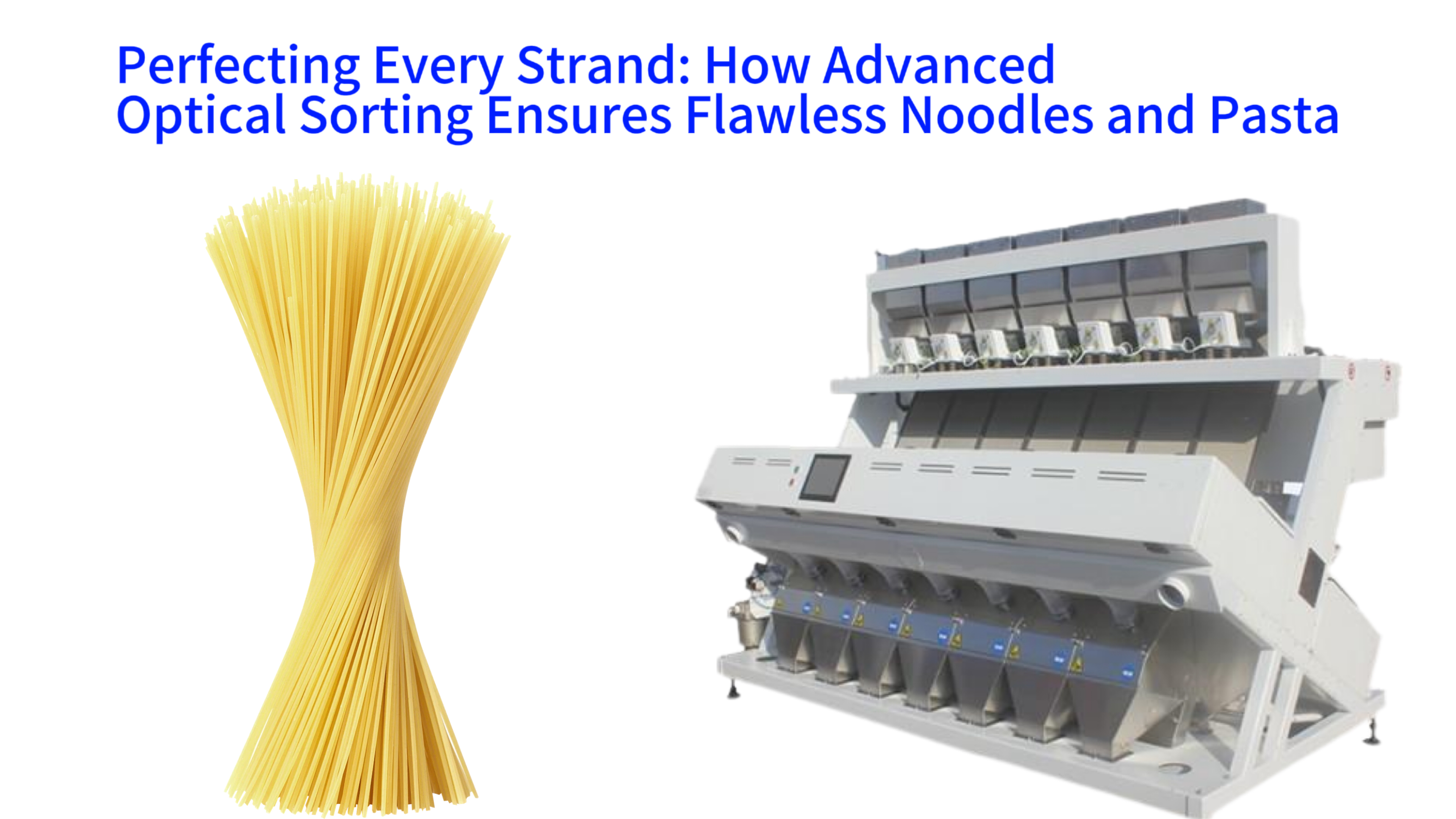
The journey from raw ingredients to a perfect package of noodles or pasta on a supermarket shelf involves a critical, unseen guardian: the optical sorting machine. In high-speed production environments where thousands of strands are processed every minute, maintaining consistent quality poses a significant challenge. Bent, broken, or surface-bubbled products are not merely aesthetic issues; they affect cooking performance, customer satisfaction, and ultimately, a brand's reputation. This article delves into the sophisticated world of optical food sorting, explaining how cutting-edge camera systems and intelligent software work in concert to automatically detect and remove these defective pieces. We will explore the specific optical principles used to identify different flaw types, examine the integration of this technology into a production line, and quantify the tangible benefits it brings to manufacturers and consumers alike, ensuring that only the highest quality products reach your dinner table.
The Critical Quality Challenge in Noodle and Pasta Production
| Metric | Manual Inspection | Optical Sorting |
|---|---|---|
| Throughput (pieces/min) | ~500 | 10,000+ |
| Accuracy | 60-70% | 99%+ |
| Fatigue Impact | High | None |
Producing consistent, high-quality noodles and pasta at an industrial scale presents a unique set of quality control hurdles. The manufacturing processes, whether extrusion for pasta or sheeting and cutting for noodles, inherently create physical imperfections. During drying and transportation on conveyor belts, delicate strands can bend or snap. Surface bubbling, often a result of rapid drying or specific dough conditions, creates weak points that can disintegrate during cooking. For manufacturers, these defects lead to substantial product waste, increased costs from customer returns, and potential damage to brand integrity in a highly competitive market. The traditional method of manual inspection is woefully inadequate for modern production speeds, being slow, subjective, and prone to fatigue-related errors, creating a clear need for an automated, reliable solution.
The consequences of defective products reaching consumers are multifaceted. A broken pasta strand or a noodle with a bubbled surface cooks unevenly, leading to a suboptimal texture that ranges from undesirably mushy to unpleasantly firm. For the consumer, this translates to a disappointing meal experience that may influence future purchasing decisions. From a commercial perspective, a package containing a high percentage of broken pieces is often perceived as lower value, regardless of the actual flavor or ingredient quality. Therefore, implementing a robust, automated sorting system is not merely an operational upgrade but a fundamental component of quality assurance and brand protection, directly linking production line efficiency to end-customer satisfaction and loyalty.
Defining the Common Defects: Bent, Broken, and Bubbled
Optical sorting systems are programmed to recognize specific, well-defined defect categories that commonly afflict dry pasta and noodle products. A 'bent' piece refers to any strand that deviates significantly from its intended straight or uniformly curved shape, often caused by mishandling on conveyors or during packaging. 'Broken' pieces are fragments shorter than the acceptable product length, resulting from mechanical stress during cutting, drying, or bulk transport. 'Surface-bubbled' defects, sometimes called 'blisters,' manifest as small, raised air pockets on the product's surface, which scatter light differently than a smooth texture. Each of these defect types presents a distinct visual signature that advanced optical systems are trained to identify, allowing for precise and selective removal without discarding good product.
The Limitations of Manual Inspection and Sieving
Before the widespread adoption of optical sorters, producers relied on manual inspection and basic mechanical sieving. Sieves can effectively remove very small fragments or powder but are completely ineffective for detecting bends, subtle breaks near the full length, or surface bubbles. Manual inspection, typically performed by workers stationed alongside a fast-moving conveyor, is unsustainable. Human vision cannot reliably track and classify thousands of small, similarly colored objects per minute. This method is inconsistent, influenced by lighting conditions and inspector fatigue, leading to high rates of both missed defects and unnecessary removal of acceptable product. The transition to automated optical inspection represents a quantum leap in accuracy, consistency, and throughput, addressing the fundamental shortcomings of these legacy methods.
Core Technology: How Optical Sorting Machines See and Decide
High-speed line-scan cameras (up to 10,000 pixels/line)
Stable LED lighting (0.1ms response time)
AI-driven defect recognition (99.5% accuracy for known defects)
Microsecond air ejection valves (≤5ms response)
Customizable algorithm parameters for product-specific needs
At the heart of the sorting process is a sophisticated vision system that acts as the machine's eyes and brain. As products flow in a single layer on a high-speed conveyor or through a chute system, they pass under a scanning area illuminated by powerful, stable LED lights. This lighting is crucial, as it eliminates shadows and provides consistent color and texture rendition. High-resolution line-scan or area-scan cameras then capture multiple images of each individual noodle or pasta piece from various angles. These cameras operate at incredible speeds, capable of analyzing several thousand items per second, transforming the physical product into a stream of detailed digital image data that is sent for instantaneous processing.
The captured image data is analyzed in real-time by a powerful processing unit running complex detection algorithms. This software compares the visual attributes of each piece—its shape, length, color, and surface texture—against a predefined acceptance model of a 'good' product. For instance, an algorithm assessing straightness will analyze the piece's contour against a ideal linear or curved baseline. To detect breaks, it measures pixel length. Surface bubbles are identified by analyzing localized patterns of light reflection and shadow that differ from a smooth surface. When a piece's characteristics fall outside the acceptable thresholds, it is flagged as a defect. This entire cycle of image capture, analysis, and decision happens in milliseconds, a testament to the incredible speed of modern computing integrated into industrial optical sorting systems.
The Role of High-Speed Imaging and Lighting
The effectiveness of defect detection is entirely dependent on the quality of the captured image. Modern sorting machines use cameras with high pixel densities and frame rates to 'freeze' the motion of fast-moving products, capturing crisp, blur-free images. The lighting system is engineered to be uniform and to highlight the specific features of interest. For detecting surface bubbles, a combination of bright-field and dark-field lighting might be used to create contrast that makes the bubbles' edges stand out clearly against the smooth pasta surface. This controlled imaging environment allows the system to perceive minute details invisible to the human eye at high speed, forming the reliable data foundation for all subsequent sorting decisions.
From Detection to Ejection: The Precision Removal System
Once the processing software identifies a defective piece, it triggers a physical rejection mechanism. The most common method is a precisely timed puff of compressed air. The system tracks the coordinates of the defect as it travels from the scanning zone to an array of high-speed solenoid valves. At the exact moment the defective noodle or pasta piece passes over the ejection bank, a specific valve fires a brief, focused jet of air, knocking it off the main product stream and into a reject chute. The timing and accuracy of this ejection are critical; valve response times are measured in milliseconds to ensure only the targeted piece is removed without disturbing adjacent good products. This seamless integration of vision and action is what enables the system to purify the product stream at rates matching modern production lines, a key feature of high-speed ejection technology.
Advanced Software Algorithms for Defect Recognition
The true intelligence of the sorter resides in its software. Early systems used simple color or size thresholds, but contemporary algorithms are far more advanced. They can employ shape recognition to distinguish a bent piece from a naturally curved elbow macaroni. They use morphological analysis to identify incomplete breaks where a strand is mostly intact but has a small fracture. For the tricky detection of surface bubbles, texture analysis algorithms examine the pixel-level uniformity of the surface. These software parameters are highly customizable, allowing engineers to fine-tune the sorter's sensitivity for specific product types, from delicate angel hair pasta to robust rigatoni, ensuring optimal performance for each unique production line.
Tailored Sorting Solutions for Diverse Noodle and Pasta Types
| Product Type | Key Sorting Criterion | Sensitivity Level |
|---|---|---|
| Spaghetti/Linguine | Length/Bent | High |
| Fusilli/Penne | Shape Completeness | Medium-High |
| Egg Noodles | Color/Discoloration | Medium |
| Instant Noodles | Oil Stains/Blisters | Medium-High |
The application of optical sorting is not a one-size-fits-all solution; it is meticulously tailored to the vast array of noodle and pasta varieties on the market. A machine sorting long, straight spaghetti faces different challenges than one processing small, complex shapes like fusilli or farfalle. For long goods such as spaghetti, linguine, or fettuccine, the primary focus is on detecting breaks (to ensure consistent length) and bends (to ensure straightness for packaging). The system's software is configured with precise length tolerances and straightness algorithms. The product handling system, often a gentle belt conveyor, must be designed to present these long strands in a well-separated manner to prevent tangling that could obscure defects or cause false rejections.
Conversely, sorting short-cut pasta or small noodles involves recognizing defects within intricate shapes. The optical system must be trained to understand the correct three-dimensional geometry of shapes like shells, bows, or wheels. A defect might be a malformed, incomplete shape from the extrusion die, or a piece that has broken along a weak point in its design. For Asian-style noodles, which can be square, round, or flat and may be dried or partially fresh, the sorting parameters are adjusted for different surface textures and colors. This adaptability showcases the flexibility of modern food sorting solutions, which can be programmed for an incredibly wide product range, ensuring that whether the output is uniform penne or varied ramen noodles, quality standards are rigorously upheld.
Handling Long Goods: Spaghetti, Linguine, and Fettuccine
Long pasta products require a specialized approach to maintain strand integrity during sorting. Production lines often use cascading or vibratory systems to align strands parallel to the direction of travel before they enter the optical scanner. This alignment is critical for accurate length measurement and bend detection. The lighting and camera setup is optimized to view the entire length of the strand as it passes, looking for sharp angular deviations that indicate a bend or a point of contrast that indicates a break. Ejection must be equally precise, as an air jet intended for a defective middle section of a spaghetti strand must not inadvertently affect the surrounding good strands, a challenge met by ultra-narrow, targeted air nozzles.
Sorting Short-Cut and Complex Shapes: Fusilli, Penne, and Farfalle
With short-cut and shaped pasta, the sorting logic shifts from linear analysis to spatial recognition. The system builds a digital profile of what a complete, well-formed piece should look like from multiple angles. It then compares each piece against this model. A broken penne tube, lacking one of its characteristic angled ends, will be flagged. A fusilli with a malformed, overly tight spiral will be detected. The high-resolution cameras capture top and side views to assess the three-dimensional structure. This capability is essential for products where the consumer's expectation is based on a specific, recognizable shape, and where broken pieces can create an unattractive mix in the package. The technology behind this complex analysis is related to that used in AI sorters trained on vast image libraries.
Special Considerations for Egg Noodles and Instant Varieties
Egg noodles and instant (pre-cooked) noodles present their own unique sorting criteria. Egg noodles have a richer, more yellow color, and the sorter must be calibrated to this specific hue to avoid incorrectly rejecting good product. It also needs to detect discolorations or burnt spots that can occur during drying. For instant noodles, which are often fried, the system must identify oil-stained clusters or pieces that are blistered from excessive frying. The texture and density of these products differ from traditional dried pasta, requiring adjustments in the handling system to prevent further breakage and in the optical system to account for their specific surface gloss and color profile.
Quantifiable Benefits and Impact on Production Efficiency
| Benefit | Quantifiable Impact |
|---|---|
| Product Quality | 99% defect-free rate |
| Labor Cost | Reduction by 70% |
| Production Speed | Increase by 200% |
| Waste Reduction | Reduction by 80% |
The integration of an optical sorting system delivers measurable, significant improvements across multiple facets of noodle and pasta manufacturing. The most direct benefit is a dramatic increase in final product quality. By removing virtually all bent, broken, and bubbled pieces, the product reaching packaging is uniform and visually perfect. This consistency allows manufacturers to meet and exceed stringent retailer specifications and private-label contracts, which often have strict limits on allowable defect percentages. Achieving this level of quality manually would be economically impossible, but automation makes it a standard, repeatable outcome, directly enhancing the marketability and perceived value of the brand.
From an operational standpoint, the efficiency gains are substantial. Automated sorting reduces dependency on large teams of manual inspectors, reallocating labor to more skilled roles and reducing overall labor costs. The machines operate continuously without fatigue, maintaining a consistent output quality over 24-hour production runs. Furthermore, by removing defective product early in the line, downstream resources are not wasted on packaging, transporting, and potentially retailing sub-standard goods. This reduction in waste not only saves on raw material costs but also aligns with growing corporate sustainability goals. The data generated by the sorter—tracking defect types and rates—also provides invaluable insights for process optimization, helping engineers fine-tune upstream equipment like extruders, dryers, and conveyors to minimize the creation of defects in the first place.
Enhancing Food Safety and Reducing Contamination Risks
Beyond physical defects, modern optical sorters are equipped to enhance food safety. While their primary function for noodles is geometric, the high-resolution cameras can also be tuned to detect certain foreign materials that contrast with the product's color. This includes atypical discolorations, dark specks, or foreign objects that may have entered the production stream. By incorporating this additional layer of inspection, the sorter acts as a critical control point in the plant's food safety plan. The non-contact nature of optical inspection and air ejection also minimizes the risk of product contamination during the sorting process itself, as there are no mechanical parts touching the food, upholding the highest hygiene standards crucial for food production environments.
Data Analytics for Process Optimization and Quality Tracking
A modern optical sorter is not just a removal device; it is a sophisticated data generator. Every decision it makes is logged, creating a real-time stream of information on defect rates, types, and locations. This data can be analyzed to identify patterns. For example, a sudden spike in broken spaghetti might indicate a misalignment in the cutting head. A concentration of surface bubbles could point to an issue with the dryer's temperature or humidity settings. By feeding this data back to production managers and engineers, the sorting machine becomes a diagnostic tool, enabling proactive maintenance and continuous process improvement. This shift from simple quality control to data-driven quality assurance represents a significant step toward smarter, more efficient manufacturing.
The Integration into a Complete Production Line
Production Line Integration Flow
For maximum effectiveness, an optical sorting machine must be seamlessly integrated into the existing pasta or noodle production line. This integration is both physical and digital. Physically, the sorter is typically installed after the final drying or frying stage and before the packaging machines. The product handling system—whether belt, chute, or vibratory feeder—must be engineered to present a steady, singularized flow of product to the optical scanner at the appropriate speed. This often requires coordinating with the equipment immediately upstream and downstream to ensure a smooth transfer of product without creating bottlenecks or causing new breakage due to excessive drops or impacts.
Digitally, modern sorters are designed for connectivity within the Industry 4.0 framework. They can communicate with the factory's central control system, reporting throughput, efficiency, and defect statistics. This allows for remote monitoring of the sorter's performance and health. Alerts can be set up to notify maintenance staff if rejection rates deviate from normal parameters or if a component like a camera light is nearing the end of its service life. This level of integration transforms the sorter from an isolated piece of equipment into an intelligent node within a connected factory ecosystem, contributing to overall equipment effectiveness (OEE) and enabling predictive maintenance strategies that minimize unplanned downtime.
Upstream and Downstream Coordination
Successful integration requires careful coordination with both upstream and downstream processes. Upstream, the drying or stabilization process must deliver product with consistent moisture content, as very wet or sticky noodles can clump and blind the optical system. Downstream, the packaging machinery must be synchronized to handle the purified product stream. The sorting process may also include a final polishing step, such as a gentle air knife to remove dust and small fragments created during sorting itself, ensuring the product is pristine before it enters the bag or box. This holistic view of the production line ensures the sorter enhances, rather than disrupts, the overall flow, a principle key to all smart material feeding and handling systems.
Hybrid Systems and Multi-Stage Sorting for Premium Grades
For producers of premium or specialty products, a single sorting pass may not suffice. Some advanced lines employ multi-stage or hybrid sorting systems. For instance, product might first pass through a machine focused on removing gross defects like large broken pieces and foreign material. It could then proceed to a second, more sensitive optical sorter tuned specifically for subtle surface defects like micro-bubbles or slight discolorations. In other configurations, an optical sorter might be combined with a gravimetric sorter to remove low-density, hollow pieces that indicate internal bubbling. This multi-layered approach builds an exceptionally robust quality barrier, guaranteeing an outstanding final product that commands a higher market price and reinforces a brand's premium positioning.
Future Trends: Smarter Sorting with AI and Enhanced Sensing
2020: Rule-based algorithms (basic defect detection)
2025: Machine Learning (custom defect recognition)
2030: AI + NIR (compositional + visual analysis)
2035: Multi-Sensor Fusion (full quality profiling)
The future of optical sorting for noodles and pasta is being shaped by artificial intelligence and more sophisticated sensor fusion. Current systems rely on algorithms programmed with specific rules (e.g., "reject pieces shorter than X pixels"). The next generation utilizes deep learning AI, where the system is trained on thousands of images of both good and defective products. Over time, it learns to recognize complex and subtle defect patterns on its own, even those not explicitly defined by engineers. This allows for more adaptable and accurate sorting, especially for novel product shapes or defect types that emerge from new production techniques.
Furthermore, the integration of additional sensor modalities will provide a more complete quality assessment. Near-Infrared (NIR) spectroscopy could be added to complement visual inspection. While a camera ensures physical perfection, an NIR sensor could non-destructively analyze the chemical composition of each piece, verifying protein content or moisture uniformity, or even detecting off-spec ingredients. This moves quality control from a purely external inspection to a holistic verification of both form and substance. These advancements, moving towards multi-sensor optical sorting, promise to further elevate quality standards, reduce waste with even greater precision, and provide manufacturers with unprecedented levels of production insight and control.
The Role of Machine Learning in Evolving Defect Recognition
Machine learning represents a paradigm shift in how sorting systems are taught. Instead of manually setting complex thresholds for every product type, engineers can feed an AI model a curated dataset. The model learns the defining characteristics of a 'good' fusilli versus a 'bad' one. Its major advantage is adaptability; if a new, unforeseen defect appears (e.g., a unique stress fracture from a new dryer), the AI can be retrained with new image samples to recognize it, often without a complete software overhaul. This makes the sorting system future-proof and reduces the engineering burden associated with launching new products, as the AI can generalize from learned examples to new shapes and forms more effectively than traditional programming.
Beyond Visuals: Integrating Compositional Analysis with NIR
The integration of Near-Infrared sensors marks the frontier of in-line quality control. As a noodle or pasta piece passes the scanner, it is briefly illuminated with NIR light. The reflected spectrum is unique to the material's molecular bonds, creating a 'fingerprint' of its composition. This allows the system to identify pieces that are visually perfect but compositionally wrong—such as a piece of pasta with a localized area of incorrect moisture that could lead to spoilage, or a blend that deviates from the specified recipe ratio. By combining this internal quality check with external optical inspection, manufacturers can guarantee not just the appearance but the intrinsic quality and consistency of every single piece they produce, aligning with the advanced capabilities found in dedicated NIR sorting technology.