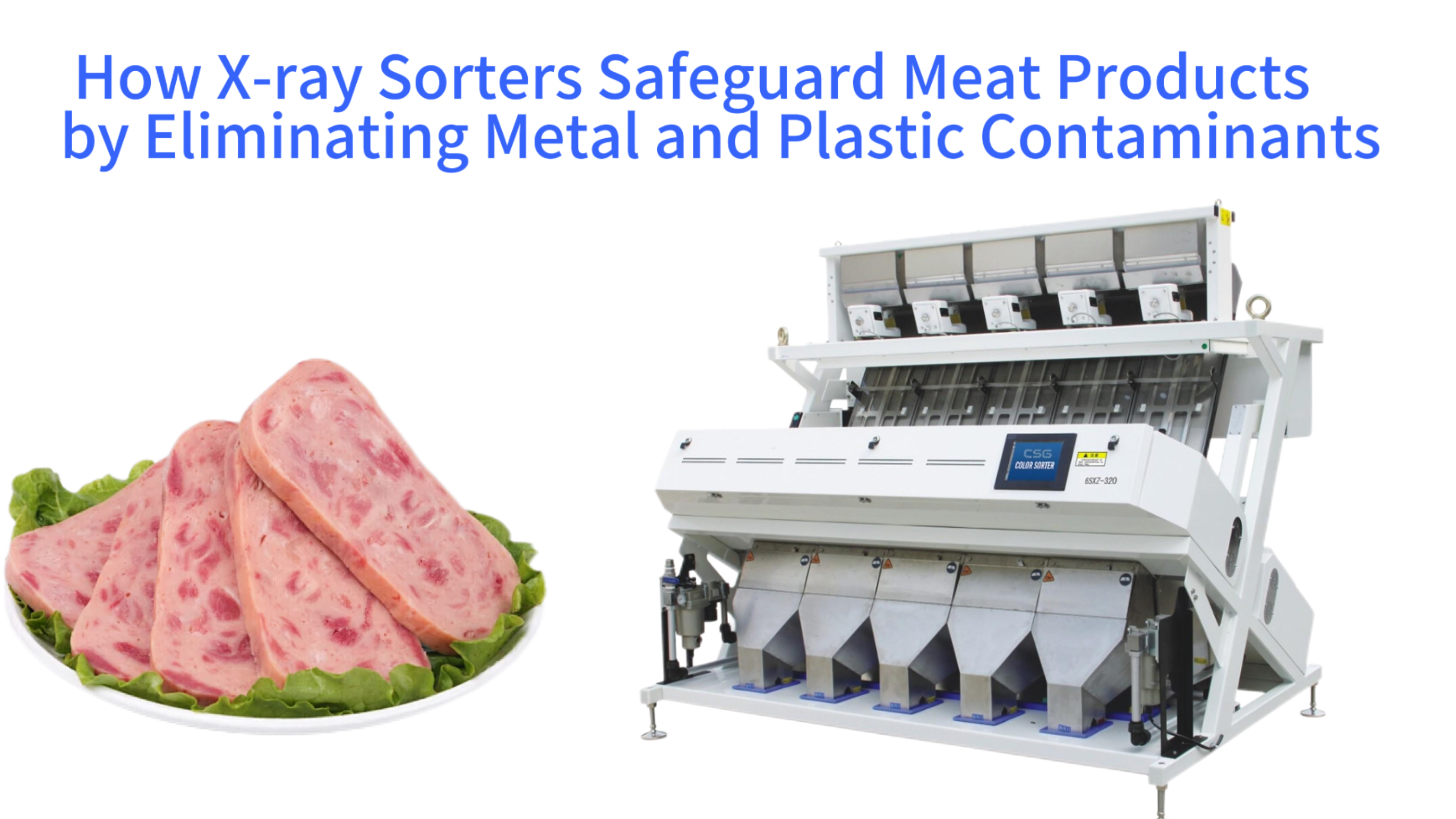
In the world of modern food processing, ensuring the absolute safety of products like sausages, burger patties, and nuggets is a paramount challenge. These meat emulsion products, while delicious, can be vulnerable to accidental contamination by foreign materials such as metal fragments from machinery or hard plastic pieces from packaging during high-speed production. This article provides a comprehensive look at the critical role of X-ray sorting technology as the ultimate line of defense. We will explore the fundamental science behind how these systems see the invisible, the step-by-step process of detection and rejection, and the significant benefits they bring to food safety and quality assurance in the meat processing industry, offering consumers peace of mind with every bite.
The Critical Need for Foreign Material Detection in Meat Processing
Inspection Method Capability Comparison
| Inspection Method | Detect Metal | Detect Plastic/Glass | Detect Hidden Contaminants | 24/7 Consistent Performance |
|---|---|---|---|---|
| Metal Detector | ✓ | ✗ | ✗ | ✓ |
| Human Visual Check | Partial | Partial | ✗ | ✗ |
| X-ray Sorter | ✓ | ✓ | ✓ | ✓ |
The production environment for meat emulsion products is complex and involves numerous stages where accidental contamination can occur. From initial grinding and mixing to forming and packaging, equipment parts can wear down, and packaging materials can fragment. Traditional inspection methods, including metal detectors and human visual checks, have limitations. Metal detectors are excellent for finding ferrous and non-ferrous metals but are completely blind to non-metallic threats like certain hard plastics, glass, or bone fragments. This gap in detection capability presents a significant risk to consumer safety and brand reputation.
Furthermore, the dense and often heterogeneous nature of meat emulsions makes visual inspection by operators exceptionally difficult. Small, low-contrast contaminants can easily blend into the product. Regulatory bodies and consumer expectations demand a higher standard. This is where X-ray inspection systems, a sophisticated type of sensor-based sorting machine, provide a technological leap. They address a wider spectrum of potential hazards, ensuring that the final product is free from both metallic and dense non-metallic foreign objects, thereby fulfilling stringent food safety protocols.
Understanding the Limitations of Conventional Methods
While essential, metal detectors operate on the principle of electromagnetic fields and can only identify materials that disrupt that field. Plastics, glass, rubber, and stones typically do not generate a detectable signal unless they have high mineral content. In a meat processing plant, where various plastic tooling and belts are used, the risk of plastic contamination is real and cannot be mitigated by metal detection alone. This creates a critical vulnerability in the safety net.
Human inspection, while valuable for certain quality aspects, is subject to fatigue, distraction, and the inherent physical limitation of the human eye. It is virtually impossible for a person to reliably identify a tiny, clear plastic shard or a stainless steel sliver embedded within a fast-moving stream of ground meat on a conveyor belt. The industry needed a solution that offered consistent, unbiased, and comprehensive inspection, leading to the widespread adoption of X-ray technology for critical control points.
The Spectrum of Contaminants in Emulsion Lines
Contaminants in a meat plant can be categorized by their origin. Metal contaminants often come from worn screens on grinders, broken blades, fastener pieces, or wire from cleaning brushes. Hard plastic contaminants may originate from brittle plastic paddles, container liners, protective guards, or even pieces from personnel equipment. Other dense materials like mineral stones or glass are also potential hazards. An effective detection system must be able to discriminate between the normal, safe product and all these anomalous materials, regardless of their color, shape, or surface texture, which is a task perfectly suited for X-ray inspection.
The financial and reputational cost of a recall due to foreign material contamination is enormous. Beyond the immediate costs of retrieving products, there is lasting damage to brand trust. Implementing an X-ray sorter is therefore not just a safety measure but a strategic investment in brand protection. It acts as a final, highly sensitive checkpoint before products are packaged and shipped, ensuring that only contaminant-free products proceed. This level of assurance is increasingly becoming a standard requirement for supplying to major retailers and global markets.
Regulatory Drivers and Consumer Safety Expectations
Food safety regulations, such as the Food Safety Modernization Act (FSMA), emphasize preventive controls. Processors are required to identify and mitigate potential hazards, including physical contaminants. X-ray inspection technology is recognized as a valid and highly effective preventive control point (PCP). Its data logging capabilities also provide auditable proof of due diligence, showing that every batch was inspected and that contamination events were recorded and addressed, which is invaluable during regulatory inspections or quality audits.
Today's consumers are more informed and concerned about food safety than ever before. A single social media post about a foreign object found in a product can cause widespread alarm. Proactively utilizing the most advanced detection technology demonstrates a company's commitment to quality and safety. It transforms food safety from a reactive process—dealing with complaints—to a proactive one, preventing unsafe products from ever reaching the consumer. This builds immense trust and loyalty, which are crucial assets in the competitive food industry.
The Science of Sight: How X-ray Technology "Sees" Inside Products
X-ray food inspection systems operate on principles similar to medical X-rays but are optimized for industrial throughput and sensitivity. At the heart of the system is an X-ray generator that produces a low-dose, highly focused beam of radiation. As products pass through this beam on a conveyor belt, the X-rays penetrate them. The key to detection lies in the concept of density and atomic mass. Different materials absorb X-ray energy to different degrees. Denser materials with higher atomic mass, like metals and minerals, absorb more radiation, allowing less to pass through. Less dense materials, like the meat product itself, fats, and water, absorb less.
The radiation that passes through the product strikes a sophisticated detector positioned underneath the conveyor. This detector, often a linear array or a high-resolution camera-like sensor, converts the varying intensities of the transmitted X-rays into a detailed grayscale image. In this image, areas that appear darker represent where more X-rays were absorbed (high-density contaminants), while lighter areas represent where more X-rays passed through (the less dense food product). This creates a clear visual contrast between the safe product and a dangerous contaminant, even if it is completely hidden inside. This core imaging capability is a form of advanced detection that forms the basis for all subsequent analysis.
Material Discrimination Based on Density
The system's software is pre-programmed with the expected density profile of the specific meat product being inspected. When the X-ray image is generated, algorithms analyze the grayscale values of every pixel. A metal fragment will show up as a very dark, distinct spot because of its high density. A piece of hard PVC plastic or a bone chip, while less dense than metal, still has a significantly higher density than the surrounding meat emulsion and will appear as a darker grey anomaly against the lighter background. This allows the system to reliably identify a wide range of foreign materials based on their differential absorption.
Modern systems go beyond simple density measurement. They can utilize dual-energy X-ray technology. This method uses two different X-ray energy levels to scan the product. By analyzing how a material reacts to these two energies, the system can better characterize its composition. This enhances the ability to distinguish between, for example, a benign dense salt cluster and a harmful piece of glass, reducing false rejects and increasing accuracy. This sophisticated analysis is a hallmark of modern meat sorting machine technology.
Image Processing and Contaminant Highlighting
Once the grayscale image is captured, powerful image processing software takes over. The first step is often to apply filters to enhance the image, reducing noise and sharpening edges to make potential contaminants more distinguishable. The software then scans the image, comparing the density of each region against the baseline established for the product. Any area exceeding a predefined density threshold is flagged as a potential contaminant. The software can also assess the size, shape, and morphology of the flagged object to apply further logic, ensuring that only genuine threats are targeted for removal.
The sensitivity of these systems is remarkable. High-performance X-ray sorters can detect metallic and non-metallic contaminants as small as 0.5 millimeters in diameter, even when embedded deep within a product. This level of precision is unattainable by human inspectors or other inspection technologies. The software continuously learns and adapts, and its parameters can be finely tuned for different products, such as adjusting the sensitivity when switching from inspecting thin breakfast sausages to thicker beef patties, ensuring optimal performance across a varied product line.
Overcoming Product Effect and Signal Noise
One of the significant challenges in inspecting meat emulsions is the "product effect." Meat is not a uniform substance; it contains natural variations in density from lean muscle, fat, and water. These variations can create signal noise in the X-ray image that might be mistaken for a contaminant. Advanced X-ray systems use complex algorithms to map and account for these normal variations. They establish a dynamic baseline for the product, effectively teaching the system what the normal, safe product looks like in X-ray vision, so it can more accurately identify true anomalies.
Furthermore, the shape and thickness of the product are factored in. Systems are calibrated to understand that a thicker part of a patty will naturally absorb more X-rays and appear darker, and this is not a defect. This intelligent contextual analysis is crucial for maintaining a high detection rate while keeping false rejections—where good product is mistakenly discarded—to an absolute minimum, often less than 1%. This balance protects both consumer safety and production yield, making the technology both effective and economical for processors.
From Detection to Action: The High-Speed Rejection Process
Identifying a contaminant is only half the battle; removing it with pinpoint accuracy from a high-speed production line is the other crucial half. The entire process from image capture to ejection happens in milliseconds. Once the system's software confirms the presence and exact location of a contaminant, it sends a synchronous signal to a rejection mechanism. The most common and effective method for meat products is the use of high-speed, precision air valves. These valves are arranged in an array along the width of the conveyor and are capable of firing a focused blast of compressed air in a matter of microseconds.
The timing is engineered with extreme precision. The system continuously tracks the speed of the conveyor belt. Knowing the exact location of the contaminant in the X-ray image and the travel time to the rejection zone, the system calculates the precise millisecond at which to activate the specific air jet(s) corresponding to the contaminant's position. When the defective product parcel arrives under the correct jet, a powerful, brief puff of air deflects it off the main conveyor and into a reject bin. This integration of imaging and high-speed ejection is what makes automated sorting possible at industrial scales.
Synchronization and Precision Timing
The synchronization between detection and ejection is what defines the system's accuracy. The response time of the ejection valves is typically faster than 0.1 milliseconds. This incredible speed ensures that even when products are moving on a conveyor belt at rates of up to 15 tons per hour, the system can isolate and remove a single contaminated item without affecting the good products immediately before or after it. The software accounts for the physical delay between issuing the command and the valve firing, as well as the flight time of the air stream, to make the ejection event perfectly timed.
This process is fully automatic and operates without any reduction in line speed. Unlike manual sorting, which would require the line to slow down or stop, the X-ray sorter works seamlessly within the production flow. This maintains high productivity and throughput, which is essential for meeting the large-volume demands of meat processing facilities. The system's ability to make these split-second decisions consistently, hour after hour, without fatigue, is a key advantage over any manual intervention.
Types of Rejection Systems for Meat Emulsions
While air rejection is the dominant method for loose or individual products like patties or nuggets, other configurations exist. For products packed in trays or flowing in a continuous bulk stream, different reject mechanisms might be employed. A "pusher" arm or a "drop flap" can be used to divert an entire tray or a section of the product flow. The choice of rejection mechanism is integrated into the system's design based on the specific application, whether it's for bulk sausage sorting or for inspecting packaged portions.
All rejection systems are designed for hygiene and easy cleaning. The air jets are made from food-grade materials and are often configured in a manifold that can be quickly detached for sanitation procedures. The reject bins or chutes are also easily accessible. This design philosophy ensures that the safety equipment itself does not become a source of contamination or a bottleneck in the plant's rigorous cleaning cycles, which is a non-negotiable aspect of meat processing.
Minimizing Product Waste and False Rejects
A well-calibrated X-ray sorter is designed to maximize the removal of contaminants while minimizing the accidental rejection of good product. The system's software allows operators to set very specific sensitivity thresholds and define the size of the contaminant that should trigger a reject. For instance, the system can be set to ignore tiny, harmless specks while targeting anything larger than 1.0 millimeter. This fine-tuning is done during the initial setup and can be saved as a "recipe" for each different product type the line runs.
This precise targeting directly reduces product waste and saves money. By ensuring that only the genuinely contaminated unit is ejected, the overall yield of the production line remains high. The system also provides real-time data and rejection counts, allowing quality managers to monitor contamination trends. A sudden spike in rejects might indicate a problem with upstream equipment, enabling proactive maintenance before a major failure occurs. Thus, the sorter functions not only as a safety device but also as a valuable process control tool.
Advantages Over Traditional Inspection Methods
Comprehensive Advantage Comparison of Inspection Technologies
| Advantage Category | X-ray Sorter | Metal Detector | Human Visual Inspection |
|---|---|---|---|
| Contaminant Detection Range | Metal, Plastic, Glass, Bone, Stone, Rubber | Ferrous/Non-ferrous Metal Only | Surface-Visible Contaminants Only |
| Hidden Defect Detection | ✓ Full Volume | ✗ No | ✗ No |
| Data Logging & Traceability | Real-time, Image, Timestamp, Reject Count | Basic Reject Count Only | No Formal Data Logging |
| Hygienic Design | IP65, Food-Grade, Easy Washdown | Basic Hygienic Design | Human Contact = Contamination Risk |
| Process Integration | Non-Contact, No Line Speed Reduction | Non-Contact, No Line Speed Reduction | Requires Line Slowdown/Stop |
The implementation of X-ray sorting technology represents a transformative upgrade in quality control for meat processors. Its most significant advantage is its comprehensive detection capability. Unlike metal detectors, X-ray systems can identify a vast array of foreign materials including stainless steel, aluminum, glass, mineral stone, calcified bone, rubber, and many types of hard plastics. This provides a much broader and more reliable safety net, addressing the majority of physical contamination risks with a single, integrated unit installed at a critical control point on the production line.
Another major benefit is consistency and objectivity. Human inspectors can have varying performance throughout a shift due to fatigue or subjective judgment. An X-ray sorter performs with unwavering accuracy 24/7, applying the same stringent standards to every single item that passes through it. It doesn't get tired, and it isn't influenced by external factors. This delivers a level of quality assurance that is predictable, measurable, and consistently meets the highest international food safety standards, giving brands a powerful story of commitment to tell their customers.
Unmatched Sensitivity and Hidden Defect Detection
X-ray technology possesses the unique ability to detect contaminants that are completely invisible from the outside. A piece of glass or metal embedded deep within a frozen burger patty or a dense sausage link poses no visual cue on the surface. Traditional methods would miss this entirely. The penetrating power of X-rays allows the system to examine the entire volume of the product, not just its surface. This capability to find hidden threats is perhaps the most compelling argument for its adoption in meat emulsion applications, where contaminants can become thoroughly mixed and enclosed.
The sensitivity of these systems is quantified and exceptional. They can reliably detect metallic and high-density non-metallic objects down to 0.5 millimeters, and sometimes even smaller, depending on the product thickness and the contaminant material. This level of detection is far beyond the capability of the human eye, especially on fast-moving production lines. This sensitivity ensures that even the smallest, most hazardous fragments are caught, dramatically reducing the risk of a consumer encountering a foreign object and the subsequent severe consequences for the manufacturer.
Data Logging and Process Transparency
Modern X-ray sorters are data powerhouses. They continuously log inspection data, including the number of items inspected, the number of rejects, images of rejected products (with the contaminant highlighted), and even timestamps. This data is invaluable for traceability and quality audits. In the event of a customer query or a regulatory inspection, the processor can provide definitive proof that the specific batch was inspected and passed through the X-ray system, or show a record of the contaminant that was detected and removed.
This data also enables process optimization. Quality managers can analyze trends over time. For example, if the system starts rejecting more metal fragments every Tuesday afternoon, it might correlate with maintenance on a grinder that is wearing down a part. This allows for predictive maintenance, fixing the root cause of contamination before it leads to a major product quality issue or equipment failure. This shift from reactive to proactive quality management is a significant operational advantage provided by intelligent sorting technology like AI-powered sorters.
Hygienic Design and Non-Contact Inspection
X-ray inspection is a completely non-contact process. The product is irradiated from above and imaged from below without any physical interaction until the moment of rejection. This minimizes the risk of the inspection system itself contributing to contamination or damaging delicate products. The machines are built with food-grade, easy-clean materials, often featuring stainless steel exteriors and smooth, crevice-free surfaces. Many are rated with high Ingress Protection (IP) ratings, such as IP65, meaning they are dust-tight and protected against water jets, allowing for rigorous wash-downs common in meat plants.
This hygienic design is critical for compliance with food safety schemes like the Global Food Safety Initiative (GFSI) benchmarks (e.g., BRC, SQF). The equipment supports, rather than hinders, the plant's sanitation protocols. Furthermore, because the inspection is non-destructive and does not alter the product in any way, 100% of the production can be inspected without any waste generated by the inspection method itself. Only the confirmed defective items are removed, maximizing yield and ensuring that all safe, wholesome product reaches the packaging stage.
Integration into Modern Meat Processing Lines
Integrating an X-ray sorter into an existing or new meat processing line is a strategic engineering decision. The systems are designed to be modular and adaptable. A typical installation point is after the forming or shaping stage (for patties, nuggets) and before primary packaging. For bulk products like ground meat, it might be placed after mixing or grinding. The key is to position it at a point where the product is presented in a single layer and where contamination risks from upstream equipment have already occurred, making it the final, conclusive check. The system connects with the line's programmable logic controller (PLC) for seamless start/stop control and data exchange.
The physical integration involves fitting the machine into the conveyor line. Belt-type X-ray sorters are the most common for meat emulsions, as they gently transport individual items through the inspection tunnel. The system requires utilities like a stable electrical supply and clean, dry compressed air for the rejection system. Modern machines come with user-friendly human-machine interfaces (HMIs), often touchscreen panels, where operators can select product recipes, view real-time inspection images, and access production reports. This ease of use is a key feature of today's belt-type X-ray sorting machines.
Choosing the Right System Configuration
Selecting the appropriate X-ray sorter depends on several factors specific to the plant. The primary consideration is the product characteristics: size, thickness, density, and production speed (tons per hour). A line producing small breakfast sausages will have different requirements than one producing large, frozen burger patties. The belt width of the sorter must accommodate the product's footprint and the desired throughput. Common industrial widths range from 600mm to over 2000mm. The system's tunnel height must also be sufficient to allow the tallest product to pass through without touching, ensuring a clear inspection path.
The type and size of contaminants of concern also guide the selection. If the main risk is very fine metal wires, a system with exceptionally high spatial resolution will be needed. If the challenge is detecting low-density plastics in a high-fat product, a dual-energy X-ray system might be recommended for its superior material discrimination. Working with an experienced supplier is crucial to analyze these factors and recommend a system, such as a AI xray sorting machine, that provides the optimal balance of sensitivity, speed, and cost for the specific application.
Validation, Calibration, and Ongoing Support
Once installed, the system must be validated to prove it works as intended. This involves running test pieces with known contaminants (e.g., metal, plastic, glass spheres of defined sizes) through the machine at normal production speed to verify it detects and rejects them consistently. Sensitivity tests are documented to establish a baseline. Regular calibration is also essential to maintain performance. This might involve running standard test pieces daily or weekly to ensure the detection sensitivity has not drifted. Most systems have automated calibration routines to simplify this critical task.
Ongoing technical support and access to spare parts are vital for maximizing uptime. A reliable supplier will offer training for operators and maintenance staff, and provide service contracts. Since X-ray generators have a finite lifespan, understanding the replacement cycle and cost is part of the long-term investment. A well-maintained X-ray sorter can serve as the cornerstone of a plant's food safety program for many years, providing an unparalleled return on investment through brand protection, reduced waste, and compliance assurance.
Complementary Role with Other Sorting Technologies
It's important to note that X-ray sorters are sometimes used in conjunction with other technologies for a multi-layered defense. For example, a metal detector might be placed earlier in the process as a cost-effective first screen for ferrous metals, with the X-ray sorter placed later as the final, more comprehensive check. For surface defect detection—like burns, discoloration, or shape irregularities—an optical sorter using high-resolution cameras and lights might be employed. Each technology has its strengths, and together they can provide complete product integrity assurance.
In advanced processing lines, data from these different sorting systems can be integrated into a central quality management software platform. This gives plant managers a holistic, real-time view of quality metrics across the entire production process. They can see not just physical contamination rates from the X-ray, but also color and shape quality from optical sorters, and weight accuracy from checkweighers. This convergence of data drives continuous improvement, operational efficiency, and provides an unprecedented level of transparency from raw material to finished product.
The Future of Contaminant Detection in Food Safety
The evolution of X-ray sorting technology is closely tied to advancements in computing power and artificial intelligence. Future systems will feature even more sophisticated AI and machine learning algorithms. Instead of just looking for density differences, these systems will be trained on vast libraries of images to recognize specific contaminant types with greater context. They will learn to distinguish between an abnormal but harmless density variation (like a pocket of gristle) and a genuine hazardous foreign material with even greater accuracy, further driving down false reject rates and boosting confidence.
Integration with the Internet of Things (IoT) and cloud computing is another clear trend. X-ray sorters will become intelligent nodes in a connected factory, sending performance data and alerts to maintenance teams remotely. Predictive analytics will forecast when a component like the X-ray tube is nearing the end of its life, scheduling maintenance during planned downtime. Cloud-based platforms could allow for centralized monitoring of sorting performance across multiple global factory locations from a single dashboard, ensuring consistent quality standards worldwide.
Enhanced Imaging and Multi-Sensor Fusion
Imaging technology itself will continue to advance. Higher-resolution detectors, faster image capture rates, and more advanced 3D imaging techniques will provide even clearer pictures of the product's interior. Furthermore, the concept of sensor fusion is gaining traction. This involves combining X-ray data with data from other sensors, such as near-infrared (NIR) spectroscopy or hyperspectral imaging. A fused system could, in one scan, detect a physical contaminant with X-rays while simultaneously analyzing the chemical composition of the meat to verify fat/lean ratio or even detect spoilage indicators, offering a multi-dimensional quality assessment.
This multi-sensor approach promises to expand the role of inspection systems from pure safety devices to comprehensive quality and composition analyzers. For meat processors, this could mean ensuring not only the absence of hazards but also the consistent nutritional content and freshness of their products. This aligns with growing consumer demand for transparency and specific nutritional attributes, allowing manufacturers to validate their product claims with hard data from the production line itself.
Accessibility and Sustainability Focus
As technology matures, it is also becoming more accessible to smaller and medium-sized processors. Compact, lower-cost, and easier-to-use X-ray systems are entering the market, bringing this high level of food safety protection to a broader segment of the industry. This democratization of technology is crucial for raising safety standards across the entire food supply chain. Additionally, the sustainability aspect is being emphasized. Modern X-ray sorters are designed to be more energy-efficient, and their role in reducing product waste by minimizing false rejects contributes directly to more sustainable food production practices.
In conclusion, X-ray sorting technology has established itself as an indispensable guardian in meat processing. Its ability to reliably detect and remove a wide range of invisible contaminants ensures that products like sausages, patties, and nuggets are safe for consumption. As the technology continues to evolve with AI, better imaging, and connectivity, its value will only grow, providing an ever-stronger foundation for trust between food producers and consumers. It represents a clear commitment to a future where food safety is guaranteed by intelligent, transparent, and unerring technology.