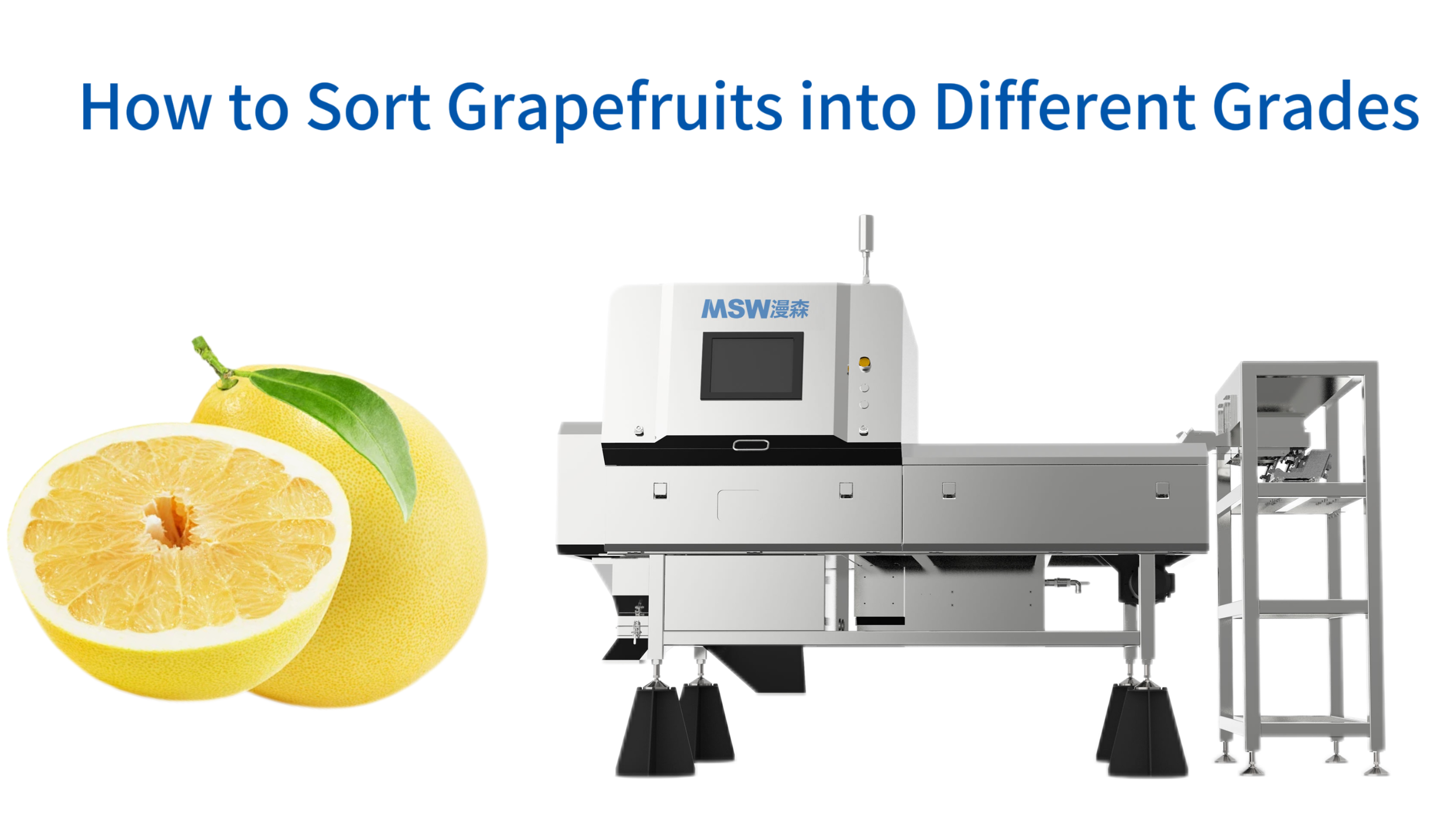
Commercial grapefruit processing demands objective, repeatable grading systems that transform variable orchard production into consistent market-ready products. The global citrus industry has evolved from subjective visual assessment to sophisticated multi-parameter sorting that evaluates shape, size, surface condition, internal quality, and sugar content simultaneously. This comprehensive guide examines the complete grapefruit grading ecosystem, from market requirements and quality indicators to advanced sorting technologies and professional workflows. Readers will understand how premium grades differ from standard and economy categories, what technologies enable non-destructive internal quality evaluation, and how intelligent sorting solutions deliver measurable financial returns through reduced waste and enhanced market access. The discussion draws on industry data showing that properly graded grapefruit achieves price premiums of 30 to 50 percent compared to mixed-quality lots, while reducing post-harvest losses by 15 to 25 percent through early defect removal and appropriate grade assignment.
Overview of Commercial Grapefruit Grading Standards
📊 Price Premium by Grade
Compared to ungraded mixed lots (baseline = 0%)
The commercial grading of grapefruit follows established standards that define acceptable quality parameters for different market channels. These standards have been developed through decades of industry experience, consumer preference research, and retailer requirements. Premium markets including high-end supermarkets and export destinations demand fruit meeting stringent specifications for external appearance, internal eating quality, and size uniformity. Standard markets accept moderate variation within defined tolerances. Economy channels take fruit with cosmetic imperfections or slight size variations that do not affect basic edibility. Understanding these standards is essential for processors seeking to maximize revenue through appropriate grade assignment rather than selling all production at average prices.
Grading standards vary significantly between consuming regions, creating both challenges and opportunities for international grapefruit suppliers. The European market emphasizes internal sugar content and absence of defects, with documented Brix measurements increasingly required for premium contracts. The North American market focuses heavily on external appearance and size calibration, with specific color requirements for different seasonal periods. Asian markets show strong preference for specific shape characteristics and uniformity. A sorting system capable of measuring all relevant parameters allows processors to flexibly assign fruit to optimal destinations based on current market conditions, maximizing overall returns across the sales portfolio.
Market Requirements for Graded Grapefruit Sales
Supermarket chains and wholesale distributors have established specific grapefruit grading requirements that suppliers must meet to maintain commercial relationships. These requirements typically specify minimum sugar content measured in degrees Brix, maximum tolerance for external blemishes, acceptable size ranges, and shape consistency standards. Large retailers often conduct their own inbound quality inspections, rejecting shipments that fail to meet agreed specifications. A single rejected container imposes costs exceeding the product value, including transportation, disposal, and potential delisting from supplier rosters. Processors without objective grading capability cannot reliably meet these requirements, limiting them to lower-priced distribution channels.
The economic value of proper grade assignment is substantial and well-documented. Industry data shows that premium grade grapefruit meeting stringent internal and external standards commands prices 40 to 60 percent higher than ungraded mixed lots. Standard grade fruit with minor cosmetic variations still achieves 20 to 30 percent premiums compared to ungraded product. Even economy grade fruit, when consistently characterized, finds appropriate markets that pay predictable prices. A sorting facility processing 10,000 tons annually can increase revenue by 500,000 to 1,000,000 dollars through effective grade optimization, with the AI sorter technology paying for itself within one to two seasons through enhanced market access alone.
Key Indicators That Determine Grapefruit Commercial Grades
Commercial grapefruit grades depend on multiple quality indicators that collectively determine market value and consumer acceptance. External appearance parameters include overall color uniformity, freedom from scarring or blemishes, and surface gloss or finish. Shape characteristics affect packing efficiency and consumer perception, with round or slightly oval fruit preferred over irregular specimens. Size classification follows standard count designations, where fruit must fall within specified diameter ranges to receive a given size grade. Internal quality parameters include juice content, segment development, absence of granulation or drying, and freedom from internal defects. Sugar content measured as degrees Brix provides the primary sweetness indicator, with premium grades requiring minimum levels typically between 10 and 11 degrees Brix depending on variety and market.
The weighting of different quality indicators varies by market channel and intended use. Fresh consumption channels prioritize external appearance and sugar content, as consumers eat the fruit out of hand. Processing applications including juice production focus on internal yield and sugar content while tolerating external blemishes. Export shipments to distant markets require fruit with sufficient structural integrity to withstand transport, favoring varieties and grades with thicker rinds and fewer defects. A comprehensive sorting system must measure all relevant indicators and allow flexible grade definitions that processors can adjust for different customers or market conditions.
Quality Differences Between Premium, Standard and Economy Grade Grapefruits
Premium grade grapefruit represents the top tier of production, typically comprising 30 to 50 percent of total output from well-managed orchards. Premium fruit exhibits excellent external color and finish, with no visible blemishes or scarring. Shape approaches perfect roundness or slight oval with symmetrical proportions. Size falls within narrow calibration ranges, ensuring uniformity within each pack. Internal quality shows fully developed juice vesicles with no granulation or drying. Sugar content exceeds market-specific thresholds, typically 10.5 degrees Brix or higher. Premium fruit commands the highest prices and supplies the most demanding customers including luxury supermarkets and export markets requiring documented quality verification.
Standard grade fruit shows minor cosmetic imperfections that do not affect eating quality. External blemishes might include light scarring, minor wind damage, or slight color variations that remain acceptable for most retail channels. Shape shows moderate variation from ideal but remains within commercial specifications. Size distribution may be wider than premium grades, requiring additional calibration for consistent packing. Internal quality remains good with normal juice content and acceptable sugar levels typically between 9 and 10.5 degrees Brix. Economy grade fruit serves processing applications or discount markets, accepting more significant external defects or size variations while still providing acceptable internal quality for juice production or further processing. The clear economic separation between grades justifies investment in color sorter technology that can objectively differentiate these categories.
Loss Risks Caused by Unstandardized Grapefruit Grading
⚠️ Annual Financial Loss from Misgrading
5 million cartons · 10% misclassification rate
Unstandardized grading imposes substantial financial losses throughout the grapefruit supply chain. When sorting lacks objective measurement, premium fruit may be downgraded into lower categories, losing 30 to 50 percent of potential revenue. Conversely, substandard fruit packed into premium grades generates customer complaints, returns, and brand damage that erodes market position over time. A facility processing 5 million cartons annually with 10 percent misclassification between grades loses approximately 750,000 dollars per year in foregone premium revenue plus additional claim costs. These losses continue year after year without the operator's full awareness because the misclassification remains invisible without objective measurement technology.
Beyond direct grade-related losses, unstandardized grading increases waste throughout the processing and distribution chain. Fruit that would be rejected by premium buyers but could succeed in standard markets often ends up in the wrong channel, where it fails and requires disposal or discounting. Packing materials, labor, and transportation applied to these misdirected fruit become complete waste when the product is ultimately rejected. A well-implemented grading system with advanced detection capabilities reduces this waste by 60 to 70 percent, directly improving both profitability and environmental sustainability through reduced resource consumption per unit of successfully marketed fruit.
Core Dimensions for Grapefruit Multi-grade Sorting
Multi-grade grapefruit sorting evaluates fruit across several independent dimensions, each contributing to overall quality assessment and grade assignment. These dimensions include external appearance characteristics visible to consumers, size and weight parameters affecting packing efficiency, surface defect presence that may reduce visual appeal, internal quality factors invisible from the outside, and sugar content that determines eating satisfaction. A complete sorting system must measure each dimension with appropriate technology and combine the results into holistic grade decisions that consider all relevant factors simultaneously. Single-dimension sorting, such as size-only or color-only systems, cannot capture the full quality picture and leaves substantial value unrealized.
The interrelationship between grading dimensions creates optimization opportunities that multi-parameter sorting can capture. A fruit with minor external blemishes might still qualify for premium grade if internal quality and sugar content excel. Conversely, perfect external appearance cannot compensate for low sugar content or internal defects. The sorting algorithm must weight each dimension appropriately based on market requirements and consumer preferences. A facility serving multiple market channels can maintain different weighting profiles, applying stricter external standards for retail fresh fruit while focusing on internal quality for processing customers. This flexibility maximizes revenue by matching each fruit to its highest-value application.
Shape and Appearance Grading Rules for Fresh Grapefruit
Shape grading for fresh grapefruit evaluates fruit geometry against ideal models representing consumer preferences. Round or slightly oval fruit with symmetrical proportions rates highest, while fruit showing elongation, flattening, or irregular contours receives lower scores. The shape evaluation uses 3D vision technology that captures surface geometry from multiple angles, calculating sphericity indices and identifying deviations from ideal form. Premium grades typically require sphericity exceeding 95 percent, meaning the fruit diameter varies less than 5 percent across different orientations. Standard grades accept sphericity between 85 and 95 percent, while fruit below 85 percent routes to processing channels where shape matters less.
Appearance grading goes beyond shape to include surface finish, color uniformity, and overall visual appeal. High-resolution cameras capture color images from multiple angles, analyzing peel color for uniformity and appropriate shade for the variety and season. Premium fruit shows consistent color across the entire surface without blotches or uneven ripening patterns. Surface finish evaluation detects gloss or dullness that may indicate storage condition issues or physiological disorders. The appearance grading system applies machine learning models trained on consumer preference data to predict how different visual characteristics affect purchase decisions. This data-driven approach produces appearance grades that align with actual market behavior rather than arbitrary inspector preferences.
Size and Weight Classification Standards for Commercial Fruit
Size classification for commercial grapefruit follows established count designations where fruit of similar dimensions pack into standard carton sizes. The classification system measures fruit diameter at the equatorial plane, typically the widest cross-section. Premium grades require tight size distributions, often with no more than 5 millimeter variation within a single pack. Standard grades allow somewhat wider ranges, typically 10 to 15 millimeter variation. Economy grades may accept any size within a broader commercial range, with sorting only to remove fruit that falls completely outside marketable dimensions. The size classification technology uses precision weight sensors and optical diameter measurement, with accuracy exceeding 99 percent for correctly positioned fruit.
The economic value of precise size classification is substantial for grapefruit processors. A carton packed with uniformly sized fruit sells for premium prices because retailers can display attractive, consistent product. Mixed sizes require discounting of 10 to 20 percent compared to uniform packs. The sorting system must handle overlapping size distributions accurately, assigning each fruit to the correct size grade even when adjacent categories differ by only 5 millimeters. Precision acceleration sorting machine technology ensures gentle handling that maintains fruit quality while achieving accurate size separation. The system tracks size distribution data continuously, allowing process adjustment to optimize grade yield as fruit characteristics change throughout the harvest season.
Surface Defect Screening for Grade Division
🎯 Detection Accuracy: AI vs Human
Surface defect detection rate
Surface defect screening identifies external blemishes that affect visual quality and grade placement. Common grapefruit surface defects include wind scarring, insect damage, mechanical injury from harvesting, and various physiological disorders that appear as discolored patches or rough texture. The defect detection system uses high-resolution color imaging with specialized lighting that highlights surface irregularities. Machine learning algorithms trained on thousands of annotated defect images classify each detected blemish by type, size, and severity. Premium grades typically allow no visible defects, requiring fruit with perfectly clean surfaces. Standard grades accept minor defects below specified size thresholds, while economy grades tolerate more significant blemishes as long as the fruit remains edible.
The relationship between defect severity and economic value determines optimal rejection thresholds for different market channels. A small superficial scar might cause no consumer objection in standard retail channels but would exclude fruit from premium export markets. The sorting system allows operators to set different defect tolerance levels for different grade destinations, ensuring each fruit reaches the highest-value channel where its specific characteristics remain acceptable. This approach maximizes overall recovery compared to single-threshold systems that either accept defects that should reject or reject fruit that could sell in lower grades. AI optical sorting machine technology achieves detection sensitivity exceeding 95 percent for defects as small as 2 millimeters, outperforming human inspection by substantial margins.
Internal Quality Indicators Affecting Fruit Grade
Internal quality indicators determine grapefruit eating satisfaction and significantly influence grade assignment for premium applications. Key internal parameters include juice content, absence of granulation or drying, and structural integrity of segment walls. Granulation, a physiological disorder where juice vesicles become dry and hard, severely degrades eating quality while remaining invisible externally. X-ray transmission technology detects granulation through density anomalies, as affected tissue shows different X-ray attenuation than healthy vesicles. Internal breakdown or excessive pith development also appears in X-ray images as density variations, allowing rejection of fruit with internal defects before they reach consumers who would experience disappointment and potentially avoid future purchases.
The economic impact of internal defects hidden from external inspection is substantial for grapefruit processors. Industry studies show that 5 to 15 percent of fruit passing external inspection contains internal quality issues significant enough to affect consumer satisfaction. In premium markets where consumers pay higher prices expecting superior quality, this defect rate produces unacceptable complaint levels. X-ray sorting reduces internal defect escape rates to below 2 percent, preventing customer disappointment and protecting brand reputation. The same technology also enables grade differentiation based on internal quality, with premium grades requiring perfect internal condition while standard grades accept minor internal variations that do not affect basic edibility.
Sugar Content and Taste Level Classification Criteria
🍬 Sugar Content (Brix) vs Price Premium
Higher Brix = higher market value
Sugar content measured as degrees Brix provides the primary objective indicator of grapefruit sweetness and consumer acceptance. Premium grades typically require minimum Brix levels of 10.5 to 11.0 degrees depending on variety and market expectations. Standard grades accept fruit with Brix between 9.0 and 10.5 degrees, while fruit below 9.0 degrees routes to processing applications where sugar can be adjusted or blended. The sorting system measures sugar content non-destructively using near-infrared spectroscopy, which analyzes light absorption patterns that correlate with chemical composition. NIR technology predicts Brix with mean absolute error below 0.5 degrees when properly calibrated for specific varieties, enabling meaningful grade separation.
The relationship between sugar content and market value varies by channel and application. Fresh consumption markets strongly prefer sweeter fruit, with price premiums increasing continuously with Brix level. A study of retail pricing data shows that grapefruit with Brix above 11.0 degrees achieves average prices 25 percent higher than fruit with Brix between 9.5 and 10.0 degrees. Processing applications such as juice production value sugar content linearly because higher Brix fruit yields more sugar per ton. The sorting system's ability to measure sugar content enables optimal routing, sending high-Brix fruit to fresh markets where sweetness commands premium prices while directing lower-Brix fruit to processing where the sugar value remains realizable through concentration or blending. NIR sorter technology makes this optimization possible without destructive testing that would consume the fruit being evaluated.
Main Sorting Technologies for Grapefruit Grade Classification
Modern grapefruit sorting integrates multiple sensor technologies, each contributing specific measurement capabilities essential for comprehensive grade classification. No single technology can evaluate all quality dimensions because different physical phenomena reveal different characteristics. Color imaging captures external appearance and visible defects but cannot penetrate the rind to assess internal quality. X-ray transmission reveals density variations indicating internal structure but provides limited sugar content information. Near-infrared spectroscopy measures chemical composition including sugar but offers less spatial resolution for defect detection. The integrated sorting system combines these complementary technologies, applying the appropriate measurement method for each quality dimension and fusing the results into holistic grade decisions.
The technology selection for a grapefruit sorting line depends on target markets, available capital, and desired grade sophistication. Basic sorting for standard domestic markets may require only color and size measurement, representing lower initial investment. Premium export operations serving demanding customers need full internal and external evaluation, requiring X-ray and NIR integration with vision systems. The technology investment scales with grade sophistication, but so does revenue potential from premium market access. Processors should match technology capability to market opportunity, avoiding both under-investment that limits grade options and over-investment in capability that current customers do not value.
AI Visual Sorting for Appearance and Shape Grading
AI visual sorting technology uses high-resolution cameras and deep learning algorithms to evaluate grapefruit external appearance and shape characteristics. Multiple cameras positioned around each fruit capture images covering the entire surface, eliminating blind spots that would miss defects on hidden sides. The AI algorithms process these images in real time, identifying defects, evaluating color uniformity, and reconstructing 3D shape from 2D image data. Training the AI system requires thousands of annotated fruit images where human experts have marked defect locations and quality grades. After training, the system applies these learned patterns consistently to every fruit, eliminating the performance variation that plagues human inspection.
The accuracy of AI visual sorting for grapefruit appearance grading exceeds human performance in controlled studies. Detection rates for surface defects reach 97 to 99 percent compared to 70 to 85 percent for human inspectors working under typical packing line conditions. The AI system maintains this performance continuously without fatigue, while human accuracy declines measurably after 60 to 90 minutes of inspection work. Shape classification accuracy for sphericity assessment approaches 98 percent agreement with laser-based 3D measurements, providing reliable grade assignment without the expense of dedicated 3D sensors. This performance level enables sensor-based sorting machine configurations that achieve premium grade quality at competitive capital costs.
Precision Weight and Size Detection Technology
Precision weight and size detection forms the foundation of commercial grapefruit grading, as size classification directly impacts packing efficiency and market acceptance. The technology combines load cell weighing with optical diameter measurement, each calibrated to achieve specified accuracy. Individual fruit weigh cells achieve accuracy within plus or minus 2 grams across typical grapefruit weights of 200 to 600 grams, enabling precise separation into count grades. Optical diameter sensors use laser or LED line scanning to measure fruit dimensions at the equatorial plane, achieving resolution below 1 millimeter. The system correlates weight and diameter measurements to verify consistency, flagging fruit where the two measurements disagree as potential orientation or handling issues.
The economic value of precise weight and size detection lies in maximizing pack-out within grade specifications. A packing facility serving a customer requiring fruit in the 280 to 320 gram range, for example, wants to assign all fruit meeting that specification to the premium line while routing both smaller and larger fruit to alternative channels. A detection system with 2 gram accuracy can confidently assign fruit at the specification boundaries, while a less accurate system must leave safety margins that reduce yield. The difference between 2 gram and 5 gram accuracy in a typical size distribution represents 3 to 5 percent of production shifted from premium to standard grades, directly reducing revenue by a corresponding percentage.
NIR Spectral Detection for Internal Taste Grading
Near-infrared spectral detection enables non-destructive measurement of grapefruit sugar content by analyzing how fruit tissue absorbs and reflects light at specific wavelengths. The NIR system projects broad-spectrum light onto each fruit while sensors measure reflected energy across hundreds of wavelength bands. Different chemical compounds absorb light at characteristic wavelengths, creating spectral signatures that correlate with composition. The sugar content prediction algorithm, trained on hundreds of fruit with known Brix values measured destructively, maps spectral patterns to estimated sweetness. The entire measurement process takes less than 100 milliseconds per fruit, enabling inline sorting at production speeds without damaging the fruit.
The accuracy of NIR sugar content prediction for grapefruit depends on calibration quality and fruit temperature uniformity. Under optimal conditions with well-calibrated systems and fruit at stable temperature, prediction root mean square error below 0.5 degrees Brix is achievable. This accuracy enables meaningful grade separation because the difference between premium and standard sugar specifications typically ranges from 1.0 to 1.5 degrees Brix. Temperature variation remains the primary accuracy challenge, as fruit temperature affects both light absorption properties and actual sugar perception. Temperature compensation algorithms and controlled fruit conditioning before sorting help maintain prediction accuracy across typical processing conditions. Belt-type AI NIR sorting machine configurations provide the stable fruit presentation necessary for consistent spectral measurement.
X-Ray Non-Destructive Detection for Hidden Defect Filtering
X-ray transmission technology provides the only practical method for detecting internal grapefruit defects without cutting or otherwise destroying the fruit. The X-ray system passes low-energy radiation through each fruit while sensors measure transmitted intensity variations that reveal internal density patterns. Healthy grapefruit tissue produces relatively uniform X-ray attenuation, while defects including granulation, internal drying, and segment abnormalities create localized density anomalies. The system's AI algorithms, trained on thousands of fruit with known internal conditions, classify each fruit as acceptable or defective based on these internal density patterns. Rejection of defective fruit before packing prevents customer complaints and protects brand reputation.
The performance of X-ray defect detection for grapefruit has been validated through extensive commercial operation. Studies across multiple packing facilities show that X-ray sorting reduces internal defect escape rates from 8 to 15 percent under visual-only inspection to below 2 percent. The technology detects granulation with 95 percent sensitivity, internal drying with 92 percent sensitivity, and severe defects with 98 percent sensitivity. False rejection rates for acceptable fruit remain below 3 percent, meaning the system removes very few good fruit while catching most defective ones. This performance level transforms quality outcomes, enabling processors to confidently guarantee internal quality to demanding customers. X-ray sorter technology represents a significant investment but delivers corresponding value through prevented complaints and enhanced market access.
Multi-Sensor Fusion Sorting for Comprehensive Grade Evaluation
Multi-sensor fusion sorting integrates data from color cameras, X-ray sensors, NIR spectrometers, and weight scales into unified grade decisions. The fusion approach recognizes that no single measurement captures complete fruit quality; only combining multiple sensing modalities provides holistic evaluation. The system's central processing unit collects data from each sensor for every fruit, synchronizing measurements to ensure all data corresponds to the same individual. A fusion algorithm weights each measurement according to its relevance for the grade being assigned, applying different weights for premium fresh grade versus processing grade versus juice grade. This flexible weighting enables the same equipment to sort for different market requirements without hardware changes.
The commercial advantage of multi-sensor fusion lies in capturing value that single-sensor systems miss. A fruit with perfect external appearance might contain internal defects that only X-ray reveals, while a fruit with minor cosmetic blemishes might have exceptionally high sugar content that NIR detects. The fusion system considers both measurements, potentially assigning the internally defective fruit to processing where external appearance doesn't matter while routing the high-sugar but blemished fruit to fresh markets where sweetness compensates for minor cosmetic issues. This optimization typically increases overall revenue by 5 to 10 percent compared to single-sensor sorting, with the incremental benefit directly funding the additional sensor investment.
Professional Workflow of Multi-level Grapefruit Sorting
The professional workflow for multi-level grapefruit sorting transforms incoming bulk fruit into graded output streams through a sequence of automated operations. Each workflow step serves a specific purpose, from preparing fruit for inspection to executing grade-based separation. The complete workflow must balance throughput against accuracy, with faster operation generally requiring more sophisticated sensors and processing hardware to maintain grade quality. Well-designed workflows achieve commercial speeds of 5 to 10 fruit per second per lane while maintaining detection accuracy exceeding 98 percent for specified defect types and quality parameters.
Workflow design must accommodate the physical characteristics of grapefruit, which vary substantially by variety and growing conditions. Larger fruit require wider inspection zones and more powerful X-ray sources for adequate penetration. Irregular shapes may need additional camera angles to capture complete surface information. High moisture content affects optical properties and may require specialized lighting to avoid glare. The sorting system must adapt to these variations while maintaining consistent grade decisions. This adaptability is achieved through configurable inspection parameters and multiple sensor options that processors select based on their specific fruit characteristics.
Automatic Feeding and Fruit Positioning Pretreatment
The automatic feeding system receives bulk grapefruit from storage or transport and prepares individual fruit for inspection. A hopper or conveyor receives the bulk product, with vibrating feeders spreading fruit into a single layer. Singulation mechanisms including roller systems or spacing wheels separate individual fruit, ensuring consistent gaps between consecutive items. Proper singulation is essential for accurate inspection because overlapping fruit would prevent full surface viewing and cause measurement errors. The feeding system also removes debris including leaves, stems, and loose dirt that could interfere with sensor readings or contaminate downstream equipment.
Fruit positioning pretreatment ensures each grapefruit presents consistently to the inspection sensors. Grapefruit tend to orient with stem and blossom ends vertical when handled properly, which improves measurement consistency for both external and internal evaluation. Rotating rollers or cup conveyors position each fruit and may rotate it during inspection to capture complete surface coverage. Pretreatment also includes optional washing and drying stations for operations where fruit enters the sorter directly from field storage rather than after separate cleaning. The feeding and positioning system typically processes 10 to 20 tons per hour per lane, with multiple lanes operating in parallel for higher total capacity.
Omni-Direction Appearance and Dimension Scanning
The appearance and dimension scanning station captures comprehensive external data for each fruit using multiple cameras and sensors. High-resolution color cameras positioned around the fruit capture images covering the entire surface, typically using 4 to 8 cameras per inspection lane to eliminate blind spots. Structured light projectors or laser scanners illuminate the fruit with known patterns, enabling 3D shape reconstruction from camera images. The scanning system operates at speeds synchronized with fruit transport, capturing complete data sets in less than 100 milliseconds per fruit. LED lighting systems provide consistent illumination regardless of ambient conditions, ensuring stable image quality throughout production shifts.
The dimension scanning component precisely measures fruit size and shape characteristics. Multiple laser or LED displacement sensors measure fruit diameter at various points, providing data for size classification and shape analysis. The dimension data integrates with image information to create a complete digital representation of each fruit, including both visual appearance and geometric measurements. This comprehensive external data enables grade decisions based on shape quality, size uniformity, and surface condition simultaneously. The scanning system's output includes size measurements accurate to within 1 millimeter, shape indices quantifying roundness, and color coordinates representing external coloration.
Internal Quality and Sugar Content Data Analysis
The internal quality analysis station applies X-ray and near-infrared technologies to evaluate characteristics invisible from the fruit surface. X-ray sensors capture transmission images showing internal density patterns that reveal granulation, drying, and structural defects. The X-ray system operates at optimized energy levels for grapefruit, typically 40 to 60 kiloelectron volts, providing adequate penetration while maintaining sensitivity to small density differences. Simultaneously, NIR spectrometers measure light absorption across hundreds of wavelengths, generating spectral signatures that predict sugar content. Both measurement technologies operate non-destructively, leaving fruit intact for further processing or packaging.
The data analysis algorithms process X-ray and NIR measurements to produce actionable quality classifications. For X-ray data, convolutional neural networks trained on thousands of labeled fruit images identify density anomalies indicating defects. The system classifies each fruit as clear or defective based on comparison to reference patterns. For NIR data, regression models convert spectral measurements to estimated Brix values, typically reporting results with 0.5 degree accuracy. The analysis completes in real time, with results available for grade assignment before the fruit leaves the inspection zone. This speed enables inline sorting at commercial throughput rates, with the system processing up to 10 fruit per second per lane through the internal analysis station.
Intelligent Grade Judgment and Data Matching
The intelligent grade judgment system integrates all external and internal measurements into holistic grade assignments. A fusion algorithm receives data from cameras, X-ray sensors, NIR spectrometers, and weight scales, applying configurable weighting to each measurement based on target market requirements. The algorithm compares each fruit's measurement vector against grade thresholds defined by operators, identifying the highest-value grade for which the fruit qualifies. Premium grade might require perfect external appearance, size within narrow range, Brix above 11.0, and no internal defects. Standard grade might accept minor external blemishes or slightly lower Brix while still requiring no internal defects. Economy grade accepts external and internal variation within broader tolerances.
The grade judgment system also tracks each fruit's position through the sorting process, ensuring correct assignment despite high speeds and multiple lanes. Encoder synchronization maintains precise position data from inspection zone through to ejection points. The system calculates ejection timing based on fruit speed and distance to each discharge chute, activating the appropriate ejector within milliseconds of the fruit reaching its assigned destination. This tracking accuracy achieves misassignment rates below 0.1 percent in properly calibrated systems. The grade judgment system also logs classification results for each fruit, providing production data that supports quality management and continuous improvement.
Automatic Classified Discharging by Grade
The automatic discharge system directs each fruit to the appropriate bin or conveyor based on assigned grade. High-speed ejectors, typically pneumatic or servo-driven, deflect fruit from the main product stream into grade-specific collection channels. Each grade channel leads to separate packing lines, bulk bins, or further processing equipment. The discharge system must handle fruit gently to prevent bruising or other damage that would reduce value. Ejection forces are carefully controlled to redirect fruit without impact damage, typically using cushioned surfaces at collection points. The system can accommodate 4 to 8 grade outputs in typical configurations, with additional outputs available for specialized applications.
The discharge system design must accommodate the physical characteristics of grapefruit, including their relatively large size, weight, and susceptibility to impact damage. Collection chutes use padded surfaces and curved geometries that decelerate fruit gradually rather than stopping them abruptly. Diverters operate at speeds matching fruit transport, typically 0.5 to 1.5 meters per second depending on product and grade count. The system maintains separation between grades, preventing cross-contamination that would defeat the sorting purpose. Regular verification tests confirm that discharge assignment matches grade judgment, with correction procedures for any detected misassignments. High-speed ejection components maintain these performance standards through millions of operating cycles.
Advantages of Intelligent Grapefruit Grading Solutions
Intelligent grapefruit grading solutions deliver measurable advantages across quality, efficiency, and profitability dimensions. Quality advantages include elimination of subjective grading variation, detection of internal defects invisible to humans, and documentation of quality parameters for customer verification. Efficiency advantages include reduced labor requirements, continuous operation without fatigue-related performance degradation, and lower per-unit sorting costs at high volumes. Profitability advantages include premium market access, reduced customer claims and returns, optimized grade assignment that maximizes revenue from each fruit, and data-driven quality management that continuously improves operations. Facilities implementing intelligent sorting typically achieve return on investment within 12 to 24 months, with continuing benefits over equipment lifetimes exceeding ten years.
The competitive advantage conferred by intelligent grading grows as market requirements evolve. Major supermarket chains increasingly mandate objective quality verification for citrus suppliers, and early adopters of intelligent sorting gain preferential access to these premium channels. Export markets impose stricter quality documentation requirements over time, and facilities with intelligent grading can certify compliance while competitors cannot. The technology's data collection capabilities also support continuous improvement by providing objective quality measurement across supply sources and processing conditions, enabling data-driven decisions that improve orchard management, harvest timing, and post-harvest handling.
Unified Digital Grading Standards Replace Manual Experience
Unified digital grading standards eliminate the variability inherent in human-dependent quality assessment. When grading depends on individual inspectors, different workers apply different standards, and the same worker applies different standards at different times depending on fatigue, attention, and other factors. Digital standards define grade boundaries precisely in measurable parameters: size in millimeters, sugar content in degrees Brix, defect size and count thresholds, shape indices. The sorting system applies these same digital standards consistently to every fruit, every day, regardless of who operates the equipment or what time of day production occurs. This consistency builds buyer confidence because delivered product reliably matches specifications.
The transition from manual experience to digital standards also addresses workforce challenges in fruit processing regions. Experienced graders who can accurately sort grapefruit take years to train, and their departure leaves quality gaps that are difficult to fill. Digital standards embedded in sorting equipment preserve grading knowledge independent of individual workers, maintaining quality even as personnel change. New operators can learn to manage the sorting system in days rather than the years required to develop expert grading skills. This workforce flexibility reduces vulnerability to labor shortages and simplifies scaling operations across multiple shifts or facilities.
Improved Consistency of Batch Grapefruit Quality
Intelligent sorting dramatically improves batch-to-batch quality consistency by applying identical standards regardless of production volume or timing. A batch sorted on Monday morning meets the same specifications as a batch sorted on Friday afternoon because the digital thresholds do not change with operator fatigue or attention. This consistency enables buyers to rely on supplier quality without conducting extensive inbound inspection, reducing their transaction costs and increasing willingness to pay premium prices. The producing facility benefits from simplified quality management, as the output meets specifications without the over-quality margin needed to absorb grading variation that would otherwise cause occasional failures.
The consistency improvement also reduces quality-related disputes between suppliers and buyers. When grading is subjective, disagreements inevitably arise about whether specific fruit meet grade standards. Digital grading eliminates this ambiguity because the standards are objectively measurable and the sorting system's compliance with those standards can be verified. Any dispute can be resolved by testing the sorted product against the digital specifications, providing clear evidence of compliance or non-compliance. This clarity reduces transaction costs and preserves supplier-buyer relationships that might otherwise suffer from recurring disagreements about product quality.
Higher Market Premium for Finely Graded Fruits
Finely graded grapefruit commands higher market premiums because buyers value the consistency and quality assurance that intelligent sorting provides. A buyer purchasing finely graded product knows that each carton contains fruit meeting specific measurable standards, enabling reliable pricing and customer satisfaction. This reliability supports premium pricing because the buyer can confidently offer the product to consumers at higher price points without fear of quality variation causing disappointment. Industry data shows that grapefruit sorted into premium grade with documented quality parameters achieves prices 40 to 60 percent higher than ungraded mixed lots, with the premium directly attributable to the sorting investment.
The premium for fine grading extends beyond the top grade to all quality tiers. Standard grade fruit with documented specifications sells for 20 to 30 percent more than ungraded fruit because buyers can confidently assign it to appropriate channels without fear of hidden defects or unexpected variation. Even economy grade fruit achieves predictable prices when consistently characterized, enabling processors to plan revenue accurately. The total revenue increase from comprehensive grading typically ranges from 15 to 25 percent of total sales value, representing substantial annual income improvement from the same orchard production.
Reduction of Post-Harvest Waste and After-Sales Complaints
♻️ Post-Harvest Waste Reduction
Internal defect escape rate
Intelligent sorting significantly reduces post-harvest waste by removing defective fruit before it consumes processing and packaging resources. When defective fruit proceeds through packing lines, it uses packaging materials, occupies machine time, and requires labor for handling before eventual rejection at final inspection or customer receipt. Each defective fruit packed represents complete waste of all processing resources applied after the point where intelligent sorting would have rejected it. A facility processing 10 million fruit annually with a 5 percent defect rate avoids approximately 500,000 waste fruit packs through early rejection, saving over 100,000 dollars in packaging and processing costs alone while also reducing environmental impact through lower resource consumption.
After-sales complaint reduction provides additional financial benefits that compound direct waste savings. Customer complaints, product returns, and compensation claims resulting from hidden internal defects impose substantial costs that conventional operations treat as unavoidable business expenses. A medium-volume packer shipping 2 million cartons annually might experience 0.5 percent return rates from quality issues, representing 10,000 cartons of lost product value plus handling and investigation costs. Intelligent sorting reduces quality-related returns by 70 to 90 percent, eliminating these costs while also protecting brand reputation from the damage of customer disappointment. The avoided complaint handling alone often justifies the technology investment, with production and labor savings providing additional returns.
Compatibility with High-End Supermarket and Export Standards
Intelligent grading solutions enable compliance with the stringent quality standards required by high-end supermarket chains and export markets. These standards typically specify maximum tolerance for internal defects, minimum sugar content levels, shape consistency requirements, and documentation of quality parameters. Manual inspection cannot provide the documented verification or achieve the internal defect detection rates these standards demand. X-ray and NIR technologies integrated into intelligent sorters provide both the detection capability and the documentation required for compliance, opening access to premium channels that would otherwise remain unavailable.
The compatibility with high-end standards creates competitive advantage for early adopters. As retailers and importers increasingly require objective quality verification, facilities without intelligent sorting find themselves locked out of premium channels. The technology investment becomes not just a profit enhancer but a market access requirement for serving sophisticated buyers. Facilities that invest early gain preferential relationships with top buyers, building customer loyalty that competitors cannot easily displace. This first-mover advantage compounds over time as premium relationships deepen and expand, creating sustained competitive differentiation that newer entrants cannot match without their own technology investment.
Why Choose MSW Technology for Grapefruit Sorting
⏱️ Return on Investment (10,000 tons/year facility)
Based on premium access + waste reduction
payback period
The selection of an equipment provider for grapefruit sorting technology significantly influences project success outcomes. MSW Technology brings extensive experience across agricultural sorting applications, with specific expertise in citrus grading developed through numerous installations worldwide. This experience translates to faster commissioning, more reliable operation, and better sorting performance for specific grapefruit varieties. The company's integrated solution approach considers the entire processing line rather than just the sorting machine itself, addressing feeding, handling, discharge, and data systems as a unified whole rather than leaving customers to integrate components from multiple vendors with competing priorities.
MSW Technology's commitment to customer success extends beyond equipment delivery to include comprehensive service support throughout the equipment lifetime. Pre-sales services include material testing to verify sorting performance on customer-specific fruit varieties before equipment purchase, eliminating uncertainty about achievable results. Installation services include site preparation guidance, equipment positioning, and integration with existing handling systems. Training services prepare customer operators and maintenance personnel to manage the equipment effectively. Ongoing support provides troubleshooting assistance, spare parts availability, and algorithm updates that maintain optimal sorting as fruit characteristics evolve over seasons and years.
Multi-Sensor Integrated Sorting Equipment Advantages
🔗 Multi-Sensor Fusion → Revenue +5-10%
MSW Technology's multi-sensor integrated sorting equipment combines color vision, X-ray transmission, NIR spectroscopy, and precision weighing in unified platforms. This integration eliminates the complexity and space requirements of separate machines for each sensing modality, simplifying facility layout and operation. The integrated design ensures perfect data synchronization between sensors, as a single control system manages all measurements for each fruit. This synchronization is essential for accurate grade decisions that depend on multiple quality dimensions, as misaligned data would produce incorrect classifications. The integrated approach also reduces maintenance requirements compared to multiple separate systems, with a single service interface for all sensing components.
The equipment portfolio includes multiple platform configurations optimized for different throughput and capability requirements. Belt-type AI sorting machine configurations provide gentle handling for delicate fruit, with adjustable belt speeds that accommodate varying fruit sizes and throughput requirements. Chute-type configurations offer higher speeds for robust fruit where gentle handling is less critical. Both configurations share the same core sensor technologies and AI algorithms, ensuring consistent grading performance across different handling approaches. The modular design allows processors to select the optimal handling configuration for their specific fruit varieties and throughput needs while maintaining grading consistency across multiple machines.
Custom Grading Models for Different Grapefruit Varieties
MSW Technology develops custom grading models for specific grapefruit varieties, recognizing that optimal sorting parameters differ between red, pink, and white varieties as well as between early and late season fruit. The model development process collects thousands of fruit samples representing the full quality spectrum for each variety, measures both sensor signatures and reference quality parameters through destructive testing, and trains prediction models that map sensor data to quality outcomes. This variety-specific approach achieves higher accuracy than generic models because it accounts for the unique characteristics of each commercial cultivar, including typical density patterns, sugar distribution, and defect presentation.
The custom models are continuously refined through field feedback and periodic retraining. As new fruit varieties enter commercial production or growing conditions shift with climate patterns, the models update to maintain optimal performance. MSW Technology's algorithm development team works directly with customers to validate model performance and implement improvements. This collaborative approach ensures that sorting equipment maintains peak accuracy throughout its operational life, adapting to changes in fruit characteristics rather than degrading as conditions evolve. The result is sustained grading performance that meets market requirements season after season, year after year.
Stable Operational Performance for Long-Term Production
MSW Technology sorting equipment is engineered for continuous operation in demanding processing environments. Industrial-grade components including sensors, processors, and mechanical systems are selected for reliability under extended duty cycles. The equipment design facilitates routine maintenance through accessible service points and modular component replacement. Predictive maintenance features monitor system performance and alert operators to developing issues before they cause production interruptions. This reliability focus minimizes unplanned downtime, maintaining throughput and grade quality across multi-shift operations.
The operational stability extends to sorting accuracy under varying production conditions. Temperature fluctuations, humidity changes, and fruit characteristic variations that might degrade performance in less robust systems are managed through automatic calibration and adaptive algorithms. The system continuously monitors its own performance, adjusting parameters as needed to maintain specified accuracy. When conditions exceed normal ranges, the system alerts operators and may recommend operational adjustments. This robust performance ensures that grade quality remains consistent even when processing conditions are not ideal, protecting product value through challenging production periods.
Full-Process Technical Support and After-Sales Service
MSW Technology's service commitment begins before equipment delivery and continues throughout the operational lifetime. Pre-sales technical support includes application consulting, facility planning, and performance testing using customer fruit samples. Installation support includes on-site supervision, operator training, and commissioning verification. Post-installation support includes remote diagnostics, preventive maintenance programs, and on-site service when needed. The service infrastructure includes regional support centers with trained technicians and spare parts inventory, minimizing response times for service requests. This comprehensive support ensures that customers realize the full value of their equipment investment through sustained performance and minimal production interruptions.
The after-sales service program includes regular performance reviews that analyze sorting data to identify optimization opportunities. As market requirements evolve or new fruit varieties enter production, MSW Technology works with customers to adjust grading parameters or develop new models. Algorithm updates incorporating improved detection methods become available to existing customers, protecting their equipment investment against obsolescence. This ongoing partnership approach transforms equipment purchase from a one-time transaction to a continuing relationship focused on sustained customer success. Smart material feeding systems and other ancillary equipment receive the same comprehensive support, ensuring the entire sorting line operates at peak efficiency.
Contact Us
The selection and implementation of grapefruit sorting technology requires careful consideration of multiple factors including fruit varieties, throughput requirements, target markets, and facility constraints. MSW Technology's application engineers are available to discuss specific requirements and recommend appropriate equipment configurations. The consultation process typically includes reviewing current operations, identifying quality improvement opportunities, estimating expected financial returns, and developing implementation timelines. Prospective customers are encouraged to submit fruit samples for testing to verify sorting performance before equipment purchase, eliminating uncertainty about achievable results.
MSW Technology serves customers across all major grapefruit producing regions, with service infrastructure supporting international installations. The company's experience spans diverse varieties, growing conditions, and market requirements, providing perspective that benefits new customers regardless of their location or scale. Whether upgrading existing sorting lines or establishing new processing facilities, MSW Technology offers solutions matched to specific operational needs and budget parameters. Contact the technical sales team for professional consultation, equipment quotations, or additional information about grapefruit sorting technology applications.
Professional Customized Grapefruit Sorting Line Solution
MSW Technology designs complete grapefruit sorting lines tailored to specific customer requirements rather than offering one-size-fits-all solutions. The line design process begins with a detailed analysis of current operations, quality goals, and market targets. Based on this analysis, engineers select appropriate equipment including feeding systems, sorting machines, and discharge configurations. The design accounts for facility layout, power requirements, and integration with existing handling equipment. Custom solutions may include specialized features for particular grapefruit varieties, such as gentle handling for delicate fruit or enhanced cleaning for dusty conditions. The result is a sorting line optimized for the customer's specific fruit, throughput, and quality requirements.
The customized approach extends to software configuration and algorithm development. Grade definitions are programmed to match specific customer market requirements, with grade thresholds set based on target buyer specifications. Algorithm models are trained on the customer's fruit varieties using representative samples collected before equipment delivery. Operator interfaces are configured for the customer's language and preferred terminology. This customization ensures that the sorting line works correctly from startup, producing graded output that meets specifications without extended commissioning delays or post-installation modifications.
Technical Consultation and Equipment Quotation Service
MSW Technology provides no-obligation technical consultation to help prospective customers evaluate sorting technology options and expected returns. The consultation process typically begins with a discussion of current operations, challenges, and goals. Application engineers then recommend appropriate technology configurations and estimate expected performance including throughput, accuracy, and grade yield. Financial analysis tools calculate expected return on investment based on customer-specific pricing and volume data. This consultation provides the information needed for informed investment decisions without pressure or obligation.
Equipment quotations include detailed specifications, pricing, delivery timelines, and support options. Quotations are customized to each customer's requirements, reflecting the specific configuration needed for their application rather than generic pricing. MSW Technology welcomes requests for proposals from processors at any stage of evaluation, from initial concept to final budget approval. The company's global service infrastructure ensures that customers receive consistent support regardless of location, with local service personnel available in major producing regions. Contact the technical sales team to initiate the consultation process and receive a customized equipment quotation for grapefruit sorting technology.