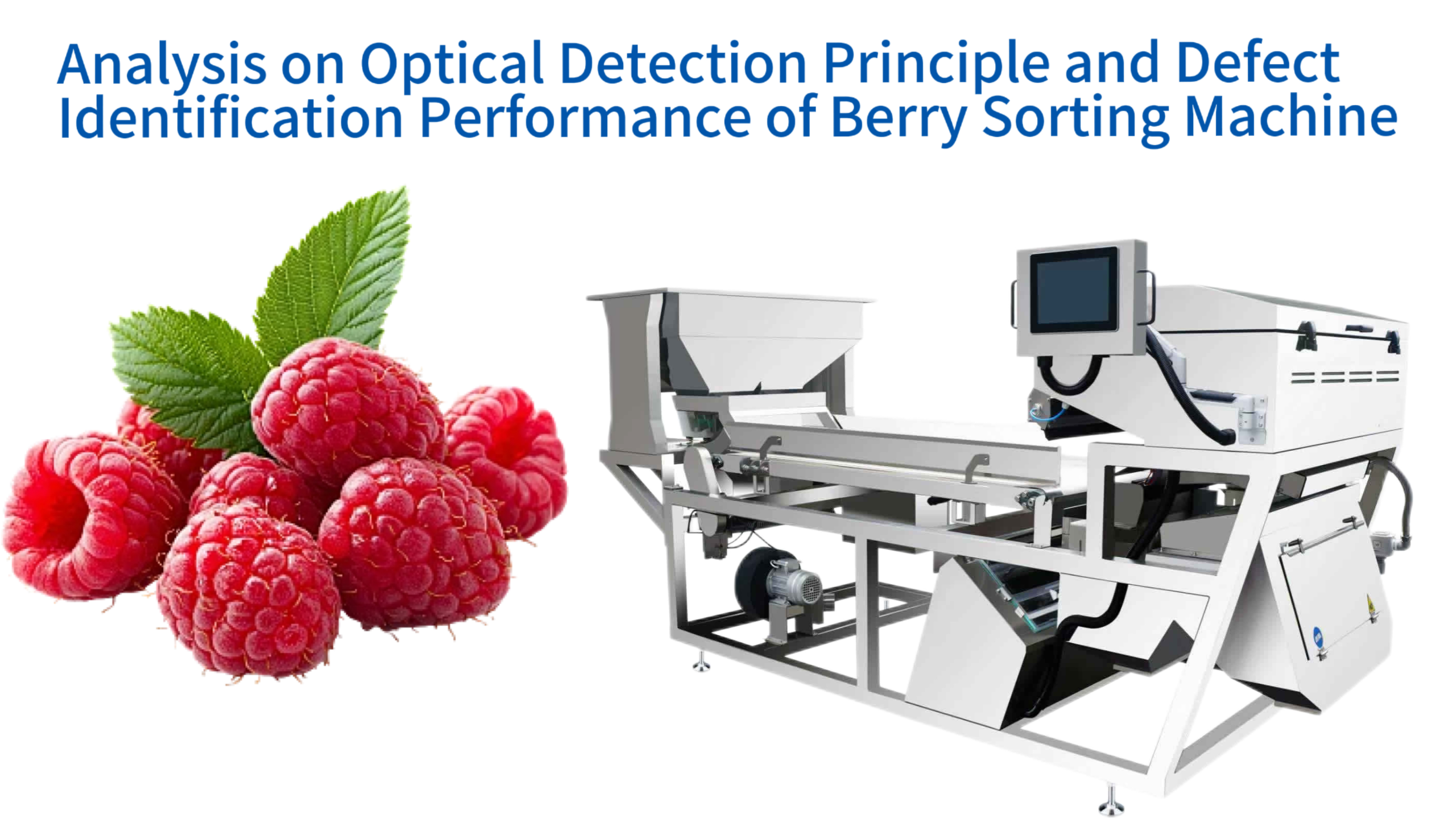
Modern berry processing faces an unprecedented challenge: delivering consistently high-quality fruit while operating at production scales that make manual inspection impossible. The berry sorter has emerged as the essential solution, combining advanced optical detection technologies with intelligent algorithms to identify and remove defective berries at remarkable speeds. This comprehensive guide explores the fundamental optical principles that enable these machines to distinguish acceptable fruit from rejects, the specific defect types they can recognize, and the technical capabilities that determine sorting accuracy. Readers will discover how high-resolution imaging, multi-spectral analysis, and artificial intelligence work together to achieve defect removal rates exceeding ninety-five percent while preserving valuable product. Whether you process blueberries, cranberries, raspberries, or other small fruits, understanding these technologies is essential for maintaining competitiveness in quality-driven markets.
Why Berry Sorting Technology Has Become Essential for Modern Fruit Processing
Key Data of Berry Sorting Technology vs Manual Sorting
Defect Removal
Rate: 95%+
Manual Defect
Miss Rate: 30%
Throughput
(2-10 Tons/H)
Payback Period
(6-18 Months)
| Indicator | Optical Sorter | Manual Sorting |
|---|---|---|
| Defect Removal Rate | ≥95% | ≤70% |
| Throughput | 2-10 Tons/Hour | ≤0.5 Tons/Hour |
| Labor Replacement | 10-20 Workers/Unit | Full-time Staff |
The berry industry has undergone dramatic transformation over the past decade, with quality standards rising sharply while labor availability for manual sorting continues declining. Supermarket chains and food manufacturers now demand defect levels below one percent for fresh and frozen berries, thresholds that manual inspection cannot reliably achieve at commercial volumes. A single defective berry in a package can trigger customer complaints, product returns, and lasting brand damage. The economic impact extends beyond immediate losses, as retailers increasingly require certified sorting documentation for preferred supplier status. Traditional approaches using human sorters working at conveyor belts simply cannot maintain consistent attention across eight-hour shifts, particularly when identifying subtle defects like early-stage decay or color irregularities.
Optical sorting technology addresses these limitations by providing consistent, fatigue-free inspection that operates at speeds far exceeding human capability. A single berry sorter can process between two and ten tons of fruit per hour while examining each individual berry from multiple angles. The advanced detection systems within these machines identify defects based on color, shape, texture, and even internal characteristics invisible to human eyes. Unlike human sorters who may miss up to thirty percent of defects during peak production, optical systems maintain detection accuracy regardless of shift length or production pressure. This consistency enables processors to guarantee product quality to customers while reducing the labor costs associated with manual sorting stations. Investment payback periods typically range from six to eighteen months depending on production volume and local labor rates.
The Growing Quality Demands of Global Berry Markets
International berry trade has established increasingly stringent quality specifications that directly impact pricing and market access. Premium markets require defect rates below one half of one percent, with zero tolerance for specific defect types including mold, decay, and insect damage. Meeting these standards demands sorting precision that only automated optical systems can consistently achieve. Export shipments failing quality inspection at destination face rejection, destruction, or deep discounting, creating financial losses that far exceed the cost of proper sorting equipment. Major retailers now conduct regular audits of supplier sorting capabilities as part of their procurement requirements.
Beyond basic defect removal, quality grading has become essential for maximizing revenue from each harvest. Berries vary significantly in color intensity, size uniformity, and maturity level, with different markets willing to pay premiums for specific characteristics. Optical sorters can separate berries into multiple grades based on these parameters, allowing processors to direct premium fruit to high-value channels while finding appropriate uses for lower-grade material. This capability transforms sorting from a cost center into a profit-generating operation that extracts maximum value from every pound of fruit received. Processors without advanced sorting capabilities cannot access these market opportunities.
Labor Shortages Driving Automation Adoption
Manual berry sorting presents persistent operational challenges that have intensified as labor markets have tightened. Seasonal processing peaks require temporary workers who may lack experience identifying subtle berry defects. Training programs typically require two to four weeks before sorters achieve acceptable accuracy levels. High turnover rates mean facilities constantly invest in training without realizing full productivity returns. The physical demands of staring at moving belts for extended periods cause fatigue that degrades performance, particularly during the final hours of shifts when defect rates in outgoing product can spike without warning.
Optical sorting eliminates these human factors entirely, providing consistent performance from the first berry of the day to the last. A single automated sorting machine typically replaces ten to twenty manual sorters while operating continuously without breaks or shift changes. The machine never experiences fatigue, distraction, or variation in attention levels. Quality remains identical whether processing at the beginning of peak season or after twenty hours of continuous operation. Facilities that invest in optical sorting gain a significant competitive advantage as labor availability continues declining across agricultural regions worldwide. The technology also improves worker safety by reducing repetitive motion and ergonomic concerns associated with manual sorting tasks.
Optical Detection Fundamentals in Modern Berry Sorting Systems
The optical detection system forms the core of any berry sorter, converting visual information into electronic signals that algorithms analyze for defect identification. High-resolution line scan cameras capture detailed images of each berry as it passes through the inspection zone, typically using CCD sensors with resolutions exceeding five thousand pixels across the detection width. These cameras operate at line rates up to forty thousand scans per second, providing sufficient resolution to identify defects as small as half a millimeter across the fruit surface. Multiple camera positions allow inspection from different angles, ensuring that defects cannot hide on the side facing away from a single camera.
Illumination quality proves equally important as camera resolution for accurate defect detection. Advanced LED lighting systems provide consistent intensity across the full spectral range, eliminating shadows that could obscure defects or create false readings. Lighting angles are carefully optimized to highlight specific defect types, with some systems using directional lighting that makes surface irregularities more apparent. The entire optical assembly operates within an enclosure that excludes ambient light, ensuring consistent conditions regardless of facility lighting changes or time of day. This controlled environment enables the intelligent sorting algorithms to compare each berry against established standards without compensating for variable external conditions.
Line Scan Versus Area Scan Camera Technologies
Berry sorters typically employ line scan cameras rather than area scan sensors for optimal detection performance. Line scan cameras capture a single row of pixels at a time as berries move through the inspection zone, building complete images by combining successive lines. This approach provides unlimited image length and uniform resolution regardless of berry size or shape. The continuous imaging matches naturally with conveyor or chute transport, eliminating the synchronization challenges associated with triggering area cameras. Line scan sensors also achieve higher line rates than equivalent area sensors, supporting faster processing speeds without resolution loss.
Area scan cameras offer advantages in specific applications where individual berry isolation proves challenging. These sensors capture complete images of defined zones, potentially simplifying analysis for clustered berries. However, area scan systems require precise triggering to capture each berry at the optimal moment. Motion blur becomes problematic at higher speeds when using area sensors. Most commercial berry sorters therefore utilize line scan technology for its superior speed and simplicity. The choice between technologies should consider specific product characteristics and throughput requirements, with line scan generally preferred for free-flowing individual berries processed at high rates.
Multi-Spectral Imaging for Enhanced Defect Detection
Beyond basic color imaging, advanced berry sorters incorporate multi-spectral capabilities that detect characteristics invisible to standard cameras and human eyes. Near-infrared sensors identify moisture content variations that indicate internal decay before surface symptoms appear. Ultraviolet illumination reveals fluorescence patterns associated with fungal infection or chemical residues. By analyzing responses across multiple wavelengths simultaneously, the system builds a comprehensive quality profile of each berry that extends far beyond surface appearance. This deeper analysis enables removal of defective berries that would pass conventional optical inspection.
Multi-spectral imaging proves particularly valuable for detecting early-stage defects that have not yet caused visible color changes. A berry infected with decay may appear acceptable under white light while showing distinct spectral signatures in other bands. Removing these berries prevents quality problems from developing during storage or transit, maintaining product quality through the supply chain. The hyperspectral detection capabilities represent the cutting edge of this technology, capturing dozens of spectral bands for each berry. While hyperspectral systems cost more than basic color sorters, they provide superior detection for applications where early defect identification delivers significant value.
High-Resolution CCD Sensor Performance Parameters
CCD sensor resolution directly determines the smallest defect size that a berry sorter can reliably detect. Higher pixel counts provide more detailed images, allowing identification of subtle color variations across small areas. For blueberry sorting, typical systems achieve resolutions of two hundred to four hundred microns per pixel, sufficient to detect individual soft spots or discolored patches. Smaller berries like currants require higher resolution to maintain defect detection capability, while larger berries like strawberries may achieve adequate detection at lower resolution due to defect size scaling with fruit dimensions.
Sensor performance extends beyond resolution to include dynamic range and signal-to-noise characteristics. High dynamic range sensors capture detail in both bright highlights and dark shadows, important for berries with glossy surfaces that create specular reflections. Low noise performance ensures that subtle color differences represent actual berry characteristics rather than electronic artifacts. Modern CCD sensors achieve signal-to-noise ratios exceeding sixty decibels, providing clean images even under demanding conditions. Sensor operating temperature affects noise performance, with cooled sensors achieving superior results in high-speed applications. The combination of resolution, dynamic range, and noise performance determines real-world detection capability more than any single specification.
Defect Types That Berry Sorters Can Identify and Remove
Modern berry sorters recognize an extensive range of defect types that affect fruit quality and market value. Color defects including under-ripe green berries, over-ripe dark fruit, and varietal color variations are detected through comparison with acceptable color ranges defined by the operator. Surface defects such as bruising, scarring, and insect damage appear as texture or color anomalies analyzed by the imaging system. Shape defects including misshapen, fused, or partial berries are identified through contour analysis algorithms. The system simultaneously evaluates multiple defect criteria, rejecting any berry that fails any parameter.
More sophisticated sorters detect internal defects not visible on the fruit surface. Soft spots indicating bruising or beginning decay alter light reflection characteristics detectable by multi-angle illumination. Internal browning or discoloration changes how light transmits through translucent berries like cranberries. Near-infrared analysis reveals moisture variation associated with tissue breakdown. By combining multiple detection technologies, advanced optical sorting systems achieve defect removal rates exceeding ninety-five percent while maintaining false rejection rates below three percent, representing significant improvement over conventional color-only systems.
Color Defects and Their Optical Signatures
Color remains the primary quality parameter for most berry applications, with consumers expecting uniform coloration within packages. Under-ripe berries appear lighter or greener than acceptable, with spectral reflectance shifted toward shorter wavelengths. Over-ripe berries trend darker or redder beyond acceptable ranges, with reduced reflectance across visible spectrum. Varietal mixing creates color variation that may be acceptable for some markets but prohibited for others. Optical sorters measure color using standardized color spaces that correlate with human perception, typically using L*a*b* or RGB color models with calibrated reference values.
The optical signature of color defects depends on multiple factors including berry type, maturity stage, and lighting geometry. Blueberries develop a distinctive bloom that affects light scattering, requiring careful illumination design for accurate color measurement. Cranberries have translucent skin that allows some light transmission, making backlighting useful for internal color assessment. Strawberries present a textured surface with embedded seeds that affect local color readings. Advanced sorters compensate for these product-specific characteristics through calibration procedures that establish acceptable color ranges for each application. The system learns which color variations occur naturally and which indicate quality defects, adapting to seasonal and varietal differences.
Surface Defect Detection Capabilities
Surface defects including bruising, scarring, cracking, and insect damage each present unique optical characteristics that specialized algorithms can identify. Bruised areas typically appear darker and may have altered texture compared to healthy skin. The bruise signature depends on time since injury, with fresh bruises showing different characteristics than older damage. Scars and surface blemishes create localized reflectance changes that contrast with surrounding healthy tissue. Cracks create linear features detectable through edge detection algorithms. Insect damage often presents as small holes or entry points with characteristic shapes and surrounding discoloration.
Detecting these diverse surface defects requires sophisticated image analysis beyond simple color thresholding. Texture analysis algorithms examine local pixel variation patterns to identify areas where surface characteristics differ from typical healthy tissue. Morphological processing identifies shapes associated with specific defect types. Machine learning models trained on thousands of defective and acceptable berry images learn to recognize subtle patterns that distinguish harmless natural markings from true defects. The same optical system that detects major defects like mold also identifies minor surface imperfections that affect premium market acceptance. This comprehensive inspection capability ensures that only truly marketable fruit reaches customers.
Internal Defect Identification Using Transmission and Reflection Analysis
Internal defects that have not yet reached the berry surface represent particular challenges for quality control, as they can develop into visible decay during storage and transit. Optical sorters detect these hidden problems through analysis of light transmission and reflection characteristics. When light strikes a berry, some portion reflects from the surface while another portion penetrates the skin and scatters internally. Internal defects alter light scattering patterns, changing the ratio of reflected to transmitted light and affecting the color of light emerging from the berry. Multi-angle detection captures these subtle differences, revealing internal quality issues.
Specific internal defects detectable through optical analysis include internal browning in apples and pears, seed defects in grapes, and early decay in all berry types. The detection sensitivity depends on berry translucency, with more translucent berries allowing deeper light penetration and better internal assessment. Cranberries and other translucent berries can be effectively inspected using backlighting that reveals internal structure. Opaque berries like blueberries require different approaches using near-infrared wavelengths that penetrate deeper than visible light. Near-infrared sorting technology has proven particularly valuable for detecting internal defects in a wide range of berry types, providing capabilities unavailable with visible light alone.
Chute Type Versus Belt Type Berry Sorter Configurations
Chute Type vs Belt Type Berry Sorter Comparison
| Parameter | Chute Type Sorter | Belt Type Sorter |
|---|---|---|
| Suitable Berries | Small, Firm Berries (Blueberry, Cranberry) | Soft, Large Berries (Raspberry, Strawberry) |
| Max Throughput | Up to 10 Tons/Hour | 2-8 Tons/Hour |
| Handling Feature | Gravity-driven, Free Fall | Gentle Conveyor, Stable Position |
| Maintenance | Low, No Belt Replacement | Medium, Belt Tracking Required |
| Cost | Lower Initial Cost | Higher Initial Cost |
Berry sorters are available in two primary configurations, each offering distinct advantages for specific applications and product characteristics. Chute type systems use gravity to accelerate berries down an inclined surface before they enter free flight through the detection zone. This design achieves the highest throughput rates for small, firm berries that separate cleanly during acceleration. The absence of moving belts reduces maintenance requirements and simplifies cleaning between product changes. Chute systems typically cost less than equivalent belt configurations while providing excellent detection for applications where gentle handling is not critical.
Belt type systems use a conveyor to transport berries through the inspection zone, providing stable positioning for consistent imaging. This design proves superior for larger, softer berries that might bruise during chute acceleration or jam in narrow passages. The belt creates a flat presentation surface that maximizes camera focus accuracy and allows inspection of each berry from above before it drops for optional additional viewing angles. Belt systems handle wet or sticky berries more reliably than chutes where moisture can cause adhesion. The choice between configurations depends primarily on berry characteristics, required throughput, and existing facility layout constraints.
Chute Type Advantages for Small Firm Berries
Chute type sorters excel when processing small, firm berries like blueberries, currants, and cranberries that tolerate free-fall handling. The acceleration chute spreads berries into a single layer, preventing overlapping that could hide defects from cameras. Free flight through the detection zone provides unobstructed views from multiple angles, including below the berry trajectory. This multi-angle viewing ensures comprehensive inspection regardless of defect location on the berry surface. The simple mechanical design with no belts or rollers reduces maintenance requirements and cleaning time between variety changes.
Throughput rates for chute type systems typically exceed belt configurations for small berries, with some models processing up to ten tons per hour. The gravity-powered transport eliminates belt drives and tracking systems that require periodic adjustment. Chute surfaces made from low-friction materials prevent berry adhesion while resisting wear from abrasive fruit surfaces. Modular chute designs allow processors to add capacity by installing additional chutes on the same base frame. For facilities processing primarily small, firm berries, chute type sorters often represent the most cost-effective solution with the lowest operating costs and simplest maintenance requirements.
Belt Type Benefits for Soft and Large Berries
Belt type sorters prove essential for delicate berries that would be damaged by chute acceleration or free-fall impacts. Raspberries, blackberries, and strawberries require gentle handling to maintain appearance and prevent juice release. The belt conveyor provides controlled acceleration from stationary, eliminating the sudden drop that can bruise sensitive fruit. Wide belt surfaces accommodate large berries that might not fit through chute passages. The flat presentation allows stable imaging without the berry rotation that occurs in free flight, improving detection consistency for berries presented with preferred orientation.
The belt configuration also offers advantages for wet or sticky berries that tend to adhere to chute surfaces. Moisture from washing operations or condensation can create adhesion that disrupts controlled chute flow. Belt materials with appropriate surface textures maintain reliable transport even with damp fruit. Some belt sorters integrate drying capabilities before the inspection zone, further improving handling of wet product. For strawberry sorting applications where gentle handling is paramount, belt type sorters represent the standard solution despite higher initial cost compared to chute alternatives.
AI Integration Across Both Configuration Types
Artificial intelligence enhances sorting performance regardless of whether the platform uses belt or chute transport. The same deep learning algorithms that identify subtle berry defects operate effectively on images captured from either configuration. AI systems automatically compensate for minor differences in berry presentation between transport methods. Training models on representative images from each sorter type ensures optimal performance for the specific configuration. The intelligence resides primarily in software rather than mechanical design, allowing consistent sorting capabilities across different hardware platforms.
Manufacturers offer AI-powered versions of both belt and chute sorters, with the choice based on product handling rather than detection capability. A blueberry processor might select a high-capacity chute system with AI detection to maximize throughput. A raspberry processor would choose a belt system with identical AI software to protect delicate fruit. This flexibility allows berry processors to optimize mechanical configuration for their specific products while benefiting from the same intelligent sorting algorithms. The trend toward AI integration across all configurations reflects the technology's fundamental value independent of transport method. Facilities without AI-powered sorting capabilities increasingly struggle to meet market quality requirements.
Illumination System Design for Accurate Berry Color Assessment
Reliable berry sorting depends on illumination systems that provide consistent, stable lighting across the entire detection zone. Advanced LED arrays maintain constant intensity throughout their operational life, unlike fluorescent tubes that dim and shift color temperature over time. Multiple LED bars positioned at various angles eliminate shadows that could obscure defects or create false readings. The illumination spectrum is optimized for berry inspection, typically emphasizing wavelengths where defect signatures appear most clearly. For blueberry sorting, specific LED wavelengths highlight the contrast between ripe fruit and under-ripe green berries.
Industrial food processing environments present unique challenges for illumination systems, including dust, moisture, and temperature variation. Enclosed lighting chambers with sealed windows protect sensitive components while allowing periodic cleaning. Automatic intensity monitoring compensates for gradual LED degradation or window contamination, maintaining consistent illumination levels. Some systems include reference standards that the camera periodically views to verify lighting calibration. Without this active compensation, color measurement accuracy would deteriorate over time as LEDs age or optical surfaces accumulate contamination.
Spectral Optimization for Specific Berry Types
Different berry types require different illumination spectra for optimal defect detection. Blueberries have a distinctive waxy bloom that scatters light, requiring careful spectral selection to avoid masking color differences. Cranberries are translucent, allowing backlighting that reveals internal characteristics. Dark berries like blackberries have low light reflection, requiring intense illumination to achieve adequate signal levels. Strawberries present complex surfaces with embedded seeds that create local color variations needing compensation. Professional sorter manufacturers customize illumination for each application based on optical analysis of the specific berry type.
Multi-spectral systems combine multiple illumination sources to extract maximum information from each berry. Alternating between different LED colors at high speed allows capture of sequential images under different lighting conditions. Analysis algorithms then combine information from each illumination type to build comprehensive quality profiles. A berry that appears acceptable under white light might show problems under UV or near-infrared illumination. The ability to switch illumination rapidly enables comprehensive inspection without reducing throughput. Facilities processing multiple berry types benefit from adjustable illumination systems that optimize for each product.
Lighting Geometry and Defect Visibility
The angle and positioning of illumination significantly affects which defects become visible to cameras. Diffuse lighting from multiple directions provides even illumination that works well for general color assessment. Directional lighting from specific angles creates shadows that highlight surface texture variations. Backlighting from behind the berry reveals internal structure and defects in translucent fruit. Combining multiple lighting geometries in a single sorter allows each defect type to be viewed under optimal conditions. The system can dynamically select which lighting configuration to use for analyzing each berry region.
Proper lighting geometry particularly matters for detecting subtle surface defects like early bruising or scarring. Bruised areas often show altered light reflection angles compared to healthy tissue, making them more visible under specific lighting directions. Directional lighting at low angles creates shadows from surface irregularities, highlighting texture differences. Multi-angle illumination systems with cameras positioned at corresponding angles capture the berry under all lighting conditions simultaneously. This comprehensive approach ensures that no defect escapes detection regardless of its optical characteristics. The advanced illumination techniques represent a key differentiator between basic and premium berry sorting systems.
Economic Benefits of Berry Sorter Investment
Investment in berry sorting technology delivers compelling returns through multiple value channels that extend beyond simple labor replacement. Quality improvements enable access to premium markets with price premiums ranging from twenty to fifty percent above standard grades. For facilities processing five hundred tons annually, this premium can exceed five hundred thousand dollars per year. Reduced waste from more accurate sorting prevents good berries from being rejected with defects, preserving product that would otherwise be lost. Labor savings from replacing manual sorters typically range from one hundred thousand to three hundred thousand dollars annually depending on local wages and operating hours.
Beyond direct financial returns, automated sorting provides strategic benefits including consistent quality documentation for customer audits. Major retailers increasingly require sorting verification as part of supplier qualification. The ability to guarantee defect levels below contractual limits reduces liability from customer rejections. Processors with sorting technology can accept fruit loads with higher incoming defect rates, expanding their supply options and potentially reducing raw material costs. The combination of direct savings, quality premiums, and strategic advantages typically yields investment payback between six and eighteen months depending on production volume and local market conditions.
Labor Replacement and Operational Efficiency
A single berry sorter typically replaces ten to twenty manual sorters while eliminating associated supervision, training, and quality control costs. Manual sorting lines require break relief and shift changes, with productivity varying throughout each shift. Automated sorters operate continuously at rated capacity, processing twenty-four hours daily when production demands. The elimination of manual sorting stations also reduces floor space requirements and associated facility costs. Worker safety improves by removing repetitive motion tasks and ergonomic concerns associated with manual sorting.
Operational efficiency extends beyond direct labor replacement to include reduced quality control sampling and testing requirements. When manual sorters handle product, frequent sampling verifies that quality standards are being maintained. Automated systems provide real-time quality data for every berry processed, reducing or eliminating the need for separate quality sampling. Production planning becomes more predictable when sorting capacity depends on machine availability rather than workforce availability. Seasonal peaks that previously required temporary worker hiring can be managed with existing sorting equipment operating at full capacity around the clock.
Premium Market Access Through Quality Assurance
High-quality berry markets demand sorting precision that only automated optical systems can consistently provide. Premium frozen berry blends require specific color mixes that depend on accurate sorting. Organic berry markets have zero tolerance for certain defect types that automated systems reliably remove. Export markets with stringent quality requirements demand documented sorting processes. Without verified sorting capability, processors cannot access these premium channels and must accept lower prices in commodity markets.
The quality assurance provided by optical sorting extends beyond defect removal to include consistency documentation. Automated systems log sorting statistics including defect rates by type, providing data for customer quality reports. This documentation demonstrates due diligence in quality control, reducing liability in case of customer complaints. Some large retailers now require supplier quality management systems that include optical sorting verification. Investing in sorting technology therefore serves both immediate operational needs and long-term strategic positioning for evolving market requirements. Processors who delay automation investment risk losing established customers to competitors with superior sorting capabilities.
Maintenance Requirements for Sustained Sorting Performance
Regular maintenance ensures that berry sorter equipment maintains specified detection accuracy over years of continuous operation. Daily cleaning of optical surfaces prevents dust and juice residue accumulation that degrades image quality. Weekly inspection of air ejection systems confirms valve operation and nozzle alignment. Monthly calibration verification using reference samples ensures detection parameters remain accurate. Quarterly professional inspection identifies wear before it causes failures. Facilities implementing systematic maintenance programs achieve higher uptime and more consistent sorting results than those using reactive approaches.
Maintenance requirements differ between belt and chute configurations. Belt systems require conveyor tracking adjustment and periodic belt replacement as surfaces wear. Chute systems need inspection of wear surfaces where berry contact causes gradual erosion. Both configurations benefit from scheduled camera cleaning and illumination verification. Operators should maintain detailed maintenance logs documenting all activities and observed performance metrics. These records help predict component replacement needs and identify developing issues before they cause significant production interruptions. Regular performance testing using material with known defect content validates system operation between scheduled maintenance intervals.
Optical Component Cleaning Protocols
Proper cleaning of optical components requires appropriate materials and techniques to prevent surface damage that could affect detection accuracy. Compressed air removes loose dust without contacting sensitive surfaces. Optical-grade cleaning solutions dissolve accumulated residues without leaving streaks that could distort images. Microfiber cloths designed for lens cleaning remove contaminants without scratching anti-reflective coatings. Operators must never use standard glass cleaners or paper products that may damage optical surfaces. Cleaning frequency depends on dust and moisture levels in the operating environment.
Facilities processing wet berries should implement more frequent optical cleaning than those handling dry product. Juice splatter can dry into films that progressively degrade image quality. Automated cleaning systems that brush or blow optical surfaces reduce manual labor requirements and ensure consistent cleaning intervals. Sealed camera housings with purge air connections prevent most contamination ingress, reducing cleaning frequency. Regardless of cleaning method, operators should verify optical clarity after each cleaning session using test patterns viewed through the camera system. Compromised optical systems cannot achieve specified detection accuracy regardless of other machine adjustments or algorithm sophistication.
Air System Maintenance for Accurate Ejection
The air ejection system requires regular maintenance to maintain precise removal of defective berries. Compressed air quality directly affects solenoid valve reliability and ejection force consistency. Moisture in air lines causes valve corrosion and erratic operation over time. Particulate contamination can block nozzle openings, creating dead zones where defective berries pass without ejection. Proper filtration and drying at the compressor prevent these issues from developing. Daily draining of moisture separators removes accumulated water before it reaches sensitive components.
Valve performance degrades gradually as internal components wear through millions of cycles. Regular performance testing identifies valves operating outside specifications before they cause quality issues. Testing involves blocking individual nozzles while monitoring pressure response timing. Delayed or inconsistent response indicates developing problems requiring valve replacement. Most manufacturers recommend valve inspection every three months and replacement annually for continuously operating sorters. Recording valve replacement dates helps plan maintenance budgets and prevents unexpected failures during peak production periods. Facilities without proactive air system maintenance inevitably experience quality incidents when ejection failures allow defective berries to reach customers.