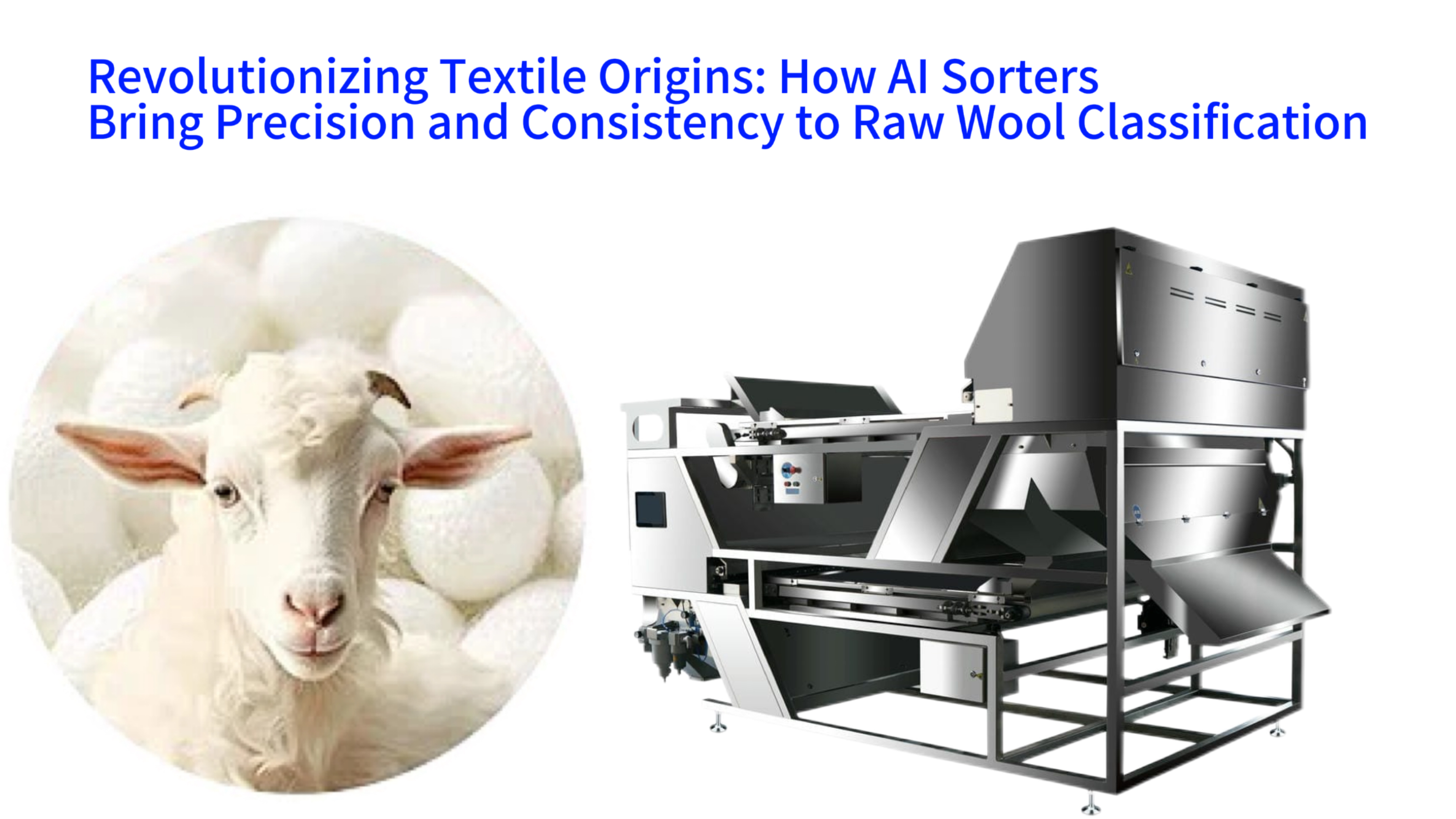
The journey of a luxurious wool sweater or a durable carpet begins not at a loom, but in the raw, ungraded fleece freshly shorn from sheep. For centuries, the critical task of sorting this wool by quality has relied on the skilled yet subjective eyes and hands of experienced workers. Today, a technological transformation is underway. Artificial Intelligence (AI) sorters are entering the textile industry, bringing unprecedented objectivity, speed, and accuracy to the foundational stage of wool processing. These machines automate the classification of wool based on two of its most vital quality parameters: fiber thickness, measured in microns, and natural color. By replacing human guesswork with data-driven precision, AI sorting ensures that each batch of wool meets exact specifications, leading to more consistent yarns, superior final products, and optimized manufacturing efficiency. This article explores the mechanics of this intelligent technology, its tangible benefits over traditional methods, and its profound impact on the entire textile value chain, from farm to fashion.
Wool Processing Workflow: Traditional vs AI Sorting
Traditional Sorting
Shearing
Raw fleece collection
Manual Sorting
Subjective grading by skilled workers
Baling
Inconsistent quality batches
Spinning
High waste, inconsistent yarn
AI-Powered Sorting
Shearing
Raw fleece collection
AI Sorting
Objective grading by sensors & AI
Baling
Consistent quality with digital certificate
Spinning
Low waste, consistent yarn
The Foundational Challenge of Traditional Wool Sorting
Traditional vs AI Wool Sorting: Performance Comparison
Wool sorting has always been a cornerstone of textile quality, yet its traditional practice is fraught with inherent challenges. After shearing, a fleece is a heterogeneous mix containing fibers of varying thickness, length, strength, and color from different parts of the sheep's body. Skilled sorters manually separate this fleece into categories, a process demanding years of experience. The primary criteria are fiber diameter (fineness) and color, as these directly dictate the wool's end use—luxurious apparel versus robust upholstery, for example. However, human assessment is intrinsically subjective and inconsistent. Factors like individual judgment, eye fatigue, and varying lighting conditions can lead to significant classification discrepancies between different sorters or even the same sorter at different times.
This inconsistency creates a ripple effect of inefficiency downstream. Spinning mills receiving inconsistently graded wool face difficulties in maintaining uniform yarn thickness and strength, leading to higher waste and production delays. Furthermore, the manual process is slow and labor-intensive, struggling to meet the volume demands of global textile production. The reliance on human expertise also presents a workforce challenge, as the specialized skill of wool sorting is not easily transferred and faces a declining number of practitioners. These limitations within the traditional system create a clear and pressing need for an objective, scalable, and repeatable solution to standardize the very foundation of wool processing.
Understanding the Core Metrics: Micron Count and Color Grading
At the heart of wool valuation lie two objective physical properties. Fiber diameter, or fineness, is measured in microns (one-thousandth of a millimeter) and is the single most important factor determining wool's price and application. Superfine merino wool, used in high-end suiting, can be as fine as 15 microns, while coarser wools for carpets may exceed 35 microns. Traditionally, this measurement required laboratory sampling using specialized equipment like the LaserScan or OFDA100, which is destructive, time-consuming, and only tests a small sample from a large lot. This sampling approach risks misrepresenting the entire batch's true quality profile.
Similarly, color is a critical grade determinant, especially for wools intended for light-colored or white finished products. The natural color of wool is graded on a scale from white to deep yellow or brown, influenced by genetics, nutrition, and environmental factors. Discoloration can be caused by weathering, grease, or vegetable matter. Human graders assess color under standardized lighting, but the assessment remains qualitative. The lack of precise, quantitative data for both micron and color across every individual fiber snippet in a bulk lot has been a long-standing bottleneck in achieving true quality control and traceability in the wool industry.
Limitations of Manual and Mechanical Pre-Sorting Methods
Prior to the advent of advanced optical sorting, several methods were employed to organize raw wool. Manual sorting, as described, is the baseline. Mechanical methods, such as airflow separation or sieve-based systems, can sort by fiber length or density to some extent. However, these methods are crude and cannot distinguish the nuanced differences in fiber diameter or subtle color variations that define high-value grades. They often cause fiber damage due to aggressive mechanical handling and are ineffective for removing specific contaminants like dark fibers from a light batch.
Another common practice is bulk core testing, where a sample is taken from a large bale for laboratory analysis. While this provides scientific data, it operates on the principle of averaging. It cannot identify the distribution of fiber diameters within the bale or isolate small pockets of inferior or contaminated wool that, when blended, degrade the entire lot's quality. This means a bale with an "average" 19-micron rating might still contain a significant percentage of unwanted 22-micron or colored fibers, problems that only reveal themselves during the spinning process, causing faults and breaks. These systemic gaps highlight the industry's need for a technology that can inspect and act upon every individual fiber cluster in the production stream.
The Economic and Quality Ripple Effects of Inconsistent Grading
The financial implications of inconsistent wool sorting are substantial. For wool producers, subjective grading can lead to underpricing of high-quality lots or rejection of lots based on perceived flaws. For textile manufacturers, inconsistent raw material leads to increased waste, higher reprocessing costs, and lower production yields. Yarn breakage during spinning, fabric defects like barre (streaky appearance), and uneven dye uptake in finished garments can often be traced back to variations in the raw wool that were not identified during initial sorting.
This inconsistency also hampers branding and traceability initiatives that are increasingly important to consumers. A brand promising garments made from "consistent, fine micron wool" cannot fully guarantee that promise when the raw material input varies. The entire supply chain, therefore, bears the cost and risk of this initial classification uncertainty. The move towards an AI-driven, sensor-based approach is not merely an operational upgrade but a strategic shift towards data integrity at the source, enabling better forecasting, pricing, and quality assurance throughout the manufacturing pipeline.
The Anatomy of an AI-Powered Wool Sorter
AI Wool Sorter: Core Components & Workflow
An AI sorter for wool is a sophisticated integration of advanced hardware and intelligent software, designed to replicate and surpass human sensory judgment with digital precision. At its core, the system functions as a high-speed, automated inspection line. Loosened wool fibers are presented to the machine, typically using a vibrating feeder or an aerodynamic system that creates a thin, randomized curtain of material. This presentation is crucial, as it ensures individual fiber snippets or small tufts are separated enough for the sensors to analyze them independently, a key challenge given wool's naturally entangled state.
The real intelligence begins with a suite of high-resolution optical sensors. Unlike simple RGB cameras, these systems often employ advanced line-scan cameras paired with specialized lighting, including hyperspectral or near-infrared (NIR) imaging. This allows the system to capture data far beyond what the human eye can see, analyzing the spectral signature of each fiber snippet. This data is streamed in real-time to a powerful industrial computer housing the AI "brain"—a complex algorithm, often based on deep learning convolutional neural networks, that has been trained on thousands of labeled wool samples to recognize patterns associated with specific micron ranges and color grades.
Sensor Fusion: Beyond Human Vision for Fiber Analysis
The sensing system of a modern AI wool sorter is its eyes, but with superhuman capabilities. High-speed line-scan cameras capture detailed surface images at resolutions that can discern micron-level structural differences. Crucially, many systems integrate near-infrared (NIR) spectroscopy. NIR light interacts with the molecular bonds in the wool keratin. Different fiber diameters and conditions (like moisture or grease content) have unique absorption and reflection signatures in the NIR spectrum. By analyzing this spectral data, the system can predict the average diameter of a fiber snippet with remarkable accuracy, correlating closely with traditional laboratory methods.
This multi-sensor approach creates a rich, multidimensional data profile for each particle passing through the inspection zone. The visible light camera provides precise colorimetric data (whiteness, yellowness) and detects contaminants like vegetable matter or dark hairs. Simultaneously, the NIR sensor provides objective internal structural data related to fineness. By fusing these data streams, the AI model makes a far more robust and accurate classification than would be possible using image data alone, effectively performing a non-contact, instantaneous laboratory analysis on every single fiber cluster.
The AI Brain: Training and Decision-Making in Milliseconds
The artificial intelligence component is what transforms sensor data into sorting decisions. Before operation, the system undergoes a rigorous training phase. Engineers and wool experts present it with thousands of known samples—wool snippets that have been pre-graded by both human experts and laboratory instruments for micron count and color. The AI algorithm, typically a deep neural network, learns to associate the complex sensor signatures (image texture, spectral curves) with these known grades. It identifies subtle, non-linear patterns that are imperceptible to humans, such as specific light scattering properties of a 18.5-micron fiber versus a 19.5-micron one.
In production, this trained model operates in real-time. As each fiber snippet passes the sensors, its data is fed into the neural network. The network calculates probabilities for each predefined grade category (e.g., "19-20 micron, white") within milliseconds. Based on a configurable confidence threshold, it makes a definitive classification decision. This process, occurring thousands of times per second, is the core of the sorter's intelligence. It embodies a shift from rule-based "if-then" programming to pattern recognition, allowing the machine to handle the natural variability of wool with consistent, data-driven logic. The robustness of this system is akin to the advanced decision-making found in other multi-sensor optical sorters used in mining and recycling.
The Actuation System: Precision Ejection for Perfect Purity
Once a decision is made, the system must physically separate the wool stream. This is achieved through a high-speed, non-contact ejection system. The most common method uses precisely timed pulses of compressed air. The wool stream free-falls past a bank of hundreds of small, high-speed solenoid valves. If the AI classifies a specific particle as belonging to a "reject" category (e.g., too coarse or too colored), it triggers the corresponding valve at the exact moment the particle is in front of it. A brief, powerful air blast deflects the particle out of the main product stream and into a separate reject chute.
The performance of this ejection system is critical. Valves with response times as fast as 0.04 milliseconds and firing frequencies over 1000 Hz are required to keep up with the high throughput and ensure that only the targeted particles are removed without disturbing the desired product. The timing synchronization between the sensor's detection point and the valve's firing location must be exact, accounting for the particle's speed and trajectory. This high-speed ejection technology is what physically enforces the digital decision, creating two or more purified output streams sorted to the specified micron and color criteria.
Operational Advantages and Tangible Benefits for the Industry
Operational Benefits of AI Wool Sorting
The implementation of AI sorting technology delivers a cascade of measurable benefits that address the core inefficiencies of traditional wool processing. The most immediate advantage is the dramatic leap in sorting consistency and objectivity. Unlike human workers, the AI system does not suffer from fatigue, does not have subjective preferences, and is not influenced by ambient lighting conditions. It applies the same rigorous standard to every single fiber snippet, 24 hours a day, resulting in batches of wool with unprecedented uniformity in both micron distribution and color profile. This consistency is the holy grail for spinners, as it directly translates to fewer yarn breaks, more even spinning, and a higher yield of first-quality product.
Furthermore, the process generates a wealth of data that was previously inaccessible. Every decision made by the sorter can be logged, creating a detailed quality report for each batch processed. This includes not just the average grade, but the full distribution—what percentage of fibers fell into each micron bracket and color grade. This data transforms wool from a commoditized bulk material into a precisely characterized raw input with a digital quality certificate. It enables spinners to fine-tune their machinery settings for specific batches, allows for accurate traceability from farm to fabric, and provides indisputable evidence for quality-based pricing, ensuring fair value for producers of premium wool.
Unprecedented Sorting Accuracy and Yield Optimization
The accuracy of AI sorters in identifying off-spec fibers directly boosts production yield and product value. By removing virtually all coarse fibers from a batch intended for fine wool apparel, the spinner can produce a higher-quality, more valuable yarn. Conversely, by efficiently recovering fine fibers from a mixed-grade lot that would have been downgraded, the system increases the overall recovery of premium material. This precision sorting minimizes "good fiber" being mistakenly discarded with the waste, a common issue in manual sorting. The result is a higher percentage of the input raw wool being converted into saleable, on-spec output.
This optimization extends to contaminant removal. AI sorters excel at identifying and removing non-wool contaminants like polypropylene (from feed bags) or dark, medullated fibers (kemp) that cause defects in light-colored fabrics. Their ability to distinguish these materials based on spectral signature is far superior to human sight. By ensuring a cleaner raw material, downstream processes like scouring and carding become more efficient, and the final fabric is free from distracting faults. The economic benefit is clear: less waste, higher-quality output, and reduced costs associated with reprocessing or customer claims.
Data-Driven Traceability and Supply Chain Transparency
In an era where consumers demand transparency, the data generated by AI sorters provides a powerful tool for traceability. Each bale of sorted wool can be linked to a digital record detailing its exact composition. This record can follow the wool through subsequent processing stages. A brand can, therefore, substantiate claims such as "garment made from 100% 19.5-micron wool" with hard data from the initial sorting stage. This level of verification supports sustainability and ethical sourcing initiatives, allowing brands to confidently communicate the provenance and quality credentials of their products.
For wool brokers and traders, this objective data simplifies transactions and reduces disputes. Sales can be made based on the sorter's certified data report rather than on samples that may not represent the entire lot. This builds trust and efficiency in the global wool market. The data also provides invaluable feedback to wool growers. By understanding the precise quality profile of their clip, farmers can make informed breeding and animal management decisions to better align their production with market demands for specific fineness and color characteristics, creating a more responsive and efficient supply chain from the very beginning.
Labor Solutions and Enhanced Workplace Health
The automation of the sorting process addresses significant labor challenges. It reduces dependency on a shrinking pool of highly skilled manual sorters and alleviates the physical demands of the job, which involves long hours of repetitive visual inspection and manual handling in often dusty environments. By taking over this task, AI sorters allow the existing workforce to be upskilled into roles focused on machine supervision, maintenance, and data analysis—jobs that are less strenuous and offer greater technical engagement.
From a health and safety perspective, automation minimizes workers' exposure to wool dust, a known respiratory irritant. The closed, often negatively pressurized design of modern sorting chambers contains dust more effectively than open sorting tables. Furthermore, by providing a consistent, high-throughput process, these systems help stabilize production schedules and make wool processing facilities more competitive in regions with high labor costs or shortages. The integration of such automated systems represents a broader trend in industrial processing, similar to the advancements seen in automated grain sorting facilities.
Integration into Modern Wool Processing Lines
AI Sorter Integration in Wool Processing Line
Successfully deploying an AI wool sorter requires thoughtful integration into the existing mill workflow. The process typically begins after the raw wool has been opened and pre-cleaned to remove major impurities like dirt and vegetable matter. The loosened wool is then transported, often via pneumatic systems, to a feed hopper above the sorter. A critical component is the smart material feeding system, which precisely meters the wool and presents it to the inspection chamber in an even, monolayer curtain. Consistent feed presentation is paramount; if fibers are clumped together, the sensors cannot analyze them individually, and sorting accuracy plummets.
Following the sorting chamber, the separated streams—usually a "accepts" stream (on-spec wool) and one or more "reject" streams (off-spec wool or contaminants)—are conveyed to their respective collection points for baling or further processing. The entire system is controlled by an intuitive human-machine interface (HMI) where operators set the desired sorting parameters (e.g., "select 18-21 micron, white fibers") and monitor real-time performance metrics like throughput, ejection rates, and purity levels. Modern systems often feature cloud connectivity, allowing for remote monitoring, performance analytics, and even receiving software updates that improve the AI model's accuracy over time.
Pre-Sorting Preparation and Material Handling
The efficiency of the AI sorter is heavily dependent on the preparation of the wool feedstock. The incoming raw wool must be sufficiently opened and blended to ensure a representative and consistent flow. This is typically achieved through a series of mechanical openers and blenders that tease apart the dense fleece without damaging the delicate fibers. The goal is to present individual fiber snippets or very small tufts to the sorter's sensors. Any remaining large clumps, locks, or excessive vegetable matter can cause blockages in the feed system or create "shadows" that prevent accurate inspection of underlying fibers.
Furthermore, the moisture content of the wool needs to be relatively stable. Excess moisture can cause fibers to stick together, compromising the monolayer presentation, and can also affect the accuracy of NIR spectral readings. Therefore, the conditioning of the wool (often involving controlled drying after scouring) is an important upstream consideration. Effective integration means viewing the AI sorter not as a standalone miracle machine, but as the central intelligence unit within a carefully orchestrated preparation and handling circuit designed to optimize its performance.
Configuring for Different Wool Types and End-Uses
A significant strength of AI sorters is their configurability. The same machine can be programmed for vastly different sorting tasks. For a merino wool processor targeting the superfine apparel market, the sorter would be configured with very tight tolerances, perhaps isolating wool in a narrow 16.5-17.5 micron range and rejecting any fibers with even a slight cream tint. The reject stream from this process, containing slightly coarser but still valuable wool, could be re-fed into the sorter with a different program to extract wool for the knitwear market.
Conversely, a processor handling crossbred wool for carpets would configure the machine with different priorities. The focus might be on robustly removing all dark, medullated kemp fibers and vegetable matter from a broader range of acceptable fiber diameters (e.g., 30-35 microns). The AI model's flexibility allows it to be re-trained or have its decision thresholds adjusted to suit these diverse requirements. This versatility makes the technology applicable across the entire wool industry spectrum, from the most exclusive fashion houses to manufacturers of technical felts and insulation. This adaptive capability mirrors the flexibility found in belt-type AI color sorters used in food processing.
Output Handling and Integration with Downstream Processes
The sorted output streams must be efficiently managed to preserve the purity achieved by the sorter. Pneumatic conveying systems are commonly used to transport the accepted and rejected wool to separate balers or storage bins. Care must be taken in the design of these conveyors to prevent re-mixing of the streams through cross-contamination or residual material in the ducts. The baled, sorted wool is now a premium, characterized product ready for the next stage, such as scouring (if not done before sorting), carding, and spinning.
The data from the sorter can be integrated into the mill's overall production management system. Knowing the exact quantity and quality of each sorted batch allows for precise inventory management and enables spinners to schedule their machinery with greater confidence. For example, a spinning frame can be set up with optimal parameters for a known 20.5-micron batch, reducing trial and error and startup waste. This creates a seamless, data-informed pipeline from raw material to yarn, maximizing quality and efficiency at every step. The holistic approach to sorting and process integration is a hallmark of modern industrial sorting solutions.
The Future of Wool Sorting: Continuous Learning and New Possibilities
Future Advancements in AI Wool Sorting
The current generation of AI wool sorters represents a monumental leap, but the technology is inherently forward-looking. The core of its intelligence—the machine learning model—is designed for continuous improvement. As a sorter processes millions of fiber snippets, it can be configured to collect data on ambiguous or challenging classifications. This data can be periodically reviewed by experts, re-labeled, and used to retrain the model, making it smarter and more accurate over time. This concept of continuous learning means that the system's performance is not static; it evolves and adapts to handle new types of wool, subtle seasonal variations, or newly defined quality criteria from customers.
Looking ahead, the next frontier involves fusing even more data streams. Research is ongoing into integrating other sensing modalities, such as mid-infrared spectroscopy or even low-power X-ray, to not only measure fiber diameter but also assess intrinsic properties like strength (tenacity), elasticity, and residual grease content. Furthermore, the concept of "digital twins" for wool lots is emerging. By creating a comprehensive digital profile of a batch during sorting—covering fiber diameter distribution, color, length, and eventually strength—spinners could simulate the entire spinning process virtually to predict yarn properties and optimize recipes before any physical processing begins, pushing the industry towards fully predictive manufacturing.
Advancements in AI Models and Multi-Parameter Sorting
Future AI models will move beyond basic classification to more nuanced understanding. Instead of simply assigning a fiber to a category like "19-20 micron," advanced regression models could predict the exact micron value for each snippet, building a hyper-accurate distribution profile. The models will also become better at multi-task learning, simultaneously evaluating color, fineness, and the presence of different contaminant types in a single pass. This reduces the need for sequential sorting stages and increases overall line efficiency.
The algorithms will also become more efficient, requiring less computational power to make accurate decisions, which could lower the cost of the technology and make it accessible to smaller processors. There is also active development in explainable AI (XAI) for industrial applications. Future systems might not only make a decision but also provide a reason, such as highlighting which specific spectral feature led it to classify a fiber as "coarse." This transparency builds trust with operators and helps experts refine quality standards.
Sustainability and Circular Economy Applications
AI sorting technology is a powerful enabler for the circular economy within the textile industry. One of the biggest challenges in recycling woolen textiles is the heterogeneous nature of post-consumer material. A shredded batch of used clothing contains a chaotic mix of fiber types, colors, and conditions. An advanced AI sorter, trained on recycled feedstock, could perform miracles here. It could separate not just by fiber type (wool from polyester) but also by wool quality—sorting finer, longer fibers for closed-loop recycling into new high-quality yarns, and directing shorter, coarser fibers into applications like insulation or composite materials.
This ability to "un-mix" blended wastes is crucial for moving beyond downcycling. By creating pure, sorted streams of recycled wool, the technology increases the economic viability of textile-to-textile recycling, reducing the industry's reliance on virgin materials and its environmental footprint. The sorter's data capabilities also provide the traceability needed to certify recycled content, meeting growing regulatory and consumer demand for sustainable products. The principles applied here are directly relevant to broader waste sorting challenges in the municipal and industrial sectors.
Global Standardization and the Digitization of Wool Trading
The widespread adoption of AI sorting paves the way for a fundamental shift in how wool is traded globally. Objective, machine-generated quality data could form the basis for new international trading standards. A "digital wool bale" would carry a certified data file from the sorter, detailing its complete composition. This would streamline international commerce, as buyers could trust the data without needing to physically inspect or sample every bale, reducing costs and delays.
This digitization extends to auction systems and direct farm-to-mill sales. Wool could be sold based on its digital specification with guaranteed accuracy. For breeders, this creates a direct, data-driven feedback loop connecting genetic selection and animal management practices to the measurable financial premium their wool commands in the market. Ultimately, AI sorting is more than a processing machine; it is the key instrument in digitizing and bringing transparent, data-centric modernity to an ancient and vital agricultural industry, ensuring its relevance and competitiveness for the 21st century.
Slug: ai-wool-sorter-fiber-thickness-color-classification
Long-tail Keyword: how AI sorting machines improve wool grading by micron and color
Description: Discover how AI sorters revolutionize wool processing by automatically classifying raw fibers by thickness (micron) and color. Learn about the technology's benefits for yield, quality, and supply chain transparency.