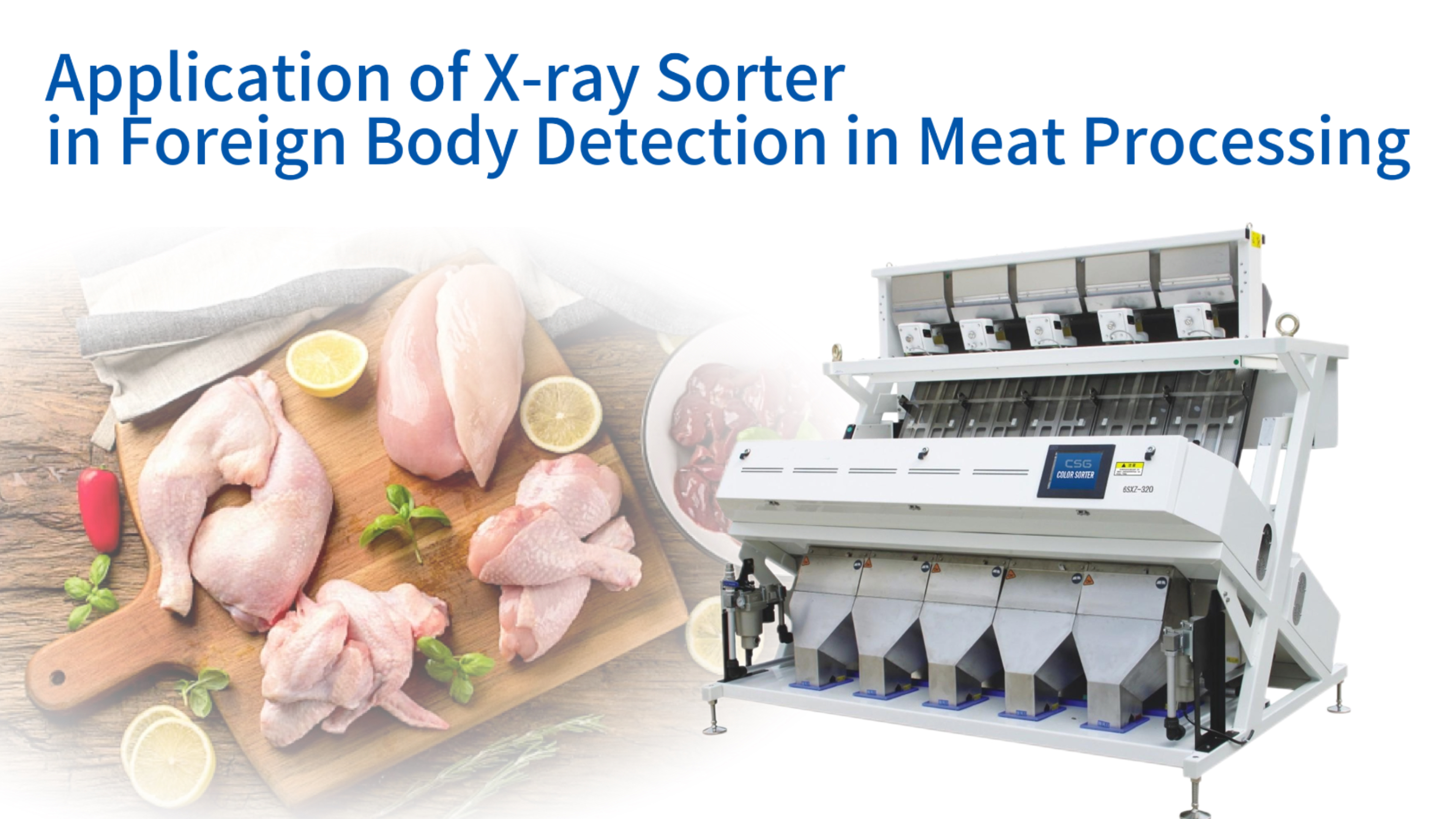
Meat processing facilities operate under immense pressure to deliver products that are safe, wholesome, and free from physical contaminants. Foreign bodies such as metal fragments, bone chips, glass pieces, and hard plastics can enter the meat supply chain during slaughter, deboning, grinding, or packaging. The presence of these contaminants not only poses serious health risks to consumers but also exposes processors to costly recalls, brand damage, and legal liabilities. Traditional detection methods like metal detectors and visual inspection have significant limitations in identifying non-metallic or embedded contaminants. X-ray sorting technology has emerged as the most comprehensive solution for foreign body detection in meat processing. By utilizing advanced sensors and artificial intelligence, X-ray sorters can identify and remove a wide range of physical contaminants with exceptional accuracy and speed, ensuring that only safe, high-quality meat products reach consumers. This guide explores the critical role of X-ray sorters in meat processing lines, their operating principles, integration strategies, and the tangible benefits they deliver for food safety and operational efficiency.
Common Foreign Bodies in Meat Products
| Contaminant Type | Source | Size Range (mm) | Detection Challenge |
|---|---|---|---|
| Metal Fragments (Ferrous/Non-Ferrous/Stainless Steel) | Equipment wear, maintenance, farm tools | 0.5 - Several cm | Stainless steel hard to detect with metal detectors |
| Bone Fragments | Cutting/deboning operations | 2 - Several cm | Similar density to meat |
| Glass Shards | Broken containers/light fixtures | 1 - Several cm | Invisible to metal detectors/visual inspection |
| Hard Plastics | Packaging, equipment components | 0.5 - Several cm | Low density similar to meat |
| Stones/Grit | Field conditions, raw material | 1 - Several cm | Embedded in meat tissue |
Detection Method Limitations Comparison
Metal Detectors
- Only detect metallic contaminants
- Reduced sensitivity in high moisture/salt products
- Cannot detect embedded contaminants
Visual Inspection
- Human fatigue reduces accuracy
- Cannot see subsurface contaminants
- Misses color-matched contaminants
X-ray Technology
- Detects all physical contaminants
- Sees embedded/subsurface objects
- High sensitivity (0.1 g/cm³ density difference)
1. The Critical Need for Foreign Body Detection in Meat Processing
Physical contaminants in meat products originate from multiple sources throughout the production chain. During slaughter and primary processing, metal fragments from equipment wear, bone splinters from cutting operations, and even bullet fragments from hunted game can contaminate the meat. During further processing, foreign materials such as glove fragments, plastic from packaging, or glass from broken lights may inadvertently enter the product stream. The detection and removal of these contaminants is not merely a quality issue but a fundamental food safety requirement enforced by regulatory bodies worldwide. Meat processors must implement effective control measures to prevent contaminated products from reaching consumers.
The consequences of failing to detect foreign bodies are severe. Contaminated meat can cause physical injury to consumers, leading to product recalls that cost millions of dollars and irreparable brand damage. Regulatory agencies impose strict liability on processors, and failure to comply with food safety standards can result in plant closures or legal sanctions. Furthermore, retailer demands for certified safe products have intensified, with major supermarket chains requiring suppliers to implement X-ray inspection as a condition of supply. These pressures make investment in advanced detection technology a business necessity rather than an option.
Common Foreign Bodies Found in Meat Products
Meat products can contain a diverse array of physical contaminants. Metal fragments are the most common, including ferrous metals from equipment wear, non-ferrous metals like aluminum from foil packaging, and stainless steel from processing machinery. Bone fragments, particularly in boneless products, pose a significant challenge because they have similar density to meat and can be missed by conventional detectors. Glass shards from broken containers or light fixtures, hard plastic pieces from equipment or packaging, and even stones or grit from field conditions are also frequently encountered. Each contaminant type has unique physical properties that influence detectability.
The size and shape of contaminants vary widely. Some fragments may be as small as 0.5 millimeters, while others can be several centimeters long. They may be embedded deep within meat tissue or resting on the surface. This variability demands detection systems with high sensitivity and the ability to discriminate between contaminants and product features. X-ray technology's ability to image density differences makes it uniquely suited to this task, as it can reveal contaminants regardless of their location or orientation within the meat.
Risks Posed by Physical Contaminants
Physical contaminants in meat products present immediate health hazards. Metal fragments can cause dental damage or internal injuries if ingested. Bone chips may become lodged in the throat or digestive tract. Glass shards can lacerate mouth and throat tissues. Beyond acute injury, the psychological impact on consumers who discover a foreign object in their food can be devastating, leading to loss of trust in the brand and the entire meat industry. The mere suspicion of contamination can trigger widespread recalls affecting millions of product units.
The economic impact of contamination incidents extends far beyond the direct cost of recall. Processors face lost sales, legal fees, compensation claims, and increased insurance premiums. Regulatory fines and mandated process improvements add further financial burden. Perhaps most damaging is the long-term erosion of consumer confidence, which can take years to rebuild. These risks underscore why proactive detection using reliable technology is essential for protecting public health and business sustainability.
Regulatory Requirements and Industry Standards
Food safety regulations worldwide mandate that meat processors implement effective foreign body control measures. In the United States, the Food Safety and Inspection Service (FSIS) requires establishments to maintain Hazard Analysis and Critical Control Point (HACCP) plans that address physical hazards. In the European Union, Regulation (EC) 852/2004 requires food business operators to implement procedures based on HACCP principles, including the identification and control of physical contaminants. International standards such as the British Retail Consortium (BRC) Global Standard for Food Safety and the International Featured Standards (IFS) require documented foreign body detection and management systems.
Compliance with these regulations and standards is verified through audits and inspections. Non-compliance can result in loss of certification, which is often a prerequisite for supplying major retailers. X-ray sorting systems provide documented evidence of detection effectiveness through audit trails and rejection data, helping processors demonstrate due diligence and maintain compliance. Many retailers now explicitly require X-ray inspection for certain meat products, recognizing its superiority over metal detection alone.
Limitations of Traditional Detection Methods
Metal detectors have long been the standard for foreign body detection in meat processing, but they have inherent limitations. They can only detect metallic contaminants and are ineffective against glass, stone, bone, or plastic. Their sensitivity to non-ferrous metals and stainless steel is often reduced, particularly in products with high moisture or salt content, which can mask signals. Metal detectors also cannot detect contaminants embedded deep within thick products or those oriented in unfavorable directions.
Visual inspection, whether manual or camera-based, is even more limited. Human inspectors tire quickly and cannot see contaminants inside opaque meat. Machine vision systems using visible light cameras cannot detect subsurface defects or materials with similar color to meat. These methods miss a significant proportion of contaminants, leaving processors vulnerable. X-ray technology overcomes these limitations by imaging density differences, providing a comprehensive solution that detects all types of physical contaminants regardless of their location.
Why X-ray Technology is Superior
X-ray inspection operates on the principle that different materials absorb X-rays to different degrees based on their density and atomic number. Meat, being primarily water and soft tissue, has relatively low X-ray absorption. Dense contaminants such as metal, bone, glass, and stone absorb more X-rays and appear as dark areas in the resulting image. This fundamental physical principle enables X-ray systems to detect contaminants that are invisible to other technologies. Modern X-ray sorters can simultaneously detect multiple contaminant types and even differentiate between acceptable product variations and true defects.
The sensitivity of X-ray systems has improved dramatically in recent years. Advanced detectors can resolve density differences of less than 0.1 g/cm³, allowing detection of very small or low-density contaminants. Dual-energy X-ray technology further enhances discrimination by analyzing how materials absorb X-rays at two different energy levels, enabling differentiation between materials with similar densities but different atomic compositions. This capability is particularly valuable for distinguishing bone fragments from cartilage or identifying certain plastics. The combination of high sensitivity and material discrimination makes X-ray the most powerful detection tool available for meat processors.
2. Principles of X-ray Sorting Technology for Meat Inspection
X-ray Sorting System Operational Flow
Key System Components
X-ray sorting systems for meat inspection operate on well-established physics principles adapted for industrial food safety applications. An X-ray source generates a beam of high-energy photons that passes through the meat product as it travels on a conveyor. A detector array on the opposite side measures the intensity of X-rays that penetrate the product. Dense contaminants attenuate more X-rays, creating a shadow or absorption image. This image is processed in real time by sophisticated algorithms that compare pixel values against preset thresholds. When a contaminant is identified, the system triggers a rejection mechanism to remove the affected product from the line.
The entire process occurs in milliseconds, allowing modern X-ray sorters to inspect products at speeds exceeding 100 meters per minute while maintaining detection accuracy above 99.9%. The systems are designed to withstand the harsh environment of meat processing plants, including washdown procedures and temperature variations. They incorporate safety features to protect operators from radiation exposure, with lead shielding and interlock systems ensuring compliance with international safety standards. The combination of speed, accuracy, and reliability makes X-ray technology an integral component of modern meat processing lines.
How X-rays Interact with Different Materials
The interaction of X-rays with matter depends primarily on two material properties: density and atomic number. High-density materials such as metals and bone absorb X-rays more strongly than low-density materials like fat and muscle. High atomic number elements, such as iron in steel, also absorb X-rays more efficiently than low atomic number elements like carbon in plastic. This differential absorption creates contrast in the X-ray image, allowing contaminants to be distinguished from the surrounding meat. The physics is well understood and forms the basis for all X-ray inspection technologies.
In practice, the X-ray image appears as a grayscale map where darker areas indicate higher absorption. A metal fragment will appear as a dark spot against the lighter gray of the meat. Bone fragments, being less dense than metal but denser than meat, appear as moderately dark regions. The system's software analyzes the size, shape, and intensity of these dark regions to determine whether they represent contaminants or acceptable product features such as cartilage or fat deposits. Advanced algorithms can even compensate for product thickness variations, ensuring consistent detection regardless of product shape.
Components of an X-ray Sorting System
A complete X-ray sorting system for meat processing comprises several key components. The X-ray generator produces the radiation beam and typically operates at voltages between 80 and 160 kV, adjustable based on product density and thickness. The detector array consists of hundreds or thousands of individual detector elements that convert X-ray photons into electrical signals. Modern detectors use scintillator materials that emit light when struck by X-rays, coupled with photodiodes for readout. The conveyor system transports products through the inspection zone at controlled speeds, often with features to stabilize product position and minimize movement artifacts.
The processing unit is the brain of the system, containing high-speed computers that acquire detector data, reconstruct images, and execute detection algorithms. These processors must handle massive data streams in real time, often performing billions of calculations per second. The rejection mechanism, typically an array of high-speed air jets or mechanical pushers, removes identified contaminants from the product stream. All components are housed in a stainless steel enclosure with radiation shielding, designed for easy cleaning and resistance to corrosion. The belt-type X-ray sorting machine configuration is particularly common in meat processing due to its gentle handling and ability to inspect products of varying sizes.
Dual-Energy X-ray and Material Discrimination
Single-energy X-ray systems measure total absorption but cannot distinguish between different materials that have similar density. Dual-energy X-ray technology overcomes this limitation by acquiring images at two different X-ray energy levels. Materials with different atomic numbers exhibit different absorption ratios between the high and low energy images. By analyzing these ratios, the system can differentiate between, for example, bone fragments and calcium deposits, or between aluminum and glass. This capability significantly reduces false rejects and improves detection of specific contaminant types.
The implementation of dual-energy technology requires sophisticated detectors and processing algorithms. The detectors must be capable of discriminating energy levels, or the system must rapidly switch the X-ray source energy. The resulting images are combined mathematically to generate material-specific information. In meat processing, dual-energy X-ray is particularly valuable for detecting bone fragments in boneless products, where the density difference between bone and meat is small, and for identifying low-density contaminants like certain plastics that might otherwise be missed. This technology represents a major advancement in food safety inspection.
Integration of AI and Machine Learning
Modern X-ray sorters increasingly incorporate artificial intelligence and machine learning to enhance detection performance. Traditional systems rely on fixed threshold algorithms that compare pixel values to preset limits. AI-based systems, however, are trained on thousands of images of both good products and various contaminants, learning to recognize patterns and features that indicate contamination. This approach is particularly effective for detecting complex or variable defects, such as bone fragments that vary in shape and density, or contaminants that partially overlap with product features.
Machine learning models can adapt to new product types or contaminant profiles without extensive manual reprogramming. When a processor introduces a new meat product or encounters a novel contaminant, the system can be retrained with a relatively small set of labeled images. The models also improve over time as they process more data, continuously refining their detection accuracy. Some systems even incorporate advanced detection algorithms that combine X-ray data with other sensor inputs, such as visible or near-infrared imaging, for comprehensive quality assessment. This integration of AI transforms X-ray sorters from simple inspection devices into intelligent quality control platforms.
Differences Between X-ray Transmission and X-ray Fluorescence
In the context of meat processing, the primary technology used is X-ray transmission (XRT), which creates images based on differential absorption. However, X-ray fluorescence (XRF) is another technique that analyzes the characteristic X-rays emitted by materials when irradiated. XRF can identify the elemental composition of a contaminant, providing definitive identification of metal types or mineral content. While XRF is more commonly used in recycling and mining applications, it has niche uses in food inspection, such as confirming the nature of metallic contaminants for traceability purposes.
The practical difference is that XRT provides spatial imaging suitable for high-speed inline inspection, while XRF is typically slower and used for offline analysis. Some advanced X-ray sorters combine both modalities, using XRT for detection and XRF for confirmation, but this is rare in meat processing due to speed constraints. For most applications, XRT alone provides sufficient detection capability, and the addition of dual-energy technology addresses material discrimination needs. Understanding these distinctions helps processors select the appropriate technology for their specific requirements.
3. Integration of X-ray Sorters into Meat Processing Lines
Successful implementation of X-ray sorting requires careful consideration of where and how the system fits into the overall production flow. The goal is to inspect products at a point where contaminants are most likely to be present and where rejection can be efficiently managed, without disrupting upstream or downstream operations. The integration process involves mechanical design, electrical connections, software interfaces, and operational procedures. Proper integration ensures that the X-ray sorter operates at its full potential, maximizing food safety while minimizing impact on productivity.
Most meat processors position X-ray sorters after critical control points where contamination risk is highest. Common locations include after deboning operations, where bone fragments may be present, after grinding, where metal fragments from equipment wear can occur, and just before packaging, as a final quality check. The specific placement depends on the product type, the process flow, and the contaminant risks identified in the HACCP plan. Multi-stage inspection, with X-ray sorters at multiple points, may be justified for high-risk products or those destined for sensitive markets.
Optimal Placement Within the Production Flow
Determining the optimal location for an X-ray sorter requires analysis of where contaminants are introduced and where they can be most effectively removed. For bone-in products, inspection after cutting operations but before further processing allows removal of bone splinters before they contaminate downstream equipment. For ground meat, inspection after the final grind but before forming or packaging ensures that any metal fragments from the grinder plates are detected. For portioned products like steaks or cutlets, inspection after portioning and before packaging provides a final quality gate.
The physical layout of the processing line also influences placement. Sufficient space must be available for the sorter's footprint, including infeed and outfeed conveyors. The product must be presented to the sorter in a consistent orientation and at a controlled speed, which may require upstream conveyors with accumulation capability. Downstream, the reject system must be integrated with collection bins or rework lines. Electrical and compressed air supplies must be available at the chosen location. Careful planning during the design phase avoids costly modifications later.
Conveyor Belt Designs and Product Presentation
The conveyor system that feeds products through the X-ray sorter plays a critical role in detection performance. Products must be transported with minimal vibration and consistent spacing to avoid image blurring or overlapping. The belt material itself must be selected to minimize X-ray absorption, typically using thin, low-density materials like polyurethane. Some systems use belts with cleats or dividers to maintain product separation. For loose products such as ground meat or nuggets, vibratory feeders may be used to create a monolayer before presentation to the X-ray beam.
The width of the conveyor determines the maximum product size and throughput capacity. Standard belt widths range from 300mm to 1400mm or more, with wider belts allowing higher throughput but requiring larger detectors and X-ray sources. The 1400mm belt width AI X-ray sorting machine is a popular choice for high-volume meat lines, offering a balance of capacity and detection sensitivity. For very large products like whole carcass sections, specialized systems with wider belts or multiple lanes may be required.
Synchronization with Upstream and Downstream Equipment
For the X-ray sorter to function effectively, it must be synchronized with the surrounding equipment. Upstream devices such as conveyors, feeders, and orienters must supply products at a consistent rate that matches the sorter's maximum inspection speed. If the upstream flow is intermittent, a buffer system may be needed to ensure continuous operation. Downstream equipment such as packaging machines must accept the sorted product stream without creating bottlenecks. The reject system must also be coordinated, with rejected products diverted to separate collection points without interfering with the main flow.
Modern X-ray sorters include programmable logic controllers (PLCs) with communication interfaces that allow integration with factory automation systems. They can exchange data with upstream and downstream equipment, adjusting speeds and coordinating start-stop sequences. This integration is particularly important in continuous processing lines where any interruption can cause significant productivity losses. Some systems also provide feedback to upstream processes, such as alerting operators when a sudden increase in contaminants indicates a problem with a specific piece of equipment.
Data Integration for Traceability and Quality Management
X-ray sorters generate valuable data that extends beyond simple pass-fail decisions. Each inspection event can be logged with time stamps, product identification, contaminant type, and rejection information. This data can be integrated with enterprise resource planning (ERP) systems and quality management software to provide complete traceability from raw material to finished product. In the event of a customer complaint or regulatory inquiry, processors can retrieve detailed records showing that specific batches were inspected and cleared.
Advanced systems offer real-time dashboards that display key performance indicators such as rejection rates, detection accuracy, and system uptime. Trends in contaminant occurrence can be analyzed to identify problem areas in the production process, enabling continuous improvement. Some processors use this data to optimize maintenance schedules, adjusting cleaning and calibration based on actual usage patterns. The integration of X-ray sorter data into broader Industry 4.0 initiatives is becoming increasingly common, transforming inspection from a standalone function into a source of actionable intelligence.
Handling of Rejected Product and Re-sorting Options
The management of rejected product is an important consideration in X-ray sorter integration. Rejected items must be safely diverted from the main line and collected for further evaluation. Depending on the product and the reason for rejection, options include disposal as waste, rework to recover edible portions, or re-inspection by a secondary sorter to confirm the presence of contaminants. For high-value products, a second-pass sorting system can recover good product that was rejected due to borderline features, significantly improving yield.
The reject mechanism itself must be designed to handle the product without causing damage or creating additional contamination. Air jet ejection is common for small, light items, while mechanical pushers or drop gates are used for larger products. The reject station should be easily accessible for clearing jams and collecting samples. Automated rejection with confirmation sensors ensures that rejected products are reliably removed. Proper handling of rejects is essential for maintaining both food safety and operational efficiency.
4. Types of Foreign Bodies Detectable by X-ray Sorters
X-ray sorting technology is capable of detecting a wide spectrum of physical contaminants that may be present in meat products. The fundamental principle of density-based detection means that any material with density significantly different from meat is potentially detectable. This includes all metals, many minerals, dense plastics, and even some organic materials like bone. The sensitivity of detection depends on the size of the contaminant, its density contrast with the surrounding meat, and its orientation relative to the X-ray beam. Modern systems achieve detection of contaminants as small as 0.5 mm for high-density materials like steel.
The range of detectable materials continues to expand as technology advances. Dual-energy systems improve discrimination between similar-density materials, while AI-based image analysis can identify contaminants that might be missed by simple thresholding. Some contaminants, such as certain low-density plastics, remain challenging, but ongoing research and development are steadily closing the gap. For most meat processing applications, X-ray provides the most comprehensive detection capability available.
Metallic Contaminants: Ferrous, Non-Ferrous, and Stainless Steel
Metal fragments are the most common contaminants in meat processing and are readily detectable by X-ray. Ferrous metals (iron and steel) have high density and high atomic number, appearing as very dark spots in the X-ray image. Non-ferrous metals such as aluminum, copper, and brass also have good contrast, though aluminum's lower density requires slightly larger particles for reliable detection. Stainless steel, widely used in food processing equipment, is detectable but can be more challenging due to its variable alloy composition and the fact that some stainless steels are less dense than carbon steel.
The sources of metallic contaminants are diverse. Equipment wear produces fine metal particles from grinding plates, mixing blades, and conveying systems. Broken machine parts, such as bolts or screens, can introduce larger fragments. Maintenance activities may leave behind tools or wire brushes. Even raw materials can contain metal from farm equipment or harvesting processes. X-ray sorters detect all these metallic contaminants, providing a critical safeguard against physical hazards. Their ability to detect stainless steel, which often eludes metal detectors, is a key advantage.
Dense Non-Metallics: Glass, Stones, and Calcified Bone Fragments
Glass and stone are among the most hazardous contaminants because of their sharp edges and potential to cause injury. Both have densities significantly higher than meat, making them clearly visible in X-ray images. Glass from broken containers or light fixtures can be detected down to sizes of 1-2 mm, depending on thickness. Stones, which may enter with raw materials from outdoor harvesting, are also easily detected. The challenge lies in distinguishing these contaminants from dense product features, which dual-energy systems address effectively.
Bone fragments in boneless products represent a special category of dense non-metallic contaminants. While bone density is only slightly higher than meat, modern X-ray systems can detect bone fragments as small as 2-3 mm under optimal conditions. This capability is essential for products labeled as boneless, where even small bone pieces can cause consumer complaints. Calcified cartilage and other dense tissues can be similarly detected. The use of dual-energy technology significantly improves bone detection by exploiting the calcium content of bone, which gives it a distinct absorption signature compared to meat.
Low-Density Contaminants: Plastics, Rubber, and Wood
Low-density contaminants present the greatest detection challenge because their density may be similar to or even lower than meat. Many plastics have densities in the range of 0.9-1.4 g/cm³, which is close to the density of muscle tissue (approximately 1.06 g/cm³). Rubber and wood also fall in this range. Detecting these materials requires very high sensitivity and careful optimization of X-ray parameters. Some plastics, particularly those containing fillers or pigments, may have slightly higher density and be detectable. Others may be nearly invisible.
Despite the challenges, progress is being made. Dual-energy X-ray can sometimes identify plastics based on their atomic composition, even when density contrast is low. Hyperspectral imaging, sometimes combined with X-ray, offers another pathway for plastic detection. For meat processors, the risk of plastic contamination from packaging materials or equipment components remains significant, and ongoing research aims to improve detection capabilities. In practice, a combination of X-ray inspection and careful material handling procedures provides the best defense.
Detection of Product Defects Beyond Foreign Bodies
In addition to foreign body detection, X-ray sorters can identify certain product defects that affect quality. For example, they can detect bone fragments in products that should be boneless, as discussed. They can also identify calcification or other density anomalies that may indicate spoilage or disease. Some systems are capable of measuring fat-to-lean ratio by analyzing X-ray absorption, providing valuable information for product grading and formulation. This multi-functionality adds significant value beyond basic food safety.
The ability to detect internal defects such as bruising or blood spots is limited because these defects often have similar density to normal tissue. However, advanced image analysis techniques may eventually enable such detection. For now, X-ray remains primarily a tool for physical contaminant detection, but its expanding capabilities are making it increasingly useful for overall quality assurance. Processors who invest in advanced systems gain not only safety benefits but also opportunities for quality improvement.
Real-World Performance Data and Detection Rates
Independent studies and industry data demonstrate the effectiveness of X-ray sorting in meat processing. Under optimal conditions, modern X-ray sorters achieve detection rates exceeding 99.9% for metal contaminants down to 0.5 mm, 98% for glass and stone down to 1.5 mm, and 95% for bone fragments down to 3 mm. These figures vary with product thickness, orientation, and the specific system configuration. In continuous operation, false reject rates are typically maintained below 0.5%, ensuring that yield is not unnecessarily compromised.
The performance of X-ray sorters is validated through routine testing using calibrated test pieces. Many systems include automatic self-test features that periodically verify detection sensitivity and trigger alarms if performance degrades. Processors participating in third-party certification programs must demonstrate that their X-ray systems meet specified performance standards. The combination of high detection rates, low false rejects, and continuous validation makes X-ray sorting a reliable and trusted technology for ensuring meat product safety.
5. Advantages of X-ray Sorting for Meat Processors
The adoption of X-ray sorting technology delivers multiple benefits that extend far beyond contaminant detection. Meat processors who integrate X-ray into their operations gain enhanced food safety, improved regulatory compliance, operational efficiencies, and protection of brand reputation. These advantages translate into tangible financial returns through reduced recall costs, higher customer confidence, and access to premium markets. The investment in X-ray technology is increasingly viewed not as an expense but as a strategic asset that strengthens the entire business.
Quantifying the benefits of X-ray sorting involves considering both direct and indirect impacts. Direct benefits include reduced recall-related expenses, lower liability insurance premiums, and decreased labor costs for manual inspection. Indirect benefits include enhanced brand value, improved customer relationships, and the ability to command higher prices for certified safe products. When these factors are combined, the return on investment for X-ray sorters is typically achieved within one to three years, depending on the scale of operation.
Enhanced Food Safety and Brand Protection
The primary benefit of X-ray sorting is the dramatic improvement in food safety it provides. By detecting and removing physical contaminants before products reach consumers, processors virtually eliminate the risk of injury-related incidents. This protection extends to the entire supply chain, safeguarding consumers, retailers, and the brand itself. In an era where food safety incidents can go viral on social media within hours, the reputational protection offered by X-ray inspection is invaluable.
Brand protection also encompasses compliance with retailer and customer requirements. Major supermarket chains increasingly mandate that their meat suppliers implement X-ray inspection as a condition of supply. Having X-ray capability demonstrates a commitment to quality that differentiates processors from competitors. It also provides documented evidence of due diligence that can be presented during audits and in the event of a customer complaint. This assurance builds trust and strengthens long-term business relationships.
Reduction in Costly Product Recalls
Product recalls are among the most expensive events a food company can experience. Direct costs include retrieving products from the supply chain, disposing of recalled inventory, and notifying customers. Indirect costs include lost sales, legal fees, and damage to brand equity. The average cost of a food recall can range from hundreds of thousands to millions of dollars, depending on the scale. X-ray sorting dramatically reduces the likelihood of a recall due to physical contaminants, providing a strong financial justification for the investment.
Even when a recall does occur, having X-ray inspection data can limit liability. Processors can demonstrate that they had robust detection systems in place and that the incident was an isolated event rather than a systemic failure. This evidence can be crucial in legal proceedings and regulatory investigations. Some insurance companies offer reduced premiums for facilities with X-ray inspection, recognizing the lower risk profile. These financial benefits add to the overall value proposition.
Compliance with Retailer and Regulatory Standards
Food safety standards such as BRC, IFS, and FSSC 22000 explicitly require documented foreign body control measures. X-ray inspection provides the highest level of assurance and is often cited as best practice in these standards. Processors with X-ray systems find it easier to achieve and maintain certification, which is essential for accessing global markets. Regulatory bodies also view X-ray favorably, and its use can streamline inspections and reduce regulatory scrutiny.
In addition to formal standards, many retailers have their own supplier requirements that increasingly mandate X-ray inspection. For example, some UK retailers require all own-label meat products to be X-ray inspected. As these requirements become more common, processors without X-ray capability may find themselves excluded from lucrative contracts. Investing in X-ray technology is therefore essential for maintaining market access and competitiveness.
Increased Throughput and Reduced Labor Costs
X-ray sorters operate at high speeds, inspecting thousands of products per minute without fatigue. This capability enables processors to maintain high throughput while ensuring thorough inspection. In contrast, manual inspection lines are slow and require multiple operators, each with limited attention span. By replacing or supplementing manual inspection with X-ray, processors can significantly reduce labor costs and reallocate workers to more value-added tasks. The labor savings alone can often justify the investment over time.
The automation provided by X-ray sorting also improves consistency. Manual inspection performance varies with operator fatigue, training, and individual judgment. X-ray systems apply the same criteria to every product, every time, ensuring uniform quality. This consistency is particularly valuable for products destined for multiple customers with different specifications, as the sorter can be programmed to apply different rejection criteria for different batches. The combination of speed and consistency enhances overall operational efficiency.
Data Collection for Process Improvement
The data generated by X-ray sorters provides valuable insights for process optimization. By tracking contaminant types and frequencies, processors can identify which parts of the production process are generating the most rejects and take corrective action. For example, if metal fragments are detected more frequently after a particular grinding operation, that grinder may need maintenance or replacement. If bone fragments are appearing in boneless products, the deboning process may need review.
This data-driven approach to quality management aligns with continuous improvement methodologies such as Six Sigma and Lean. Processors can establish baseline rejection rates, set improvement targets, and monitor progress over time. The ability to demonstrate continuous improvement is also valued by auditors and customers. Some processors share this data with their raw material suppliers to drive quality improvements upstream, creating a collaborative approach to food safety.
6. Selecting the Right X-ray Sorter for Meat Applications
Choosing the appropriate X-ray sorter for a meat processing operation requires careful evaluation of multiple factors. No single system is ideal for all applications, and the best choice depends on product characteristics, throughput requirements, contaminant risks, and budget constraints. Processors should conduct a thorough needs assessment before engaging with equipment suppliers, defining their inspection objectives and operational parameters. This preparation ensures that the selected system will deliver the expected performance and return on investment.
Engaging with experienced suppliers is essential for navigating the technical options. Reputable manufacturers offer application testing services where they run the processor's products through their equipment to demonstrate detection capabilities and optimize settings. These tests provide objective data for comparison and help identify any potential issues before purchase. Processors should also consider the supplier's reputation for reliability, service support, and availability of spare parts, as these factors significantly impact long-term satisfaction.
Throughput Requirements and Belt Width Selection
The required inspection throughput directly influences the choice of belt width and system configuration. Throughput is typically expressed in kilograms per hour or products per minute, depending on the application. For high-volume lines processing ground meat or nuggets, a wide belt system with high-speed processing is necessary. For lower-volume lines handling whole cuts or portioned products, a narrower belt may suffice. Manufacturers provide capacity charts based on product size and density, helping processors match the system to their needs.
It is important to consider peak production periods when specifying throughput. A system that meets average demand may be overwhelmed during seasonal peaks, leading to bottlenecks. Conversely, overspecifying capacity adds unnecessary cost. Many systems offer modular designs that allow future expansion, providing flexibility to adapt to changing demand. The smart material feeding systems available with modern sorters can optimize flow to maximize throughput without compromising detection accuracy.
Sensitivity and Resolution Needs Based on Product Type
Different products require different detection sensitivities. For ground meat, where contaminants may be finely dispersed, high sensitivity is essential to detect small fragments. For whole muscle products, larger contaminants are more likely, but the ability to detect embedded bone is critical. The required pixel resolution of the detector determines the minimum detectable size. Higher resolution detectors capture more detail but generate more data, requiring faster processing. The choice involves balancing detection needs with cost and speed.
Product thickness also affects sensitivity. Thicker products attenuate more X-rays, reducing contrast and making small contaminants harder to detect. Systems for thick products may require higher X-ray energy or more sensitive detectors. Some applications may benefit from multi-view inspection, where products are imaged from multiple angles to improve detection of contaminants oriented in unfavorable directions. Processors should discuss their specific products with suppliers to determine the appropriate sensitivity level.
Consideration of Product Size, Shape, and Packaging
The physical characteristics of the products to be inspected influence the design of the handling system and the inspection algorithm. Large, irregularly shaped products may require special conveyor configurations to ensure stable presentation. Products that are already packaged present additional challenges because the packaging material itself may absorb X-rays and potentially obscure contaminants. For packaged products, the system must be capable of distinguishing between packaging artifacts and true contaminants.
Some X-ray sorters are specifically designed for packaged products, with algorithms that compensate for the packaging material's absorption. Others are optimized for bulk flow inspection. Processors must clearly define whether they need to inspect products before or after packaging, and whether multiple product formats will be run on the same line. Systems with recipe management can store settings for different products, enabling quick changeovers. This flexibility is particularly valuable for co-packers or processors with diverse product lines.
Ease of Cleaning and Sanitation
Meat processing environments require rigorous sanitation to prevent microbial growth and cross-contamination. X-ray sorters must be designed to withstand frequent washdowns with high-pressure water and cleaning chemicals. Stainless steel construction, sealed enclosures, and corrosion-resistant components are essential. The system should have smooth surfaces without crevices where bacteria can accumulate, and all components should be accessible for cleaning. Some manufacturers offer systems with IP69K ratings, indicating suitability for extreme washdown conditions.
The ease of disassembly for cleaning is also important. Belts, chutes, and guards should be removable without tools for thorough cleaning. The X-ray source and detectors are typically sealed and require only external cleaning, but access panels must be designed to prevent water ingress. Processors should review the manufacturer's cleaning recommendations and verify that the system meets their sanitation requirements. A machine that is difficult to clean will not be cleaned properly, leading to food safety risks and potential regulatory issues.
Software Features, User Interface, and Connectivity
The user interface of the X-ray sorter determines how easily operators can monitor performance, adjust settings, and troubleshoot issues. A touchscreen interface with intuitive menus reduces training time and the risk of operator error. The software should display real-time images of inspected products, highlighting detected contaminants and showing rejection decisions. Historical data should be easily accessible for review and analysis. Some systems offer remote monitoring capabilities, allowing off-site experts to assist with diagnostics.
Connectivity options are increasingly important for integration with plant-wide automation and data systems. Ethernet, Wi-Fi, and industrial protocols enable the sorter to communicate with PLCs, MES, and ERP systems. This connectivity allows for centralized data collection, remote software updates, and integration with quality management platforms. Processors should consider their future automation plans and choose a system that can evolve with them. The high-speed ejection systems integrated with advanced software ensure that rejected products are accurately removed and tracked.
7. Maintenance and Long-Term Performance
To ensure that an X-ray sorter continues to deliver reliable detection over many years, a comprehensive maintenance program is essential. Like any precision equipment, X-ray sorters require regular attention to keep components in optimal condition. The maintenance program should include daily cleaning, periodic calibration, preventive replacement of wear items, and software updates. Operators and maintenance staff must be properly trained to perform these tasks correctly and safely. A well-maintained sorter will maintain its detection accuracy, minimize downtime, and provide a long service life.
The manufacturer's maintenance manual provides detailed instructions for all required procedures. Following these recommendations is critical for warranty compliance and optimal performance. Many suppliers offer service contracts that include regular inspections, calibration, and emergency support. For processors without in-house technical expertise, these contracts provide peace of mind and ensure that maintenance is performed by qualified personnel. Investing in proper maintenance protects the significant investment represented by the X-ray sorter.
Daily Cleaning and Sanitation Procedures
Daily cleaning is the most important maintenance task for an X-ray sorter in a meat processing environment. Product residue, fat, and protein can accumulate on belts, chutes, and housing surfaces, potentially harboring bacteria and attracting pests. Cleaning should follow the same rigorous standards applied to other food contact equipment. Typically, this involves a pre-rinse with warm water, application of approved detergents, thorough scrubbing, and a final rinse with potable water. All cleaning agents must be compatible with the machine's materials.
Special attention must be paid to areas where product can accumulate, such as belt edges, chute transitions, and reject mechanisms. The X-ray source and detectors are sealed and should only be wiped externally with a damp cloth; internal cleaning is not required. After cleaning, the machine should be inspected for any signs of water ingress or damage. A daily log of cleaning activities should be maintained as part of the overall sanitation program. Consistent daily cleaning prevents buildup that could affect detection performance or lead to contamination.
Regular Calibration and Performance Verification
Calibration ensures that the X-ray sorter's measurements remain accurate over time. Most systems include automatic calibration routines that adjust for drift in the X-ray source or detectors. These routines typically run at startup or at scheduled intervals, using built-in reference standards. In addition, processors should perform periodic performance verification using calibrated test pieces. These tests confirm that the system can detect contaminants of specified sizes and types. The frequency of verification depends on the criticality of the application and regulatory requirements, but monthly or quarterly is common.
Test results should be documented and reviewed for trends. A gradual decline in detection sensitivity may indicate wear in the X-ray tube or degradation of detectors, prompting preventive maintenance before failure occurs. If verification reveals unacceptable performance, the system must be taken offline and serviced immediately. Many certification standards require documented evidence of regular performance verification, making this a compliance necessity as well as a best practice.
Preventive Maintenance of X-ray Source and Detectors
The X-ray tube is the heart of the system and has a limited lifespan, typically 5-10 years depending on usage. Preventive maintenance includes monitoring tube hours and replacing the tube before it fails. Signs of tube degradation include reduced output, longer warm-up times, or instability in the X-ray beam. Detectors, whether scintillator-based or direct conversion, also have finite lifetimes and may require replacement if individual pixels fail. Preventive replacement of these components during scheduled downtime avoids unexpected failures that could halt production.
Other preventive tasks include checking and tightening electrical connections, inspecting cables for damage, and verifying that cooling fans are operating properly. The mechanical components, such as conveyor belts and bearings, should be inspected for wear and replaced as needed. A preventive maintenance schedule, based on manufacturer recommendations and operating hours, should be established and followed. Keeping detailed records of all maintenance activities helps predict future needs and provides documentation for audits.
Software Updates and Algorithm Improvements
Manufacturers periodically release software updates that improve detection algorithms, add new features, or address security vulnerabilities. These updates should be applied in a timely manner to keep the system at peak performance. Before updating, it is important to back up current settings and verify compatibility with existing hardware. Some updates may require recalibration or retraining of AI models. Processors should establish a process for evaluating and implementing updates, including testing on a non-production line if possible.
Algorithm improvements are particularly important for AI-based systems. As manufacturers collect more data from field installations, they can refine their machine learning models to detect new contaminant types or improve discrimination. These improvements are often delivered through software updates, allowing existing systems to benefit from ongoing research and development. Staying current with software ensures that the sorter continues to meet evolving food safety challenges.
Training Operators and Maintenance Staff
Even the most advanced X-ray sorter will underperform if operators and maintenance staff are not properly trained. Operators must understand how to start and stop the machine, monitor performance, interpret alarms, and perform basic cleaning. They should also be trained to recognize signs of malfunction and know when to call for technical support. Maintenance staff require deeper training on calibration, troubleshooting, and component replacement. Many manufacturers offer training programs as part of the purchase package, and refresher courses may be available.
Cross-training multiple staff members ensures that knowledge is not lost when an individual leaves. Written procedures and checklists should be provided to guide daily activities. A culture of ownership, where operators take pride in keeping their equipment in top condition, contributes to long-term performance. Investing in training is investing in the reliability of the entire food safety system.
Spare Parts Management and Support Services
To minimize downtime, processors should maintain an inventory of critical spare parts. These typically include belts, air valves, fuses, and possibly a spare detector module or X-ray tube, depending on the criticality of the line. The manufacturer can provide a recommended spare parts list based on the specific model. Having these parts on hand allows quick replacement when failures occur, rather than waiting for shipments. Parts should be stored in a clean, dry environment and rotated as needed to prevent aging.
Support services are equally important. Processors should establish a relationship with the manufacturer's technical support team and understand the terms of warranty and service contracts. Some manufacturers offer remote diagnostics that can identify problems without an on-site visit, speeding resolution. For critical lines, a service level agreement guaranteeing rapid response may be worthwhile. The availability of genuine spare parts and expert support ensures that any issues are resolved quickly and correctly, maintaining the high level of food safety that X-ray sorting provides.