AI Wood Sorting Machine - Core Operational Flow
Material Scanning
Multi-sensor Data Capture
AI Analysis
Species/Contaminant ID
Decision Making
Real-time Sorting Logic
Physical Separation
Precision Ejection
Quality Output
Purified Material Streams
The global push toward a circular economy has placed immense pressure on the wood waste recycling industry to dramatically improve both the efficiency of resource recovery and the final quality of output materials. Traditional methods reliant on manual labor or basic mechanical screening are fundamentally incapable of handling the immense scale and complex composition of modern mixed wood waste streams. Artificial Intelligence (AI) powered wood sorting machines have emerged as a revolutionary solution, integrating sophisticated sensor arrays with machine learning algorithms to autonomously process and categorize waste wood. These systems address the core challenges of modern recycling by providing unprecedented accuracy in material identification and separation. This article provides a comprehensive analysis of how AI sorters function within the demanding environment of a recycling yard, focusing on their technological principles, practical applications for separating wood species and contaminants, implementation strategies, and the measurable benefits they deliver to operations focused on sustainability and profitability.
The Sorting Challenges and Core Needs of Modern Wood Recycling Yards
Manual Sorting vs AI-Powered Sorting - Key Performance Metrics
| Performance Metric | Manual Sorting | AI-Powered Sorting |
|---|---|---|
| Throughput | 2-5 pieces/second (declines with fatigue) | 100-300 pieces/minute (24/7 consistent) |
| Accuracy | 70-85% (subjective, error-prone) | >98% (consistent, data-driven) |
| Contaminant Detection | Limited to visible contaminants only | Detects hidden metals/chemical coatings |
| Labor Cost | High (variable, per-shift expenses) | Fixed (capital cost, low ongoing labor) |
| Species Separation | Slow, subjective, inconsistent | Fast, precise, species-specific streams |
Wood recycling facilities receive feedstocks from a vast array of sources, including construction and demolition debris, discarded furniture, industrial pallets, and packaging materials. This diversity results in an incredibly heterogeneous material stream that is difficult to process efficiently. The inherent complexity of separating valuable wood from contaminants and different species forms the primary bottleneck in enhancing the economic viability and environmental integrity of the entire recycling chain. Manual sorting is plagued by low throughput, high error rates, and significant labor costs, creating an urgent demand for automated, intelligent solutions that can operate at scale with consistent reliability. The financial and regulatory landscape further intensifies this need, as markets demand higher-purity recycled materials and environmental standards become increasingly stringent.
The Complexity of Species Identification in Mixed Wood Waste
Recycled wood streams typically contain a chaotic mix of hardwood species like oak and maple, softwoods like pine and fir, and various engineered wood products such as plywood and particleboard. Manual identification and separation of these materials is a slow, subjective process prone to error. This inefficiency leads directly to value loss, as high-value hardwoods may be incorrectly downgraded to fuel chip or low-grade composite feedstock. The economic potential of the recovered material is never fully realized when sorting is inconsistent. An automated system capable of distinguishing between these species at high speed is therefore critical for maximizing the return on recycled wood resources and creating distinct, marketable product streams from what was once considered a homogenous waste pile.
Hidden and Diverse Contaminants Threaten Downstream Processes
Beyond wood, the waste stream contains numerous contaminants that pose serious risks to equipment and product quality. Metal fasteners like nails and screws can cause catastrophic damage to shredders and grinders, leading to expensive downtime and repair costs. Chemical coatings, including paints, stains, and preservatives, can compromise the safety and performance of recycled wood products, especially those intended for landscaping or composite manufacturing. Plastic films, rubber gaskets, and fabric residues introduce impurities that reduce the quality of wood chips for biofuel or animal bedding. The ability to reliably detect and remove these diverse contaminants before primary processing is not merely a quality improvement but a fundamental requirement for protecting capital investment and ensuring operational safety.
Evolving Environmental Regulations and Market Demands for Purity
Environmental compliance is a major driver for advanced sorting technology. Regulations governing the use of recycled wood, particularly in applications like mulch or soil amendment, often stipulate maximum allowable levels of chemical and physical contaminants. Furthermore, green building certifications and responsible sourcing initiatives increasingly require detailed documentation on material composition. Markets for high-quality recycled wood, such as furniture remanufacturing or specialty panel production, demand precise species separation and near-total contaminant removal. AI sorting systems provide the consistent, auditable data and material purity necessary to meet these stringent regulatory and market specifications, transforming waste wood into a certified, reliable raw material for discerning customers.
The Unsustainable Economics of Labor-Intensive Manual Sorting
The traditional model of manual sorting is economically unsustainable for large-scale, continuous operations. It is characterized by high and variable labor costs, susceptibility to fatigue-related errors, and an inability to scale processing capacity quickly. As recycling volumes grow to meet sustainability targets, facilities cannot simply add more personnel to sorting lines; the physical space and management complexity become prohibitive. This creates a critical contradiction between the need for increased throughput and the limitations of human labor. Automated AI sorter systems offer a solution by providing a fixed, predictable operating cost and the ability to process material 24/7 at a constant, high rate of speed, decoupling operational capacity from labor availability.
System Architecture and Intelligent Decision-Making Principles of AI Wood Sorters
AI Wood Sorter - System Architecture & Decision Pipeline
• High-res Cameras
• Laser 3D Scanners
• NIR/Hyperspectral
• X-ray Systems
• Real-time Data Fusion
• GPU-Powered Processing
• Latency < 10ms
• Species Classification
• Contaminant Detection
• Confidence Scoring
• Pneumatic Air Jets
• Mechanical Flippers
• PLC Synchronization
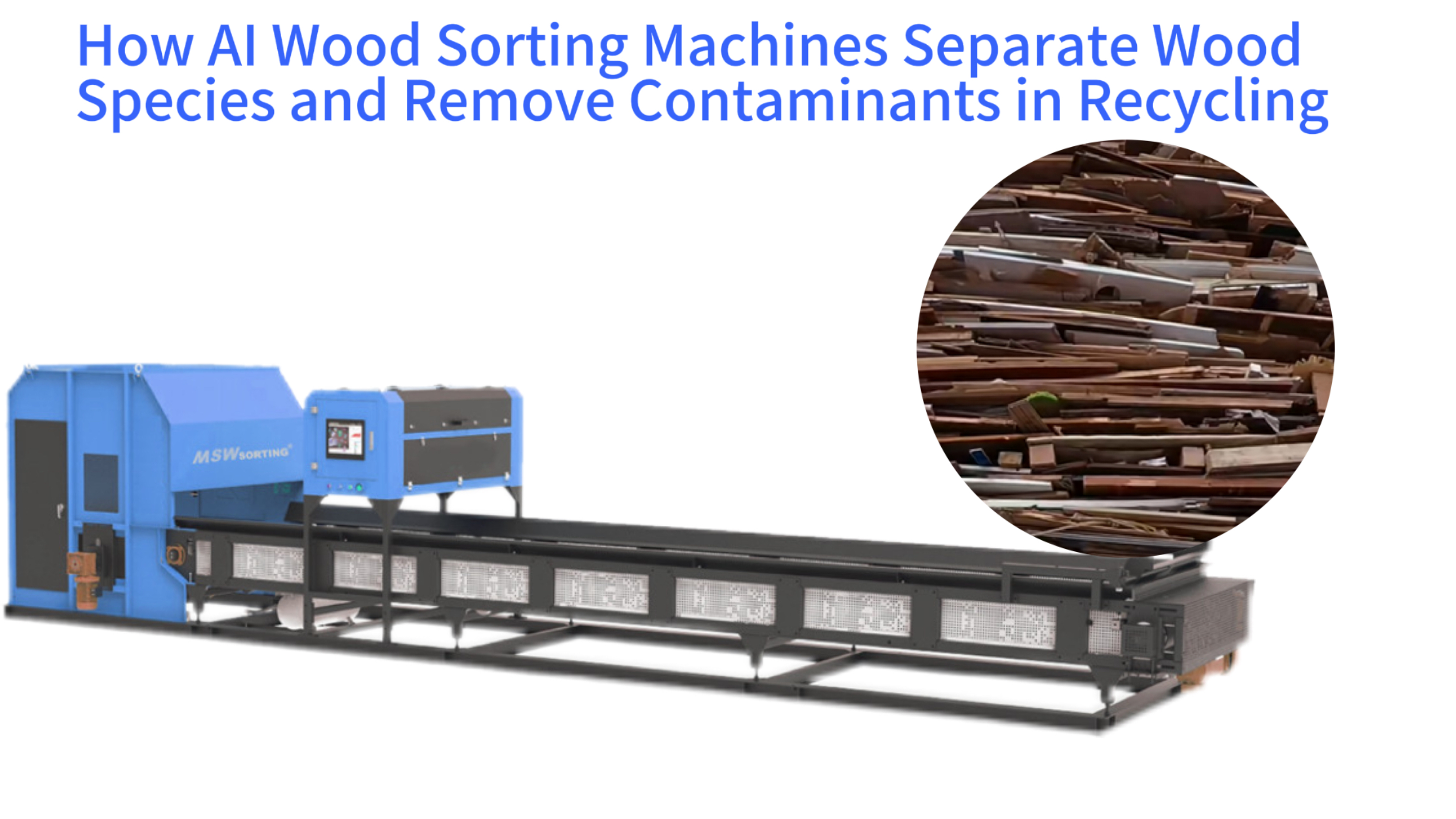
An AI wood sorting machine is not a single device but a complex, integrated system comprising perception, decision, and execution modules. Its intelligence stems from its ability to synthesize data from multiple sources and make classification decisions that mimic and often surpass human capabilities. The core of the system lies in a multi-modal sensor array that captures a comprehensive digital signature of each piece of wood as it passes through the scanning tunnel. This data is processed in real-time by powerful computing hardware running specialized deep learning algorithms, which assign a material identity and quality grade. Finally, a high-speed actuation system physically separates the material based on this digital instruction, completing the cycle from detection to action in a fraction of a second.
The Collaborative Data Acquisition of Multi-Modal Sensor Systems
The sensing suite of a modern AI wood sorter is designed to capture complementary data streams. High-resolution color cameras analyze surface features like color, grain pattern, and large visual defects. Laser 3D scanners precisely measure the geometry, volume, and surface topography of each piece. Near-infrared (NIR) or hyperspectral sensors probe the material's chemical composition, enabling the determination of wood species and moisture content based on their unique spectral signatures. For critical contaminant detection, X-ray systems are employed to visualize internal metal inclusions or variations in density caused by rot or voids. This fusion of visual, geometric, chemical, and structural data creates a rich, multi-dimensional profile that forms the basis for accurate AI analysis, far exceeding what any single sensor could achieve.
Real-Time Feature Recognition and Classification via Deep Convolutional Neural Networks
At the heart of the sorter's intelligence is a deep learning model, typically a convolutional neural network (CNN), trained on vast datasets containing millions of annotated wood images and sensor readings. This training process allows the algorithm to learn the subtle visual and spectral patterns that distinguish, for example, oak from ash, or pine from spruce. The model learns to recognize not only species but also defects such as knots, cracks, blue stain, and decay. Once deployed, the model operates in real-time, analyzing the fused sensor data for each object and outputting a classification with an associated confidence score. This process happens continuously as material flows on the conveyor, with the system making thousands of individual sorting decisions per hour.
The High-Speed Data Processing and Decision Logic Pipeline
Speed is paramount in recycling applications. The sensor data pipeline and decision logic are optimized for minimal latency. Industrial-grade computers equipped with powerful GPUs process the incoming sensor streams at the "edge," meaning directly on the machine. This edge computing architecture avoids the delays associated with sending data to a remote cloud server. The AI model analyzes the compiled data for each wood piece in milliseconds. From this analysis, the system generates a precise digital instruction—a "sorting ticket"—that specifies the detected species, grade, and the presence of any contaminants. This ticket is immediately transmitted to the machine's control system, which must execute the physical separation before the material travels beyond the reach of the ejection mechanism.
Precision Actuators Transforming Digital Decisions into Physical Separation
The final step in the sorting loop is the physical ejection of the material into the correct collection bin. This is accomplished by high-speed, high-precision actuators. The most common method is an array of pneumatic nozzles (air jets) aligned across the width of the conveyor. When a piece of wood identified for rejection (e.g., as a contaminant or a specific species) passes under the corresponding nozzle, a brief, powerful blast of air deflects it off the main belt into a chute. For larger or heavier pieces, mechanical flippers or robotic arms may be used. The timing and coordination of these actuators are critical, requiring synchronization with the conveyor speed and the precise location of the object, a task managed by the system's programmable logic controller (PLC).
Technical Pathways and Applications for High-Accuracy Wood Species Separation
Wood Species Sorting - Accuracy & Value Uplift Metrics
Hardwood vs Softwood Separation
AI Accuracy: 99.2%
Value Uplift: 25-40% for pure hardwood streams
Key Sensors: NIR + Laser Density Scanning
Solid Wood vs Engineered Wood
AI Accuracy: 98.7%
Value Uplift: 30-50% (avoids contamination)
Key Sensors: High-res Cameras + X-ray
High-Value Species Extraction
AI Accuracy: 97.8% (Walnut/Cherry/Teak)
Value Uplift: 100-200% (upcycling premium)
Key Sensors: Hyperspectral + Visual CNN
Fragmented Material Sorting
AI Accuracy: 96.5% (irregular shapes/sizes)
Throughput: Up to 50 tons/hour
Key Tech: Rotation-Invariant CNN Models
Accurately separating different wood species is fundamental to unlocking the highest value from recycled material. AI sorters excel in this area by utilizing the multi-dimensional data captured by their sensors to make distinctions that are often imperceptible to the human eye. The technology enables the creation of pure, single-species product streams from mixed feedstocks, which can then be marketed for specific, high-value applications. This capability transforms a low-value mixed waste pile into a sorted inventory of distinct raw materials, each with its own market and price point, dramatically improving the economics of the recycling operation.
Automated Sorting of Hardwoods from Softwoods Based on Density and Properties
One of the most basic yet valuable separations is between hardwood and softwood. While sometimes visually apparent, the distinction can be challenging for composite or painted pieces. AI sorters use data from NIR sensors and laser scanners to make this determination reliably. Hardwoods generally have a different chemical signature (lignin and cellulose composition) and often a higher density than softwoods. The system's algorithms are trained to recognize these spectral and physical differences. This allows for the automatic diversion of dense hardwoods like oak or maple toward value-added applications like furniture or flooring, while softer woods like pine are directed to uses such as animal bedding, biomass fuel, or panel core material.
Reliable Identification and Separation of Natural Solid Wood from Engineered Wood Products
The recycling stream contains significant amounts of engineered wood like plywood, oriented strand board (OSB), and medium-density fibreboard (MDF). These materials must often be separated from solid wood due to their different recycling pathways or chemical compositions (e.g., adhesives). AI vision systems are highly effective at this task. They analyze surface texture, edge patterns, and internal uniformity visible through advanced scanning. Plywood, for instance, shows distinct layered edges under high-resolution imaging, while MDF has a very uniform, featureless surface. By training the AI on examples of these materials, the sorter can reliably identify and separate them, ensuring that glue-containing products are processed appropriately and do not contaminate clean solid wood streams.
Recognition and Extraction of High-Value Residual Wood for Upcycling
Mixed construction and demolition waste often contains pieces of high-value timber from old furniture, architectural elements, or quality off-cuts. Manually finding these "needles in a haystack" is inefficient. AI sorters can be programmed to act as material scouts. By training the system to recognize specific color tones, grain patterns, or dimensions associated with desirable species like walnut, cherry, or teak, the machine can automatically pick these valuable pieces from the mainstream. This targeted extraction for upcycling or remanufacturing represents a significant revenue opportunity, turning what was oversight in a manual process into a profitable, automated sorting category that directly contributes to a facility's bottom line.
Robust Sorting Algorithms Adapted for Fragmented and Irregularly Shaped Feedstock
Wood waste is rarely neat and uniform; it consists of broken pieces, splintered edges, and irregular fragments, especially after initial shredding. A robust sorting algorithm must perform well on this non-ideal feedstock. Modern AI systems are trained on datasets that include a wide variety of shapes, sizes, and orientations. Techniques like data augmentation and the use of neural network architectures invariant to object rotation ensure that the classification accuracy remains high even for small, fragmented, or oddly shaped pieces. This adaptability is crucial for post-shredder sorting applications, where the goal is to create clean, contaminant-free wood chips or flakes from a pre-broken material stream.
Key Technologies and Efficacy in Contaminant Detection and Removal
Contaminant Detection Technologies & Removal Efficacy
| Contaminant Type | Detection Technology | Removal Efficacy | Key Benefit |
|---|---|---|---|
| Ferrous Metals (Nails/Screws) | Magnets + Metal Detectors | 99.5% | Prevents shredder/grinder damage |
| Non-Ferrous Metals (Al/Cu) | X-ray Transmission (XRT) | 98.8% | Captures non-magnetic metal contaminants |
| Chemical Coatings (Paint/Stain) | Hyperspectral Imaging | 97.2% | Complies with environmental regulations |
| Plastics/Rubber/Fabric | AI Visual Recognition (CNN) | 96.5% | Improves biomass fuel purity |
| Biological Deterioration | X-ray + Density Scanning | 95.0% | Ensures consistent material strength |
The presence of contaminants is a primary factor limiting the quality, safety, and marketability of recycled wood. AI sorting systems provide a multi-layered defense against these impurities by employing specific sensor technologies tailored to detect different contaminant types. The integration of these technologies allows for comprehensive screening, ensuring that non-wood materials are identified and removed before they can compromise downstream processes or end products. The efficacy of this removal directly translates to higher-quality output, reduced equipment wear, and compliance with stringent material specifications.
Non-Destructive Detection and Efficient Removal of Metal Inclusions
Metal is the most damaging contaminant in wood recycling. Sensor-based sorting machines employ two primary technologies for metal detection. Ferrous metals (iron, steel) are easily detected by powerful magnets or metal detectors. For non-ferrous metals like aluminum, copper, or brass, which are non-magnetic, X-ray transmission (XRT) technology is essential. XRT systems measure material density and atomic number, creating an image where metals appear distinctly brighter than wood. When a metal signature is detected, the system triggers a precise air jet to eject the contaminated piece. This proactive removal protects expensive shredder hammers, grinding screens, and other processing equipment from catastrophic damage, saving thousands in potential repair costs and production downtime.
Identification and Handling of Chemical Pollutants and Surface Coatings
Wood waste often carries chemical residues from paints, stains, preservatives, or fire retardants. These coatings can be problematic for composting, mulching, or certain manufacturing processes. Hyperspectral imaging sensors are particularly effective for this task. These sensors capture data across hundreds of narrow wavelength bands, creating a unique spectral "fingerprint" for each material. Different chemicals absorb and reflect light in characteristic ways. By training the AI on the spectral signatures of common coatings, the sorter can identify painted, treated, or stained wood even if the color appears similar to clean wood. This allows for the separate collection of chemically treated wood, which can then be sent for specialized processing or energy recovery, preventing contamination of clean wood streams.
Visual Recognition and Separation of Plastics, Rubber, and Fabric Contaminants
Plastic films, rubber seals, fabric upholstery, and insulation are common companions to waste wood. While sometimes loosely attached, they must be removed to produce clean wood chips. AI-powered visual recognition is highly effective here. Deep learning models are exceptionally good at distinguishing materials based on texture, reflectivity, and edge characteristics. A plastic film has a shiny, smooth texture and distinct edges that differ markedly from fibrous, matte wood. The AI can be trained to recognize these visual cues, even when contaminants are partially wrapped around a wood piece. Upon detection, the system activates the ejection mechanism to remove the contaminated item, significantly improving the purity of the final wood product for applications like boiler fuel or composting, where non-organic materials are strictly limited.
Early Screening for Biological Deterioration and Internal Defects
Not all contaminants are foreign materials; some are undesirable conditions within the wood itself. Wood that is heavily rotted, insect-damaged, or internally cracked has reduced value for many applications. X-ray and advanced density scanning technologies can screen for these internal flaws. Decayed wood has a lower density than sound wood, which shows up clearly in X-ray or laser-based density scans. Similarly, large internal voids or insect galleries create distinctive density variations. By setting appropriate thresholds, the sorter can identify and reject pieces with excessive internal deterioration. This is crucial for producing high-quality biomass fuel with consistent calorific value or for manufacturing wood-plastic composites where material strength is important, ensuring that only structurally sound material proceeds to these value-added uses.
Planning and Integration Considerations for Deploying an AI Sorter in a Recycling Yard
AI Wood Sorter Deployment - Step-by-Step Implementation
Successfully integrating an AI wood sorting system into an existing recycling operation requires careful forethought and strategic planning. It is not merely the purchase of a machine but the implementation of a new, intelligent process node within the material flow. A methodical approach from initial assessment through to commissioning and training is essential to realize the full return on investment. This involves a clear understanding of current operational bottlenecks, defining precise sorting goals, selecting the right system configuration, and ensuring seamless integration with upstream and downstream equipment. Proper planning mitigates risk and sets the stage for a smooth transition to automated, data-driven sorting.
Feasibility Analysis: Auditing Material Flow and Defining Sorting Objectives
The first step is a thorough audit of the facility's incoming material. This involves sampling the waste stream to quantify the percentages of different wood species, the types and frequencies of contaminants (metal, plastic, rock, etc.), and the typical size range of pieces. Concurrently, management must define clear business objectives. Is the goal to produce ultra-clean wood chips for a specific bioenergy contract? To extract high-value hardwoods for resale? To meet new regulatory purity standards for landscape mulch? These objectives will directly dictate the required performance specifications of the sorter, such as the necessary detection sensitivity for metals, the accuracy of species identification, and the required throughput in tons per hour. This data-driven foundation is critical for making an informed capital investment.
System Selection and Process Flow Redesign
With objectives defined, the next phase is selecting the appropriate sorter model and redesigning the plant's process flow. Selection criteria include required throughput capacity, maximum feed size, the specific sensor suite needed (e.g., is X-ray essential for non-ferrous metal?), and the number of sorting categories (e.g., hardwoods, softwoods, engineered wood, reject). The sorter must be integrated into the line, typically after primary size reduction (shredding) but before final grinding or chip refining. This often requires adding or modifying conveyors, installing appropriate feeding systems to ensure a single layer of material, and planning for collection bunkers for each sorted fraction. The goal is to create a smooth, efficient material flow where the sorter acts as the intelligent quality control gate.
Best Practices for Installation, Calibration, and Performance Validation
Professional installation is crucial. This includes ensuring a stable, level foundation, providing adequate electrical power and compressed air for the pneumatic ejectors, and establishing network connectivity for data reporting. Once mechanically installed, the system must be calibrated. This involves running representative samples of the facility's own wood waste through the machine and "teaching" the AI by confirming or correcting its classifications. This process tunes the algorithm to the specific material characteristics of that yard. Finally, a formal performance validation test should be conducted, processing a known batch of material and verifying the sorting accuracy and purity of the output fractions against the predefined targets to ensure the system meets its contractual specifications.
Establishing Operator Training and Standardized Maintenance Protocols
The sophistication of an AI sorter necessitates proper training for operations and maintenance staff. Operators need to understand the human-machine interface, how to monitor system performance through its digital dashboard, and how to perform basic diagnostics and clearing of occasional jams. Maintenance technicians require training on routine procedures like cleaning optical sensor lenses, checking and replacing air filters and solenoid valves, and performing periodic calibration checks. Developing and adhering to a standardized preventive maintenance schedule is key to ensuring long-term reliability and consistent sorting performance. A well-trained team ensures the technology is used to its full potential and minimizes unplanned downtime.
Comprehensive Benefit Analysis: Operational, Economic, and Environmental Impact
AI Wood Sorter - Quantifiable Benefits (Average Industry Metrics)
Throughput Increase
30-50% avg. vs manual sorting
Value Uplift
25-40% for pure wood streams
Maintenance Cost Reduction
60-70% less equipment damage
Sorting Accuracy
>98% consistent purity
Investing in an AI wood sorting system represents a strategic capital decision with multidimensional returns. The benefits extend far beyond simply replacing manual labor, impacting nearly every aspect of a recycling yard's operations, economics, and environmental footprint. A holistic analysis reveals gains in efficiency, revenue, cost savings, and sustainability compliance. By converting a variable, low-efficiency process into a fixed, high-performance one, these systems provide predictable operational outcomes and create new opportunities for business growth and market differentiation in the competitive recycling industry.
Direct Quantifiable Impact on Sorting Efficiency and Plant Throughput
The most immediate benefit is a dramatic increase in sorting speed and consistency. While a human sorter might examine a few pieces per second with declining accuracy over a shift, an AI sorter can analyze and make decisions on hundreds of pieces per minute, 24 hours a day. This can increase total plant throughput by 30-50% or more by eliminating the sorting bottleneck. Furthermore, the sorting accuracy, often exceeding 98%, is far higher and more consistent than manual methods. This efficiency liberates workers from monotonous, physically demanding tasks, allowing them to be redeployed to higher-value roles in maintenance, quality control, or logistics, thereby improving overall workforce utilization and job satisfaction.
Enhancement of Recycled Material Value and Access to New Markets
By creating pure, sorted product streams, AI sorting directly increases the market value of output materials. Clean, species-specific hardwood chips command a premium for mulch, landscaping, or composite feedstocks compared to mixed, contaminated chips. The removal of all metal and inert contaminants makes wood fuel suitable for sensitive, high-efficiency biomass boilers. The ability to reliably produce a consistent, high-purity product opens doors to new, more lucrative markets and allows recyclers to negotiate better contracts based on guaranteed material specifications. This transforms the business model from selling a low-grade commodity to marketing engineered, value-added raw materials with certified quality.
Optimization of Operational Cost Structure and Reduction of Long-Term Risk
AI sorting delivers significant operational cost savings. The reduction in manual sorting labor is a direct cost saving. Perhaps more importantly, the near-total removal of metal contaminants drastically reduces wear and tear on shredders, grinders, and conveying systems, lowering maintenance costs and extending equipment life. Fewer contaminants also mean less residual waste sent to landfill, reducing associated tipping fees. The consistency of the automated process reduces product quality variability and the risk of rejected loads from customers, protecting revenue. These combined effects create a more stable, predictable, and lower-cost operational profile, strengthening the facility's financial resilience.
Sustainable Contributions: Enhanced Environmental Compliance and Reduced Carbon Footprint
The environmental benefits are substantial. By improving the purity and yield of recycled wood, the system directly supports the principles of a circular economy, reducing demand for virgin timber and conserving forest resources. The production of clean, high-quality biomass fuel from waste displaces fossil fuels, reducing greenhouse gas emissions. Reliable contaminant removal ensures compliance with environmental regulations for soil amendments and other applications, protecting the facility from fines and reputational damage. The data generated by the sorter provides quantifiable evidence of recycling rates and material purity, supporting corporate sustainability (ESG) reporting and demonstrating a genuine commitment to environmental stewardship to customers, regulators, and the community.