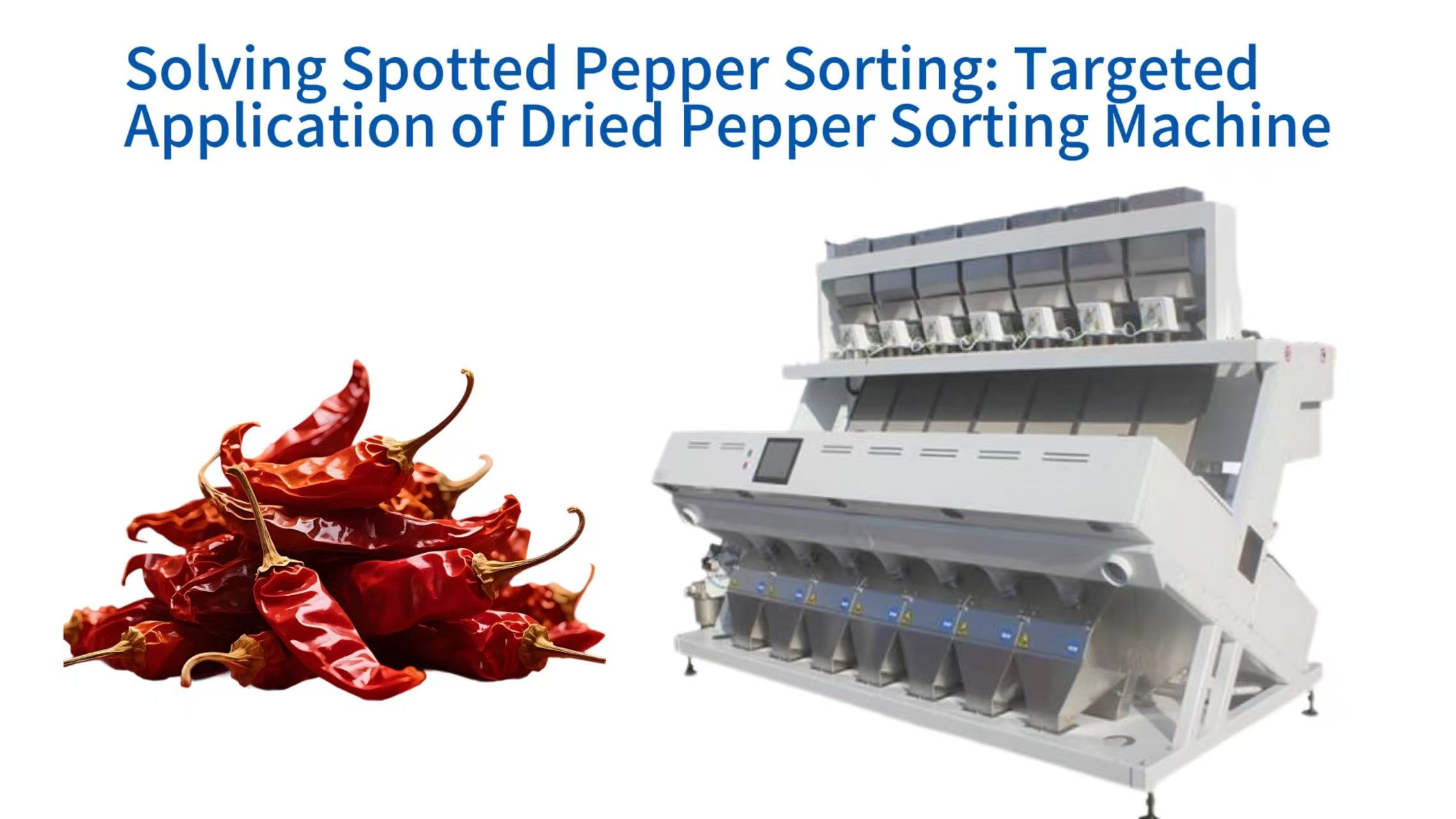
This comprehensive guide explores how a dried pepper sorting machine addresses one of the most persistent challenges in chili processing: the accurate identification and removal of spotted, discolored, and defective peppercorns. Unlike traditional sorting methods that struggle with subtle color variations, modern optical sorting technology combines high-resolution imaging, artificial intelligence, and precision ejection systems to achieve exceptional purity rates. The following sections examine the science behind spot detection, the machine's operational workflow, specific applications for different pepper varieties, economic benefits for processors, selection criteria for different production scales, maintenance requirements for consistent performance, and future technological advancements that promise even greater accuracy. Readers will gain practical insights into how automated sorting transforms quality control while reducing labor dependency and operational costs.
Understanding the Spotted Pepper Challenge in Modern Processing Lines
Sorting Accuracy Comparison
Spotted peppers present a unique quality control problem for food processors because their visual defects often indicate underlying issues such as fungal infection, insect damage, or improper drying. These blemishes can range from small dark specks to large discolored patches, making them difficult to detect consistently with human vision. A dried pepper sorting machine addresses this challenge by employing multi-spectral cameras that capture images across multiple wavelength bands, revealing spots that might be invisible under normal lighting conditions. The financial impact of undetected spotted peppers is substantial, with a single contaminated batch potentially triggering costly product recalls or damaging brand reputation. Studies indicate that manual inspection typically achieves only 70-80% accuracy for small surface defects, whereas automated systems routinely exceed 99% detection rates for similar imperfections. Processors who upgrade to intelligent sorting technology report immediate reductions in customer complaints related to visual quality issues, demonstrating the direct correlation between sorting precision and market acceptance.
The biological origins of pepper spotting vary significantly depending on growing conditions, harvest timing, and post-harvest handling practices. Some spots result from sunscald during field ripening, while others develop from bacterial spot disease or anthracnose fungal infections. Each type of defect has unique spectral signatures that a pepper sorting machine can be trained to recognize through machine learning algorithms. Advanced systems can differentiate between harmless cosmetic spots and defects that affect flavor or food safety, allowing processors to make nuanced quality decisions rather than applying blanket rejection criteria. This capability becomes particularly valuable when handling organic peppers, where minor superficial blemishes are acceptable but internal decay is not. By understanding the specific defect profile of their incoming raw material, operators can configure sorting parameters to maximize both purity and yield simultaneously, achieving the optimal balance between quality standards and economic efficiency.
How Optical Technology Identifies and Eliminates Spotted Defects
Multi-Spectral Imaging for Surface Anomaly Detection
The core detection capability of modern sorting equipment relies on sophisticated camera systems that capture images across visible and near-infrared wavelengths. These sensors can distinguish between normal pepper tissue and discolored areas by analyzing reflectance patterns that correspond to chemical composition changes in damaged cells. A belt type AI color sorting machine typically operates at resolutions exceeding 30 megapixels, allowing it to identify spots as small as half a millimeter in diameter while processing several tons of product per hour. The imaging system illuminates each pepper from multiple angles simultaneously, eliminating shadows that might otherwise obscure defects on curved surfaces. This multi-angle approach ensures consistent detection regardless of how individual peppercorns are oriented as they pass through the inspection zone, a critical feature for maintaining accuracy when handling irregularly shaped dried peppers.
Deep Learning Algorithms for Spot Classification
Artificial intelligence transforms raw image data into actionable sorting decisions by applying neural networks trained on thousands of example images. These models learn to distinguish between acceptable variations in pepper coloration and true defects that warrant rejection. When processing spotted peppers, the chute type AI sorting machine evaluates not only spot size and darkness but also spot morphology, edge characteristics, and spatial relationships with surrounding healthy tissue. The algorithm can identify patterns that human inspectors might miss, such as early-stage fungal infections that appear as subtle halo effects around small necrotic centers. As the system processes more product, its detection accuracy continues improving through machine learning updates that incorporate new defect examples encountered during production, creating a self-optimizing quality control system that adapts to seasonal variations in pepper quality.
High-Speed Pneumatic Ejection for Precision Removal
Once the AI system identifies a defective pepper, the machine must remove it from the product stream with millisecond precision to avoid disrupting surrounding good product. High-speed air valves activate within thousandths of a second after detection, producing precisely aimed bursts of compressed air that deflect only the targeted peppercorn. Modern high speed ejection systems achieve rejection rates exceeding 98% while maintaining good product carryover below one percent, meaning that for every hundred defective peppers removed, fewer than one acceptable pepper is mistakenly ejected. This efficiency level requires careful calibration of air pressure, nozzle alignment, and timing synchronization between the camera system and ejection mechanism. Processors can monitor real-time rejection statistics on the machine's control panel, allowing immediate adjustments when product characteristics change, such as when switching between different pepper varieties or suppliers.
Real-Time Quality Monitoring and Data Logging
Beyond active sorting, modern machines provide continuous quality surveillance that helps operators identify emerging problems before they affect large production volumes. The system records defect rates by category, tracking whether spots result from fungal issues, insect damage, mechanical injury, or other causes. A dried pepper optical sorting machine equipped with data logging capabilities can generate alerts when defect rates exceed preset thresholds, enabling rapid investigation of upstream issues such as drying inconsistencies or storage problems. Historical data analysis reveals patterns that might otherwise remain hidden, such as increased spotting in product from specific growing regions or harvest periods. This information empowers processors to work with suppliers on preventative measures, reducing defect incidence at the source rather than simply removing affected product downstream. The transition from reactive quality control to proactive quality management represents one of the most significant long-term benefits of adopting intelligent sorting technology.
Application Strategies for Different Pepper Types and Defect Profiles
High-Speed Ejection System Performance
| Parameter | Performance Rate |
|---|---|
| Defect Rejection Rate | > 98% |
| Good Product Carryover | < 1% |
Red Bell Pepper Sorting for Surface Blemishes
Red bell peppers present unique sorting challenges because their uniform coloration makes even minor spots highly visible to consumers. The contrast between bright red healthy tissue and darker blemishes means that relatively small defects can cause product to be downgraded or rejected. A dried bell pepper sorting machine optimized for red varieties typically employs enhanced red-channel sensitivity to detect subtle variations in hue that indicate bruising or beginning decay. Processors handling premium-grade red peppers for export markets often configure their sorters with tighter tolerance settings, accepting only product that achieves 99.5% color uniformity. This stringent standard requires multiple inspection passes or higher-resolution camera systems, but the resulting quality premium typically justifies the additional processing cost. Many facilities operate two sorting stages, with the first removing obvious defects and the second performing final polishing to achieve the highest quality grades.
Green Chili Processing for Rot and Mold Detection
Green chilies pose different detection challenges because their color naturally varies from pale yellow-green to deep forest green, making it harder to define a single standard for acceptable product. Mold infections on green chilies often appear as white or gray patches that contrast well with healthy tissue, but early-stage rot may only cause slight darkening that inexperienced sorters might miss. The vegetable sorting machine addresses this challenge by using near-infrared sensors that detect chemical changes in cell structure before visible discoloration appears. This early detection capability is particularly valuable for green chili processors who supply products destined for further processing into sauces or pastes, where internal decay could affect flavor even if external appearance remains acceptable. By removing affected product at the earliest possible stage, processors prevent quality degradation from spreading to adjacent product during storage or transport, maintaining overall batch integrity.
Spotted Pepper Removal in Mixed Color Batches
Many processing operations receive peppers with heterogeneous coloration, including green, red, yellow, and orange specimens within the same batch. Sorting mixed-color product requires algorithms capable of distinguishing between natural color variations and genuine defects without rejecting acceptable peppers simply because they differ from a single reference color. Advanced dried chili sorting solutions employ classification models that learn the expected color range for each pepper type present in the mixture, then flag only those specimens whose coloration falls outside statistically normal parameters for their category. This approach preserves valuable product diversity while still removing truly defective items. For example, a naturally two-toned pepper might be retained, while a similarly colored pepper showing early decay would be rejected based on other spectral indicators such as moisture content or surface texture. This nuanced decision-making capability represents a significant advance over early color sorters that could only compare each object against a single color standard.
High-Volume Processing for Industrial Pepper Applications
Large-scale pepper processors handling multiple tons per hour require sorting systems that maintain accuracy even at maximum throughput rates. These industrial installations often employ multiple machines operating in parallel, with product distribution systems ensuring each unit receives a consistent flow. A pepper AI sorting machine designed for high-volume applications typically features wider inspection chutes or broader conveyor belts, along with more powerful computing hardware capable of processing the increased image data flow. Processing capacities ranging from three to ten tons per hour are common, with the largest systems incorporating up to 768 sorting channels operating simultaneously. Despite the high throughput, modern machines maintain spot detection sensitivity comparable to slower systems, thanks to advances in camera frame rates and processor speeds. Operators managing these large installations rely heavily on automated reporting features to track performance metrics and identify maintenance needs before they cause production interruptions.
Economic Benefits of Automated Spotted Pepper Removal
Labor Cost Reduction and Resource Reallocation
Manual pepper sorting requires significant human resources, with typical operations employing dozens of workers on each shift to inspect product moving along conveyor belts. A single industrial pepper color sorter can replace ten to thirty manual sorters, depending on product volume and defect rates, while operating continuously without breaks or fatigue-related accuracy declines. The labor savings alone often justify equipment investment within twelve to eighteen months of operation, with additional benefits accruing from reduced training requirements and lower worker turnover costs. Freed personnel can be reassigned to more valuable activities such as equipment maintenance, quality assurance monitoring, or process improvement initiatives that further enhance facility efficiency. Processors who have automated their sorting operations consistently report that the transition from manual to machine sorting transforms their workforce from repetitive inspection roles to technical positions that offer greater job satisfaction and skill development opportunities.
Reduction of Good Product Loss During Sorting
Traditional sorting methods often sacrifice significant quantities of acceptable product to ensure that no defects reach customers. Manual sorters typically remove several good peppers for every defective one they identify, driven by caution and the difficulty of making precise distinctions at speed. Automated pepper sorting equipment achieves far better selectivity, typically removing less than one good pepper for every hundred defects eliminated. This reduction in false rejects translates directly to increased yield, potentially recovering hundreds of thousands of dollars in product value annually for large processors. The economic impact becomes even more significant when sorting high-value pepper varieties destined for premium markets, where every kilogram of product commands substantial pricing. By optimizing the balance between purity and yield, processors can maximize their overall profitability while maintaining the quality standards required by their most demanding customers.
Brand Protection Through Consistent Quality Output
Consumer expectations for product quality have risen steadily across all food categories, with social media and online reviews making every quality failure visible to millions of potential customers. A single spotted pepper reaching a consumer can trigger negative reviews that damage brand perception far beyond the value of the individual product. Automated precision sorting technology provides consistent, verifiable quality control that manual inspection cannot match, with documented performance records that satisfy both internal quality standards and external audit requirements. Major retailers and food service operators increasingly require suppliers to demonstrate automated sorting capability as a condition of doing business, recognizing that machine vision systems deliver more reliable results than human inspection. Processors who invest in advanced sorting equipment gain not only operational efficiency but also a powerful marketing advantage, able to certify their products as optically sorted to the highest standards of purity.
Extended Equipment Life Through Reduced Contaminant Load
Removing spotted and defective peppers early in the production process protects downstream equipment from damage that would otherwise occur when compromised product reaches grinding, drying, or packaging machinery. Soft or rotting peppers can clog screens, adhere to cutting surfaces, and contaminate processing equipment with sticky residues that require frequent cleaning. A sensor based sorting machine positioned at the front of the processing line removes these problematic items before they can affect other operations, reducing maintenance requirements and extending the service life of subsequent equipment. Processors who have implemented front-line sorting report up to forty percent reductions in cleaning downtime and significantly longer intervals between major equipment overhauls. These secondary benefits, while less visible than direct labor savings, contribute substantially to the overall return on investment for automated sorting systems, particularly in facilities running multiple shifts or processing abrasive products that accelerate wear on unprotected machinery.
Selecting the Right Configuration for Your Processing Needs
Key Configuration Selection Factors
✅ Daily Production Volume
✅ Facility Space Limitation
✅ Pepper Varieties Processed
✅ Output Quality Standards
✅ Future Expansion Plans
The optimal sorting machine configuration depends on several factors including daily production volume, available facility space, pepper varieties processed, and desired output quality standards. Chute-type sorters typically achieve higher throughput for free-flowing granular products, while belt-type machines better handle fragile or irregularly shaped peppers that could be damaged during free fall. Processors should request on-site testing with their specific product before finalizing equipment selection, as actual performance can vary based on pepper characteristics that may not be apparent from specification sheets alone. Many manufacturers maintain test facilities where potential customers can run their product through demonstration machines while observing real-time sorting results, providing valuable data for return on investment calculations and configuration decisions.
Future expansion plans should influence equipment selection, as modular sorting systems allow incremental capacity increases through the addition of extra sorting channels or wider conveyor belts. Processors anticipating growth may prefer larger frame machines that can accept upgraded camera systems or additional ejection modules as production demands increase. Remote diagnostic capabilities have become increasingly important, allowing equipment suppliers to monitor machine performance and troubleshoot issues without requiring on-site visits. This connectivity reduces downtime and ensures that processors receive timely support when problems arise, a critical consideration for facilities operating around the clock during peak harvest seasons. When evaluating suppliers, processors should compare not only initial equipment costs but also ongoing support availability, spare parts pricing, and training programs for operator and maintenance personnel.
Maintenance Protocols for Consistent Sorting Performance
Regular cleaning of optical components represents the most critical maintenance activity for sustained sorting accuracy. Pepper dust and oil residues gradually accumulate on camera windows, light sources, and background plates, gradually degrading image quality and reducing detection sensitivity. Daily cleaning using manufacturer-approved methods and solutions prevents this gradual performance decline, maintaining consistent sorting results throughout the production campaign. Operators should document cleaning activities and record any changes in rejection rates that might indicate developing issues with optical components, allowing proactive intervention before significant quality problems emerge.
Pneumatic system maintenance focuses on air filter inspection, nozzle cleaning, and valve performance verification. Compressed air quality directly affects ejection accuracy, with moisture or oil contamination causing inconsistent valve operation that reduces rejection precision. Weekly checks of air preparation units ensure proper filtration and drying, while monthly nozzle inspections identify wear or blockages that could affect ejection patterns. Valve response time testing using built-in diagnostic routines confirms that each ejection channel operates within specification, with slow valves replaced before they cause quality failures. Processors who implement systematic preventive maintenance typically achieve sorting machine service lives exceeding ten years, with consistent performance throughout that period.
Future Developments in Pepper Sorting Technology
Future Pepper Sorting Technology Trends
Hyperspectral imaging represents the next frontier in defect detection, offering the ability to identify specific chemical compounds associated with decay, mold, or insect infestation. Unlike current systems that infer defects from visual appearance, hyperspectral sorters directly detect the molecular signatures of spoilage, potentially identifying problems before any visible symptoms appear. Early commercial implementations have demonstrated the ability to detect ochratoxin contamination in peppercorns at levels far below current regulatory limits, opening new possibilities for food safety assurance. As sensor costs decrease and processing power increases, hyperspectral technology will likely become standard on premium sorting equipment within the next five years.
Artificial intelligence continues advancing rapidly, with new neural network architectures achieving human-level performance on complex visual discrimination tasks. Future sorting systems will incorporate self-supervised learning, allowing machines to develop new defect detection capabilities without requiring extensive manual image labeling. This advancement will enable rapid deployment of sorting solutions for novel pepper varieties or emerging defect types, with systems learning from production data rather than relying on pre-trained models. Integration with supply chain tracking systems will allow sorters to adjust parameters automatically based on product origin information, optimizing settings for specific growing regions or harvest conditions without operator intervention. These developments promise to further reduce quality risk while improving processing efficiency, making automated sorting increasingly essential for competitive pepper processing operations.