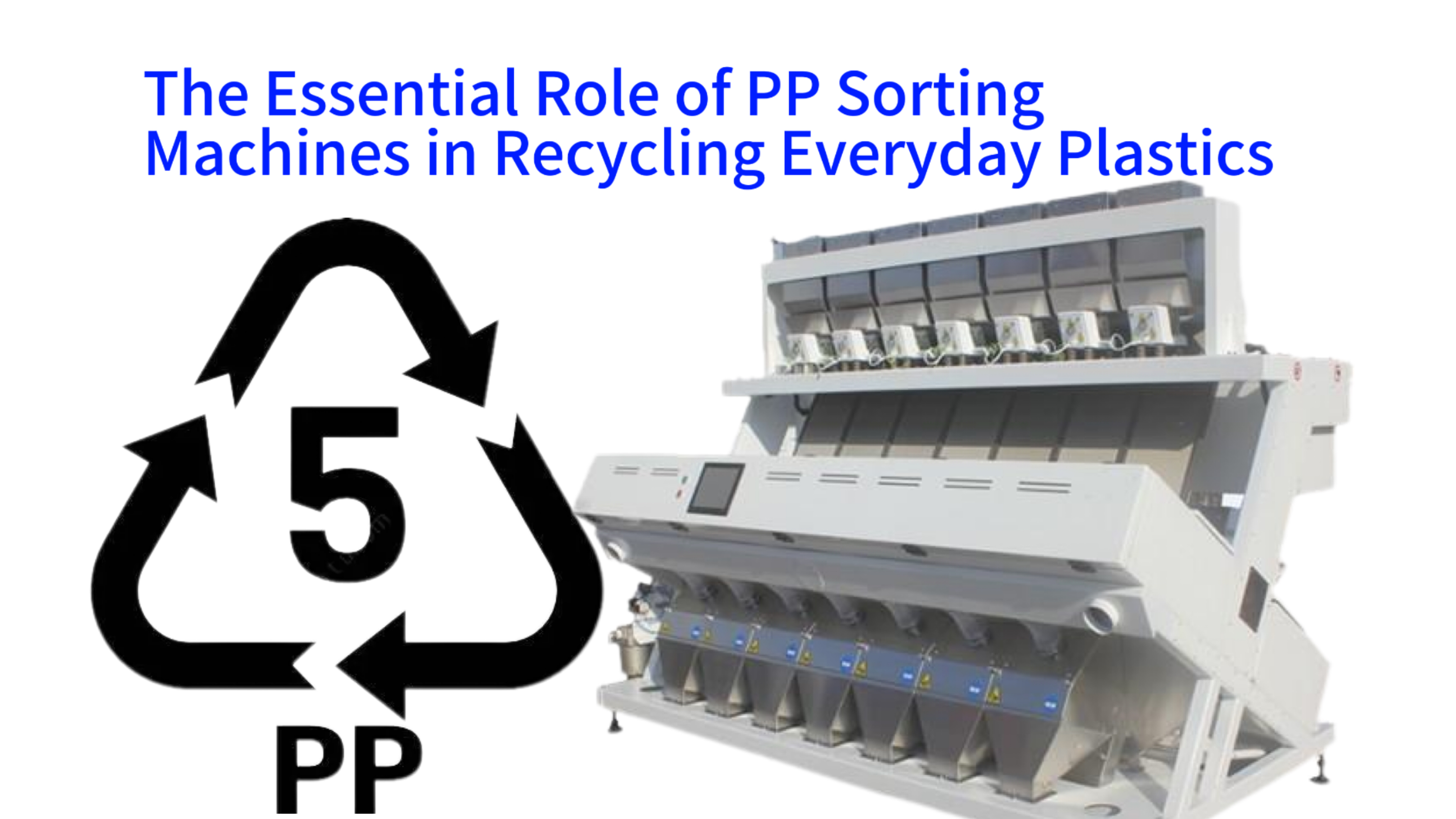
Polypropylene, commonly known as PP, is one of the most versatile and widely used plastics in our daily lives. From yogurt cups and microwaveable food containers to durable toys and bottle caps, PP is everywhere. However, its very ubiquity makes effective recycling both a challenge and a necessity. This page explores the multifaceted applications of specialized PP sorting machines within the daily necessities recycling stream. We will delve into how these advanced systems identify and separate PP from complex waste, examine the specific household items they process, and highlight the significant environmental and economic benefits of high-purity PP recovery. The journey of a single food container from your bin back to a new product is powered by remarkable technological precision.
PP Recycling & Sorting Workflow
The Pervasiveness of PP in Our Daily Lives
Before understanding the sorting process, it is crucial to recognize the scope of PP in household waste. Polypropylene is favored for its resilience, resistance to heat and chemicals, and adaptability. This makes it the material of choice for a staggering array of consumer goods. The challenge for recycling facilities is that these items come in all shapes, sizes, colors, and often with food residue or labels attached, creating a mixed and contaminated stream that must be untangled.
Common PP Household Items Classification
PP Usage Distribution in Daily Items
Key PP Application Characteristics
| Kitchen/Food Packaging | Heat-resistant, rigid/flexible forms |
| Personal Care/Household | Chemical-resistant, durable |
| Toys/Durable Goods | Impact-resistant, injection-molded |
Common Kitchen and Food Packaging Items
A significant portion of household PP waste originates in the kitchen. This includes durable food storage containers, often with numbered 5 recycling symbols, tubs for butter, spreads, and ice cream, and thin-walled pots for yogurt and desserts. Even ketchup bottle caps and syrup jugs are frequently made from PP. These items are typically rigid but can vary greatly in color, from transparent to white or various pigments, which a PP sorting machine must accurately classify. The presence of leftover food or adhesive paper labels adds another layer of complexity to the mixed plastic sorting process.
Furthermore, ready-meal trays that are microwave-safe are commonly manufactured from polypropylene. These trays must withstand high temperatures without deforming, a key property of PP. After use, they often contain food grease and residues. Advanced sorting technology is essential to reliably pick these items out of a conveyor belt full of other plastics and waste, ensuring they are directed towards a dedicated PP recycling line for proper cleaning and reprocessing.
Personal Care and Household Product Containers
Moving beyond the kitchen, PP is a staple in bathrooms and laundry rooms. Shampoo and conditioner bottles, while often made from PET or HDPE, frequently have PP caps and pumps. Detergent bottles, especially those for concentrated liquids, and cleaning spray bottles are also major sources of PP waste. These containers are designed to be chemically resistant and durable, perfect for housing household chemicals. Their recycling is vital to close the loop on post-consumer plastic.
Other everyday items include cosmetic compacts, pill bottles, and even disposable razors. The variety is immense, requiring a sorting system with sophisticated advanced detection capabilities. These systems must differentiate between the PP body of a detergent bottle and a similar-looking HDPE container, as cross-contamination can degrade the quality of the recycled output. Precision here directly translates to the value and usability of the recycled PP material.
Toys, Furniture, and Durable Goods
Polypropylene's toughness makes it ideal for items that undergo wear and tear. Many children's toys, from building blocks to outdoor play equipment, are injection-molded from PP. Small home furniture like storage bins, wastebaskets, and garden chairs are other common examples. At the end of their life, these bulky items pose a distinct sorting challenge due to their size and potential composite structure. Specialized sorting lines handle this rigid plastic sorting stream.
When these durable goods enter the recycling facility, they are often shredded into smaller flakes. This is where the sorting process becomes particularly granular. A flake from a red toy car must be separated from a flake from a blue HDPE bottle. Modern PP sorting machines excel at this task, analyzing each small piece individually based on its molecular signature rather than its original shape or size, ensuring a pure stream of recycled polypropylene.
How PP Sorting Machines Identify the Target Material
The core intelligence of a PP sorting machine lies in its sensor technology. Unlike manual sorting, which relies on visual cues and can be error-prone, automated systems use scientific principles to identify materials with exceptional accuracy. The process begins as mixed plastic waste is spread into a single layer for optimal scanning, a critical step enabled by smart material feeding systems.
PP Material Identification Technology Process
Near-Infrared (NIR) Spectroscopy as the Primary Tool
The workhorse technology for plastic sorting is Near-Infrared spectroscopy. When NIR light is shined on a plastic flake or item, the material absorbs and reflects specific wavelengths based on its molecular structure. Each type of plastic, including PP, has a unique spectral "fingerprint." Sophisticated sensors capture this reflected light and compare the data to a vast library of known material signatures stored in the machine's computer. This allows the system to make a near-instantaneous identification, distinguishing PP from PET, HDPE, PVC, and others with accuracy rates typically exceeding 95%. You can learn more about this core technology on our dedicated NIR sorter page.
This method is highly effective for most colored and clear PP items. However, certain additives, like carbon black used to create black plastics, can absorb the NIR signal, making the material "invisible" to standard NIR sensors. For these challenging streams, alternative or supplemental technologies are required, which will be discussed later. The continuous evolution of sensor libraries and algorithms also allows these machines to adapt to new plastic formulations and packaging types entering the market.
Complementary Color and AI Recognition Systems
While NIR determines the material type, other sensors work in tandem to sort by color and remove contaminants. High-resolution RGB cameras and laser sensors provide detailed visual data on each item's color, shape, and surface structure. This is crucial for creating high-value recycled streams; for instance, separating natural translucent PP from brightly colored PP can increase its market value for manufacturers wanting a specific hue in their new products.
Furthermore, artificial intelligence and machine learning are revolutionizing this field. An AI sorter can be trained to recognize specific objects—like a PP yogurt pot versus a PS foam cup—based on thousands of visual features, not just the base material. This is exceptionally useful for handling the complex shapes and labeled items found in household recycling. The AI continuously improves its accuracy, learning from every decision it makes to better handle the unpredictable nature of the waste stream.
Handling Special Cases: Black Plastics and Films
Black plastic items, common in ready-meal trays and electronic equipment housings, have historically been difficult to recycle because carbon black pigments absorb the NIR signal. Modern PP sorting machines overcome this using modified Mid-Wave Infrared (MWIR) or laser-based technologies that can penetrate the dark pigment and still read the underlying polymer fingerprint. This breakthrough has significantly improved recycling rates for these items.
Another distinct category is PP films and flexible packaging, such as the woven plastic used in reusable shopping bags or certain food wrappers. These lightweight, flexible materials require specialized handling to be presented properly to the sensors. They are often sorted using film plastic sorting machine technology, which may use different air-jet configurations or mechanical methods to separate them from rigid plastics without being blown off course or tangled.
The Sorting and Ejection Process in Action
Once a PP item is positively identified, the machine must physically separate it from the fast-moving waste stream. This happens in a fraction of a second and is a marvel of precision engineering. The entire sequence, from detection to ejection, must be perfectly synchronized to achieve the high purity levels required by recyclers and plastic manufacturers.
Sorting & Ejection System Performance
Real-Time Processing Metrics
Decision-making time: Milliseconds
Conveyor speed: Up to 3 m/s
Data processing capacity: 10,000+ items/min
Ejection System Specifications
Air valve response time: <1ms
Air pressure range: 0.4-0.8 MPa
Ejection accuracy for rigid PP: >98%
Ejection accuracy for PP films: >92%
Sorting Criteria Flexibility: Programable for material type (all PP/clear PP), color (natural/colored), contamination level (label-free/clean) to meet market demands.
Real-Time Data Processing and Decision Making
Between the sensor scan and the physical ejection lies a critical software layer. The sensor data is processed in real-time by powerful onboard computers. Using the material and color information, the software makes a split-second decision: keep or reject. This decision is tied to the exact location of the item on the conveyor belt. The coordinates are tracked as the item travels a short, precisely calibrated distance to the ejection module. This high-speed decision-making is a core function of modern sensor-based sorting machine systems.
The software allows for incredibly nuanced sorting criteria. Operators can program the machine to sort all PP, or only clear PP, or to reject any PP item that has a specific color of label contamination. This flexibility is key to handling the diverse stream of daily necessities, allowing facilities to tailor their output to meet specific market demands and maximize the economic return from the recovered materials.
High-Speed Precision Ejection Technology
The physical act of separation is most commonly performed by a bank of ultra-fast, precisely controlled air valves. When the target PP item passes over these valves, a brief but powerful jet of compressed air is fired, knocking it off the main conveyor and into a dedicated collection chute. The timing of this air pulse is measured in milliseconds and is critical; firing too early or too late would result in missing the target or ejecting the wrong material.
This high-speed ejection system operates thousands of times per minute. For rigid PP flakes, the accuracy is exceptionally high. For lighter film materials, the air pressure and valve timing are carefully adjusted to ensure effective separation without causing the material to flutter uncontrollably. The reliability and speed of this ejection mechanism directly determine the throughput and profitability of the recycling sorting line.
From Sorted PP to New Products: Closing the Loop
The output of a well-tuned PP sorting machine is a baled pile of predominantly polypropylene material. This is not the end, but the beginning of its new life. The sorted PP is sold to recyclers who wash, melt, and reform it into pellets. These recycled PP pellets then become the raw material for manufacturers, effectively closing the loop and creating a circular economy for plastic.
Recycled PP vs Virgin PP: Benefits Comparison
| Metrics | Virgin PP | Recycled PP (rPP) | Improvement |
|---|---|---|---|
| Energy Consumption | High (fossil fuel-based) | ~70% lower | ↓ 70% |
| CO₂ Emissions | 1 ton/ton PP | ~0.3 tons/ton PP | ↓ 70% |
| Market Value (High-Purity) | Baseline | 80-90% of virgin PP | Cost saving |
| Waste Reduction | None | 1 ton rPP = 1 ton waste diverted | 1:1 diversion |
rPP Applications: Garden furniture, automotive parts, storage bins, food-grade packaging (multi-layer), toys, etc.
Manufacturing New Daily Necessities from Recycled PP
Recycled polypropylene, or rPP, has excellent properties for many applications. It is commonly used to manufacture non-food-contact items like garden furniture, flower pots, automotive battery cases, and storage bins. As washing and purification technologies improve, the quality of rPP has increased to where it can now be used in some food-grade applications, often in a middle layer of multi-layered packaging. This gives the old yogurt pot a genuine chance to become a new yogurt pot, dramatically reducing the need for virgin plastic.
The environmental impact is substantial. Producing new items from rPP requires significantly less energy and fossil fuels than manufacturing from virgin materials. It also reduces landfill waste and plastic pollution. By creating a reliable supply of high-quality rPP, efficient PP sorting machine operations provide the essential first link in this sustainable manufacturing chain, making the recycling of everyday plastics truly viable and economically attractive.
The Economic and Environmental Imperative
Investing in advanced sorting technology is not just an environmental decision but a sound economic one. High-purity bales of sorted PP command a much higher market price than contaminated mixed plastic bales. For Material Recovery Facilities (MRFs), this increased revenue helps offset operational costs and justifies the recycling process. Furthermore, legislation and corporate sustainability goals are increasingly mandating the use of recycled content, driving demand for sorted materials like rPP.
From an environmental perspective, every ton of PP that is successfully sorted and recycled prevents approximately one ton of carbon dioxide equivalent emissions compared to producing virgin PP from petroleum. It also conserves natural resources and reduces the volume of waste destined for incineration or landfill. The precision of modern sorting machines is therefore a key tool in the global effort to manage plastic waste responsibly and mitigate climate change.
The Future of PP Sorting for Household Recycling
The technology behind PP sorting machines is not static. It is evolving rapidly to meet new challenges, such as increasingly complex multi-layer packaging and the global push for higher recycling targets. The future points towards even smarter, more integrated systems that can handle the waste stream with unprecedented efficiency.
Future Development Roadmap of PP Sorting Technology
Short-Term (1-2 Years)
Enhanced AI model accuracy (>98%)
MWIR sensor optimization for black plastics
Integration of IoT for real-time monitoring
Mid-Term (3-5 Years)
AI-robot hybrid sorting systems
Multi-layer packaging separation tech
On-site waste stream analytics platform
Long-Term (5+ Years)
Self-learning sorting robots
Molecular-level material identification
Full circular economy integration
Integration with AI and Robotic Systems
The next frontier involves deeper integration of artificial intelligence and robotics. While current air-jet sorters are incredibly fast, future systems may combine them with AI-powered robotic arms for pre-sorting bulky items or for performing very delicate sorting tasks that require physical manipulation. These AI sorting machines will be able to learn from new waste patterns in real-time, adapting to changes in packaging design or consumer disposal habits without needing manual reprogramming.
Furthermore, data collected by sorting machines will become increasingly valuable. Analytics on the waste stream can inform packaging designers about recyclability, help municipalities improve their recycling education programs, and allow facility operators to optimize their entire process for maximum recovery and purity. The sorting machine will transition from being just a separator to a central data node in the smart recycling facility of the future.