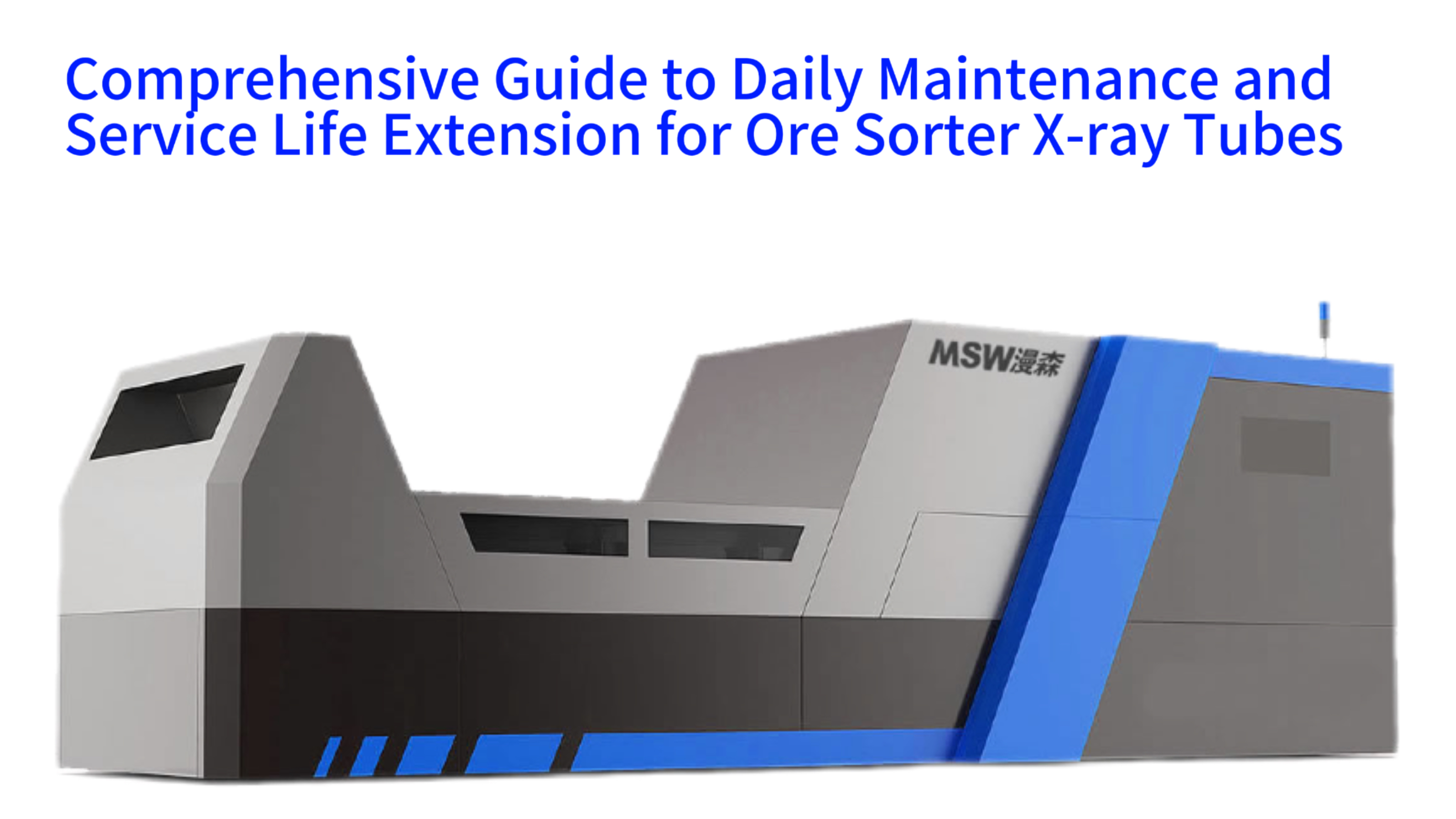
This detailed guide provides an in-depth exploration of the essential practices required to maintain and extend the operational lifespan of the critical X-ray tubes used in modern mineral ore sorting machines. The X-ray tube is the core sensor component in X-ray Transmission (XRT) sorters, responsible for generating the radiation that allows the machine to differentiate valuable minerals from waste rock based on density. Proper daily care and a structured maintenance regimen are not merely recommended but are fundamental to ensuring consistent sorting accuracy, maximizing machine uptime, and protecting a significant capital investment. By understanding the tube's function, implementing rigorous daily checks, and adhering to proven life-extension protocols, operators can directly impact the profitability and reliability of their entire mineral ore sorting operation, preventing costly unscheduled downtime and replacement expenses.
The Critical Role of the X-ray Tube in Ore Sorting
1. X-ray Emission
Tube emits controlled X-ray photons
2. Ore Irradiation
X-rays pass through falling ore particles
3. Radiation Attenuation
Dense minerals absorb more radiation
4. Detector Measurement
Detector measures attenuated beam
5. Data Processing
Software analyzes density data
6. Ejection Decision
High-speed ejection system triggers
The X-ray tube functions as the essential "eye" of an XRT-based sorting system. It operates by emitting a controlled beam of X-ray photons through a stream of falling ore particles. Denser, valuable mineral particles absorb more of this radiation compared to less dense waste rock or gangue. A high-resolution detector on the opposite side measures the attenuated beam, creating a precise density map of each particle. This data is instantly processed by the sorter's computer to make an accept-or-reject decision, triggering the high-speed ejection system. The integrity and stability of the X-ray beam are therefore directly correlated with the machine's ability to accurately identify and separate target minerals such as gold, copper, or diamonds from barren material.
Given its pivotal role, the X-ray tube's health dictates the overall performance of the sorter. A tube operating outside its optimal parameters can lead to a gradual decline in detection accuracy, manifested as an increased rate of missed valuable particles or the erroneous ejection of good material. This not only reduces yield and profitability but also accelerates wear on other components like the air valves. Consequently, investing time in the tube's maintenance is an investment in the entire sorting line's precision and economic output. Modern tubes in industrial sorters are engineered for durability but remain precision instruments sensitive to their operating environment and handling.
Understanding X-ray Tube Construction and Failure Modes
An industrial X-ray tube for ore sorting is a complex assembly housed within a robust, shielded casing. Its key internal components include a cathode filament that, when heated, emits electrons, and a metal anode (or target) that generates X-rays when bombarded by these electrons. A high vacuum inside the tube is essential for this process. The tube is cooled, typically by oil circulation, to manage the immense heat generated during operation. Understanding these internal parts helps diagnose issues; for instance, gradual thinning of the anode target over thousands of operating hours is a normal wear mechanism that eventually leads to decreased output and necessitates replacement.
Common failure modes extend beyond simple anode wear. Sudden failures can occur from filament burn-out due to voltage spikes or improper warm-up cycles. Loss of vacuum, often signaled by internal arcing or a change in the beam spectrum, is a critical failure requiring immediate tube replacement. Contamination of the tube window, the transparent section allowing X-rays to exit, by dust or oil mist can attenuate the beam. Inadequate cooling leading to chronic overheating is a primary cause of premature tube failure, as excessive temperatures degrade internal components and the insulating oil. Recognizing the early signs of these issues is the first step in proactive maintenance.
The Direct Link Between Tube Health and Sorting Accuracy
The relationship between X-ray tube performance and sorting accuracy is quantifiable and direct. The tube's output intensity and spectral consistency determine the signal-to-noise ratio received by the detector. A new, well-calibrated tube produces a strong, stable signal, allowing the system's software to set very precise discrimination thresholds between densities. As the tube ages or its output fluctuates due to poor maintenance, this signal can become noisier and less stable. The sorter's software may compensate to a degree, but ultimately, the discrimination between similar densities becomes less reliable.
This decline directly impacts key performance indicators. The "miss rate," where valuable ore particles are not detected and are lost to the waste stream, may increase. Conversely, the "false ejection rate," where waste rock is mistakenly identified as valuable and ejected, can also rise, wasting compressed air and potentially contaminating the product stream. Regular monitoring of these performance metrics, alongside tube performance data, provides an early warning system. Maintaining tube health is therefore not an isolated task but a core activity for sustaining the economic model of the pre-concentration plant, ensuring that the promised benefits of the AI Sorter technology are fully realized.
Economic Impact of Proactive Versus Reactive Tube Management
Adopting a proactive maintenance strategy for X-ray tubes presents a compelling economic argument. The cost of a single unscheduled production stoppage due to catastrophic tube failure can be enormous, factoring in lost throughput, labor for emergency replacement, and potential expedited shipping fees for a new tube. Furthermore, the period of suboptimal sorting performance leading up to a failure represents hidden losses in recovered minerals. Proactive management, involving daily checks, scheduled cleaning, and performance monitoring, requires minimal investment in time and resources compared to these potential losses.
The financial benefit extends to the tube's service life itself. A tube that is properly warmed up, kept within its ideal temperature range, and protected from environmental contaminants can often exceed its rated operational life by a significant margin, sometimes by 20% or more. This delays a major capital expenditure. By planning tube replacements during scheduled maintenance shutdowns based on performance trends, operations can avoid emergency scenarios, secure better pricing, and ensure a seamless transition. This planned approach to a critical spare part is a hallmark of mature, cost-effective industrial asset management.
Essential Daily Maintenance Procedures
Visual Inspection
Cooling System Check
Power-Up Sequence
Data Logging
| Parameter | Normal Range | Monitoring Notes |
|---|---|---|
| Coolant Temperature | 20°C - 35°C (68°F - 95°F) | Log inlet/outlet differential daily |
| Tube Voltage (kV) | Stable at preset values | No flickering or arcing during power-up |
| Tube Current (mA) | Stable at preset values | Gradual rise indicates tube aging |
Implementing a consistent and thorough daily maintenance routine is the most effective way to safeguard the X-ray tube and the sorter's investment. This routine should be performed at the start of each production shift, before the machine is powered on, and again at the end of the shift during shutdown. The primary goals are to ensure the tube's cooling system is functioning, the immediate environment is clean, and there are no obvious signs of distress. These checks, often taking less than 15 minutes, can prevent issues that might otherwise lead to days of downtime. A daily log sheet should be used to record key parameters, creating a valuable historical record for trend analysis and validating the maintenance protocol.
The daily procedure is a multi-sensory inspection. It involves visual checks for leaks or physical damage, auditory checks for unusual sounds from cooling pumps or fans, and verification of readings from installed gauges and the machine's human-machine interface (HMI). Consistency in who performs these checks and how they are performed is crucial; therefore, clear standard operating procedures (SOPs) and training are necessary. This disciplined approach ensures that minor anomalies are caught early before they escalate into major failures, embedding tube care into the operational culture of the facility.
Visual Inspection and Environmental Check
The daily inspection begins with a careful visual examination of the X-ray tube housing and its immediate surroundings. The technician should look for any signs of oil or coolant leakage around the tube assembly and its connecting hoses. Even small, fresh droplets can indicate a developing seal failure. The area around the tube's beam window must be examined for the accumulation of dust, ore fines, or moisture, as these contaminants can scatter or absorb X-rays. The inspection should also verify that all safety interlocks and shielding doors are intact and secure, as these are critical for operator safety.
Equally important is assessing the general environment of the sorting cabin. High levels of airborne dust, excessive humidity, or wide ambient temperature fluctuations place additional stress on the tube and its cooling system. Ensuring that the cabin's ventilation or air conditioning is operational and that doors are kept closed as per procedure helps maintain a stable microclimate. This step is a preventative measure, as a clean, stable environment drastically reduces the rate of window contamination and thermal stress on the tube, contributing directly to extended service intervals and reliability.
Cooling System Verification and Temperature Monitoring
The cooling system is the lifeline of the X-ray tube, and its verification is the most critical daily task. The operator must check the coolant reservoir level, typically a specialized oil, and confirm it is within the marked operating range. A dropping level can signal a leak. The temperature of the coolant as displayed on the sorter's control panel must be recorded and checked against the manufacturer's specified operating range, usually between 20°C and 35°C (68°F and 95°F). The operation of cooling circulation pumps and fans should be confirmed both audibly and by feeling for vibration or airflow.
Monitoring the inlet and outlet coolant temperatures provides insight into the heat exchange efficiency. A gradually widening differential between these two points can indicate a buildup of scale in the heat exchanger, reduced coolant flow, or a failing pump. The daily log of these temperatures creates a baseline; a sudden spike or gradual upward trend is a clear early warning sign. In systems with water-to-oil heat exchangers, the supply and temperature of the plant cooling water must also be verified. Proper attention to cooling can prevent the majority of thermally induced tube failures.
Power-Up Sequence and Initial Stability Observation
Initiating the tube properly each day is a key longevity practice. Modern sorters have an automated power-up sequence that includes a "soft start" or filament warm-up period. This crucial phase, which may last several minutes, allows the tube's cathode to gradually reach its operating temperature, preventing thermal shock that can fracture the filament. Operators must never interrupt or bypass this sequence. During and immediately after power-up, they should observe the tube's high-voltage and current readings on the HMI, ensuring they stabilize at the preset values without flickering or arcing.
Following stabilization, a brief period of running the sorter without feed material is advisable. This allows the operator to observe the baseline signal from the X-ray detector on the diagnostic screen. A stable, noise-free baseline signal indicates the tube and detector are functioning correctly. Any unusual patterns, excessive noise, or instability in this baseline should be investigated before commencing production. This careful start-up ritual conditions the tube gently for the day's work, similar to warming up a high-performance engine, and is a simple yet profoundly effective life-extension habit.
Data Logging and Performance Baseline Checks
Consistent data logging transforms daily maintenance from a subjective checklist into an objective, data-driven process. Key parameters to record daily include: tube high voltage (kV), tube current (mA), coolant inlet/outlet temperature, detector baseline signal strength, and ambient temperature. These should be entered into a physical logbook or a digital computerized maintenance management system (CMMS). Over time, this data set reveals the normal operating "personality" of the specific tube and allows for the detection of subtle deviations that precede failure.
Beyond simple logging, a daily performance check can involve running a small batch of a known calibration sample through the sorter. This verifies that the sorting accuracy for a material of known density remains within specification. Some advanced sensor-based sorting machine models have built-in diagnostic routines that automatically test tube output and detector response. Utilizing these tools provides a quantitative daily health check. Establishing and adhering to this routine creates a powerful predictive maintenance capability, enabling interventions to be scheduled during planned downtime rather than reacting to a crisis.
Advanced Cleaning and Calibration Protocols
Advanced Maintenance Cycle
1. Shutdown & LOTO
2. Precision Cleaning
3. Coolant Purge
4. Beam Alignment
5. System Calibration
6. Software Update
While daily checks maintain basic health, periodic advanced cleaning and calibration are necessary to sustain peak performance over the long term. These procedures are typically performed weekly, monthly, or quarterly, depending on the operational environment's severity and the manufacturer's recommendations. They require a more detailed approach, often with the machine powered down and locked out, and should be conducted by trained technicians. The focus shifts from prevention of catastrophic failure to the optimization of signal quality and the correction of minor drifts in system calibration, ensuring the sorter operates at its maximum possible accuracy and efficiency.
These protocols address the inevitable accumulation of contaminants and the subtle aging effects of components. Dust will slowly coat surfaces; cooling oil may degrade slightly; mechanical alignments can drift microscopically. Without addressing these factors, the sorter's performance will degrade gradually, and the economic losses from reduced recovery or increased waste will accumulate silently. Scheduled advanced maintenance is the antidote, a planned investment of time to reset the system to its ideal state and capture the full value of the ore stream.
Precision Cleaning of the X-ray Tube Window and Detector Array
The X-ray tube window and the opposing detector array are the most sensitive optical surfaces in the system. Any film of dust, grease, or condensation on these surfaces acts as an unwanted filter, attenuating the X-ray signal and introducing noise. During a scheduled shutdown, a trained technician must carefully clean these components using the methods and materials specified by the manufacturer—typically lint-free wipes and a specialized, non-residue-leaving solvent like high-purity isopropyl alcohol. Compressed air should be used with extreme caution, if at all, to avoid driving contaminants into seals.
This cleaning process requires strict safety protocols, including confirmed radiation shut-off and lock-out/tag-out procedures. The technician will also inspect the window for any permanent etching or damage that might require professional service. Cleaning the detector array often involves removing a protective cover; this must be done in an ultra-clean environment to prevent new contamination. The immediate improvement after cleaning is often visible in a stronger, cleaner baseline signal on the diagnostic screen, directly translating to sharper density discrimination and improved advanced detection capabilities during operation.
Coolant System Purge and Oil Quality Analysis
The cooling oil is both a heat transfer medium and an electrical insulator within the tube housing. Over months of operation, it can degrade through thermal cycling, absorb moisture, or become contaminated with microscopic particles. A periodic maintenance task involves checking the oil's dielectric strength and clarity. Some systems have a visual inspection port; the oil should appear clear and bright, not cloudy or dark. Scheduled oil changes, as per the manufacturer's interval (often 12-24 months), are critical. The old oil is drained, the reservoir and lines are flushed with a cleaning fluid if specified, and fresh, manufacturer-approved oil is filled using a vacuum pump to avoid air bubbles.
For critical operations, sending a sample of the used oil to a laboratory for analysis can be highly informative. The analysis can detect the presence of trace metals (indicative of internal wear), water content, and the breakdown of additives. This is a form of condition monitoring for the tube itself, providing an early warning of internal issues long before they affect performance or cause failure. Maintaining optimal coolant quality ensures efficient heat removal, stabilizes the tube's internal electrical environment, and is a cornerstone practice for achieving the maximum possible service life from the component.
Beam Alignment and Detector Calibration Verification
The geometric alignment between the X-ray tube's focal spot, the collimator that shapes the beam, and the detector pixels is precision-engineered. Over time, vibrations or thermal cycling can cause microscopic misalignment, leading to a non-uniform beam profile across the detector. Advanced maintenance includes verifying this alignment using specialized test fixtures or the machine's own software routines. Correct alignment ensures that every ore particle passing through the beam is irradiated uniformly, guaranteeing consistent density readings regardless of its trajectory across the chute or belt.
Following alignment, a full system calibration is performed. This involves running samples of materials with known densities through the sorter and allowing the software to map the detector's response across its entire width. This calibration updates the internal density thresholds used for sorting decisions, compensating for any minor drift in tube output or detector sensitivity. It is the equivalent of zeroing a precision scale. Regular calibration, perhaps monthly or after any major component service, is essential for maintaining sorting accuracy, especially for high-value ores where small density differences are critical, such as in a dedicated gold ore sorting machine.
Software Updates and Algorithm Optimization
The performance of the X-ray tube is interpreted through the sorter's software algorithms. Manufacturers regularly release software updates that can improve signal processing, noise filtration, and the interpretation of complex density data. As part of scheduled maintenance, operators should check for and install these updates. An update might include better algorithms for compensating for slight tube aging, effectively "re-tuning" the system to get the best possible data from the existing hardware. This software-level optimization is a powerful tool for extending the useful economic life of the tube.
Furthermore, technicians can work with the sorting algorithms themselves. Based on production data, the detection thresholds and parameters for specific ore types can be fine-tuned. This process ensures the system is perfectly adapted to the current feed material, maximizing recovery and purity. This iterative optimization, leveraging the stable data from a well-maintained tube, squeezes every bit of performance out of the system. It represents the synergy between diligent hardware maintenance and intelligent software management, a combination that defines world-class sorting operations.
Operational Practices for Maximizing Tube Lifespan
Optimized Material Feed
Consistent particle size
Stable feed rate (no surges)
Minimize frequent start/stop
Stable Electrical Supply
Voltage regulators & surge protectors
Minimize power cycling
Use standby mode for breaks
Environmental Control
Positive pressure sorting cabin
Stable temp & low humidity
Pre-dry wet/high-clay ore
Documentation Culture
Record all maintenance events
Analyze failure trends
Continuous improvement cycle
Feed Optimization
Power Management
Environmental Control
Continuous Improvement
Beyond scheduled maintenance, the daily operational practices of the sorting plant have a profound cumulative effect on X-ray tube longevity. How the machine is started, stopped, and operated during production cycles creates the environmental conditions the tube endures. Instituting best practices in these areas requires training and discipline but pays dividends in reduced wear and extended service intervals. The goal is to minimize thermal and electrical stress on the tube, providing it with the most stable and gentle operating environment possible throughout its life.
These practices encompass the entire production workflow, from the initial material preparation feeding the sorter to the management of production batches and shift changes. They are often simple procedural changes that cost nothing to implement but require consistent enforcement. By viewing the X-ray tube not as a consumable but as a precision partner in the value-creation process, operations can foster a culture where every team member contributes to its care, ultimately driving down the cost per ton sorted and enhancing operational reliability.
Optimized Material Feed and Load Management
The characteristics of the ore fed into the sorter directly impact the tube's workload. A consistent, well-sized feed with minimal oversize or fines allows the sorter to operate at its design efficiency. A highly variable feed, especially one with a high percentage of near-size or sticky material, can cause blockages and require the machine to be stopped and started frequently. Each shutdown and restart subjects the tube to a thermal cycle, which contributes to fatigue over time. Therefore, optimizing upstream crushing and screening to deliver a consistent product to the sorter is an indirect but powerful method of extending tube life.
Similarly, managing the feed rate is crucial. Running the sorter consistently near, but not above, its optimal capacity is better than running it in short bursts at maximum overload. Continuous operation at a stable load allows the tube to reach and maintain a steady-state temperature, minimizing thermal stress. Operators should avoid the temptation to dramatically surge feed rates, as this does not typically increase valuable throughput proportionally but does increase the thermal load on the tube and the wear on the entire smart material feeding and ejection system.
Stable Electrical Supply and Surge Protection
X-ray tubes are highly sensitive to the quality of electrical power they receive. Voltage sags, spikes, and harmonic distortion from the plant's electrical grid can stress the tube's power supply and the tube itself. A sudden voltage spike can cause an internal arc, instantly destroying the tube. Ensuring a clean, stable power supply is therefore paramount. This can involve installing dedicated voltage regulators, uninterruptible power supplies (UPS) for the control electronics, and high-quality surge protectors on the main power line feeding the sorter.
Furthermore, the practice of turning the sorter on and off multiple times per day should be minimized. If breaks are necessary, many modern sorters have a "standby" mode that keeps the tube's filament at a low temperature, avoiding a full cold start. A planned production schedule that maximizes continuous running periods is beneficial. These measures protect the tube from the electrical and thermal shocks associated with frequent power cycling, which is a known contributor to premature filament failure and other internal degradation mechanisms.
Environmental Control and Contamination Prevention
Actively managing the sorter's operating environment is a continuous operational practice. Enclosing the sorter in a dedicated cabin with positive air pressure, where filtered air is gently blown in, helps keep dust out. Maintaining stable ambient temperature and low humidity with air conditioning protects not only the tube but all electronic components. Operators should be trained to keep cabin doors closed and to ensure that any maintenance on nearby equipment does not generate excessive dust that could be drawn into the sorter's enclosure.
Preventing contamination also involves managing the ore itself. If the feed material is wet or has a high clay content, it may be necessary to install a pre-drying or dedusting stage upstream. Moisture and fine dust can become airborne in the sorting chamber and coat the tube window and detectors much faster than dry material. Controlling the ore's condition at the infeed is a proactive step that reduces the frequency required for invasive cleaning, keeps the optical systems clearer for longer, and maintains optimal sorting performance between scheduled maintenance events.
Documentation and Continuous Improvement Culture
Finally, the most impactful operational practice is the cultivation of a documentation and continuous improvement culture. Every tube replacement, every unusual event, and every performance trend should be documented and analyzed. How long did the previous tube last? What were the recorded failure symptoms? Were there specific operational changes preceding a drop in performance? Answering these questions builds institutional knowledge.
This data should be reviewed regularly in maintenance meetings. It can lead to actionable improvements, such as adjusting a cooling water valve, improving a dust seal, or modifying a start-up checklist. This cycle of observe-record-analyze-improve turns experience into wisdom. It empowers the team to move beyond simply following a manual to truly understanding their specific machine's behavior in their specific plant conditions. This culture is the ultimate life-extension tool, ensuring that hard-won knowledge about caring for critical assets like the X-ray tube is preserved and built upon, year after year.
Diagnostic Techniques and Predictive Maintenance
Tube Current (mA) Trend (Aging Indicator)
Parameter Monitoring
kV/mA/Temperature
Thermal Analysis
ΔT/Cooling Efficiency
Signal Quality Check
SNR/Detector Data
Predictive Analytics
Data Correlation
Life Forecasting
RUL Estimation
Transitioning from preventative to predictive maintenance represents the pinnacle of asset care for an ore sorter's X-ray tube. This approach uses diagnostic techniques to monitor the tube's condition in real-time and predict its remaining useful life, allowing for replacement to be planned at the optimal moment. Instead of relying solely on fixed time-based intervals or reacting to failure, predictive maintenance uses data to make informed decisions. Modern sorters are equipped with sensors that provide a wealth of data; the key is knowing which parameters to monitor and how to interpret trends that signal the onset of degradation.
Implementing a predictive strategy involves setting up a monitoring system, defining key performance indicators (KPIs) for tube health, and establishing alert thresholds. This system can range from manual trend analysis of daily logged data to fully automated condition monitoring software integrated with the plant's control system. The payoff is maximized tube utilization—replacing it only when necessary—and the complete avoidance of in-service failures. This not only saves on tube costs but also protects production schedules and revenue streams, making it a strategic advantage for any mining operation relying on sorting technology.
Monitoring Key Electrical Parameters for Trends
The electrical operating parameters of the X-ray tube are primary indicators of its internal health. The tube current (mA) required to maintain a set X-ray output intensity is a critical metric. As the tube ages and the anode target erodes, the efficiency of X-ray generation decreases. To compensate and maintain the same output, the control system may automatically or manually increase the tube current. A gradual, steady upward creep in the mA reading over weeks or months, while voltage (kV) and output remain constant, is a classic sign of normal tube aging and can be used to estimate remaining life.
Conversely, instability in these readings is a warning sign. Fluctuations or noise in the high-voltage (kV) or current (mA) signals can indicate developing problems such as a weakening filament, intermittent arcing due to minor vacuum issues, or problems with the high-voltage generator. Modern sorters log this data; plotting it on a graph reveals trends invisible in daily snapshots. Setting automated alarms for when parameters exceed a stable baseline band allows for early investigation. This electrical fingerprint is the most direct window into the tube's internal state.
Analyzing Thermal Signatures and Cooling Efficiency
Thermal management is so vital that its efficiency serves as a key diagnostic marker. The temperature difference (ΔT) between the cooling oil inlet and outlet is a direct measure of how much heat the tube is generating and how effectively the cooling system is removing it. A stable ΔT under constant load is normal. A gradually increasing ΔT could indicate that the tube is becoming less efficient internally (generating more waste heat) or that the cooling system is losing efficiency due to a clogged heat exchanger or failing pump.
Infrared thermography can be used during scheduled inspections to scan the external surface of the tube housing. Hot spots may indicate internal problems or poor thermal contact. Monitoring the ambient temperature around the sorter and correlating it with cooling system performance can also reveal issues. For example, on hotter days, if the cooling system struggles to maintain oil temperature, it may signal that the system is operating at its limit and requires enhancement. Thermal diagnostics provide a non-invasive way to assess the holistic health of the tube and its support system.
Signal Quality Analysis from the Detector Array
The quality of the signal received by the X-ray detector is the ultimate measure of system performance. Diagnostic software within the sorter can analyze this signal for noise, stability, and uniformity across the detector's pixels. An increase in electronic noise in the signal can stem from tube instability, detector problems, or electrical interference. A drop in overall signal strength, after confirming a clean window, points directly to decreased tube output. Regularly saving and comparing baseline signal profiles creates a historical record of performance decay.
Some systems can perform automatic signal-to-noise ratio (SNR) tests. A declining SNR means the useful data from the tube is being drowned out by noise, forcing the sorting algorithms to work with less reliable information, which will eventually impact accuracy. By tracking SNR over time, maintenance can be scheduled proactively—for instance, planning a tube replacement during the next quarterly shutdown when the SNR is predicted to fall below a critical threshold. This data-driven approach removes guesswork and aligns maintenance actions with actual performance needs.
Integrating Data for Predictive Analytics and Life Forecasting
The most advanced diagnostic approach involves integrating all available data streams—electrical, thermal, signal quality, and operational hours—into a predictive analytics model. This can be done using specialized industrial IoT platforms or even spreadsheet models. The model correlates historical data from previous tube failures with the ongoing data from the current tube. By identifying the patterns that preceded past failures, the model can forecast the remaining useful life (RUL) of the current tube with increasing accuracy as it ages.
This forecasting enables truly predictive maintenance. A work order for tube replacement can be automatically generated weeks in advance, allowing time to source the part, schedule the technician, and plan the production slowdown. It transforms tube management from a reactive cost center into a predictable, planned operational event. This level of sophistication is becoming standard in Industry 4.0-connected mines and represents the future of maintaining critical sensor-based equipment like the X-ray sorter, ensuring maximum asset utilization and unwavering production reliability.
Strategic Spare Parts Planning and Replacement Protocol
1. LOTO & Shutdown
2. Old Tube Removal
3. New Tube Installation
4. System Calibration
5. Validation Testing
6. Failed Tube Analysis
| Factor | Stock Spare | No Spare (Rapid Delivery) |
|---|---|---|
| Downtime Risk | Low (Hours) | High (Days/Weeks) |
| Capital Cost | High (Upfront) | Low (On-demand) |
| Emergency Freight Cost | None | Significant |
| Suitable For | High-value ore sorting | Low-criticality operations |
Even with exemplary maintenance, an X-ray tube will eventually reach the end of its service life. Strategic planning for its replacement minimizes operational disruption and cost. This involves more than just keeping a spare tube on the shelf; it encompasses a holistic protocol covering inventory strategy, replacement procedures, and post-replacement validation. The high value and potential long lead times of these specialized parts make advanced planning a critical business decision. A well-executed replacement protocol ensures the new tube is installed correctly, calibrated precisely, and delivers immediate performance, restoring the sorter to its original specification or better.
The decision of whether to stock a spare tube is economic, based on the cost of the part versus the cost of production downtime. For a critical sorter processing high-value ore, holding a spare is usually justified. The replacement process itself must be meticulously planned, treating the tube as a delicate scientific instrument rather than a simple mechanical part. Following the replacement, a comprehensive commissioning process is required to integrate the new tube into the system fully. This end-to-end management of the tube's lifecycle closes the loop on a comprehensive care strategy.
Developing an Economically Justified Spare Parts Strategy
Formulating a spare parts strategy requires a clear-eyed cost-benefit analysis. The factors include: the purchase price and lead time of a new tube from the manufacturer, the average tube lifespan at the site, the hourly revenue generated by the sorter, and the cost of emergency freight. If the potential revenue lost during an unplanned outage (lead time + replacement time) exceeds the cost of holding the spare inventory, then stocking a tube is financially prudent. For less critical lines or operations with multiple similar sorters, a shared regional spare or a guaranteed rapid delivery agreement with the supplier might be a better option.
The strategy must also consider tube variants. Sorting machines may use different tube models based on the energy (kV) required for specific ore types. If an operation processes multiple ore types requiring different setups, this complexity must be factored in. Furthermore, the spare should be stored correctly—in a climate-controlled, vibration-free environment as per the manufacturer's instructions—to prevent degradation while in inventory. A documented strategy, reviewed annually, ensures that capital is allocated wisely and that the operation is resilient in the face of this inevitable component failure.
Step-by-Step Safe Removal and Installation Procedure
When replacement is required, a detailed, safe procedure must be followed. The first and most critical step is a full system shutdown, lock-out, and tag-out (LOTO), with a mandatory waiting period to allow capacitors to discharge and radiation to decay. The technician must wear appropriate personal protective equipment. The procedure involves disconnecting power and coolant lines, carefully unbolting the tube housing, and using proper lifting techniques to remove the heavy, delicate assembly. The orientation and handling of the tube are crucial; it must never be tilted or bumped, as this can damage internal structures.
Installation of the new tube is the reverse process, with emphasis on cleanliness and torque specifications. All electrical connections and coolant fittings must be perfectly clean and dry before mating. Cooling lines should be purged of air to prevent hot spots. The manufacturer's specified torque values for bolts must be used with a calibrated torque wrench to avoid damaging the flange seals. Rushing this process or using improper tools can lead to immediate failure of the new tube or chronic leaks. A methodical, document-driven approach, often involving a two-person team for safety and verification, is essential for success.
Post-Replacement Calibration and System Validation
Installing the tube is only half the job. A new tube, even of the same model, will have slightly different characteristics than the old one. Therefore, a full system recalibration is mandatory. This begins with powering up the system and allowing it to go through its extended warm-up cycle. The technician must then enter the new tube's specific calibration data, often provided on a certificate from the manufacturer, into the sorter's software. This data tailors the high-voltage control to the new component.
Following this, a comprehensive validation run is performed. This involves processing samples of known accept and reject material and measuring the sorting accuracy. The parameters of the sorting algorithm may need fine-tuning to optimize performance with the new tube's output profile. All safety systems and radiation monitoring must be verified as fully functional. Only after achieving sorting accuracy equal to or better than the performance standard should the sorter be released for full production. This rigorous validation ensures the capital invested in the new tube translates directly into restored and reliable production capability, completing the lifecycle management process.
Analysis of Failed Tubes and Feedback for Improvement
The final, often overlooked step in the replacement protocol is the analysis of the failed tube. Whenever possible, a used tube should be returned to the manufacturer or a specialized service center for a failure analysis report. This report will detail the root cause of failure—whether it was normal wear, thermal stress, electrical surge, vacuum loss, or another factor. This objective analysis is invaluable feedback for the site's maintenance team.
If the failure was due to operational factors (e.g., chronic overheating traced to a undersized cooler), corrective actions can be taken to protect the new tube. If it was a manufacturing defect, it may be covered under warranty. This practice of learning from failure closes the continuous improvement loop. It turns a costly replacement event into a learning opportunity, refining maintenance practices, operational procedures, and even future purchasing decisions. This relentless focus on learning and adaptation is what ultimately drives down total cost of ownership and elevates operational excellence in modern ore sorting plants.