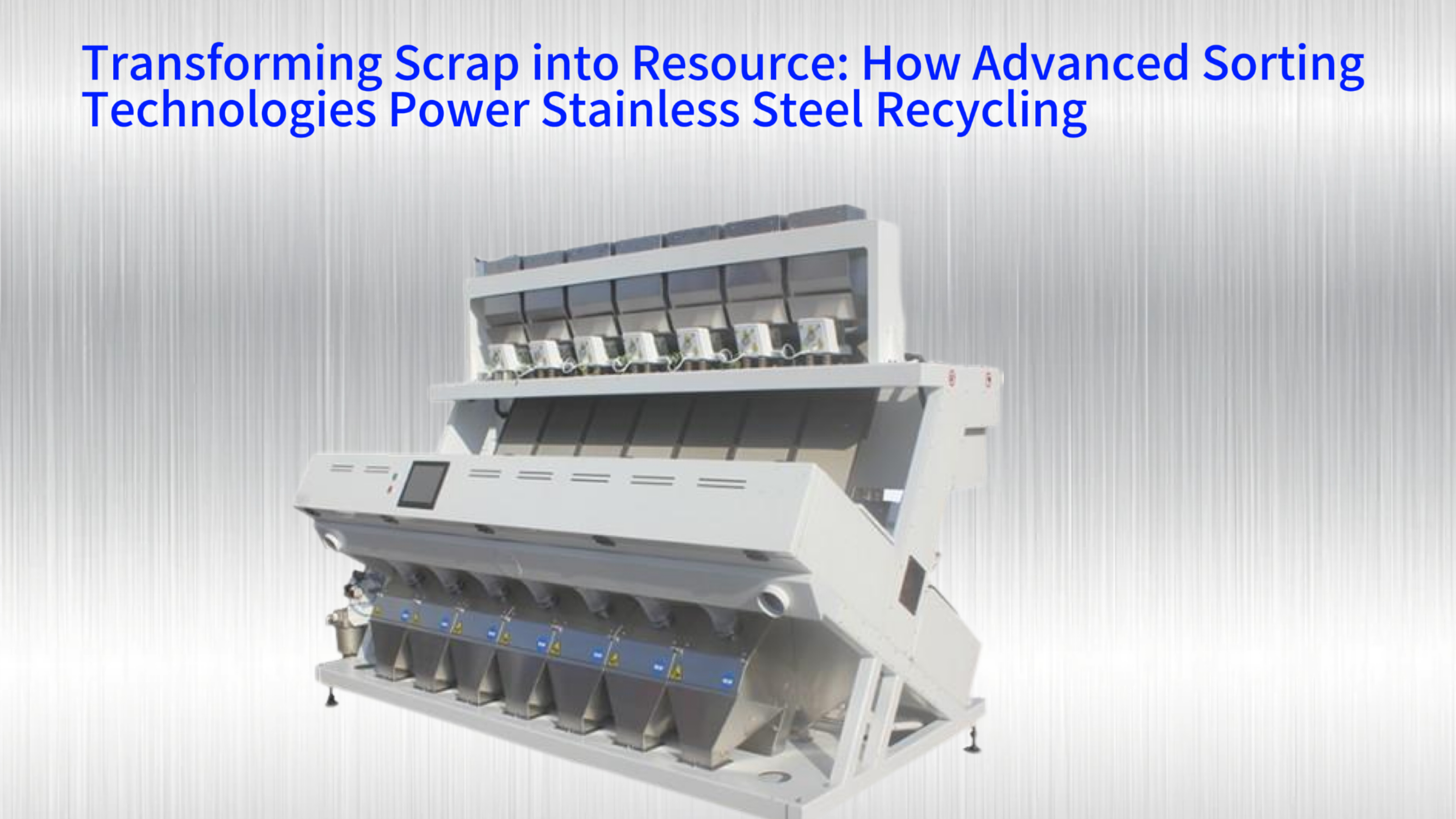
In the world of metal recycling, stainless steel presents a unique and valuable challenge. Unlike ordinary steel, it's actually a family of alloys containing chromium, nickel, and other elements that give it corrosion resistance and strength. This complexity makes traditional magnet-based sorting useless, as most stainless steel is non-magnetic. Modern recycling plants have turned to sophisticated metal sorting machines that employ a suite of advanced sensor technologies to solve this puzzle. This article explores the key application technologies that make efficient stainless steel scrap recycling possible, from initial material handling to final high-purity output. We will examine the preparatory steps that optimize sorting, the core sensor technologies that identify different stainless steel grades, the data processing and decision-making systems, the high-precision ejection mechanisms, the integration of these systems into complete recycling workflows, and the significant economic and environmental benefits this technological approach delivers. These systems are critical for transforming mixed industrial scrap and end-of-life products back into valuable, furnace-ready feedstock.
The Critical First Step: Preparing Scrap for Effective Sorting
| Preparation Step | Key Metrics | Impact |
|---|---|---|
| Shredding | 10mm - 150mm Size Range | Optimal Sensor Exposure |
| Ferrous Removal | 90% of Unwanted Material | Reduce Sorter Load |
| Feeding | Single-Layer Presentation | 100% Sensor Visibility |
Before any advanced sensor can analyze a piece of stainless steel scrap, the material must be properly prepared. This stage is often overlooked but is fundamental to the success of the entire sorting process. Mixed stainless steel scrap arrives at a recycling facility in various forms: discarded kitchen equipment, industrial machinery parts, construction beams, and shredded automotive components. These items vary dramatically in size, shape, and are often contaminated with attachments like rubber, plastic, or other metals. The primary goal of preparation is to liberate the stainless steel by breaking down large objects and creating a more uniform stream of material that the sorting machine can analyze effectively.
This preparation typically involves a series of mechanical processes. Large items are first sheared or shredded into smaller, more manageable pieces, often aiming for a size range between 10mm and 150mm. This shredding not only reduces size but also helps to break apart composite materials. Following shredding, the material passes through screening systems to remove fine dust and undersized particles. Ferrous metals are commonly removed at this stage using powerful overhead magnets, which easily pull out magnetic steel, leaving a concentrate of non-ferrous metals including aluminum, copper, brass, and the target non-magnetic stainless steels. This pre-concentrated stream is then fed onto a smart material feeding system, which spreads the material into a consistent, single layer, ensuring each piece is fully exposed to the sensors for accurate analysis. Without this careful preparation, even the most advanced sorter would struggle with accuracy.
Shredding and Size Reduction for Optimal Sensor Exposure
Shredding is the transformative process that turns bulky, irregular scrap into a commodity that sorting machines can handle. Industrial shredders with high-torque rotors tear apart sinks, pipes, and industrial equipment, creating fragments with more consistent dimensions. The target size is crucial; pieces that are too large may not be fully analyzed by the sensor's field of view, while pieces that are too small may not contain enough material for certain sensors to get a reliable reading. Most advanced sorting systems are optimized for a mid-range fragment size, which provides the best balance between throughput and analytical accuracy. This size reduction also dramatically increases the surface area of the material, which improves the signal for technologies like laser-induced breakdown spectroscopy (LIBS) that analyze surface composition.
Beyond mere size, shredding aims to create "liberated" particles. This means breaking the bonds between stainless steel and other materials attached to it. For example, a stainless steel pipe with a carbon steel flange, or a kitchen sink with a plastic drain attachment, needs to be broken apart so the sorter can identify and separate the different materials cleanly. Effective liberation is measured by the purity of the resulting sorted fractions. Inadequate liberation leads to "composite" particles that contain both valuable stainless steel and worthless contaminants, which the sorter may either incorrectly accept or reject, reducing overall yield and purity. Therefore, the shredding process is calibrated in tandem with the sorter's capabilities to achieve the best economic outcome.
Removing Ferrous Contaminants and Initial Pre-Sorting
After shredding, the mixed metal stream contains a significant amount of ferrous (iron-based) scrap. Since stainless steel is the target and most common grades are non-magnetic, removing magnetic metals is a logical and efficient first separation. This is accomplished using powerful overhead drum magnets or magnetic head pulleys on conveyors. As the mixed scrap passes under or over these magnets, any material containing iron—such as ordinary steel, cast iron, or magnetic grades of stainless steel (like the 400 series)—is forcefully pulled from the stream. This step is highly effective and low-cost, and it can remove up to 90% of the unwanted material by weight, dramatically reducing the volume of material that must be processed by the more expensive and sophisticated sensor-based sorter.
This magnetic separation does more than just clean the feed; it protects downstream equipment. Removing hard, heavy ferrous metals prevents wear and tear on the sensitive components of the optical sorter, such as its high-speed conveyor belt and ejection system. The remaining non-magnetic fraction, now enriched with target metals like stainless steel, aluminum, copper, and zinc, is much more homogeneous and suitable for precise sensor analysis. This pre-sorting stage exemplifies a fundamental principle in recycling: using simple, robust technology first to handle the bulk of the separation, reserving complex, high-precision technology for the final, value-critical sorting decisions. It ensures the sensor-based sorting machine operates at peak efficiency on the most relevant material.
Feeding and Presentation: The Gateway to Accurate Analysis
The final preparatory step is perhaps the most critical for sorting accuracy: material presentation. A state-of-the-art sensor is only as good as the view it gets of the target material. The pre-concentrated non-ferrous scrap is fed onto the sorter's infeed system, which must transform a piled, jumbled mass of metal into an orderly, spaced-out stream. This is typically achieved with a vibrating feeder or a series of accelerating conveyors. These systems are designed to gently spread the material across the full width of the processing belt while ensuring pieces do not overlap or touch each other.
This single-layer presentation is non-negotiable for several reasons. First, it ensures that every piece is fully visible to the optical and spectroscopic sensors. If one piece hides behind another, it cannot be analyzed and will be missed. Second, it allows the system's tracking software to follow each individual piece from the sensor zone to the ejection zone with precision. The system calculates the exact trajectory and timing for each fragment; overlapping pieces would confuse this tracking and lead to mis-ejection. Third, consistent presentation leads to consistent sensor readings. A piece tumbling erratically will reflect light differently than one lying flat. Therefore, modern feeding systems are engineered for gentle, controlled acceleration to achieve a stable, monolayer flow, setting the stage for the sophisticated detection technologies that follow.
Core Sensor Technologies: The Eyes of the Sorting Machine
| Stainless Steel Grade | Chromium (%) | Nickel (%) | Molybdenum (%) |
|---|---|---|---|
| AISI 304 | 18 | 8 | 0 |
| AISI 316 | 16 | 10 | 2 |
| AISI 430 | 17 | 0 | 0 |
Once stainless steel scrap is properly prepared and presented, the real technological magic begins. Modern metal sorters deploy an array of sensor technologies, each capable of identifying material properties invisible to the human eye. Unlike sorting simple materials, differentiating between various stainless steel grades (like 304, 316, or 430) and separating them from look-alike metals like aluminum or nickel alloys requires deep material insight. No single sensor is perfect for all scenarios, which is why leading systems use a multi-technology approach. By combining the strengths of different sensors, the system can make a highly reliable identification even when scrap pieces are dirty, oxidized, or painted.
The primary technologies employed include laser-induced breakdown spectroscopy (LIBS), X-ray fluorescence (XRF), and sometimes color or shape recognition. Each technology interrogates the material in a different way. LIBS uses a high-powered laser pulse to vaporize a microscopic amount of the metal's surface, creating a small plasma whose light signature reveals the exact elemental composition. XRF uses X-rays to excite atoms in the material, causing them to emit secondary (fluorescent) X-rays that are unique to each element. These technologies move far beyond simple density or color, allowing the sorter to distinguish between stainless steel containing 18% chromium and 8% nickel (304) and one containing 16% chromium, 10% nickel, and 2% molybdenum (316), which have significantly different market values. This level of analysis is what makes high-value, grade-specific stainless steel recycling economically viable.
Laser-Induced Breakdown Spectroscopy (LIBS) for Elemental Fingerprinting
Laser-Induced Breakdown Spectroscopy (LIBS) has emerged as a gold-standard technology for metal sorting, particularly for stainless steel. The process is fascinating in its precision. A highly focused, pulsed laser beam is fired at each passing piece of scrap. The intense energy of the laser creates an incredibly hot, localized plasma on the metal's surface—a tiny ball of ionized gas. As this plasma cools, the excited atoms within it emit light at very specific wavelengths. This emitted light is collected by a spectrometer, which acts like a sophisticated prism, splitting the light into a full spectrum. Each chemical element in the alloy—chromium, nickel, molybdenum, manganese—produces a unique set of spectral lines, like a fingerprint.
The system's computer contains a library of these spectral fingerprints for all common metal alloys. In milliseconds, it compares the live spectrum from the scrap piece to its library. It can not only confirm "this is stainless steel" but can specifically identify it as "AISI 304" or "AISI 316." This ability to perform positive material identification (PMI) is revolutionary. It allows recyclers to create separate, high-purity piles of 304 and 316 scrap, which can be sold at a premium to mills that need specific feedstock. LIBS is so surface-sensitive that it can often see through light oxidation or paint, making it robust for real-world scrap conditions. This technology represents the pinnacle of advanced detection in the recycling industry.
X-ray Fluorescence (XRF) for Bulk Composition Analysis
While LIBS is exceptionally precise, X-ray Fluorescence (XRF) technology offers complementary strengths, particularly for certain applications. An XRF sensor works by bombarding the scrap metal with primary X-rays. These X-rays have enough energy to knock electrons out of the inner shells of the atoms in the metal. When an electron from an outer shell drops in to fill this vacancy, it releases energy in the form of a secondary, or fluorescent, X-ray. Crucially, the energy of this fluorescent X-ray is characteristic of the specific element from which it came. A detector measures the energy and intensity of these returning X-rays to determine the material's elemental composition.
XRF analysis probes slightly deeper into the material than LIBS, providing a bulk composition reading rather than a strictly surface one. This can be an advantage for heavily oxidized or coated scrap, where the surface might not be fully representative. In a sorting context, XRF is excellent for distinguishing broad categories and identifying heavy elements. It can reliably separate stainless steel (containing chromium and nickel) from, say, copper alloys (copper and zinc) or lead. Some advanced sorters may use a hybrid approach, where XRF performs a first-pass categorization, and LIBS makes the final grade-specific call on identified stainless pieces. This multi-layered analysis, akin to the process in an X-ray sorter for other applications, builds immense confidence in the sorting decision.
Color, Shape, and 3D Laser Scanning for Supplemental Identification
Beyond elemental analysis, other sensor modalities play crucial supporting roles. High-resolution color line-scan cameras are often integrated into the system. While two different metal alloys might look similar to us, their surface color, texture, and reflectivity under specific lighting can differ subtly. An advanced color sorter can be trained to recognize the visual signature of freshly shredded 300-series stainless steel versus aluminum, providing a fast, initial filter. This is particularly useful for removing obvious non-metallic contaminants or large aluminum pieces before the more expensive spectroscopic analysis is performed.
Furthermore, 3D laser profilers or time-of-flight cameras can be used to analyze the shape and volume of each piece. This information is valuable for several reasons. First, it can help distinguish between dense, compact stainless steel pieces and lighter, more voluminous aluminum pieces of similar projected area. Second, knowing the exact volume of a piece allows the system to estimate its mass when combined with material density (identified by LIBS/XRF), which is useful for yield tracking and data analytics. Finally, 3D shape analysis ensures the system only attempts to analyze and sort pieces within the acceptable size range, ignoring overly large or tangled clusters that might have escaped the pre-screening process. This holistic sensor fusion creates a complete digital profile of every single piece of scrap.
Intelligent Decision-Making: From Data to Action
| Decision Parameter | Value Range | Significance |
|---|---|---|
| Decision Time | 10-50 ms | Real-Time Processing |
| Confidence Threshold | ≥95% | High Purity Assurance |
| Conveyor Speed | 3-4 m/s | High Throughput |
The torrent of data generated by the sensor array—spectral lines from LIBS, X-ray counts from XRF, color pixels from cameras, and contour points from 3D scanners—is meaningless without a brain to interpret it. This is where the sorting machine's central processing unit and its sophisticated software take center stage. The core challenge is to take this multi-dimensional data set and, in a timeframe of 10 to 50 milliseconds, make a definitive decision: accept or reject, and if rejecting, into which specific output bin should the piece be directed? This decision-making process is governed by complex algorithms and, increasingly, artificial intelligence.
The software first synchronizes and fuses the data from all sensors for each individual scrap piece. It then compares this fused data profile against a user-defined set of sorting recipes. A recipe might be set up to find all fragments identified as AISI 304 stainless steel with a confidence level above 95%. The software assigns a confidence score to each identification based on how closely the sensor data matches the reference library. If the score crosses the acceptance threshold, the piece is marked for keeping. If it falls below, or matches the profile of a contaminant (like aluminum or a non-target steel), it is marked for rejection. In more advanced systems, there can be multiple rejection streams, allowing for the simultaneous sorting of 304, 316, and a "rejects" pile containing everything else. This real-time analysis is a monumental computational task that happens continuously, piece after piece, hour after hour.
AI and Machine Learning for Adaptive Sorting Logic
The next evolutionary step in sorting intelligence is the incorporation of Artificial Intelligence (AI) and Machine Learning (ML). Traditional sorting software relies on fixed algorithms and thresholds programmed by engineers. An AI sorter, however, can learn and adapt. It uses machine learning models, often based on neural networks, that are trained on vast datasets of sensor readings paired with known material identities. During operation, the AI doesn't just check against a list; it evaluates patterns in a more nuanced way, similar to how a human expert might develop an intuition for identifying materials.
This AI-driven approach offers powerful advantages. It can better handle "borderline" cases where sensor data is ambiguous, making more context-aware decisions. It can also continuously improve. If the system makes a sorting error and it is corrected by an operator, that correction can be fed back into the AI model as a new learning example, making the system slightly smarter. Furthermore, AI can identify new, profitable material streams that were not originally programmed. For instance, by analyzing patterns in the data, it might discover that a certain subset of "reject" pieces actually has a consistent spectral signature matching a valuable, niche superalloy, prompting the creation of a new, lucrative sorting recipe. This transforms the sorter from a static tool into a dynamic, profit-optimizing asset.
Tracking and Trajectory Calculation for Precision Ejection
Once the intelligent brain has decided the fate of a scrap piece, it must execute that decision in the physical world. This requires precise coordination. From the moment a piece is analyzed in the sensor chamber, sophisticated tracking software follows its movement. Using high-speed encoders on the conveyor belt and predictive algorithms, the software calculates the exact trajectory of each piece. It determines the precise microsecond when that piece will arrive in front of the correct ejection valve located further down the line.
This calculation must account for the conveyor speed, the distance between the sensor and the ejector, and the individual piece's behavior (does it bounce or slide?). The timing is incredibly tight; the entire journey from sensor to ejector may take only a few hundred milliseconds. The system manages this for hundreds, even thousands, of pieces simultaneously, all moving at speeds of 3 to 4 meters per second. It creates a real-time map of the belt, knowing the identity and projected position of every object on it. This digital-physical synchronization is what allows the subsequent high-speed ejection system to act with surgical precision, ensuring that only the targeted pieces are removed without disturbing the valuable material that is to continue on to the accept bin.
Data Analytics and System Optimization Feedback Loop
The decision-making system doesn't just control the machine; it also generates a wealth of operational intelligence. Every decision, every piece analyzed, is logged with its sensor data, identification result, and final destination. This creates a powerful database for analytics. Plant managers can access dashboards showing real-time and historical metrics: throughput in tons per hour, sorting purity (percentage of target material in the accept bin), material recovery (percentage of target material successfully captured), and the composition of the reject stream.
This data is used for continuous optimization. If the recovery rate for 304 stainless drops, analysts can drill down to see if the problem is with a specific sensor, a change in the incoming scrap mix, or a need to adjust the sorting recipe's confidence threshold. This feedback loop closes the circle on the technological process. It allows operators to move from reactive problem-solving to proactive process control, fine-tuning the entire system—from shredder settings to sorter parameters—to maximize yield, purity, and profitability. The sorting machine becomes not just a separator, but the central data hub for the metal recycling operation.
The Final Act: High-Speed, Non-Contact Material Separation
| Performance Metric | Aggressive Setting | Conservative Setting |
|---|---|---|
| Purity (%) | 95 | 99.5 |
| Yield (%) | 99 | 90 |
With the analysis complete and the decision made, the final technological step is the physical separation of the identified stainless steel pieces from the waste stream. This is achieved through high-speed, non-contact ejection systems, which are marvels of pneumatic engineering. The most common method uses arrays of precisely calibrated solenoid valves, each connected to a nozzle. When the tracking system determines that a targeted piece of scrap is directly in front of a nozzle, it sends an electrical signal to the corresponding valve. The valve opens for a few milliseconds, releasing a powerful, focused blast of compressed air.
This jet of air strikes the selected fragment, knocking it off its trajectory on the main conveyor belt and into a separate collection chute for the "accept" material. All non-targeted pieces continue undisturbed along the belt to a separate "reject" chute. The speed and coordination required are extraordinary. Valves must fire in sequences lasting only 1 to 5 milliseconds, with timing accuracy down to 0.1 milliseconds to avoid hitting adjacent good material. The air pressure—often between 6 and 10 bar—must be perfectly tuned; too low and it won't move heavy metal pieces, too high and it can cause fragmentation or create dust. This method is entirely non-contact, meaning there is no mechanical wear on the sorter from the scrap itself, and it is highly hygienic, preventing cross-contamination between material streams.
Multi-Way Sorting and Sequential Ejection for Complex Streams
For sophisticated stainless steel recycling, simple accept/reject sorting is often insufficient. The goal is to separate multiple valuable fractions simultaneously—for instance, creating distinct output piles for 304 stainless, 316 stainless, and aluminum, while rejecting all else. To achieve this, modern sorters are equipped with multi-way ejection systems. This can involve multiple banks of air valves positioned sequentially along the belt. The first bank might eject all pieces identified as aluminum. A fraction of a second later, a second bank might eject pieces identified as 304 stainless steel. Finally, a third bank might eject 316 stainless steel.
Alternatively, some systems use a single, wider array of valves with a more complex firing pattern to deflect pieces into different chutes based on their lateral position on the belt. The sorting software must manage an even more intricate tracking and timing calculation to coordinate these sequential or positional ejections. This capability maximizes the value extracted from a single stream of mixed non-ferrous scrap. Instead of running the material through multiple machines, one for each metal type, a single, advanced sorter can perform the work of several, saving space, energy, and capital investment while improving overall material recovery rates.
Ensuring Purity and Yield Through Ejection Validation
The performance of the ejection system is directly measured by two key metrics: purity and yield. Purity refers to the percentage of the desired material (e.g., 304 stainless) in the output pile. Yield refers to the percentage of the total 304 stainless present in the infeed that was successfully captured in the output pile. The ejection system is finely tuned to balance these often-competing goals. A very aggressive ejection setting might capture 99% of the target stainless (high yield) but might also mistakenly eject some non-stainless pieces, reducing purity. A very conservative setting might ensure 99.5% purity but might miss some borderline target pieces, lowering yield.
Advanced systems include feedback mechanisms to optimize this balance. Some have secondary "validation" sensors after the ejection zone to check the composition of the accept and reject streams. If the accept stream shows too much contamination, the software can automatically adjust the ejection timing or the confidence thresholds for identification. This closed-loop control ensures the system adapts to changes in the feed material, such as increased oxidation or a different mix of alloys, maintaining consistently high performance without constant manual intervention. The end result is a reliably high-quality product that meets the strict specifications of stainless steel mills and foundries.
Integration and Impact: Building a Sustainable Recycling Ecosystem
| Benefit Category | Quantifiable Impact |
|---|---|
| Energy Savings | 70% vs Virgin Production |
| Sorted Purity | >98% for 304/316 Grades |
| Ferrous Removal | 90% of Unwanted Material |
| Furnace Utilization | Up to 100% Recycled Feedstock |
The true power of these key technologies is realized when the metal sorting machine is fully integrated into a modern scrap recycling plant's workflow. It is not a standalone island but a central node in a fully automated, material-handling system. Prepared scrap is conveyed to it, and its sorted outputs—high-purity stainless steel fractions, other non-ferrous metals, and residual waste—are automatically transported to their respective destinations: storage bunkers, baling presses, or further processing lines. This integration is managed by a central plant control system that coordinates the sorter with shredders, conveyors, and downstream equipment, optimizing the entire flow for maximum throughput and efficiency.
The impact of this technological integration is profound, spanning economic, environmental, and supply chain dimensions. Economically, it turns low-value, mixed scrap into high-value, commodity-grade raw materials. By producing 304 and 316 stainless steel fractions with purities exceeding 98%, recyclers can command prices close to that of prime metal, dramatically improving their profit margins. Environmentally, the benefits are immense. Recycling stainless steel through this efficient process saves about 70% of the energy required to produce it from virgin ore. It conserves natural resources like iron ore, chromium, and nickel, and reduces landfill waste, greenhouse gas emissions, and water usage associated with mining and primary metal production. The technology thus sits at the heart of a circular economy for metals.
Driving the Circular Economy for High-Value Alloys
Stainless steel is a permanent material; it does not degrade or lose its properties when recycled. Advanced sorting technology is the enabler that closes the loop for this material. By providing mills with a reliable, high-quality source of recycled stainless steel, it reduces the industry's dependence on mined raw materials. A modern electric arc furnace can use up to 100% recycled stainless steel scrap to produce new metal. The precise sorting of grades is critical here, as mills have tight chemical specifications for their melts. Contamination with the wrong grade (e.g., 316 in a 304 melt) or other metals can ruin an entire batch.
Therefore, the sorting technology provides more than just volume; it provides trust and traceability. The consistent purity delivered by sensor-based sorters gives mill operators confidence in the recycled feedstock. This has led to the growth of dedicated "stainless steel scrap yards" that use this technology to become specialist suppliers to the steel industry. They are effectively mining urban landscapes, recovering valuable alloys from discarded products and construction debris, and feeding them back into manufacturing. This circular model enhances resource security, stabilizes supply chains, and builds a more resilient and sustainable industrial base for the future.
Future Trends: Towards Fully Autonomous and Predictive Recycling Plants
The evolution of metal sorting technology is far from over. The future points towards even greater intelligence and connectivity. We are moving towards fully autonomous recycling plants where AI not only controls the sorter but the entire material flow, making real-time decisions to maximize profitability based on incoming material composition and current metal market prices. Predictive maintenance, powered by data from sensors on the sorter itself, will anticipate component wear before failure, minimizing unplanned downtime. Furthermore, the integration of blockchain or other digital ledger technologies could provide an immutable record of a batch of sorted stainless steel, tracing it from a demolished building through recycling and back into a new product, providing verifiable sustainability credentials.
Another frontier is the expansion of sensing capabilities. Hyperspectral imaging and more advanced laser spectroscopy may allow for even finer distinctions between complex alloy families. The goal is a "zero-waste" sorting system where every atom of value is identified and recovered. As these technologies mature and become more accessible, they will trickle down from large, centralized facilities to smaller, regional recyclers, further decentralizing and strengthening the global recycling network. The key application technologies in stainless steel sorting machines are thus not just tools for today's recycling; they are the foundational infrastructure for a sustainable material future.
Transforming Scrap into Resource: How Advanced Sorting Technologies Power Stainless Steel Recycling
Stainless Steel Recycling Sorting Workflow
In the world of metal recycling, stainless steel presents a unique and valuable challenge. Unlike ordinary steel, it's actually a family of alloys containing chromium, nickel, and other elements that give it corrosion resistance and strength. This complexity makes traditional magnet-based sorting useless, as most stainless steel is non-magnetic. Modern recycling plants have turned to sophisticated metal sorting machines that employ a suite of advanced sensor technologies to solve this puzzle. This article explores the key application technologies that make efficient stainless steel scrap recycling possible, from initial material handling to final high-purity output. We will examine the preparatory steps that optimize sorting, the core sensor technologies that identify different stainless steel grades, the data processing and decision-making systems, the high-precision ejection mechanisms, the integration of these systems into complete recycling workflows, and the significant economic and environmental benefits this technological approach delivers. These systems are critical for transforming mixed industrial scrap and end-of-life products back into valuable, furnace-ready feedstock.
The Critical First Step: Preparing Scrap for Effective Sorting
| Preparation Step | Key Metrics | Impact |
|---|---|---|
| Shredding | 10mm - 150mm Size Range | Optimal Sensor Exposure |
| Ferrous Removal | 90% of Unwanted Material | Reduce Sorter Load |
| Feeding | Single-Layer Presentation | 100% Sensor Visibility |
Before any advanced sensor can analyze a piece of stainless steel scrap, the material must be properly prepared. This stage is often overlooked but is fundamental to the success of the entire sorting process. Mixed stainless steel scrap arrives at a recycling facility in various forms: discarded kitchen equipment, industrial machinery parts, construction beams, and shredded automotive components. These items vary dramatically in size, shape, and are often contaminated with attachments like rubber, plastic, or other metals. The primary goal of preparation is to liberate the stainless steel by breaking down large objects and creating a more uniform stream of material that the sorting machine can analyze effectively.
This preparation typically involves a series of mechanical processes. Large items are first sheared or shredded into smaller, more manageable pieces, often aiming for a size range between 10mm and 150mm. This shredding not only reduces size but also helps to break apart composite materials. Following shredding, the material passes through screening systems to remove fine dust and undersized particles. Ferrous metals are commonly removed at this stage using powerful overhead magnets, which easily pull out magnetic steel, leaving a concentrate of non-ferrous metals including aluminum, copper, brass, and the target non-magnetic stainless steels. This pre-concentrated stream is then fed onto a smart material feeding system, which spreads the material into a consistent, single layer, ensuring each piece is fully exposed to the sensors for accurate analysis. Without this careful preparation, even the most advanced sorter would struggle with accuracy.
Shredding and Size Reduction for Optimal Sensor Exposure
Shredding is the transformative process that turns bulky, irregular scrap into a commodity that sorting machines can handle. Industrial shredders with high-torque rotors tear apart sinks, pipes, and industrial equipment, creating fragments with more consistent dimensions. The target size is crucial; pieces that are too large may not be fully analyzed by the sensor's field of view, while pieces that are too small may not contain enough material for certain sensors to get a reliable reading. Most advanced sorting systems are optimized for a mid-range fragment size, which provides the best balance between throughput and analytical accuracy. This size reduction also dramatically increases the surface area of the material, which improves the signal for technologies like laser-induced breakdown spectroscopy (LIBS) that analyze surface composition.
Beyond mere size, shredding aims to create "liberated" particles. This means breaking the bonds between stainless steel and other materials attached to it. For example, a stainless steel pipe with a carbon steel flange, or a kitchen sink with a plastic drain attachment, needs to be broken apart so the sorter can identify and separate the different materials cleanly. Effective liberation is measured by the purity of the resulting sorted fractions. Inadequate liberation leads to "composite" particles that contain both valuable stainless steel and worthless contaminants, which the sorter may either incorrectly accept or reject, reducing overall yield and purity. Therefore, the shredding process is calibrated in tandem with the sorter's capabilities to achieve the best economic outcome.
Removing Ferrous Contaminants and Initial Pre-Sorting
After shredding, the mixed metal stream contains a significant amount of ferrous (iron-based) scrap. Since stainless steel is the target and most common grades are non-magnetic, removing magnetic metals is a logical and efficient first separation. This is accomplished using powerful overhead drum magnets or magnetic head pulleys on conveyors. As the mixed scrap passes under or over these magnets, any material containing iron—such as ordinary steel, cast iron, or magnetic grades of stainless steel (like the 400 series)—is forcefully pulled from the stream. This step is highly effective and low-cost, and it can remove up to 90% of the unwanted material by weight, dramatically reducing the volume of material that must be processed by the more expensive and sophisticated sensor-based sorter.
This magnetic separation does more than just clean the feed; it protects downstream equipment. Removing hard, heavy ferrous metals prevents wear and tear on the sensitive components of the optical sorter, such as its high-speed conveyor belt and ejection system. The remaining non-magnetic fraction, now enriched with target metals like stainless steel, aluminum, copper, and zinc, is much more homogeneous and suitable for precise sensor analysis. This pre-sorting stage exemplifies a fundamental principle in recycling: using simple, robust technology first to handle the bulk of the separation, reserving complex, high-precision technology for the final, value-critical sorting decisions. It ensures the sensor-based sorting machine operates at peak efficiency on the most relevant material.
Feeding and Presentation: The Gateway to Accurate Analysis
The final preparatory step is perhaps the most critical for sorting accuracy: material presentation. A state-of-the-art sensor is only as good as the view it gets of the target material. The pre-concentrated non-ferrous scrap is fed onto the sorter's infeed system, which must transform a piled, jumbled mass of metal into an orderly, spaced-out stream. This is typically achieved with a vibrating feeder or a series of accelerating conveyors. These systems are designed to gently spread the material across the full width of the processing belt while ensuring pieces do not overlap or touch each other.
This single-layer presentation is non-negotiable for several reasons. First, it ensures that every piece is fully visible to the optical and spectroscopic sensors. If one piece hides behind another, it cannot be analyzed and will be missed. Second, it allows the system's tracking software to follow each individual piece from the sensor zone to the ejection zone with precision. The system calculates the exact trajectory and timing for each fragment; overlapping pieces would confuse this tracking and lead to mis-ejection. Third, consistent presentation leads to consistent sensor readings. A piece tumbling erratically will reflect light differently than one lying flat. Therefore, modern feeding systems are engineered for gentle, controlled acceleration to achieve a stable, monolayer flow, setting the stage for the sophisticated detection technologies that follow.
Core Sensor Technologies: The Eyes of the Sorting Machine
| Stainless Steel Grade | Chromium (%) | Nickel (%) | Molybdenum (%) |
|---|---|---|---|
| AISI 304 | 18 | 8 | 0 |
| AISI 316 | 16 | 10 | 2</td |