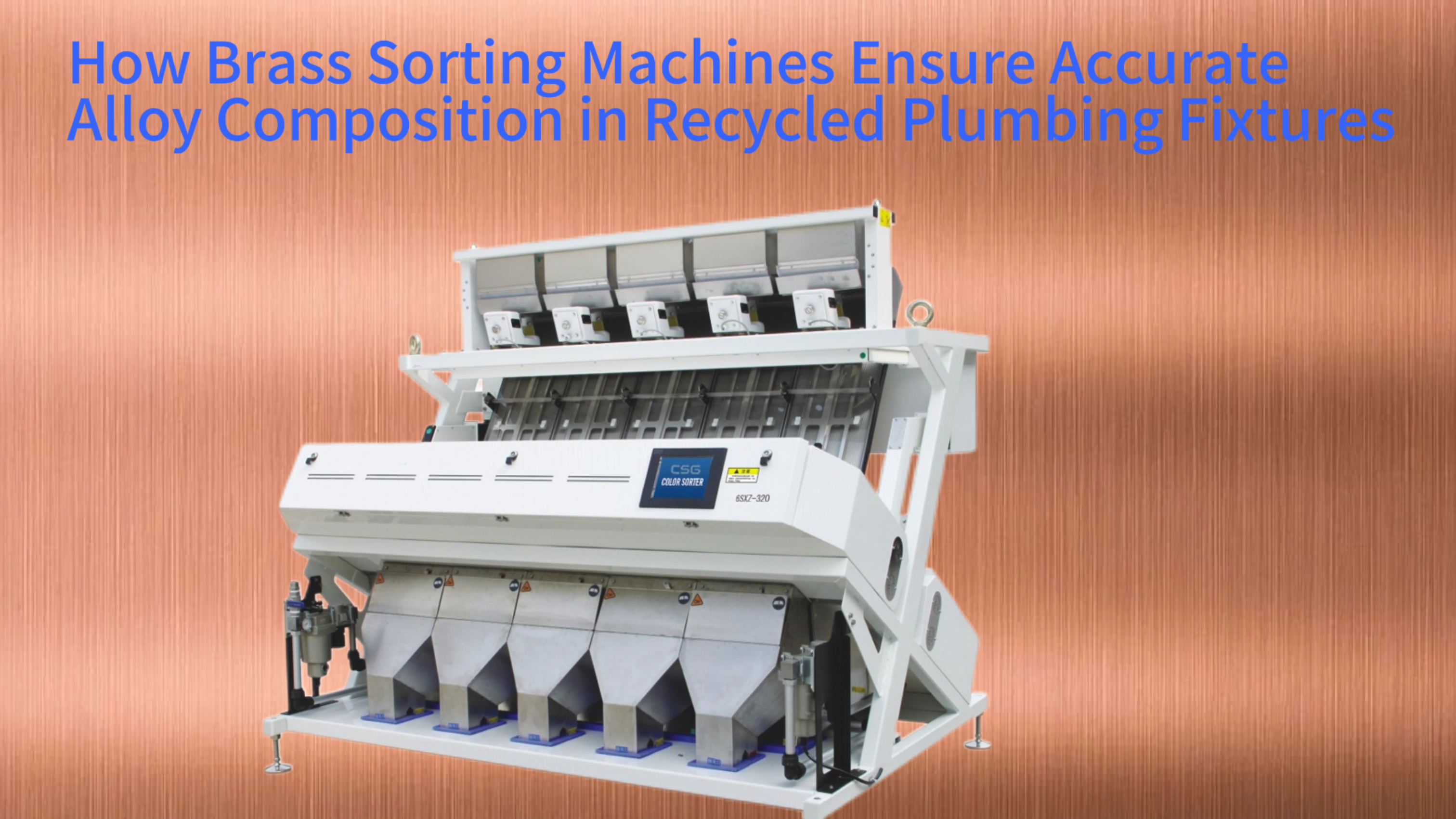
Recycling old faucets, valves, and pipe fittings is a cornerstone of the circular economy, but it presents a unique challenge: not all "brass" is the same. These plumbing fixtures can be made from a variety of brass alloys, each with different amounts of copper and zinc, and sometimes containing other elements like lead or silicon. Traditional recycling methods often melt these mixes together, creating a lower-value, impure metal batch. This article explains how modern brass sorting machines solve this problem. We will explore the technological journey from a pile of mixed scrap to precisely sorted, high-purity brass streams, detailing the science of detection, the speed of analysis, and the precision of separation that guarantees the alloy composition needed for manufacturing new, high-quality products.
The Critical Need for Precision in Plumbing Brass Recycling
Economic & Environmental Impact of Accurate Brass Sorting
| Metric | Value | Description |
|---|---|---|
| Energy Savings | ~85% | Energy saved by recycling brass vs. producing from ore |
| Sorting Purity Rate | >98% | Industry-leading purity of sorted brass alloys |
| Analysis Speed | <5ms | Time for AI to analyze alloy composition |
| Alloy Identification Accuracy | >99.7% | Accuracy for clear brass samples |
Recycling plumbing fixtures is about more than just collecting metal; it is about reclaiming specific engineering materials. A faucet designed for potable water might use a lead-free brass with excellent corrosion resistance, while a heavy-duty valve might use a different, stronger alloy. When these are recycled together inaccurately, the resulting melted metal becomes unpredictable. This contaminated batch cannot be used to make new fixtures that meet strict safety and performance standards, drastically reducing its value and forcing manufacturers to use more newly mined resources. The economic and environmental success of recycling hinges on the ability to sort these materials by their exact alloy type before they ever reach the furnace.
Furthermore, the global push for sustainable construction and stricter regulations on materials, such as limits on lead content in drinking water systems, demands traceability and purity. Recycled brass that cannot be certified as a specific, consistent alloy finds few buyers in high-value markets. Therefore, the initial sorting stage is the most critical step in transforming discarded plumbing waste back into a premium raw material. Advanced sorting technology bridges this gap, ensuring that the loop of the circular economy is not only closed but also strengthened, providing material that is as good as, or better than, virgin alloy for specific applications.
The Problem of Mixed Brass Alloys in Scrap
When plumbing fixtures arrive at a recycling facility, they are a complex mixture. Beyond different brass alloys, they may be attached to other metals like steel mounting brackets or contain rubber seals and plastic handles. Even within the brass components, the composition varies. This variation is not visible to the human eye, as many brass alloys share a similar golden color. Manually sorting this mix is impractical, slow, and incredibly inaccurate, leading to significant cross-contamination that degrades the entire batch during melting. This inefficiency represents a massive loss of valuable material and economic potential, creating a bottleneck in the recycling process.
The core issue lies in the material properties. Different brass alloys have distinct mechanical strengths, machinability, and corrosion resistance. A recycling melt contaminated with an unsuitable alloy can develop weaknesses or fail critical tests. For instance, an alloy meant for decorative purposes mixed into a batch for high-pressure valves could lead to catastrophic product failures. Therefore, the sorting process must be exceptionally discerning, capable of identifying not just "brass," but the specific type of brass, often defined by a standardized numbering system like the UNS C36000 or C87700 series, to ensure the recycled output meets precise industrial specifications.
Economic and Environmental Impact of Accurate Sorting
The financial incentive for precise brass sorting is substantial. Clean, well-sorted brass scrap commands a premium price in the metals market, often coming close to the value of primary production. By employing a brass sorting machine, recyclers can transform a mixed, low-value pile into several high-purity, high-value commodity streams. This directly increases revenue and profit margins. The efficiency of automated sorting also reduces labor costs and increases processing throughput, allowing facilities to handle larger volumes of scrap material more economically, scaling their operations effectively.
On the environmental front, the impact is profound. Producing new brass from mined ore is energy-intensive and generates significant carbon emissions. Every ton of accurately sorted and recycled brass that replaces virgin material can save approximately 85% of the energy consumption. Furthermore, it reduces the need for mining, land disruption, and associated water use. By ensuring the sorted brass is of such high quality that it can be used in the same demanding applications, the technology maximizes the true closed-loop potential of recycling. This not only conserves natural resources but also minimizes the overall carbon footprint of the manufacturing sector, making modern plumbing systems more sustainable from start to finish.
Core Technology: Seeing the Invisible Signature of Brass
At the heart of a modern brass sorter is its ability to "see" what humans cannot: the unique material signature of each alloy. This is achieved not with a single sensor, but with a suite of advanced detection technologies that work in concert. These systems analyze the physical and chemical properties of each individual piece of scrap as it moves at high speed. Unlike simple magnets that only separate iron, these sensors can distinguish between different non-ferrous metals and, crucially, between different alloys within the same metal family, such as distinguishing a leaded brass from a lead-free silicon brass.
The machine's sensing system acts like a hyper-accurate diagnostic tool. It collects data points from each scrap piece, creating a detailed profile that is instantly compared to a vast library of known material signatures stored in its database. This technological capability transforms the sorting process from a guessing game into an exact science. By relying on these precise physical measurements rather than visual approximation, the system achieves a level of consistency and accuracy that is impossible through manual methods, laying the foundation for creating reliable, specification-grade recycled brass.
Laser-Induced Breakdown Spectroscopy (LIBS) for Elemental Analysis
One of the most critical technologies for alloy sorting is Laser-Induced Breakdown Spectroscopy, or LIBS. This method involves firing a highly focused, pulsed laser at the surface of a scrap piece. The laser energy creates a microscopic plasma—a tiny, superheated ball of gas—from the material's surface. As this plasma cools, the atoms within it emit light at wavelengths unique to each chemical element. A sophisticated spectrometer then analyzes this emitted light, breaking it down into its constituent colors like a prism, but with far greater precision.
This spectral analysis allows the metal scrap laser sorting machine to detect the exact elemental composition of the brass. It can measure the percentage of copper, zinc, lead, iron, silicon, and other trace elements present. For plumbing brass, this is indispensable. It can definitively identify if a piece is a standard leaded brass (containing around 2-3% lead for machinability) or a newer, lead-free brass (which uses elements like silicon or bismuth instead). This level of granular, chemical analysis is what enables the sorter to make decisions based on the exact alloy grade, ensuring that the sorted output meets specific chemical specifications required by brass mills and foundries.
Color and Shape Recognition with Advanced Optical Sensors
While LIBS analyzes chemistry, high-resolution optical sensors provide crucial contextual information. Powerful CCD cameras capture detailed images of each scrap piece, evaluating its color, shape, size, and surface texture. Although many brasses look similar, subtle color differences caused by oxidation, plating, or alloy content can be detected. More importantly, these cameras help the system understand the physical form of the object—whether it's a bulky valve body, a thin faucet handle, or a curved pipe section.
This visual data is processed by complex machine vision algorithms. The system can learn that certain shapes are commonly associated with specific types of fixtures or alloys. For example, large, hexagonal valve bodies might typically be made from a particular grade of brass. This information complements the chemical data from the LIBS sensor, creating a more robust identification profile. Furthermore, the optical system is vital for the machine to locate the position and orientation of each scrap piece on the conveyor belt. This precise spatial tracking is essential for the next step: accurately targeting and ejecting the selected item from the mixed stream, which you can see in action with various optical sorter configurations.
The Sorting Process: From Mixed Scrap to Pure Alloy Streams
Brass Sorting Process Flow
The operation of a brass sorting machine is a continuous, high-speed ballet of material handling, analysis, and action. It begins with preparing the chaotic mix of scrap for examination and ends with perfectly separated piles of metal. This process is fully automated and occurs in a matter of milliseconds for each individual piece. The seamless integration of each stage—feeding, scanning, deciding, and separating—is what allows these systems to achieve industry-leading purity rates of over 98%, processing several tons of material every hour with minimal human intervention.
Understanding this sequence is key to appreciating the engineering behind resource recovery. Each stage is designed to optimize the one that follows. Proper feeding ensures accurate scanning; precise scanning enables correct decisions; and timely decisions allow for flawless separation. This integrated approach maximizes both the volume of material processed (throughput) and the accuracy of the sorting outcome (purity), making modern recycling facilities efficient and profitable hubs for material recovery. The process exemplifies how industrial automation and smart technology are revolutionizing waste management.
Stage One: Intelligent Material Feeding and Presentation
The journey starts at the feeding system. A mixed stream of shredded or whole plumbing fixtures is loaded onto a vibrating feeder or a conveyor belt. The primary goal here is not just to move material, but to prepare it for optimal scanning. The feeder spreads the scrap into a single, even layer to prevent pieces from piling on top of each other, which would hide some from the sensors. This stage, often referred to as smart material feeding, is critical for ensuring every piece gets its moment in the "spotlight" of the detection sensors.
Furthermore, the system often uses specialized trays, belts, or chutes to present the items in a stable and consistent manner. Some advanced systems may even gently shake or rotate the pieces to ensure that at least one relatively clean, representative surface is facing the laser and optical sensors. This consistent presentation is crucial for obtaining a reliable reading, especially for LIBS, which requires a clear line of sight to the material's surface. A well-designed feeding system directly increases the overall accuracy and efficiency of the entire sorting process by guaranteeing that the downstream sensors receive the highest quality data possible from every scrap item.
Stage Two: Simultaneous Multi-Sensor Data Acquisition
As the material enters the scanning tunnel, it is bombarded with data collection from multiple sensors simultaneously. The high-speed CCD cameras capture thousands of visual images per second. At the exact same moment, the LIBS laser fires its pulses, and the spectrometer collects the resulting spectral emissions. In some systems, additional sensors like near-infrared (NIR) or X-ray detectors might also gather data, particularly useful if the scrap stream contains non-metallic contaminants or heavily coated pieces.
This multi-layered data acquisition happens in a flash. For each piece of scrap, the system generates a complex data packet containing its chemical fingerprint from LIBS, its visual profile from the cameras, and its dimensional data. All this information is timestamped and spatially linked to the piece's exact location on the conveyor belt. This stage is where the machine "perceives" the raw truth about the material. The speed and synchronization of this data capture are phenomenal, with modern systems capable of analyzing and making decisions on thousands of individual pieces every minute, forming the core of advanced detection capabilities.
The Brain of the Machine: Real-Time Data Analysis and Decision Making
Alloy Identification & Processing Capabilities
C36000 (Free-cutting brass)
C46400 (Naval brass)
C85700 (Leaded brass)
C87700 (Silicon brass - lead-free)
C87800 (Lead-free brass)
Collecting data is only half the battle; the real magic happens in the instantaneous analysis. The torrent of raw sensor data is fed into a powerful industrial computer running sophisticated recognition software. This software acts as the brain of the operation. It compares the live spectral signature from the LIBS sensor against a vast internal database of known alloy signatures. Is the copper content 60% or 63%? Is there a detectable lead peak or a silicon peak? The algorithm answers these questions in less than 5 milliseconds.
This decision-making process is enhanced by AI sorter technology, where machine learning algorithms continuously improve performance. The more material the system processes, the better it becomes at recognizing subtle variations and making correct calls, even on weathered, dirty, or oddly shaped pieces. The software integrates the chemical data with the optical data. For instance, it might confirm that an item with the chemical signature of a specific brass alloy also has the expected shape and color. This multi-validation approach drastically reduces errors and false ejections, ensuring that the command to separate a piece is based on the most comprehensive assessment possible.
Matching Spectral Fingerprints to Alloy Libraries
The core of the analytical software is its extensive library of material "fingerprints." Each known brass alloy—C36000 (free-cutting brass), C46400 (naval brass), C85700 (leaded brass), etc.—has a unique spectral pattern stored in this digital library. When the LIBS sensor generates a spectrum from an unknown scrap piece, the software performs a rapid pattern-matching exercise. It doesn't just look for the presence of elements; it analyzes the intensity and relationship between all the spectral lines to determine the probable alloy grade with extremely high confidence, often exceeding 99.7% accuracy for clear samples.
This library is not static; it can be customized and expanded by the operator. If a recycler frequently receives a particular type of proprietary fitting from a specific manufacturer, that alloy's signature can be learned and added to the library. This allows the sorter to be tailored for specific feedstock streams. The software can also be programmed with complex sorting rules. For example, it can be instructed to sort all C36000 brass into one bin, all lead-free brasses into another, and reject any pieces contaminated with steel or entirely different metals like aluminum into a third stream. This flexibility makes the machine a versatile tool for various recycling specialties.
Calculating the Exact Ejection Coordinates and Timing
Once the "brain" has identified a target piece of brass, it must instruct the "body" on how to remove it. This is a physics and timing challenge of immense precision. The software knows the exact location of the piece on the belt from the camera tracking. It also knows the belt's speed. Using this information, it calculates the future position of the scrap piece when it reaches the ejection zone several feet down the line. It must account for the tiny delay between issuing the command and the physical ejection mechanism activating.
This calculation determines precisely which of the hundreds of small, high-speed air nozzles in the ejection bar needs to fire, and for exactly how many milliseconds. The timing must be perfect. Fire too early or too late, and the air jet will miss the target, leaving a valuable piece in the waste stream or accidentally ejecting a non-target item. This split-second coordination between sensor data, processing speed, and mechanical action is what defines the system's precision. It transforms a digital decision into a physical result, ensuring that the identified brass alloy is cleanly and reliably separated from the rest of the material flow. This principle of precision acceleration is key to efficient sorting.
Execution: High-Speed Precision Separation of Alloys
Pneumatic Ejection System & Output Quality
| Air Pressure | 6-8 bar |
| Valve Activation Time | 5-10 milliseconds |
| Air Jet Speed | >200 meters/second |
| Processing Throughput | Several tons/hour |
Sorted brass meets industrial alloy specifications for direct furnace use
The final, visible action of the sorting machine is the separation itself. Based on the calculated coordinates, the system triggers a bank of ultra-fast pneumatic valves. These valves release a brief, powerful burst of compressed air through a nozzle aimed directly at the targeted scrap piece. The air jet, traveling at speeds over 200 meters per second, acts like a precise punch, knocking the selected brass fitting off its trajectory on the main conveyor belt and into a dedicated collection chute positioned to the side.
This high-speed ejection system is remarkably selective. Because the air nozzles are arranged in a dense array across the width of the belt, and because the firing commands are so precise, the system can selectively remove a small faucet washer that is inches away from a different alloy valve body without disturbing the wrong item. This non-contact method of separation is ideal for metals; it doesn't blunt tools, cause wear, or risk damaging the pieces. The main belt continues to carry the non-target material (other metal types, contaminants, or different brass alloys) to a separate collection bin, resulting in two or more distinct, high-purity output streams from a single mixed input.
The Role of Compressed Air Jets in Non-Contact Sorting
Compressed air is the preferred method for ejection in most modern metal sorters due to its speed, cleanliness, and reliability. The system uses a reservoir of high-pressure air, typically between 6 and 8 bar. When a solenoid valve receives the electronic firing signal from the control computer, it opens for a duration as short as 5 to 10 milliseconds. This releases a precise volume of air through a nozzle, creating a focused jet of high kinetic energy. The force is sufficient to deflect even heavy metal pieces but is applied so briefly that it minimizes air consumption.
The non-contact nature of this method offers significant advantages. There are no mechanical arms that can jam or wear out from constant impact with hard metal scrap. It allows for a simpler, more robust mechanical design with fewer moving parts in the harsh recycling environment. Furthermore, it enables incredibly high ejection speeds—thousands of precise firings per minute—which is essential to keep up with the rapid analysis speed of the sensors. This synergy between digital intelligence and pneumatic power is what allows the entire system to operate at industrial-scale throughputs while maintaining surgical precision in sorting.
Output Streams: Achieving High-Purity Brass Fractions
The ultimate result of this technological symphony is the creation of clean material fractions. One output chute collects the targeted brass alloy—for example, all the lead-free silicon brass from a mix of old fixtures. Another chute collects a different alloy, like the standard leaded brasses. A third might collect all non-brass metals or rejected contaminants. Each of these output streams now has a documented, verifiable composition. This high-purity brass is often in a form that can be directly charged into a furnace by a brass mill without fear of contaminating the melt.
This purity, regularly achieving 98% or better, is what restores the full economic and material value to the recycled metal. It allows the recycled brass to be sold under specific alloy designations (e.g., C87800 lead-free brass chips), commanding the highest market price. For manufacturers, it provides a reliable, sustainable source of raw material that they can trust to meet their production specifications. This closes the loop effectively, ensuring that the old plumbing fixture is truly reborn as a new, high-performance component, driving the circular economy forward with both environmental and economic efficiency. The ability to handle such complex mixtures reliably is a key feature of a modern mixed metal sorting machine.
The Value Delivered: Consistent Material for a Circular Future
Value & Sustainability Impact of Recycled Brass
Premium market pricing for sorted alloys
Reduced labor & processing costs
Higher throughput & profit margins
85% energy savings vs virgin production
Reduced mining & carbon emissions
Closed-loop material circularity
Consistent alloy composition
Compliance with regulatory standards
High-value manufacturing feedstock
The sophisticated process undertaken by a brass sorting machine delivers immense value that extends far beyond the recycling facility fence. It provides the foundational material integrity needed for a genuine circular economy in metals. Manufacturers of new plumbing fixtures, valves, and other brass components can confidently integrate this recycled content into their production lines, knowing it will behave predictably during casting, machining, and finishing. This reliability is paramount for maintaining product quality, safety certifications, and brand reputation in demanding industries.
Furthermore, this technology future-proofs the recycling industry against evolving material standards. As regulations phase out certain substances (like lead) and new, more complex alloys are developed for specialized applications, the adaptable sensing and software capabilities of these sorters can evolve to identify and manage these changes. This ensures that the recycling infrastructure remains relevant and effective, capable of recovering the valuable materials from today's products to build tomorrow's. It transforms recycling from a basic waste management service into a high-tech raw material production industry, essential for sustainable manufacturing.
Enabling High-Value Manufacturing from Recycled Content
With a guaranteed alloy composition, recycled brass ceases to be a "scrap" and becomes a premium feedstock. Brass mills and foundries can use it to produce new billets, rods, and sheets that are metallurgically identical to those made from primary ores. This allows manufacturers to offer products with high recycled content without compromising on performance. A modern, water-efficient faucet or a critical industrial valve can now be made predominantly from post-consumer brass, significantly reducing the product's embodied carbon footprint.
This capability is increasingly demanded by regulators, architects, and environmentally conscious consumers. It enables manufacturers to meet sustainability targets and qualify for green building certifications. The sorting machine, therefore, acts as the crucial enabler in the supply chain, making the use of high-quality recycled brass not just an environmental choice, but a practical, reliable, and economically sound one. It proves that sustainability and high performance are not mutually exclusive but can be engineered together through intelligent technology like the sensor-based sorting machine.
Contributing to Sustainable Resource Management Goals
On a global scale, the precision sorting of metals like brass is a critical tool for sustainable resource management. It directly conserves finite natural resources by reducing the need for virgin copper and zinc mining. It also saves enormous amounts of energy, as recycling brass uses only about 15% of the energy required to produce it from ore. This translates into a substantial reduction in greenhouse gas emissions associated with metal production, helping industries and nations meet their climate commitments.
The technology also tackles the growing challenge of complex waste streams. As products become more intricate, end-of-life recovery becomes harder. Brass sorters demonstrate that through innovation, we can develop the tools to disassemble our material world and put the pieces back into productive use. By ensuring metals are recycled back into applications of equal or greater value—a concept known as upcycling—these machines support the creation of a less wasteful, more resource-efficient industrial system, turning the linear "take-make-dispose" model into a circular one where materials are perpetually in use.