Stone Sorting Machine
Metal Sorting Machine
Glass Sorting Machine
Plastic Sorting Machine
Soil Clod Sorting Machine
Vegetative Impurity Sorting Machine
Insect Damaged Kernel Sorting Machine
Moldy Kernel Sorting Machine
Off Color Particle Sorting Machine
Weed Seed Sorting Machine
What is Foreign Matter Sorting
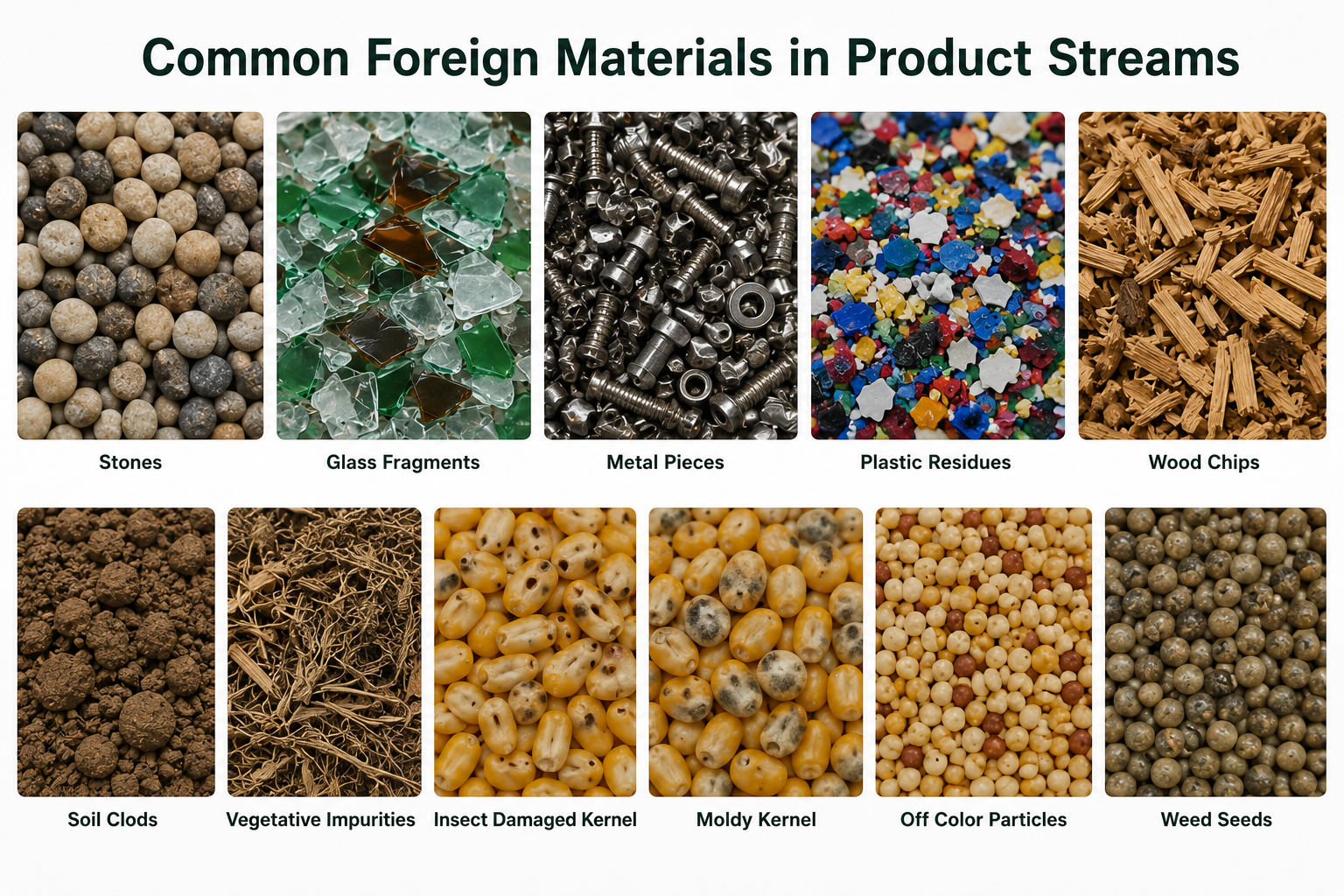
Foreign matter sorting is an advanced contamination removal process that utilizes high-precision optical sorters, X-ray inspection systems, and metal detectors to identify and eliminate unwanted materials from product streams. This technology ensures the removal of stones, glass fragments, metal pieces, plastic residues, wood chips, and other extraneous materials that may compromise product safety and quality. With increasing regulatory requirements and consumer expectations for contaminant-free products, foreign matter sorting has become a critical control point in modern food and industrial processing lines.
Modern foreign matter sorting solutions cater to a diverse range of industries including food processing, recycling, mining, and pharmaceutical manufacturing. These systems help processors comply with HACCP, FSMA, and BRCGS standards while protecting brand reputation and consumer safety. Whether it's removing stones from harvested crops, detecting metal fragments in processed foods, or eliminating plastic contamination in recycling streams, automated foreign matter sorting provides detection sensitivity and removal efficiency that manual inspection cannot achieve.
Why Choose a Foreign Matter Sorting Machine?
❌ Drawbacks of Manual Foreign Matter Removal
High labor intensity and repetitive strain injuries
Inconsistent detection due to human fatigue and distraction
Unable to detect dense contaminants like stones and metals
Poor hygiene standards with manual handling
Slow processing speeds (typically 50-200 kg per person per hour)
High turnover rates and training costs
✅ Advantages of Foreign Matter Sorting Machines
Fully automated with 24/7 operation capability
99.9% removal efficiency for most contaminant types
Detects contaminants invisible to human eye (glass, dense plastics)
Enclosed system maintains product hygiene standards
Processes 1-20 tons per hour depending on product type
Immediate ROI through reduced liability and waste
🔧 Core Components of Foreign Matter Sorting System
Optical Contaminant Detection
High-resolution CCD cameras identify color-based foreign materials including discolored stones, plastic pieces, and wood fragments based on spectral signatures.
X-Ray Inspection System
Dual-energy X-ray technology detects dense contaminants including glass shards, metal fragments, stones, and bone chips regardless of product density or packaging.
Metal Detection & Magnetic Separation
Ferrous and non-ferrous metal detectors combined with rare-earth magnetic separators remove metal contaminants including stainless steel, aluminum, and iron particles.
High-Pressure Ejection Array
Programmable air jet system with millisecond response time precisely removes detected foreign matter while preserving maximum good product.
Technical Specifications & Performance Metrics
Detection Sensitivity
Metal: ≥0.3mm
Glass: ≥0.5mm
Stone: ≥1.0mm
Plastic: ≥1.5mm
Processing Capacity
1-20 tons/hour
(product dependent)
Up to 50,000 items/min
Removal Efficiency
Metal: 99.97%
Glass: 99.5%
Stones: 99.8%
Plastics: 98.5%
Inspection Technology
RGB Camera + NIR + X-Ray
+ Metal Detection
Integrated sensor fusion
Ejection System
<0.5ms response time
64-256 programmable nozzles
98% good product retention
Construction Standards
IP65 stainless steel
Food-grade materials
FDA & CE compliant
Foreign Matter Types & Detection Methods
| Contaminant Type | Common Sources | Detection Technology | Removal Efficiency |
|---|---|---|---|
| 🪨 Stones & Rocks | Harvesting, field contamination, storage areas | NIR Spectroscopy + Density Sorting | ≥99.5% |
| 🥃 Glass Fragments | Broken containers, processing equipment | X-Ray Transmission + Optical | ≥99.5% |
| 🔩 Metal Pieces | Equipment wear, broken machinery parts | Metal Detector + Magnets + X-Ray | ≥99.9% |
| 🛍️ Plastic Residues | Packaging materials, conveyor belt wear | Hyperspectral + NIR Imaging | ≥98.0% |
| Wood & Organic Debris | Field contamination, pallet fragments | Color Sorting + Density Separation | ≥98.5% |
| 🦴 Bone Chips | Meat processing, fish deboning | X-Ray + UV Fluorescence | ≥99.0% |
Application Industries & Typical Contaminants
| Industry | Products Processed | Primary Contaminants | Recommended System |
|---|---|---|---|
| 🌾 Grain Processing | Rice, wheat, corn, barley, oats | Stones, glass, metal, plastic | Optical + X-Ray + Magnet |
| 🥜 Nut & Seed Processing | Almonds, walnuts, sunflower seeds | Shell fragments, stones, metal | Color Sorter + NIR |
| 🍎 Fruit & Vegetable | Berries, potatoes, frozen vegetables | Stones, leaves, plastic, metal | Optical + X-Ray |
| ♻️ Recycling | Plastics, glass, e-waste, metals | Mixed materials, contaminants | Hyperspectral + NIR + X-Ray |
| 💊 Pharmaceutical | Tablets, capsules, powders | Metal fragments, foreign particles | Metal Detector + X-Ray |
| ⛏️ Mining & Minerals | Ore, aggregates, industrial minerals | Gangue materials, waste rock | Sensor-Based Sorting (X-Ray/NIR) |
How Foreign Matter Sorting Works
Foreign matter sorting systems integrate multiple detection technologies in a sequential or parallel configuration to maximize contaminant removal. As product flows through the inspection zone, optical cameras, NIR sensors, X-ray generators, and metal detectors simultaneously scan each item from multiple angles. Advanced sensor fusion algorithms combine data from all detection sources to make real-time accept/reject decisions with exceptional accuracy.
The process begins with product entering the vibratory feeder, which creates an optimized single-layer stream for maximum contaminant exposure. As materials pass through the inspection tunnel, X-ray systems identify dense contaminants regardless of their position within the product. Simultaneously, high-speed cameras detect color-based foreign materials while metal detectors identify conductive contaminants. When a contaminant is detected, the control system activates precisely timed air jets that eject the unwanted material into a separate collection bin while good product continues to the acceptable product stream.
🔄 Multi-Layer Contaminant Removal Process
Magnetic Separation — Removes ferrous metal contaminants before product enters optical inspection zone.
Optical Sorting — Color and NIR cameras identify visible foreign materials including plastic and discolored stones.
X-Ray Inspection — Detects dense contaminants (glass, stones, metals) regardless of position within product.
Final Metal Check — Secondary metal detector ensures no metal contaminants bypass previous stages.
Core Benefits of Foreign Matter Sorting
Enhanced Food Safety
Removes physical hazards that could cause injury or product recalls, protecting consumers and brand reputation.
Regulatory Compliance
Meets HACCP, FSMA, BRCGS, and IFS requirements for foreign material control and documentation.
Liability Reduction
Significantly reduces risk of costly product recalls, lawsuits, and regulatory penalties.
Premium Market Access
Enables entry to high-value markets requiring zero-tolerance for foreign contaminants.
Equipment Protection
Prevents stones and metal fragments from damaging downstream processing equipment (mills, grinders).
Quality Documentation
Automatic reporting of contaminant detection events for audit trails and quality management systems.
Selection Guide for Foreign Matter Sorting Equipment
📝 Step 1: Identify Contaminant Risks
Conduct a thorough hazard analysis to determine which foreign materials are most likely to appear in your product stream based on sourcing, processing, and handling methods.
📏 Step 2: Define Detection Sensitivity
Establish minimum contaminant size requirements based on customer specifications, regulatory standards, and downstream equipment sensitivity.
⚙️ Step 3: Match Technology to Application
Select appropriate detection technologies: optical for visible contaminants, X-Ray for dense materials, metal detection for conductive metals.
🏭 Step 4: Evaluate Integration Requirements
Consider space constraints, conveyor height, upstream/downstream equipment compatibility, and installation requirements.
🔧 Step 5: Assess Maintenance & Support
Verify availability of local technical support, spare parts inventory, and training programs for operator and maintenance personnel.
🧪 Step 6: Request Material Testing
Always conduct product trials using your actual materials to validate detection sensitivity and removal efficiency before purchase.
Maintenance & Operational Best Practices
Clean optical windows and X-Ray inspection area
Verify air pressure and nozzle operation
Check belt alignment and product spread
Inspect and clean all filters and fans
Test calibration with standard samples
Exhaust condensate from air system
X-Ray generator performance verification
Camera alignment and focus calibration
Sensor fusion algorithm optimization