What is a Surface Defect Sorting Machine
A surface defect sorting machine is an advanced industrial device designed to identify and remove products with surface imperfections using high-precision optical sensors and artificial intelligence. It detects flaws such as scratches, cracks, pits, spots, discoloration, burrs, and coating peeling across a wide range of materials including metals, plastics, ceramics, glass, and electronic components.
Unlike traditional manual inspection, which is subjective and prone to fatigue, surface defect sorters automate the quality control process with remarkable consistency. These machines are widely adopted in manufacturing plants, metal processing facilities, plastic molding workshops, and food processing lines to improve product quality, reduce waste, and meet stringent international standards. By incorporating deep learning algorithms, they continuously enhance detection accuracy and adapt to new defect patterns.
How a Surface Defect Sorting Machine Works
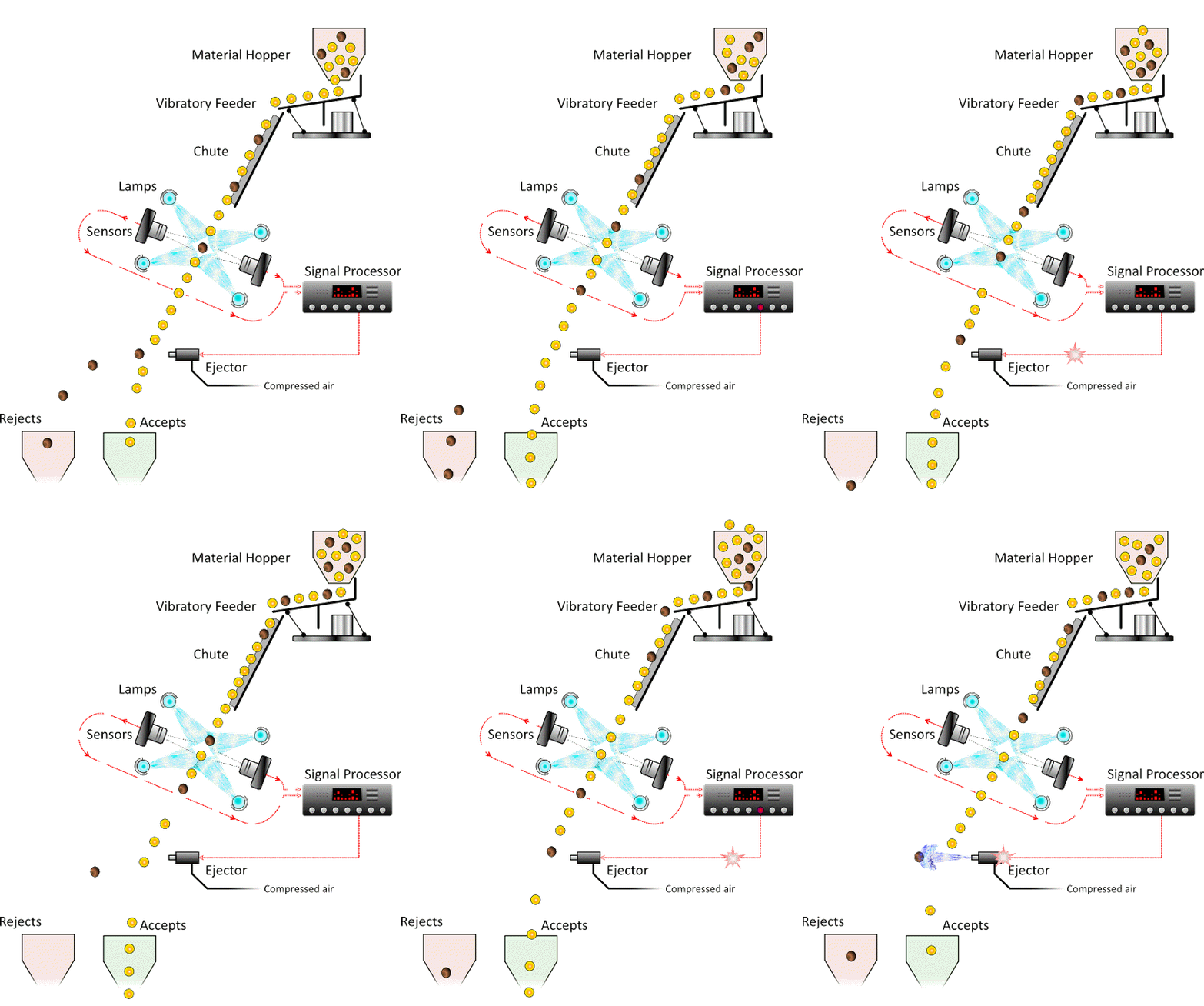
| Stage | Operation | Key Technology / Parameters |
|---|---|---|
| 1. Feeding | Vibratory feeder or conveyor evenly distributes products | Speed adjustable · Single-layer arrangement · No overlapping |
| 2. Imaging | Multi-angle / multi-spectral surface image capture | CCD/CMOS · Resolution ≥ 4096 px · Frame rate ≥ 200 fps |
| 3. Analysis | AI model compares against defect features in real-time | Deep Learning (CNN) · Inference latency < 5ms |
| 4. Ejection | Pneumatic valves or mechanical pushers separate defects | Response time ≤ 30ms · Ejection accuracy ≥ 99.5% |
| 5. Collection | Good and rejected products collected separately | Dual or quad-channel output · No secondary contamination |
Core Features and Advantages
🔍 Micron-Level Detection
Detects surface defects as small as 0.01mm.
⚡ High-Speed Processing
Processes up to 15,000 pieces per minute.
🧠 AI Self-Learning
Deep CNN models continuously optimize recognition.
🔄 Multi-Spectral Fusion
Visible + IR + UV imaging for full coverage.
Modern surface defect sorters incorporate deep learning algorithms that continuously improve sorting accuracy through pattern recognition. Many models feature multi-spectral imaging systems that inspect products under visible, infrared, and ultraviolet light, ensuring no defects escape detection regardless of material type or surface finish.
The advantages of using these machines are substantial. They dramatically increase production capacity while reducing labor costs and eliminating human error. By detecting and removing defective products early in the production chain, they prevent defective batches from reaching customers. Additionally, their non-contact inspection method preserves product integrity, and their energy-efficient designs contribute to sustainable manufacturing practices.
Technical Specifications
Surface defect sorting machines typically process between 3,000 to 15,000 pieces per minute depending on model and configuration. They operate at sorting accuracies ranging from 99.5% to 99.9%, with ejection rates adjustable according to quality requirements. The machines require compressed air at 0.5-0.8 MPa and consume approximately 2.5-6 kW of power, making them relatively energy-efficient for industrial equipment.
Application Scenarios
Surface defect sorting machines find applications across diverse industries. In metal processing, they ensure finished components are free from scratches, pits, and corrosion. For plastic injection molding, they eliminate discolored parts, flow marks, and flash. In electronics manufacturing, they detect scratches on PCBs, oxidation on connectors, and surface contamination on semiconductor components.
| Industry / Sector | Typical Products | Key Defects Detected |
|---|---|---|
| Metal Processing | Stamped parts, CNC components, fasteners | Scratches, pits, burrs, rust, coating peeling |
| Plastic / Rubber | Injection molded parts, pellets, seals | Discoloration, flow marks, bubbles, flash |
| Electronics / Semiconductor | PCBs, connectors, wafers, capacitors | Scratches, oxidation, poor soldering |
| Ceramics / Glass | Tiles, glass panels, optical lenses | Cracks, chipped edges, bubbles |
| Food / Agriculture | Nuts, dried fruits, candies | Mold, spots, insect damage, off-color |
| Automotive / New Energy | Battery electrodes, body panels | Dents, wrinkles, scratches, weld spatter |
Buying Guide
When selecting a surface defect sorting machine, consider your daily production volume and the types of products you handle. Higher capacity models justify their cost through faster ROI for large operations. Evaluate the machine's sorting accuracy claims and verify them with real-world tests using your specific defective samples. Pay attention to after-sales service availability and spare parts supply chain.
Newer models with AI capabilities offer better long-term value despite higher initial costs. Consider machines with user-friendly interfaces and remote monitoring options. For operations processing multiple product types, look for machines with quick changeover capabilities. Always request demonstrations using your actual production samples before making a purchase decision.
Maintenance Guide
Regular maintenance ensures optimal performance and longevity of your surface defect sorting machine. Daily cleaning of optical lenses and air nozzles prevents buildup that could affect accuracy. Weekly checks should include inspection of vibration feeders and conveyor belts. Monthly maintenance should focus on air compressor filters, electrical connections, and calibration verification.
Keep a log of performance metrics to spot gradual declines that may indicate needed servicing. Schedule professional calibration at least annually. Store spare parts like solenoid valves and camera modules to minimize downtime. Train operators to recognize early warning signs like decreased accuracy or unusual noises that may indicate developing issues requiring attention.