What is a Crack Sorting Machine?
A crack sorting machine is an advanced optical inspection device designed specifically for detecting and removing products with surface cracks, fractures, and structural fissures using high-resolution cameras and AI-powered image analysis. It identifies microscopic and macroscopic cracks across a wide range of materials including metal components, ceramic parts, glass products, plastic moldings, electronic components, and food items such as nuts and grains. This technology plays a critical role in quality assurance by preventing cracked products from reaching consumers or causing failures in downstream applications.
Modern crack sorters combine high-speed inspection with exceptional accuracy, capable of detecting cracks as small as 0.02mm at processing speeds up to 10,000 pieces per minute. The automated operation significantly reduces labor costs and human error compared to manual visual inspection, while providing consistent, objective quality assessment across production runs. These machines are essential in industries where even microscopic cracks can lead to product failure, safety hazards, or compromised integrity.
How a Crack Sorting Machine Works
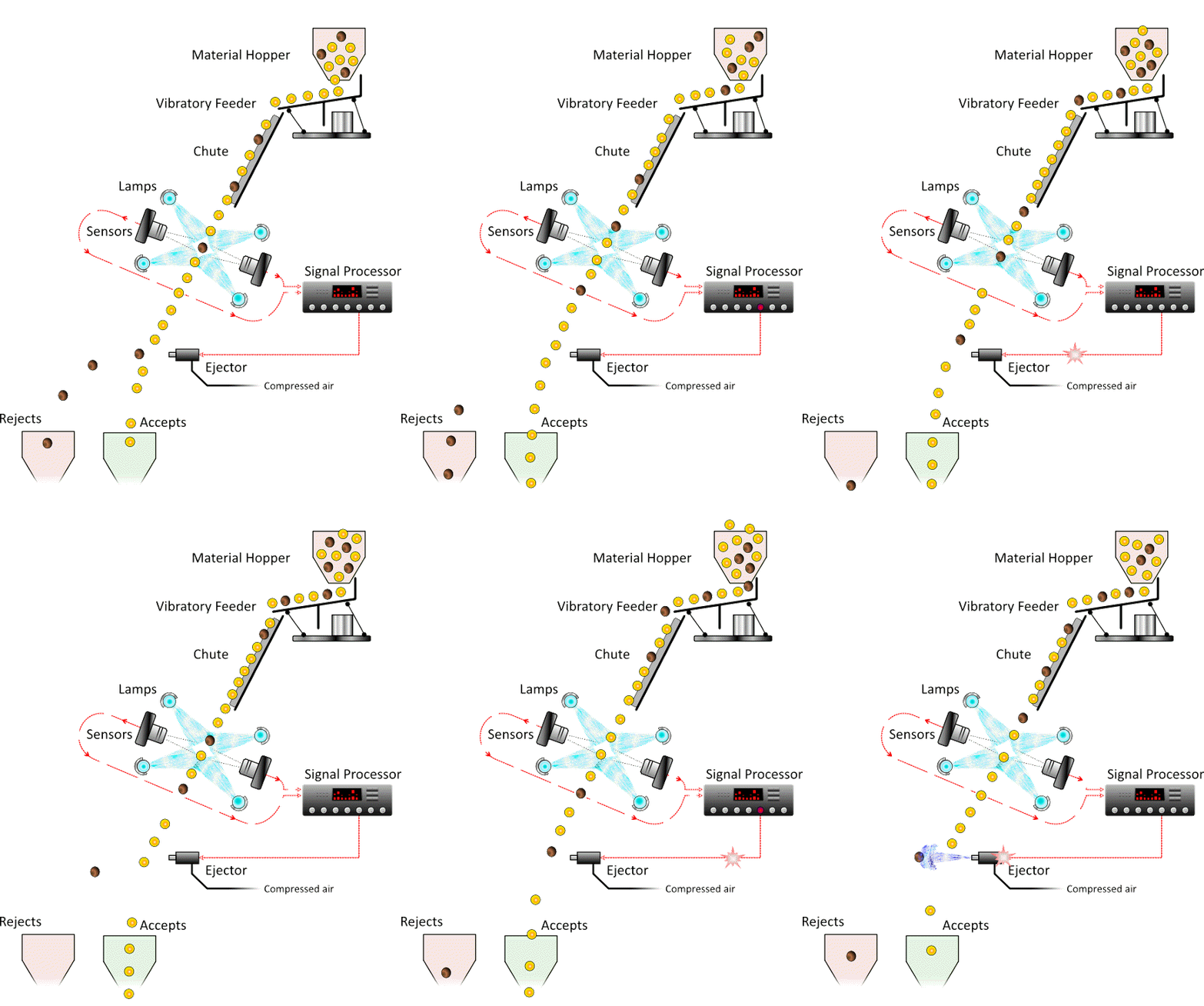
| Stage | Operation | Key Technology / Parameters |
|---|---|---|
| 1. Feeding | Vibration feeder spreads products into single layer | Speed adjustable · Uniform distribution · No overlapping |
| 2. Imaging | Multi-angle high-resolution image capture | CCD/CMOS · Resolution ≤ 0.02mm · Specialized lighting · Multiple angles |
| 3. Analysis | AI identifies crack patterns and fractures | Deep Learning · Crack detection algorithms · Shape + orientation analysis |
| 4. Ejection | Pneumatic or mechanical removal of cracked items | Response time ≤ 25ms · Ejection accuracy ≥ 99.5% |
| 5. Collection | Sound and cracked products collected separately | Multi-channel output · Defect reporting · Quality tracking |
Core Features and Advantages of Crack Sorting Machines
🔍 Microscopic Crack Detection
Identifies cracks as small as 0.02mm invisible to the human eye.
💡 Advanced Lighting Technology
Multi-angle and backlighting systems reveal hidden surface fractures.
⚡ High-Speed Processing
Processes up to 10,000 pieces per minute with real-time rejection.
🧠 AI Pattern Recognition
Deep learning distinguishes cracks from scratches and surface marks.
Modern crack sorting systems offer remarkable detection capabilities with processing capacities ranging from 500 to 10,000 pieces per minute while maintaining sorting accuracy above 99.5%. Their key advantage lies in the ability to detect cracks regardless of orientation or position, using multi-angle imaging and sophisticated AI analysis. The machines can identify hairline cracks, stress fractures, thermal cracks, impact damage, and structural fissures across diverse materials including metals, ceramics, glass, plastics, and food products.
The combination of specialized lighting techniques and advanced algorithms ensures that even subtle surface discontinuities are detected. Backlighting reveals cracks by showing light transmission differences, dark-field illumination highlights surface irregularities, and multi-angle lighting ensures complete coverage regardless of crack orientation. The latest generation incorporates self-learning capabilities that continuously improve crack recognition by analyzing patterns in rejected materials and adapting to new crack types as they emerge in production.
Technical Specifications of Crack Sorting Machines
Standard industrial crack sorters typically feature processing capacities between 500 to 10,000 pieces per minute depending on product size and material type. They operate at detection accuracies exceeding 99.5% for visible surface cracks when properly calibrated and maintained. Most systems require 380V three-phase power with typical power consumption ranging from 2-5kW, while compressed air requirements average 0.5-0.7MPa at 1.5-3m³/min flow rate.
Advanced models offer resolutions up to 0.02mm/pixel with camera systems capturing images at speeds exceeding 4,000 frames per second. The latest imaging technology incorporates specialized lighting systems that can be customized for different material types—backlighting for transparent materials, dark-field for reflective surfaces, and multi-angle illumination for complex geometries. Many machines now incorporate IoT capabilities for remote monitoring, defect tracking, and predictive maintenance features.
Applications of Crack Sorting Machines
Crack sorting technology serves critical functions across multiple industries where product integrity is paramount. In metal processing, it identifies stress fractures and surface cracks in machined components, fasteners, and structural parts. For ceramics and glass manufacturing, it detects hairline cracks, chips, and thermal fractures. The electronics industry relies on these machines to identify cracked connectors, housings, and substrate materials that could lead to product failure.
The food processing industry increasingly uses crack sorting technology to detect cracked nuts, beans, and grains that may be contaminated or have reduced shelf life. Pharmaceutical manufacturers employ these systems to inspect tablets and capsules for cracking that could compromise dosage accuracy. The technology also plays an important role in quality control for automotive parts, aerospace components, and consumer goods where cracks represent unacceptable quality defects.
| Industry / Sector | Typical Products | Crack Types Detected |
|---|---|---|
| Metal Processing | Stamped parts, CNC components, bearings, fasteners | Stress fractures, surface cracks, impact damage |
| Ceramics & Glass | Tiles, glass panels, ceramic substrates, optical components | Hairline cracks, thermal fractures, edge chips |
| Electronics | Connectors, housings, PCB assemblies, switch components | Stress cracks, surface fractures, structural fissures |
| Food Processing | Nuts, almonds, walnuts, coffee beans, grains | Shell cracks, kernel fractures, internal splits |
| Pharmaceuticals | Tablets, capsules, coated pills | Surface cracks, coating fractures, structural defects |
| Automotive | Engine components, brackets, structural parts | Stress fractures, surface cracks, material defects |
Purchasing Guide
When selecting a crack sorting machine, key considerations include the types of products to be inspected, the minimum crack size to be detected, and required processing speed. Consider whether your products require specialized lighting—transparent materials benefit from backlighting while reflective surfaces require dark-field illumination. For operations handling multiple product types, modular systems with adjustable imaging configurations provide significant advantages.
Evaluate the AI algorithm performance by requesting demonstration trials with actual products containing known crack types. Consider future expansion capabilities and the availability of software updates that may improve detection capabilities. Service availability, spare parts supply, and technical support should be evaluated, particularly for 24/7 production operations. Many manufacturers offer validation services to establish detection standards for specific crack types and product geometries.
Maintenance Guide
Proper maintenance begins with daily inspection of optical surfaces and cleaning of camera lenses using approved methods and lint-free cleaning materials. Lighting systems require regular monitoring as brightness degradation can affect crack detection sensitivity. Air filters require regular replacement according to operating conditions, typically every 1-3 months. Nozzle performance should be verified weekly using test patterns with known crack characteristics.
Annual professional calibration using certified reference samples ensures optimal detection performance as camera and lighting characteristics may drift over time. Software updates should be installed as they become available to access improved crack detection algorithms and new defect identification capabilities. Many modern systems include self-diagnostic features that alert operators to potential issues before they impact sorting quality. Maintain detailed maintenance logs with crack detection verification records for quality compliance and performance tracking.