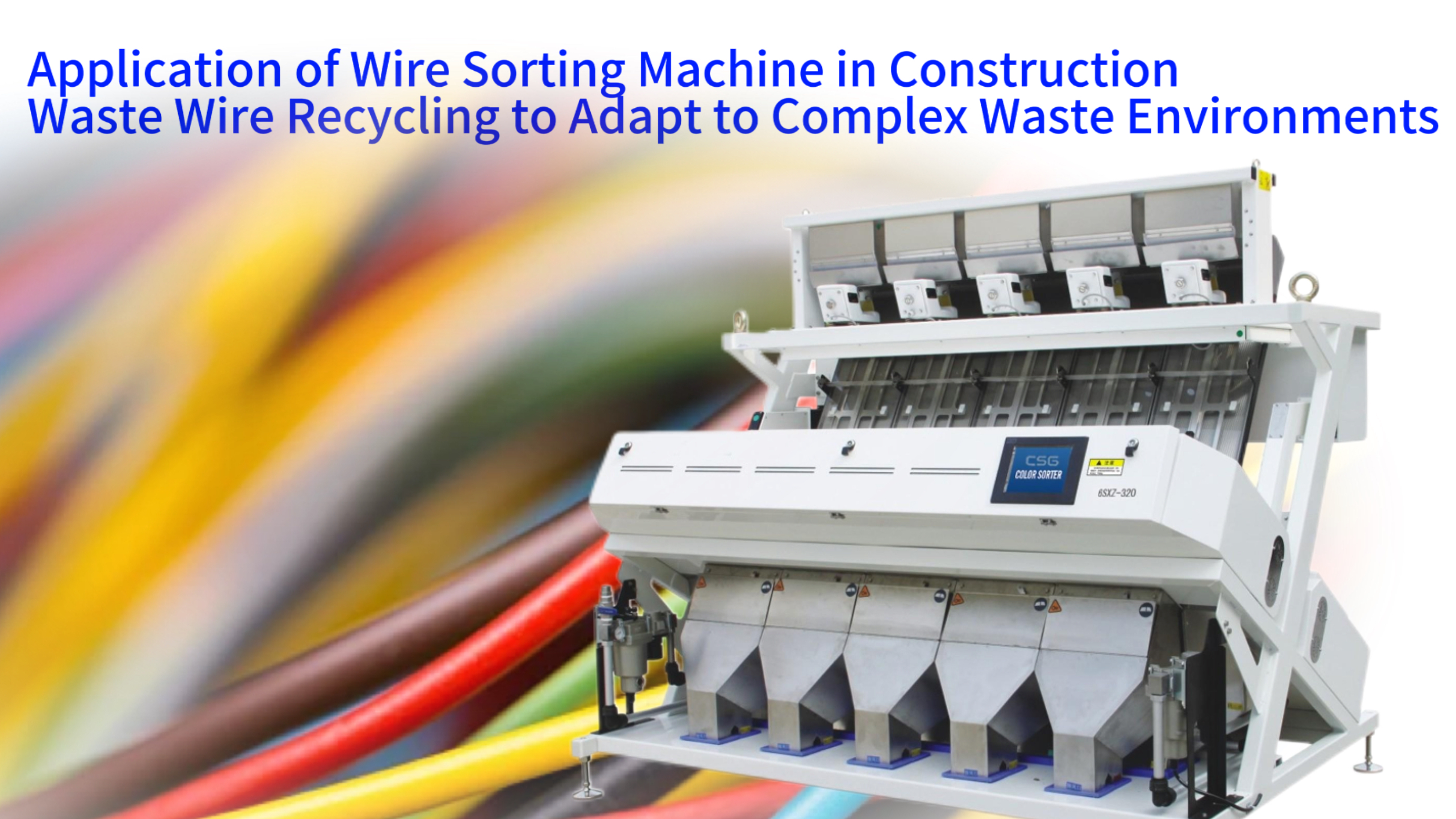
Construction and demolition sites generate immense volumes of mixed waste, presenting a significant environmental and logistical challenge. Hidden within this debris is a valuable resource: scrap wire and cable, often entangled with concrete, wood, plastics, and other materials. Manually recovering these metals is inefficient, dangerous, and economically unviable. This article explores the pivotal role of specialized wire sorting machines in modern construction waste recycling. We will delve into how these advanced systems operate within complex waste streams, the sophisticated sensor and ejection technologies they employ, the tangible economic and environmental benefits they deliver, and their practical applications in transforming chaotic demolition sites into sources of high-purity recycled copper and aluminum. The integration of artificial intelligence and robust mechanical design allows these machines to tackle the unpredictability of construction waste, making material recovery efficient, safe, and profitable.
The Complex Challenge of Wire in Construction and Demolition Waste
C&D Waste Wire Recovery: Manual vs Automated
| Metric | Manual Sorting | Automated Sorting |
|---|---|---|
| Recovery Rate | Low (≤60%) | High (≥95%) |
| Labor Cost | High | Low |
| Purity Level | Variable (≤70%) | Consistent (≥95%) |
| Safety Risk | High | Low |
Construction and demolition (C&D) waste is notoriously heterogeneous. Unlike pre-consumer scrap, wires from demolition sites are not uniform. They are often cut, crushed, coated in dust and plaster, and tightly bundled with other materials. This variability creates a major hurdle for recovery. Traditional methods rely on manual labor, where workers use tools to cut and extract wires, a process that is slow, exposes individuals to sharp edges and potential dust hazards, and results in low recovery rates. Furthermore, the economic value of the recovered metal is often undermined by high labor costs and contamination.
The composition of wire within this waste stream is also diverse. It can range from thick electrical conduit wiring and armored cables to thin telecommunications wires. Each type may have different insulating materials—PVC, rubber, polyethylene—and contain varying cores of copper or aluminum, sometimes even within the same cable bundle. This complexity demands a sorting solution that is not only powerful but also intelligent enough to distinguish valuable metal from worthless debris and different metal types from each other, all while handling a non-stop, dirty, and unpredictable feed of material.
Understanding the Mixed Debris Stream
A typical load of construction waste is a mixture of inert and recoverable materials. Beyond wires, it contains concrete chunks, bricks, wood fragments, plastics, drywall, and occasional pieces of metal siding or pipes. For a wire sorting machine to be effective, it must first be fed a stream where wires are liberated and presented. This often involves pre-processing stages like primary screening to remove large bulk debris and crushing or shredding to break apart material clusters. The goal is to create a feedstock where individual wires or wire pieces are exposed and can be detected by the machine's sensors, rather than being hidden inside a clump of other waste.
The Economic and Environmental Imperative for Recovery
Discarding wires in landfills represents a double loss. Environmentally, it leads to resource depletion and unnecessary landfill use. Economically, it wastes materials with significant intrinsic value. Copper, for instance, retains over 90% of its properties when recycled, and recycling it uses up to 85% less energy than primary production. Recovering these metals directly from C&D waste closes the loop in the construction lifecycle, reducing the need for virgin mining and its associated environmental impact. A dedicated wire sorting machine is the key technological enabler that makes this recovery process efficient enough to be standard practice, turning an environmental problem into a revenue stream for waste processors.
Limitations of Manual Sorting and Pre-Processing Needs
Manual sorting is not scalable for the tonnage of waste produced by large demolition projects. It is inconsistent, quality depends on worker skill and fatigue, and it cannot achieve the high purity levels required for optimal metal recycling markets. Therefore, the industry has moved towards mechanization. Before material even reaches the specialized sorter, it undergoes significant preparation. Initial size reduction through shredders and granulators is common, followed by density-based separation like air classifiers to remove light dust and foams. This pre-conditioning is crucial; it ensures the wire sorting machine receives a concentrated stream where its advanced detection systems can work at peak efficiency, leading to higher throughput and cleaner output.
How a Wire Sorting Machine Tackles the Chaos
Modern wire sorting machines are engineered to bring order to the chaotic stream of construction waste. They function as the intelligent core of the recycling line, following initial bulk separation. The process is continuous and automated. Pre-processed waste is fed onto a vibrating conveyor or belt that spreads the material into a thin, even layer. As this layer travels at a controlled speed, it passes under a battery of high-resolution inspection sensors. These sensors are the "eyes" of the machine, constantly scanning every piece of material in real-time.
Upon detection, the system's computer brain makes a split-second decision. When a piece of wire is identified based on its programmed parameters—which could be its metallic composition, shape, or density—it triggers a precise response. The most common method is a bank of high-speed, electronically controlled air nozzles. At the exact millisecond the target wire passes the ejection point, a brief puff of compressed air is fired, knocking it off its original trajectory into a dedicated collection chute. Non-target materials continue on their path to the residual waste stream. This all happens at remarkable speeds, with industrial systems capable of inspecting and sorting several tons of material per hour.
Stage One: Intelligent Feeding and Material Presentation
The first critical step is ensuring an optimal feed. Machines are equipped with smart feeding systems like vibrating trays or conveyors with adjustable gates. These systems regulate the flow and volume of material, preventing overload that could obscure wires from the sensors. They work to present a monolayer of debris, meaning pieces are not piled on top of each other. This presentation is vital for the accuracy of the subsequent sensor scan, as it allows each individual item, including tangled wire segments, to be fully visible to the detection array, maximizing the chance of correct identification and recovery.
Stage Two: Multi-Sensor Detection and Analysis
Detection is where technology truly shines. While a simple metal detector can find wires, it cannot distinguish between a copper wire, an aluminum wire, or a piece of steel rebar. Advanced wire sorters often combine multiple sensor technologies. For instance, a X-ray system can determine material density, effectively differentiating heavy copper from lighter aluminum. An Near-Infrared (NIR) sensor can identify the type of plastic insulation. This multi-layered data allows the machine to make highly informed decisions, such as sorting copper wires from aluminum wires or even ejecting wires with specific insulation types for separate plastic recycling streams.
Stage Three: High-Speed Precision Ejection
Once a target is identified, the system must act with pinpoint accuracy. The ejection system, typically comprising hundreds of air valves, is synchronized with the belt speed and sensor data. The timing of the air pulse is calculated to the millisecond to intercept the moving target. Modern sorters boast ejection accuracy within a few millimeters, ensuring only the intended wire piece is diverted. This precision is maintained even at high belt speeds, which is essential for achieving the high throughput rates required to make construction waste recycling economically viable. The reliability of this high-speed ejection mechanism is what transforms detection data into physical separation.
Stage Four: Output Collection and Quality Control
The final stage involves collecting the sorted fractions. Cleanly ejected wires fall into one collection bin, while the residual waste (concrete, wood, unwanted plastics) continues to another. The purity of the metal output is paramount for its market value. High-performance machines can achieve metal purity rates exceeding 95%, meaning the collected wire fraction contains minimal non-metallic contamination. Some systems incorporate a secondary check or even a second-pass sorting stage to ensure maximum recovery and purity. This results in a clean, dense stream of metal that is ready for further processing, such as granulation and smelting, commanding a premium price from metal recyclers.
Core Technologies Enabling Adaptation to Harsh Environments
Core Technologies & Environmental Durability
Sensor Fusion for Accurate Detection
| Durability Feature | Specification | Benefit |
|---|---|---|
| Sensor Housing Protection | IP65+ Rating | Dust/water resistance |
| Mechanical Construction | Hardened Steel/Ceramic | Abrasion resistance |
| Continuous Operation | 1000+ hours MTBF | Minimal downtime |
| AI Adaptability | Real-time learning | Handles variable waste streams |
The unforgiving nature of construction waste demands that sorting machines are not only smart but also exceptionally rugged. Dust, vibration, and abrasive materials are constant challenges. Therefore, the core technologies inside a wire sorter are built for durability. Sensor housings are sealed to IP65 or higher standards, protecting delicate optics and electronics from pervasive dust. Vibration-dampening mounts isolate sensitive components from the constant shaking of conveyors and shredders. The mechanical frame and components are constructed from hardened steels and wear-resistant materials to withstand the abrasive action of concrete and rubble fragments.
Beyond physical toughness, the intelligence of the system is its greatest adaptive feature. Leading systems now incorporate AI and machine learning algorithms. This allows the machine to learn from the material it processes. For example, if a new type of cable insulation or an unusual debris item appears frequently, the AI can adjust its recognition patterns over time, improving accuracy without needing constant manual reprogramming. This self-optimizing capability is crucial for handling the ever-changing mix of materials found in demolition waste from different sites, ensuring consistent performance and high recovery rates.
Advanced Sensor Fusion for Unparalleled Accuracy
The key to reliable sorting in a messy environment is sensor fusion. Instead of relying on a single data point, modern machines combine inputs from several sensor-based technologies. As mentioned, X-ray transmission can see inside materials to identify metal cores, while color cameras and NIR sensors analyze surface properties. By fusing this data, the system can confidently identify a copper wire even if it's covered in a thin layer of dust, or reject a non-metallic object that might have a similar shape to a wire. This multi-layered analysis significantly reduces error rates and improves the system's ability to handle contaminated and complex feedstocks typical of construction waste sorting.
AI and Machine Learning for Dynamic Waste Streams
Artificial intelligence transforms a static machine into a dynamic problem-solver. Machine learning models are trained on vast datasets of material images and sensor signatures. When deployed, the system continuously compares incoming material against these models. More importantly, it can be configured to learn on the job. Operators can provide feedback on sorting errors, and the AI will incorporate this to refine its future decisions. This is particularly valuable for construction waste, where the variety of wire types, insulation colors, and debris is virtually limitless. The AI adapts, ensuring the machine remains effective and efficient as waste streams evolve.
Robust Mechanical Design for Continuous Operation
Technology is useless if the machine breaks down. The mechanical design prioritizes uptime and longevity. Critical wear parts like conveyor belts, skid plates, and ejection nozzles are made from reinforced or ceramic materials. The air supply system for ejection is designed with large filters and dryers to ensure clean, moisture-free air, preventing valve clogging. Maintenance points are designed for easy access to minimize downtime for cleaning and part replacement. This focus on rugged, industrial-grade construction ensures the sorter can integrate into a harsh recycling plant environment and operate continuously for thousands of hours with minimal interruption.
Integration with Upstream and Downstream Processes
A wire sorter does not work in isolation. Its effectiveness is amplified by seamless integration with the broader waste sorting line. It receives pre-processed material from shredders and screens, and its clean output feeds into downstream systems like granulators for wire stripping or balers for compacting. Modern machines offer sophisticated programmable logic controller (PLC) interfaces that communicate with other equipment, allowing for coordinated start-up, shutdown, and speed synchronization. This system-level integration optimizes the entire recycling process, maximizing total recovery and minimizing energy use across the plant.
The Tangible Value: Economic and Environmental Benefits
Quantifiable Economic & Environmental Benefits
| Environmental Metric | Per Ton of Recycled Copper |
|---|---|
| CO2 Emission Reduction | ~15 tons CO2 eq. |
| Water Conservation | Thousands of gallons |
| Mining Tailings Avoided | Tons of waste material |
Investing in a wire sorting machine translates into direct and measurable benefits. Economically, it turns a cost center—waste disposal—into a profit center. By efficiently extracting copper and aluminum, facilities can generate significant revenue from metal sales. The high purity of the machine-sorted output commands top market prices. Furthermore, automation drastically reduces labor costs associated with manual picking and improves workplace safety by removing workers from direct contact with hazardous, dusty waste streams. The increased throughput also allows facilities to process more material, scaling up their operations and profitability.
Environmentally, the impact is profound. Recycling metals from construction waste conserves natural resources by reducing the demand for virgin ore mining. It saves enormous amounts of energy; recycling aluminum, for example, uses only about 5% of the energy required to produce it from bauxite ore. By diverting metal-rich waste from landfills, it reduces groundwater pollution risks from leaching materials and decreases greenhouse gas emissions associated with both mining and landfill decomposition. Thus, the wire sorting machine acts as a key technology in promoting a circular economy within the construction industry.
Maximizing Metal Purity for Higher Market Value
The financial return on recycled metal is directly tied to its purity. Contaminants like insulation fragments, dirt, or other metals reduce the value. Advanced wire sorters excel at producing a clean metal fraction. By precisely ejecting only the targeted wires, they minimize the inclusion of non-metallic waste. Some systems even separate copper from aluminum, creating two high-value mono-material streams. This level of sorting precision means recyclers can sell their output as premium-grade scrap, often meeting the stringent specifications of smelters without requiring additional costly cleaning steps, thereby maximizing the revenue from every ton of waste processed.
Driving Down Operational Costs Through Automation
Labor is one of the largest variable costs in waste processing. Manual sorting is slow, inconsistent, and requires significant space and management. An automated wire sorting machine operates continuously with minimal human supervision. One operator can often manage multiple sorting lines. This leads to a dramatic reduction in labor expenses per ton of material processed. Additionally, automation increases sorting speed and consistency, leading to higher overall plant throughput. The reduction in workplace injuries and associated costs further contributes to a lower total cost of ownership and a more predictable operational budget.
Quantifying the Environmental Footprint Reduction
The environmental benefits can be quantified. For instance, recycling one ton of copper wire can save approximately 15 tons of CO2 equivalent compared to primary production. It also conserves thousands of gallons of water and prevents the generation of tons of mining tailings. By implementing efficient sorting technology, a recycling facility can clearly report on its contribution to sustainability goals, such as tons of material diverted from landfill and tons of CO2 emissions avoided. This data is increasingly important for securing contracts, attracting investors, and complying with tightening environmental regulations focused on resource recovery and waste minimization.
Enabling Compliance and Supporting Green Building
Regulations surrounding construction waste are becoming stricter in many regions, mandating higher recycling and recovery rates. A wire sorting machine provides a reliable, auditable method to meet and exceed these mandates. Furthermore, it supports the growing green building movement. Projects seeking certifications like LEED (Leadership in Energy and Environmental Design) earn points for construction waste management and use of recycled content. By providing a clean stream of recycled copper and aluminum, sorters enable the production of new building materials with high recycled content, closing the material loop and supporting the development of more sustainable infrastructure.
Practical Applications and Deployment Scenarios
Deployment Scenarios for Wire Sorting Machines
C&D Recycling Plant
High-volume processing
Multi-material recovery
Continuous operation
Core metal recovery asset
On-Site Demolition
Mobile/containerized units
Immediate revenue generation
Reduced transport costs
Lower carbon footprint
Municipal Waste (MRFs)
Diversified revenue streams
Improved recycling metrics
Handles mixed waste streams
Easy integration
E-Waste Processing
Cable/wiring extraction
Prepares for circuit board sorting
High-value metal recovery
Compliance with e-waste regulations
Wire sorting machines are deployed in various settings within the construction and demolition waste ecosystem. Large-scale dedicated C&D recycling facilities are the most common, where they form the heart of the metal recovery line. These plants receive truckloads of debris from multiple demolition and renovation projects. The sorter works in tandem with crushers, screens, and magnets to systematically extract all recoverable materials, with wires representing a high-value product. Its ability to adapt to varying input quality is essential here, as the waste stream can change daily.
Beyond dedicated plants, these machines are also finding use in larger municipal solid waste (MSW) processing facilities that handle a fraction of C&D waste. They can also be deployed on-site for very large demolition projects, such as decommissioning power plants or industrial facilities rich in cabling, enabling immediate recovery and reducing transport costs for mixed waste. The scalability of the technology, from smaller units to large industrial lines, allows different players in the waste management chain to implement efficient metal recovery tailored to their specific volume and space constraints.
Integrated C&D Recycling Plant Solutions
In a full-scale C&D plant, the wire sorter is a critical component in a sequence of machines. After initial sorting for bulky items and ferrous metal removal with magnets, the remaining mixed material is shredded. It then goes through size screening. The mid-sized fraction, which contains most wires along with wood, plastic, and rubble, is conveyed to the wire sorting machine. Here, wires are cleanly extracted. The residual stream may then go to other sorters for plastic sorting or wood recovery. This multi-stage, technology-driven approach maximizes the total resource extraction from what was once considered mere trash.
On-Site Recovery for Major Demolition Projects
For mega-projects like stadium demolitions or high-rise deconstructions, setting up a temporary recycling line on-site can be highly advantageous. Mobile or containerized wire sorting units can be transported to the location. This allows for the immediate processing of demolished material. Wires are recovered on the spot, generating immediate revenue and drastically reducing the volume and weight of waste that needs to be transported off-site for disposal. This not only cuts transportation costs and carbon emissions but also simplifies site logistics and provides a clear sustainability story for the project developers.
Enhancing Municipal Waste Recovery Operations
Some advanced municipal recovery facilities (MRFs) that process mixed commercial and industrial waste also encounter significant amounts of wiring, especially from small renovation projects or business clear-outs. Incorporating a wire sorting module into their existing line can unlock this previously under-recovered value stream. It allows these facilities to diversify their output commodities and improve their overall recycling rate metrics. The machine's ability to handle a certain degree of input variability makes it suitable for this less homogeneous feed than a dedicated C&D stream.
Specialized Processing for Electrical and Electronic Waste
The technology also seamlessly crosses over into the e-waste sorting domain. While e-waste contains more intricate circuit boards, it also has substantial amounts of power cords, internal wiring, and cables. A robust wire sorter can be an excellent first step in an e-waste processing line to remove all cabling efficiently before more delicate components like circuit boards are sorted. This application highlights the versatility of the core sorting technology when applied to different but related waste streams that contain valuable metals in a wire form.
The Future of Wire Sorting in a Circular Construction Economy
Future Trends in Wire Sorting Technology
AI & Sensor Fusion
95% purity, real-time learning
Hyperspectral Imaging
Alloy/chemical composition detection
Smart Plant Integration
IoT, predictive maintenance, data analytics
Circular Economy
Zero waste, full material traceability
Key Policy Drivers
The future of wire sorting is intertwined with the broader trends of digitalization and the circular economy. We can expect even greater integration of AI, with systems potentially using visual recognition to identify wire grades or specific alloy types based on subtle visual cues. Sensor technology will continue to advance, becoming more sensitive, faster, and potentially less expensive, making the technology accessible to smaller operators. The Internet of Things (IoT) will play a larger role, with machines reporting performance data, predicting maintenance needs, and optimizing their own settings in real-time based on feed analysis.
As regulations push for "zero waste to landfill" on major projects and the economic argument for resource recovery strengthens, the demand for efficient sorting will only grow. The next generation of wire sorters will likely be more modular, energy-efficient, and capable of handling even more complex and contaminated streams without pre-processing. Their role will evolve from being a piece of recycling equipment to a fundamental data node in the material lifecycle, providing traceability and quality assurance for recycled metals that feed back into new construction projects, truly closing the loop.
Next-Generation AI and Hyperspectral Imaging
The next leap in accuracy may come from advanced AI models trained on 3D imaging and hyperspectral data. Hyperspectral sensors capture information across a very wide range of wavelengths, far beyond what color cameras or standard NIR see. This could allow machines to identify not just "copper" but specific copper alloys, or to detect minute traces of hazardous materials like lead in older cable sheathing. This level of discrimination will further increase the value of the output and ensure safer handling of legacy materials, making the sorting process smarter and more informative.
Connectivity, Data Analytics, and Smart Recycling Plants
Future sorting machines will be deeply connected. They will stream operational data—recovery rates, purity levels, energy consumption—to central plant management systems. This data can be analyzed to optimize the entire line's performance, schedule maintenance before failures occur, and provide transparent audit trails for the origin and destination of recycled materials. This connectivity enables the concept of the "smart recycling plant," where all processes are synchronized and optimized for maximum resource yield and minimum environmental impact, with the wire sorter as a key data-generating asset.
Designing for Greater Sustainability and Lower Energy Use
Innovation will also focus on the machine's own sustainability. This includes designing for energy efficiency, perhaps using regenerative braking on conveyor systems or more efficient air compressors for ejection. The use of recycled materials in the machine's own construction will become standard. Manufacturers will also design for end-of-life, ensuring that the sorters themselves are easy to disassemble and recycle. This holistic approach to design ensures that the technology enabling the circular economy also adheres to its principles.
Policy Drivers and the Path to Standardization
Government policy will be a major driver for adoption. Stricter landfill bans, higher recycling targets, and mandates for recycled content in new products will create a powerful regulatory push. This environment will encourage standardization in the industry, such as common data protocols for reporting recovery rates. As the technology becomes more widespread, it will drive down costs and become a standard fixture in waste management infrastructure, playing an indispensable role in achieving global sustainability goals by ensuring valuable metals are perpetually cycled back into productive use.