How Apple Sorting Machines Detect Surface Defects
The journey of an apple from orchard to consumer involves a critical quality control checkpoint: the detection of surface defects. Modern apple grading machines have evolved far beyond simple visual inspection, employing a sophisticated technological orchestra to scrutinize every fruit's exterior with remarkable precision. This process is fundamental to ensuring only apples meeting specific market standards proceed for packaging and sale. At the heart of this system lies a combination of advanced imaging hardware and intelligent software, working in unison to identify imperfections that could affect the apple's shelf life, aesthetic appeal, and overall market value. The core principle involves capturing highly detailed images of each apple from multiple angles as it rotates on the sorting line, then analyzing these images in real-time to map and categorize any deviations from an ideal surface. This automated scrutiny is not only faster but also significantly more consistent and objective than manual sorting, eliminating human fatigue and subjectivity from the quality assessment equation. By implementing such a system, packhouses and fruit processors can establish a reliable, repeatable standard for surface quality, a key factor in building brand reputation and meeting the stringent requirements of retailers and exporters who demand flawless presentation.
The Role of High-Resolution Optical Cameras
High-resolution optical cameras serve as the eyes of the apple sorting system. These are not ordinary cameras; they are industrial-grade, precision instruments designed to operate reliably in the demanding environment of a processing plant. Typically, a series of these cameras are strategically positioned around the fruit's path, ensuring complete 360-degree coverage. As each apple is transported and gently rotated on rollers or cups, the cameras capture a multitude of high-definition images. The resolution is crucial—it must be high enough to reveal minute details such as the subtle discoloration of a shallow bruise, the fine lines of a hairline crack, or the tiny entry holes left by pests. Modern systems often utilize cameras with resolutions exceeding several megapixels, sometimes even employing line-scan technology that builds an image line by line for exceptional clarity. The lighting conditions are meticulously controlled to complement these cameras, using diffuse, uniform illumination to eliminate shadows and highlights that could obscure defects or create false positives. This consistent, high-fidelity visual data forms the raw material for the next stage of analysis, providing a digital portrait of the apple's skin that is far more detailed than what the human eye can perceive under factory conditions.
Advanced Image Processing Algorithms for Defect Recognition
Once high-resolution images are captured, the real intelligence of the apple grading machine comes into play through advanced image processing algorithms. These sophisticated software programs are trained to interpret the visual data, distinguishing between a perfect apple skin and one with imperfections. The process begins with image enhancement and normalization, ensuring consistent analysis regardless of minor variations in lighting or apple color. The algorithms then scan the image, pixel by pixel, looking for patterns and anomalies. They are programmed to recognize the specific visual signatures of different defect types. For instance, a bruise often presents as a localized area with a different texture and slight color depression compared to the healthy skin. A scar might have a rougher, more textured appearance. The software uses techniques like edge detection, texture analysis, and color segmentation to isolate these areas. Crucially, these algorithms are built on machine learning models, often trained on vast libraries of annotated apple images. This allows the system to learn and improve over time, becoming better at differentiating between true defects and harmless natural variations like stem shadows or the apple's natural blush. The output is a precise digital map of the apple's surface, cataloging the type, size, and severity of any detected flaw, which is then used to make an automatic sorting decision.
Key Surface Imperfections Identified by Sorting Technology
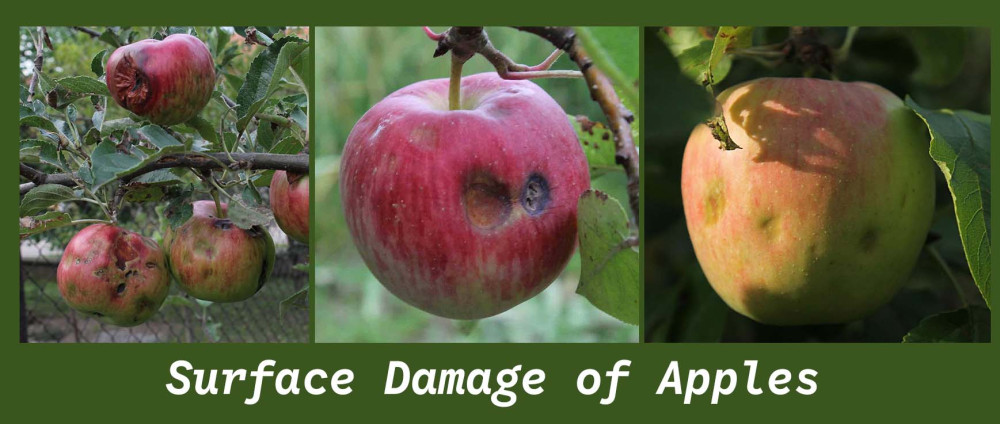
Apple sorting technology is calibrated to detect a wide spectrum of surface imperfections, each of which can impact the fruit's grade, marketability, and storability. The categorization of these defects is a critical function, as a small scar may be acceptable for processing into juice or sauce, while a bruise that leads to rapid decay would necessitate culling. The system's ability to consistently identify and classify these issues is what replaces teams of human sorters. It assesses not just the presence of a defect, but its characteristics: the surface area affected, the depth (inferred from visual cues), the location on the fruit, and the defect's nature. This granular data allows for incredibly nuanced sorting decisions. For example, an apple with a minor, dry scab on one side might be directed to a "Class II" retail pack, while an apple with a soft, discolored bruise near the stem would be rejected for fresh consumption. This level of detailed inspection ensures optimal utilization of the harvest, maximizing the yield of high-value fresh fruit while accurately segregating apples better suited for alternative product lines, thereby minimizing overall waste and maximizing revenue from each batch processed.
Detecting Bruises, Scars, and Pressure Points
Among the most common and economically significant defects are bruises, scars, and pressure points, often incurred during harvesting, transport, or handling. An apple sorting machine is exceptionally adept at finding these. Bruises appear as areas where the underlying tissue has been damaged, often causing a slight collapse of the skin and a change in light reflection and color—typically a darker, sometimes reddish or brownish patch. The machine's cameras and algorithms are fine-tuned to detect this subtle change in topography and hue, even for bruises that are not immediately visible to the human eye, known as "sub-surface" or "hidden" bruises. Scars, which can result from abrasions against branches or during bin filling, present a different challenge. They often involve roughened, corky tissue. The image processing software analyzes the texture, identifying the irregular, non-glossy pattern of a scar against the smooth background of healthy skin. Pressure points, often found where apples rest against each other in storage, may not break the skin but cause a flat, pale area. The system evaluates the shape and glossiness of such areas to identify them. Accurate detection of these mechanical defects is vital, as they are primary entry points for decay organisms and directly affect the visual appeal and perceived quality of the fruit in the consumer's eyes.
Identifying Pest Damage, Russeting, and Cracks
Beyond handling damage, apple grading systems are programmed to identify imperfections stemming from environmental and biological factors. Pest damage, such as holes from codling moths or surface feeding marks from insects, is precisely detected. The algorithms look for small, round entry holes or irregular surface etching that differs from the fruit's natural pattern. Russeting, a natural phenomenon where the skin develops a rough, brownish, net-like texture, is another key parameter. While some apple varieties have russeting as a characteristic trait, on others it is considered a defect. The sorting software can be configured based on the packhouse's standards—either to ignore natural russeting on specific varieties or to grade it as a flaw on smooth-skinned cultivars. This requires sophisticated texture discrimination. Cracks, whether fine hairline fractures or deeper splits, are also identified. These are particularly important as they severely compromise the fruit's barrier against moisture loss and microbial invasion. The system uses high-contrast imaging and edge-detection algorithms to highlight these linear discontinuities in the apple's surface. By reliably catching these diverse imperfections, the technology ensures that only apples with intact, healthy skin proceed to long-term storage or distant markets, safeguarding the entire shipment's quality.
Beyond Human Vision: The Technology Behind Accurate Detection
The superiority of automated apple sorting over manual inspection lies in technologies that extend perception far beyond the capabilities of human vision. Human sorters, no matter how skilled, are limited by biological constraints: eye fatigue, variable lighting perception, and subjective judgment. In contrast, industrial sorting machines deploy a suite of technologies that provide objective, quantifiable, and repeatable analysis. These systems do not merely "look" at the apple; they analyze its optical properties in ways invisible to us. They can measure light absorption and reflection at specific wavelengths, revealing information about the fruit's surface and immediate subsurface. This allows them to detect problems that are literally beneath the surface or to distinguish between a superficial mark and a defect that affects edibility. The integration of consistent, high-speed imaging with computational power enables the examination of every single apple on a line moving at several meters per second, a task impossible for a human team to perform with equivalent thoroughness. This technological leap transforms quality control from a sampling-based, probabilistic exercise into a comprehensive, 100% inspection regime, providing packers with unprecedented confidence in the consistency of their output.
Multispectral Imaging and Lighting Systems
A key technology enabling this superhuman vision is multispectral imaging. While standard cameras capture visible light (red, green, blue), multispectral cameras can capture data from specific wavelengths, including near-infrared (NIR) or even ultraviolet (UV). This is revolutionary for defect detection. For example, certain types of bruising or internal disorders begin to manifest subtly in the NIR spectrum before they are clearly visible in standard RGB images. A bruise affects the cellular structure and water content under the skin, altering how NIR light is reflected or absorbed. By analyzing this spectral signature, the system can flag an apple with developing damage that would be missed by a human sorter or a standard camera. Similarly, specialized lighting systems are paramount. They are engineered to provide uniform, shadow-free illumination across the entire surface of the apple. Techniques like LED strobe lighting freeze the motion of the fast-moving fruit, ensuring blur-free images. Diffuse lighting cabinets scatter light evenly, preventing specular highlights (glare) that could be mistaken for a pale defect or obscure a real one. The combination of tailored lighting and multispectral sensing creates a controlled, information-rich optical environment where the true state of the apple's surface is revealed without ambiguity.
How Software Distinguishes Defects from Natural Variations
The ultimate challenge in automated surface inspection is not just finding anomalies, but correctly interpreting them. An apple's surface is not a featureless canvas; it has a stem basin, a calyx end, a natural blush, lenticels (small pores), and color variations. The sorting software's intelligence is demonstrated in its ability to ignore these benign features while correctly flagging true defects. This is achieved through complex decision logic and machine learning. The software is "taught" using thousands of sample images what constitutes a defect versus a natural part of the fruit. It learns that the stem shadow has a specific shape and location, that the blush follows a typical gradient, and that lenticels have a regular pattern. When analyzing a new apple, the software first identifies these known "landmarks." It then examines the rest of the surface for deviations. A dark patch in the middle of the blush region might be a bruise, while a similar-colored patch right next to the stem might be a shadow. The algorithms assess context, shape, texture, and spectral response. Advanced systems use neural networks that continuously refine their models, becoming more accurate over time at making these subtle distinctions, thereby minimizing both false rejects (good fruit discarded) and false accepts (defective fruit packaged), which are critical metrics for operational efficiency and profitability.
Integrating Defect Detection with Overall Grading
In a modern AI sorter, surface defect analysis is not a standalone process; it is seamlessly integrated into a holistic grading decision. An apple's final destination on the packing line is determined by a composite score derived from multiple inspection modules working in concert. While the defect detection module provides a detailed report on surface quality, other modules simultaneously measure the fruit's size, weight, color, and internal quality. The central grading software, often called the "sorter brain," receives all this data in real-time for each individual apple. It then applies the packhouse's predefined business rules to make a final decision. For instance, a rule might state: "All apples for premium export must have a diameter >70mm, a red color coverage >60%, no bruises larger than 5mm, and a brix (sugar) level >12%. All others go to domestic market or processing." The system evaluates the apple against all these criteria at once. This integrated approach is far more efficient and accurate than sequential checks. It ensures that every apple is graded based on a complete profile, allowing for optimal sorting into multiple, finely differentiated output channels that align perfectly with market opportunities and quality specifications.
How Surface Quality Affects the Final Grade and Sorting Decision
Surface quality is a primary, and often dominant, factor in the final grade assigned to an apple. The grading logic assigns penalties or thresholds based on the type, size, number, and location of defects. The software quantifies surface quality, typically calculating a "defect score" or classifying the apple into a quality category (e.g., Extra Fancy, Fancy, Class I). A single large bruise might immediately downgrade an apple from a premium fresh category to a processing bin. Conversely, several very small, superficial scars might be permissible within a lower grade. The location is also critical; a defect on the cheek of the apple (the most visible part when packed) is often penalized more heavily than the same defect hidden near the stem or calyx. The grading software integrates this defect score with other parameters. A large, perfectly colored apple with a minor defect might still be sent to a high-value pack if the defect is within tolerance for that class. However, a smaller apple with the same defect might be downgraded further. This dynamic, multi-parameter decision-making maximizes the economic return by ensuring each apple is placed in the highest-value stream for which it qualifies, rather than being downgraded unnecessarily due to a single subpar characteristic.
Synergy Between Defect, Color, and Size Analysis
The true power of an automated apple grading line emerges from the synergy between its different inspection modules. The data streams from defect, color, and size analysis are cross-referenced to create a comprehensive quality profile. This synergy allows for more intelligent sorting than any single metric could provide. For example, color analysis might identify an apple with an excellent, deep red blush. The defect module, however, might find a small scar within that red area. The grading logic can be set to be more lenient on defect size if it occurs within the well-colored portion, recognizing that it is less visually apparent there than on the green side. Similarly, size and defect analysis work together. A common rule is to allow a slightly larger defect on a larger apple because the relative area affected is smaller. The systems can also detect correlations; certain types of surface defects like sunscald are often linked to specific color patterns (yellowish patches), and the combined data confirms the diagnosis. This interconnected analysis mimics the nuanced judgment of an expert human grader but does so at high speed and with perfect consistency, ensuring that the final sorting decision reflects a balanced assessment of the apple's overall marketability.
Benefits of Automated Surface Inspection for Your Business
Investing in an apple sorting machine with advanced surface inspection capabilities delivers a compelling return on investment through multiple operational and financial benefits. The transition from manual to automated grading represents a strategic upgrade that touches every aspect of a fruit packing business. It fundamentally changes the reliability, scale, and precision of the quality control process. By implementing such a system, a packhouse positions itself as a reliable supplier capable of meeting the exacting and consistent quality demands of modern retailers, both domestic and international. The technology provides not just a labor-saving tool, but a data-generating asset. Every apple that passes through the system contributes to a wealth of data on defect rates, size distributions, and color profiles for the entire crop, offering invaluable insights for orchard management, harvest timing, and market planning. This shift towards data-driven operations enhances overall business intelligence, enabling proactive decision-making and continuous process improvement, ultimately leading to a stronger, more competitive, and more profitable enterprise in the global fresh produce market.
Improving Quality Consistency and Reducing Labor Costs
Two of the most immediate and impactful benefits are the dramatic improvement in quality consistency and the significant reduction in labor costs and dependencies. Manual sorting is inherently variable. It is affected by shift changes, worker fatigue, differences in individual skill and judgment, and the sheer monotony of the task. An automated system, once calibrated, applies the same precise standards to every apple, 24 hours a day, without deviation. This consistency is priceless for building a brand known for reliable quality. It ensures that every box leaving the facility meets the same specification, reducing customer complaints and chargebacks. On the labor front, the system replaces large teams of sorters. In an era of rising wages and often challenging labor availability, this automation provides a stable, predictable operating cost. It also reallocates human resources to more skilled roles such as machine supervision, maintenance, and quality assurance auditing. The reduction in repetitive strain injuries associated with manual sorting also improves workplace safety and reduces associated costs. The capital investment in the sorting machine is thus offset by long-term savings in labor expenses and the added value created by a more consistent, premium product output.
Minimizing Waste and Enhancing Product Value
Automated surface inspection directly contributes to minimizing post-harvest waste and enhancing the total value derived from the apple crop. First, by accurately identifying and removing truly defective fruit early in the process, it prevents the contamination of sound fruit during storage and transport—a single decaying apple can spoil many others. This preservation of good fruit is a direct waste reduction. Second, and more subtly, it enables "value sorting." Instead of a binary "good vs. bad" decision, the machine can sort apples into multiple streams: premium fresh, standard fresh, immediate processing (e.g., for slices or sauce), and extraction (e.g., for juice). A superficially scarred apple that is perfectly sound internally is diverted to processing, where its defect is irrelevant, rather than being wasted. This maximizes the utilization of the harvest. By creating these differentiated product streams, the packhouse can access multiple markets and price points. The premium stream commands the highest price, the processing stream provides stable, bulk revenue, and the overall yield from the same tonnage of raw fruit is increased. This precise, value-based sorting, driven by accurate defect detection, transforms the packing operation from a cost center into a powerful engine for profit optimization and sustainable resource use.