What is Brazil Nut Sorting Machine?
A Brazil Nut Sorting Machine is an advanced industrial equipment designed to classify and separate Brazil nuts based on their color, size, and quality. Using high-resolution CCD optical sensors and electromagnetic valves, this machine identifies and removes defective or discolored nuts from the production line, ensuring only premium-quality products reach consumers.
The machine plays a crucial role in food processing industries, where maintaining high standards of hygiene and quality is essential. By automating the sorting process, it significantly enhances efficiency, reduces labor costs, and minimizes human error, making it indispensable for large-scale nut producers.
How Does a Brazil Nut Sorting Machine Work?
The Brazil Nut Sorting Machine operates through a combination of optical sensors and pneumatic ejection technology. The machine's high-resolution CCD cameras capture detailed images of each nut as it passes through the conveyor belt. These images analyze the color and surface characteristics, detecting any imperfections or foreign materials. Once a defective nut is identified, the system sends a signal to the pneumatic ejectors, which use compressed air to remove the substandard nut from the production line. This entire process occurs in milliseconds, ensuring high-speed and precise sorting without disrupting the workflow. | 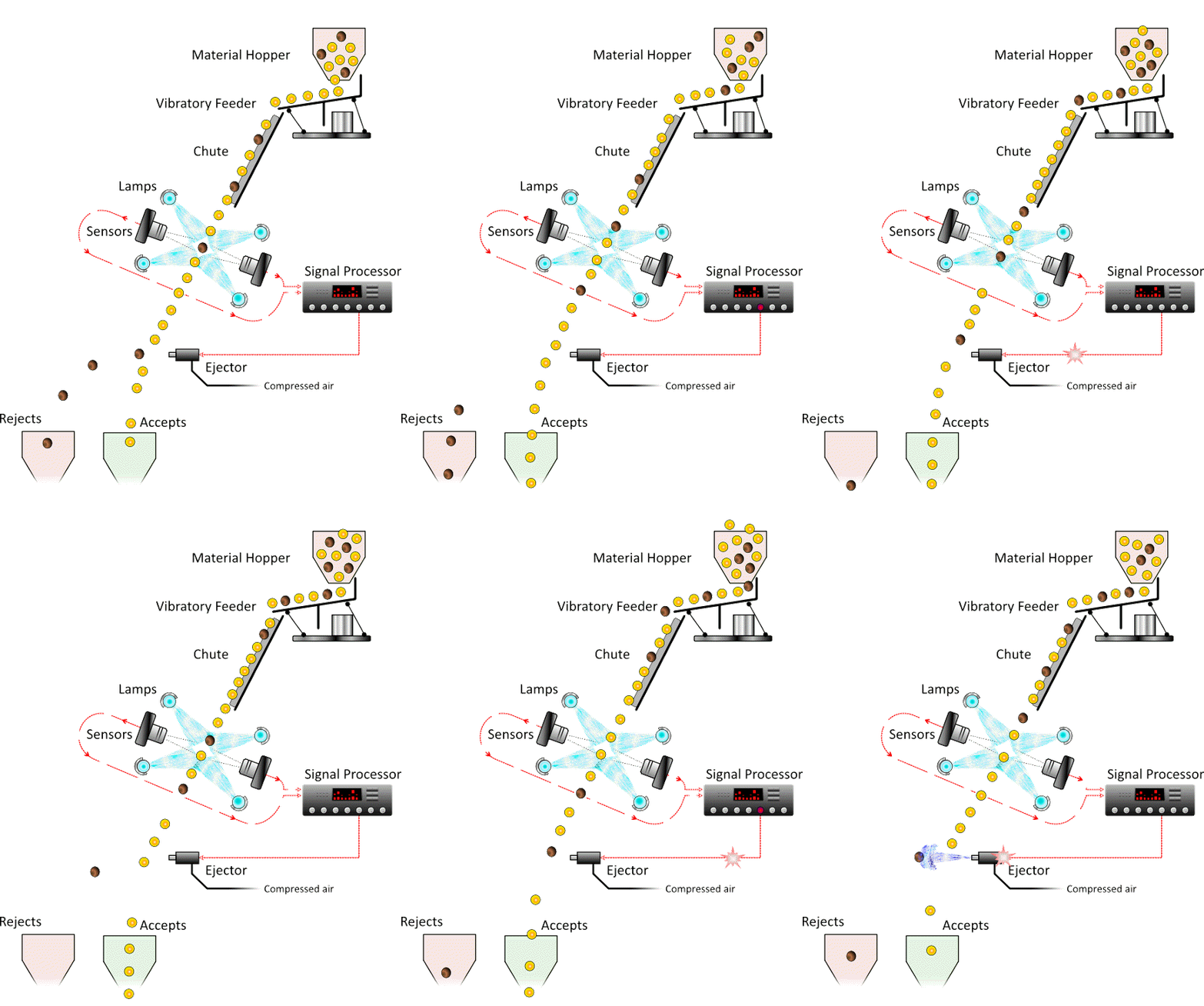 |
Core Features and Benefits of Brazil Nut Sorting Machines
High Precision Detection
Unparalleled accuracy in detecting color variations and surface defects, ensuring only premium-quality nuts proceed.
Customizable Settings
Adjustable sensitivity levels allow operators to fine-tune sorting parameters according to specific quality requirements.
Increased Productivity
Automates labor-intensive tasks, significantly reducing waste and improving overall production efficiency.
Food Safety Compliance
Ensures compliance with stringent food safety regulations through consistent and reliable sorting performance.
Technical Specifications of Brazil Nut Sorting Machines
| Parameter | Specification |
|---|---|
| Processing Capacity | 500 kg to 5,000 kg/hour (model dependent) |
| Sensor Technology | RGB CCD / Near-Infrared (NIR) optional |
| Power Supply | 220V / 380V, 50/60Hz (multi-voltage configurable) |
| Material Construction | Food-grade stainless steel |
| Compressed Air Requirement | 0.6 - 0.8 MPa |
| Sorting Accuracy | Over 99% for visible defects |
| Ejection System | High-speed pneumatic valves with millisecond response |
| Control Interface | Touchscreen HMI with product profile storage |
| Connectivity | Ethernet, remote monitoring, data logging |
| Protection Rating | IP65 (dust and moisture resistant) |
| Optional Features | AI-driven defect recognition, NIR spectroscopy |
Advanced models include AI-driven defect recognition for even higher precision and adaptability to different nut varieties.
Applications of Brazil Nut Sorting Machines
Large-Scale Processing
Essential for industrial nut processing facilities handling high volumes of Brazil nuts for domestic and export markets.
Packaging Operations
Ensures consistent quality before packaging, meeting retailer and consumer expectations for premium products.
Organic Certification
Supports organic producers by removing defective nuts without chemical intervention, maintaining certification integrity.
Quality Control Labs
Used in food quality testing and research facilities for precise defect analysis and product grading.
Buying Guide
When selecting a Brazil Nut Sorting Machine, consider factors such as processing speed, accuracy, and scalability. High-volume producers should opt for machines with higher throughput, while smaller businesses may prioritize affordability and ease of operation.
It is essential to assess the machine's compatibility with different nut sizes and the availability of technical support. Reputable manufacturers often provide customization options to align the machine with specific business needs.
Maintenance Guide
Regular cleaning and calibration are crucial to maintaining the machine's efficiency. Operators should follow manufacturer guidelines for periodic sensor checks and pneumatic system maintenance.
Ensuring a dust-free environment and proper lubrication of moving parts prolongs the machine's lifespan. Scheduled professional inspections help prevent unexpected downtime and ensure consistent performance.
Actual Case Comparison
The following table compares two Brazil nut processing facilities with similar daily throughput. Facility A uses manual sorting, while Facility B has adopted an advanced AI-driven optical sorter.
| Comparison Metric | Facility A (Manual Sorting) | Facility B (Advanced AI Sorter) |
|---|---|---|
| Sorting Accuracy | Approximately 70-80% (operator dependent) | Over 99% (consistent) |
| Processing Capacity | 50-100 kg/hour | 500 kg to 5,000 kg/hour |
| Good Nut Loss | 10-15% | less than 0.5% |
| Labor Requirement | 10-15 sorters per shift | 1-2 operators per shift |
| Quality Consistency | Highly variable | Uniform across batches |
| Annual ROI | Baseline | 200-300% improvement |
Conclusion
The Brazil Nut Sorting Machine represents a transformative investment for modern nut processing operations. By integrating high-resolution optical imaging, intelligent recognition, and precision pneumatic ejection, it delivers exceptional accuracy, significant labor savings, and consistent product quality. As global food safety standards tighten and consumer expectations rise, advanced sorting technology becomes indispensable for maintaining competitiveness.
From initial cleaning to final grading, the Brazil Nut Sorting Machine ensures excellence at every stage, helping processors maximize yield, minimize waste, and confidently meet market demands. Its adaptability and compatibility with Industry 4.0 systems make it a future-proof solution for businesses of all sizes.