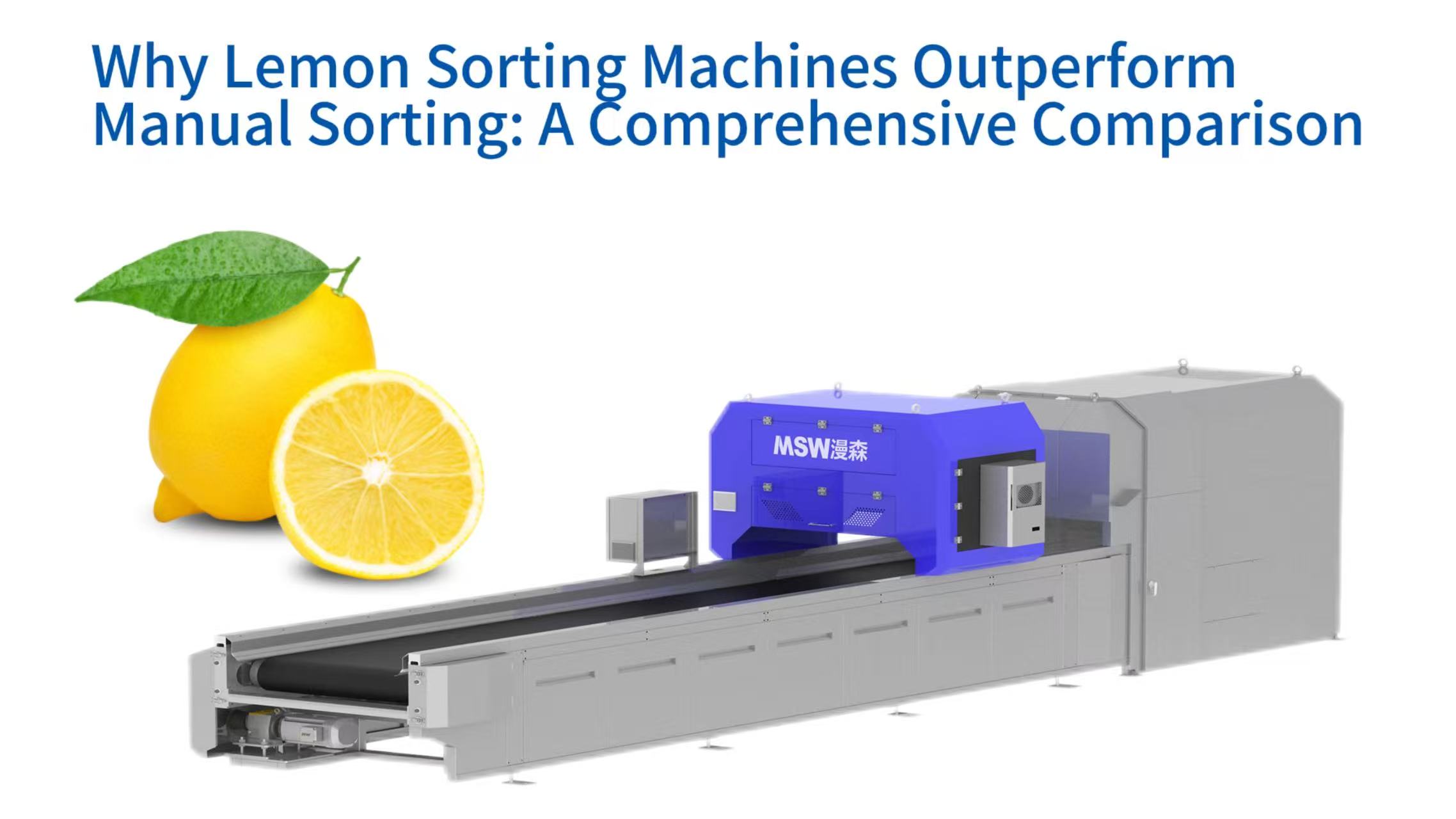
Lemon Sorting Machine Workflow
Feeding
Gentle fruit intake
Inspection
CCD + NIR + Weighing
AI Analysis
Defect & quality check
Sorting
High-speed ejection
Grading
Grade & size categorization
Lemons are one of the most widely traded citrus fruits, prized for their vibrant color, refreshing flavor, and versatility in culinary and industrial applications. As global demand for premium-quality lemons continues to rise, producers and packers face increasing pressure to deliver fruit that meets strict size, color, and defect standards. Manual sorting, the traditional method, is labor‑intensive, slow, and inherently inconsistent. Human sorters tire quickly, miss subtle defects, and vary in their judgments from person to person and from hour to hour. Lemon sorting machines, powered by advanced optical sensors and artificial intelligence, have emerged as a transformative alternative. These automated systems inspect every individual lemon at high speed, sorting by color, size, shape, and even internal quality parameters such as sugar content. The result is a level of consistency, efficiency, and food safety that manual methods simply cannot match. This article explores the many ways in which lemon sorting machines outperform manual sorting, backed by real‑world data and technical insights.
What Is a Lemon Sorting Machine and How Does It Work?
A lemon sorting machine is an advanced piece of equipment that uses high‑resolution cameras, near‑infrared sensors, electronic weighing systems, and artificial intelligence to automatically grade and separate lemons based on their external and internal characteristics. Unlike simple color sorters, modern lemon sorters analyze multiple attributes in real time, making split‑second decisions that ensure only the highest quality fruit proceeds to packaging. These machines are designed to integrate seamlessly into packing lines, handling everything from small‑scale farms to large industrial operations.
Core Technology: Multi‑Dimensional Vision System
The foundation of any lemon sorter is its vision system. High‑resolution CCD cameras capture images of each lemon from multiple angles, detecting color variations, surface defects such as scratches or blemishes, and shape irregularities. At least two cameras per inspection channel ensure that no side of the fruit goes unseen. This multi‑dimensional view allows the machine to identify defects that might be hidden from a single camera, such as a small dark spot on the underside of a lemon.
The vision system operates at remarkable speeds, processing hundreds of images per second. Advanced lighting ensures consistent illumination, eliminating shadows and reflections that could confuse the sensors. The data from these cameras is fed into a central processing unit where sophisticated algorithms analyze every pixel, comparing each lemon against pre‑programmed quality standards. This technology achieves color sorting accuracy exceeding 95 percent, far beyond what human sorters can sustain over a long shift.
Internal Quality Inspection with Near‑Infrared
While external appearance is important, internal quality often determines the true value of a lemon. Near‑infrared (NIR) spectroscopy, integrated into many modern lemon sorters, allows non‑destructive assessment of internal attributes. By measuring how light at specific wavelengths interacts with the fruit's flesh, the system can estimate sugar content (Brix) with an accuracy of ±1° and detect internal defects such as core rot or granulation that are invisible from the outside.
This capability is especially valuable for processors who supply juice manufacturers or high‑end fresh markets where taste consistency is paramount. A lemon that looks perfect but has low sugar or internal decay can be automatically diverted to a lower grade or rejected entirely. NIR inspection ensures that only fruit meeting both external and internal specifications reaches the consumer, protecting brand reputation and reducing the risk of customer complaints.
Electronic Weighing System for Precise Size Grading
Size uniformity is a critical quality parameter for lemons, especially in retail markets where fruit is often sold by count or size category. Lemon sorting machines incorporate precision electronic weighing sensors that measure each individual fruit with an accuracy of ±2 grams. This data is used to assign lemons to different size grades, ensuring that each box contains fruit of consistent weight and dimensions.
The weighing system operates in real time, with a pass rate of 95 percent for weight accuracy. Unlike manual sizing where workers estimate by eye or use simple mechanical sizers, electronic weighing provides objective, repeatable measurements. This not only improves the consistency of packed fruit but also helps packers meet the exact specifications of their customers, whether they require small lemons for juicing or large ones for the fresh fruit display.
High‑Speed Ejection Mechanism
Once a lemon has been assessed and deemed unsuitable for a particular grade, it must be removed from the product stream quickly and cleanly. Lemon sorters achieve this with arrays of high‑speed solenoid valves that fire precisely aimed bursts of compressed air. These high‑speed ejection systems operate at frequencies exceeding 1000 cycles per second, allowing them to deflect individual lemons without disturbing their neighbors.
The timing of the ejection is critical. The machine tracks each lemon's position after inspection and calculates exactly when it will reach the ejection zone. At that moment, the appropriate valve fires, diverting the fruit into a reject chute or a different grade lane. This process happens in milliseconds, enabling throughputs of 300 to 800 pieces per minute per channel while maintaining gentle handling that minimizes bruising.
AI and Deep Learning Integration
What truly sets modern lemon sorters apart is their use of artificial intelligence and deep learning. These systems are trained on thousands of images of good and defective lemons, learning to recognize subtle patterns that might escape rule‑based algorithms. As the machine processes more fruit, its neural networks continue to refine their understanding, adapting to variations in crop characteristics from different growing regions or seasons.
This self‑optimizing capability means that a lemon sorter becomes more accurate over time without requiring constant manual adjustments. Operators can simply load a new sorting recipe or allow the system to learn from the current batch. The AI also helps reduce false rejects, ensuring that good fruit is not wasted. With defect sorting accuracy exceeding 95 percent, these machines deliver consistency that manual sorters, with their inherent variability, cannot achieve.
Main Types of Lemon Sorting Machines and Their Applications
Lemon processors have different needs depending on the scale of their operation, the condition of the fruit (fresh or processed), and the target market. Manufacturers offer several configurations of lemon sorters, each optimized for specific applications. Choosing the right type is essential to maximize both throughput and quality.
Belt‑Type Lemon Sorters for Gentle Handling
Belt‑type sorters are ideal for fresh lemons destined for the retail market, where appearance and freedom from bruising are paramount. In these machines, lemons are transported on a wide conveyor belt through the inspection area. The belt provides stable support, preventing the fruit from tumbling and allowing the sensors to capture clear images from above and, in some configurations, from below. This gentle handling keeps damage rates below 5 percent.
Belt‑type AI color sorting machines with belt widths ranging from 300 mm to 2800 mm can accommodate various production volumes. They are particularly effective for sorting by color, size, and surface defects, and they can be equipped with additional modules for weighing or internal quality inspection. Many packhouses use belt sorters as the final quality checkpoint before packing, ensuring that every lemon in the box meets the highest standards.
Chute‑Type Sorters for High Throughput
For operations that process large volumes of lemons, such as juice concentrate plants or large‑scale packers, chute‑type sorters offer the highest throughput. In these machines, lemons slide down inclined channels, accelerating and forming a thin, uniform stream. As they leave the chute, they pass through the inspection zone where cameras and sensors capture data from multiple sides. The design allows for processing rates of several tons per hour.
Chute‑type AI sorting machines with multiple channels and hundreds of ejection valves can handle up to 12 chutes and 768 channels. This configuration is common in facilities where speed is critical, and where the fruit will undergo further processing such as juicing or drying. The robust design handles high volumes reliably, and the modular construction allows for easy maintenance and scalability.
Multi‑Sensor Systems for Comprehensive Quality Control
Some lemon sorting applications require the integration of multiple sensing technologies to achieve complete quality assessment. Multi‑sensor systems combine color cameras, NIR spectrometers, electronic weighers, and sometimes even laser profilers into a single machine. These systems provide a holistic view of each lemon, grading it on external appearance, internal chemistry, and physical dimensions simultaneously.
For exporters targeting premium markets with stringent quality requirements, multi‑sensor sorters are invaluable. They can, for example, ensure that a batch of organic lemons not only looks perfect but also meets minimum sugar content standards. The data from all sensors is fused by the machine's AI, enabling sophisticated decisions that no single sensor could make. This capability is the gold standard in modern fruit sorting.
Integrated Packing Line Solutions
Many lemon producers benefit from fully integrated packing lines where sorting machines work in concert with other equipment such as washers, dryers, and automatic packers. In such lines, the sorter is not an island but part of a continuous, automated workflow. Smart material feeding systems ensure a consistent flow of fruit to the sorter, while downstream equipment receives graded fruit and packages it accordingly.
Integrated solutions minimize handling, reduce labor requirements, and improve overall efficiency. Operators can monitor the entire line from a central control panel, adjusting sorting parameters in real time based on feedback from the sorter and other sensors. This holistic approach to packing line design is becoming the norm in modern lemon packing facilities.
Key Functional Advantages of Lemon Sorters Over Manual Sorting
Machine vs Manual Sorting Comparison
Sorting Accuracy
Manual
70-80%
Drops after 2-3 hours
Machine
>95%
24/7 consistent
Processing Speed
Manual
30-50
pieces/min (per worker)
Machine
300-800
pieces/min (per channel)
Damage Rate
Manual
>10%
Frequent handling
Machine
<5%
Gentle handling design
When comparing lemon sorters to manual sorting, the advantages are clear across multiple dimensions. From accuracy and speed to consistency and data collection, machines outperform humans in virtually every metric that matters for commercial fruit processing.
Sorting Accuracy and Consistency
Manual sorting accuracy depends on the skill, attention, and fatigue level of individual workers. Studies have shown that human sorters typically achieve only 70‑80 percent accuracy when identifying subtle defects, and this percentage drops significantly after the first few hours of a shift. In contrast, lemon sorting machines maintain accuracy above 95 percent for color, defect, and shape sorting throughout the entire operating day, whether that is 8 hours or 24 hours.
Consistency is another critical factor. Two different human sorters may have different opinions about whether a lemon with a minor blemish should be accepted. A machine applies the same criteria to every fruit, every time. This uniformity ensures that a customer who orders lemons of a certain grade receives exactly the same quality in every box, regardless of when the fruit was packed.
Processing Speed and Throughput
A skilled manual sorter can typically inspect 30‑50 lemons per minute before accuracy begins to decline. In contrast, a single channel of a lemon sorting machine can process 300‑800 pieces per minute, depending on fruit size and machine configuration. A multi‑channel machine can therefore replace dozens of human sorters while operating continuously without breaks, meal times, or shift changes.
This speed translates directly into higher throughput for the packing facility. A line equipped with an automated sorter can handle the output of an entire orchard in a fraction of the time required for manual sorting, reducing bottlenecks and allowing fruit to reach the market faster. Faster processing also means that fruit can be harvested at optimal ripeness without worrying about overwhelming packing capacity.
Damage Reduction and Gentle Handling
Manual sorting inevitably involves handling, and each time a lemon is touched, there is a risk of bruising or other damage. Over the course of multiple inspections and transfers, this damage can accumulate, leading to significant product loss. Lemon sorting machines are designed to handle fruit gently, with carefully engineered feeding systems and minimal contact points. Damage rates are typically kept below 5 percent.
Some machines offer water‑based feeding systems that cushion the fruit during transport, further reducing the risk of bruising. This gentle handling is especially important for delicate varieties or for fruit destined for the fresh market, where any blemish reduces value. By minimizing damage, sorting machines help preserve the quality that commands premium prices.
24/7 Operation Without Fatigue
Human workers require rest, breaks, and shift rotations. They cannot work around the clock, and their performance declines as they tire. Lemon sorting machines have no such limitations. They can operate 24 hours a day, 7 days a week, maintaining the same high level of performance throughout. This capability is invaluable during peak harvest seasons when large volumes of fruit must be processed quickly to prevent spoilage.
Continuous operation also allows for better utilization of other equipment in the packing line. Washers, dryers, and packers can run at full capacity without waiting for the sorting stage. The result is a more efficient overall operation with lower per‑unit costs.
Real‑Time Data and Traceability
Modern lemon sorters are not just sorting machines; they are also data collection platforms. They record detailed information about every batch processed, including the number of lemons accepted or rejected, the types of defects encountered, and the distribution of sizes and grades. This data can be used to track quality trends over time, identify issues with specific growers or harvests, and provide customers with documentation of product quality.
Traceability is becoming increasingly important in the food industry, especially for exporters and suppliers to large retailers. A lemon sorter with data logging capabilities can help a packer demonstrate that their fruit meets food safety and quality standards, building trust with buyers and reducing liability. Manual sorting offers no such record‑keeping, making it difficult to verify that quality checks were performed.
Lemon Varieties and Forms Processed by Sorting Machines
Lemon Processing Types & Sorting Focus
Fresh Lemons (40%)
Focus: Color, size, surface defects
Juice Processing (25%)
Focus: Sugar content (Brix), internal quality
Dehydrated Products (20%)
Focus: Color uniformity, size consistency
Organic/Premium (15%)
Focus: Defect vs natural variation
Lemon sorting machines are versatile and can handle a wide range of lemon varieties and product forms. Whether the fruit is fresh, dried, or destined for processing, the right sorter configuration ensures optimal results.
Fresh Lemons for Direct Consumption
The most common application for lemon sorters is the grading of fresh lemons for the retail and wholesale markets. Here, the machine sorts by color (from green to fully yellow), size (diameter or weight), and surface defects such as scratches, scars, or signs of decay. Lemon sorting machines in this role ensure that only the most attractive fruit reaches the consumer, while lower‑grade fruit is diverted to juice or other processing.
Fresh market standards are often very strict. Some retailers require that lemons have no blemishes larger than a few millimeters, or that they fall within a very narrow size range. Automated sorters can be programmed to these exacting specifications, ensuring that every box shipped meets the customer's requirements. This level of precision is impossible to achieve consistently with manual sorting.
Dehydrated Lemon Slices and Pieces
Dried lemon products, including slices, wedges, and powdered lemon, are used in teas, spice blends, and baked goods. Sorting these products presents unique challenges because the dehydration process can alter color and create fragments that need to be separated. Dehydrated fruits sorting machines are specially designed to handle these delicate items, using gentle conveying and specialized lighting to inspect each piece.
For dehydrated lemon slices, uniformity of color and size is important for visual appeal in tea blends or culinary presentations. Sorters can remove discolored slices, pieces that are too small, or fragments of peel that might affect the product's appearance. This ensures that the final product meets the expectations of consumers who value consistent quality.
Lemons for Juice Processing
Juice processors care less about the external appearance of lemons and more about their internal quality. High sugar content (Brix) and low acidity are desirable for many juice products, while internal defects can lead to off‑flavors. Lemon sorters equipped with NIR sensors can assess these internal attributes at line speed, allowing processors to segregate fruit based on its suitability for different juice grades.
For example, fruit with very high Brix might be directed to a premium juice line, while fruit with lower sugar could be used for concentrate or blended products. This sort‑by‑quality approach maximizes the value extracted from each harvest and ensures that the final juice has consistent taste characteristics. Manual sorting cannot provide this internal quality assessment, so processors relying on manual methods must either blend indiscriminately or accept greater variability.
Organic and Premium Lemon Sorting
Organic lemons command premium prices, but they also come with higher expectations for quality. Because organic production prohibits many synthetic pesticides, the fruit may be more prone to surface imperfections from insects or diseases. Sorting organic lemons requires a careful balance between removing defects and preserving as much marketable fruit as possible.
AI‑powered sorters excel in this application because they can be trained to distinguish between acceptable natural variations and true defects that affect quality or safety. The machine's consistent application of these criteria helps organic packers maximize their yield while still meeting the high standards of the organic market. The result is a better return on the premium paid for organic certification.
The Technology Behind Lemon Sorting Machines
The exceptional performance of lemon sorters is the result of sophisticated engineering across multiple domains. Understanding the technology helps operators appreciate the capabilities of their equipment and optimize its use.
High‑Resolution CCD Cameras and Multi‑Angle Detection
The eyes of a lemon sorter are its CCD cameras, which capture images with resolutions fine enough to detect defects as small as 1 mm. Each inspection channel is typically equipped with at least two cameras, positioned to view the fruit from different angles. This multi‑angle approach ensures that no surface goes uninspected, even if a defect is located on the side facing away from one camera.
The cameras operate at frame rates that freeze the motion of fruit moving at several meters per second. Advanced triggering ensures that images are captured precisely when the fruit is in the optimal position. The combination of high resolution and high speed allows the system to inspect every individual lemon thoroughly, even at peak throughput.
Near‑Infrared Spectroscopy for Internal Quality
NIR spectroscopy works by shining light at specific wavelengths onto the fruit and measuring how much is absorbed or reflected. Different chemical components, such as water, sugar, and organic acids, absorb NIR light at characteristic wavelengths. By analyzing the absorption spectrum, the system can estimate the concentration of these components.
In lemon sorting, NIR is primarily used to measure sugar content (Brix) and to detect internal defects like granulation or decay. The accuracy of these measurements is typically ±1° Brix, with a pass rate of 95 percent. This non‑destructive testing means that every lemon can be assessed without cutting or damaging it, preserving its value for sale.
Precision Weighing with Electronic Sensors
The electronic weighing system in a lemon sorter uses strain‑gauge sensors to measure the weight of each fruit with an accuracy of ±2 grams. This precision is essential for size grading, as weight correlates closely with diameter for a given variety. The weighing process is integrated into the fruit's journey through the machine, with the system recording the weight just before or after optical inspection.
The weight data is used not only for grading but also for yield calculations and quality reporting. For example, the machine can report the percentage of fruit in each weight class, helping packers optimize their packing configurations. Weight data can also be correlated with optical data to identify fruit that may be underweight despite looking perfect, perhaps indicating dehydration or internal voids.
Smart Feeding Systems to Minimize Bruising
Feeding fruit into the sorter in a consistent, gentle manner is critical for both accuracy and product quality. Smart material feeding systems use sensors to monitor the flow and adjust the feed rate in real time to maintain an optimal monolayer. They may incorporate water‑based feeding, where fruit floats in a water stream that cushions it from impacts, or dry feeding with specially designed vibratory conveyors that minimize bouncing.
These systems also help present the fruit in a consistent orientation, making it easier for the cameras to capture good images. For example, a feeding system might align lemons so that their stems are oriented in the same direction, reducing variability in the images. This attention to detail contributes to the overall sorting accuracy and helps keep damage rates low.
User‑Friendly Software and AI Learning
Operating a modern lemon sorter does not require a degree in computer science. The machines come with intuitive touchscreen interfaces that allow operators to select sorting recipes, adjust parameters, and monitor performance in real time. The software often includes wizards that guide the user through setup and calibration, reducing the training burden.
Behind the interface, the AI is constantly learning. When the machine encounters a new defect type or an unusual batch of fruit, it can flag this for the operator and suggest updates to the sorting model. Over time, the system becomes more attuned to the specific characteristics of the fruit from a particular region or supplier, further improving accuracy and reducing waste.
Business Value and ROI: Why Investing in a Lemon Sorter Pays Off
While the upfront cost of a lemon sorting machine can be significant, the return on investment is typically realized within one to two years. The savings and revenue gains come from multiple sources, making the financial case compelling for most packers and processors.
Labor Cost Savings
A single lemon sorting machine can replace anywhere from 10 to 20 manual sorters, depending on the throughput and the complexity of the sorting task. For a facility operating multiple shifts, the annual savings in wages, benefits, and associated costs (such as training, supervision, and turnover) can easily exceed $200,000. These savings alone often cover a significant portion of the machine's cost within the first year.
Beyond direct wages, there are indirect labor savings. Automated sorting reduces the need for recruitment and training, lowers the risk of labor shortages during peak seasons, and simplifies workforce management. The labor that remains can be redeployed to higher‑value tasks such as quality assurance, equipment maintenance, or customer service.
Increased Yield and Reduced Waste
Manual sorting tends to be conservative, rejecting some good fruit along with the bad to ensure that no defects slip through. This "over‑rejection" can waste 5‑10 percent of the crop, representing a substantial financial loss. Lemon sorters, with their precise, consistent decision‑making, reduce this waste significantly. Yield improvements of 3‑5 percent are common, meaning more of the harvest is sold as premium product.
For a packer handling 10,000 tons of lemons annually, a 4 percent yield increase translates to an extra 400 tons of saleable fruit. At a typical market price, this can add hundreds of thousands of dollars to the bottom line. Over time, these gains compound, making the sorter a powerful tool for improving profitability.
Premium Pricing for High‑Quality Fruit
Consistently high quality commands higher prices in the marketplace. Retailers and food service buyers are willing to pay a premium for fruit that meets their specifications without fail. A packer who can guarantee that every box contains perfectly sorted lemons can negotiate better contracts and access premium market segments.
In addition, sorted fruit often has a longer shelf life because defects that lead to spoilage have been removed. This benefits the entire supply chain, reducing waste at the retail level and building a reputation for reliability. Over time, this reputation translates into stronger customer relationships and increased market share.
Payback Period Typically Under Two Years
When all the benefits are tallied—labor savings, yield improvements, premium pricing, and reduced waste—the payback period for a lemon sorting machine is usually between 12 and 24 months. In high‑volume operations with high labor costs, payback can be even faster. After the machine is paid off, it continues to generate savings and revenue for many years, with proper maintenance extending its useful life to a decade or more.
Financing options and government grants for agricultural automation can further improve the economics. Many equipment suppliers offer leasing or financing programs that allow packers to acquire the technology with minimal upfront investment, paying for it out of the savings it generates.
Compliance with International Quality Standards
For exporters, meeting the quality standards of destination countries is non‑negotiable. Many markets have strict limits on defects, size variability, and even internal quality parameters. A lemon sorter with comprehensive inspection capabilities provides documented proof that fruit meets these standards, reducing the risk of shipments being rejected at the border.
In some cases, buyers require third‑party certification of sorting processes. Having an automated sorter with data logging makes it easier to obtain such certifications and to demonstrate compliance during audits. This opens doors to lucrative export markets that might otherwise be inaccessible.
Lemon Sorting Solutions: Tailored to Your Needs
Customizable Lemon Sorting Parameters
2-50
Sorting Grade Categories
Export, domestic, juice, reject, etc.
300-800
Pieces/Min per Channel
Scalable up to 9,000+/min (12 channels)
2 Types
Feeding Systems
Water-based (gentle) / Dry feeding
10+ Years
Useful Machine Life
With proper maintenance & support
No two lemon packing operations are exactly alike. That is why leading manufacturers offer a range of sorting solutions that can be customized to fit specific requirements. From the number of grading categories to the type of feeding system, every aspect can be configured to optimize performance.
Configurable Sorting Grades (2‑50 categories)
Modern lemon sorters allow operators to define anywhere from 2 to 50 different grade categories. This flexibility is essential for packers who supply multiple markets with different requirements. For example, a single machine might sort fruit into export grade (large, flawless), domestic grade (medium, minor blemishes allowed), juice grade (small or slightly defective), and reject.
The software makes it easy to set up and change grade definitions. Operators can define thresholds for color, size, weight, and defect severity, and the machine will sort accordingly. This adaptability allows packers to respond quickly to changing market demands without reconfiguring the production line.
Customizable Throughput (300‑800 pieces/min per channel)
Lemon sorters are available in various sizes and configurations to match different throughput requirements. A small packhouse might opt for a single‑channel machine processing 300 pieces per minute, while a large industrial facility could deploy a 12‑channel system handling over 9,000 pieces per minute. The modular design allows for future expansion; additional channels can often be added as the business grows.
Throughput is not just about speed; it is also about maintaining accuracy at high volumes. The engineering behind these machines ensures that the inspection and ejection systems keep pace with the flow, so that even at maximum throughput, every lemon is properly assessed.
Gentle Handling Systems (water‑based, dry feeding)
To accommodate different fruit conditions and processing environments, manufacturers offer multiple feeding options. Water‑based feeding systems use a stream of water to transport fruit, providing cushioning that virtually eliminates bruising. These systems are ideal for delicate, high‑value fruit destined for the fresh market.
Dry feeding systems, using vibratory conveyors or belts, are suitable for fruit that will be processed immediately or for operations where water is not practical. Both types of systems can be integrated with air‑drying sections to remove surface moisture before packing, ensuring that fruit is dry when it reaches the boxes.
After‑Sales Support and Maintenance
Investing in a lemon sorter is a long‑term commitment, and reliable after‑sales support is essential. Reputable manufacturers provide comprehensive services including installation, operator training, preventive maintenance, and spare parts supply. Many offer remote diagnostics that allow technicians to troubleshoot issues without traveling to the site, minimizing downtime.
Regular maintenance is key to keeping the sorter performing at its best. Manufacturers provide detailed maintenance schedules and often offer service contracts that cover routine inspections and repairs. With proper care, a lemon sorter can deliver consistent performance for many years, providing a solid return on investment.
If you are considering upgrading your lemon packing line from manual sorting to automated technology, exploring the range of lemon sorting solutions available can help you find the perfect match for your operation. The benefits in quality, efficiency, and profitability are clear, and the investment pays dividends for years to come.