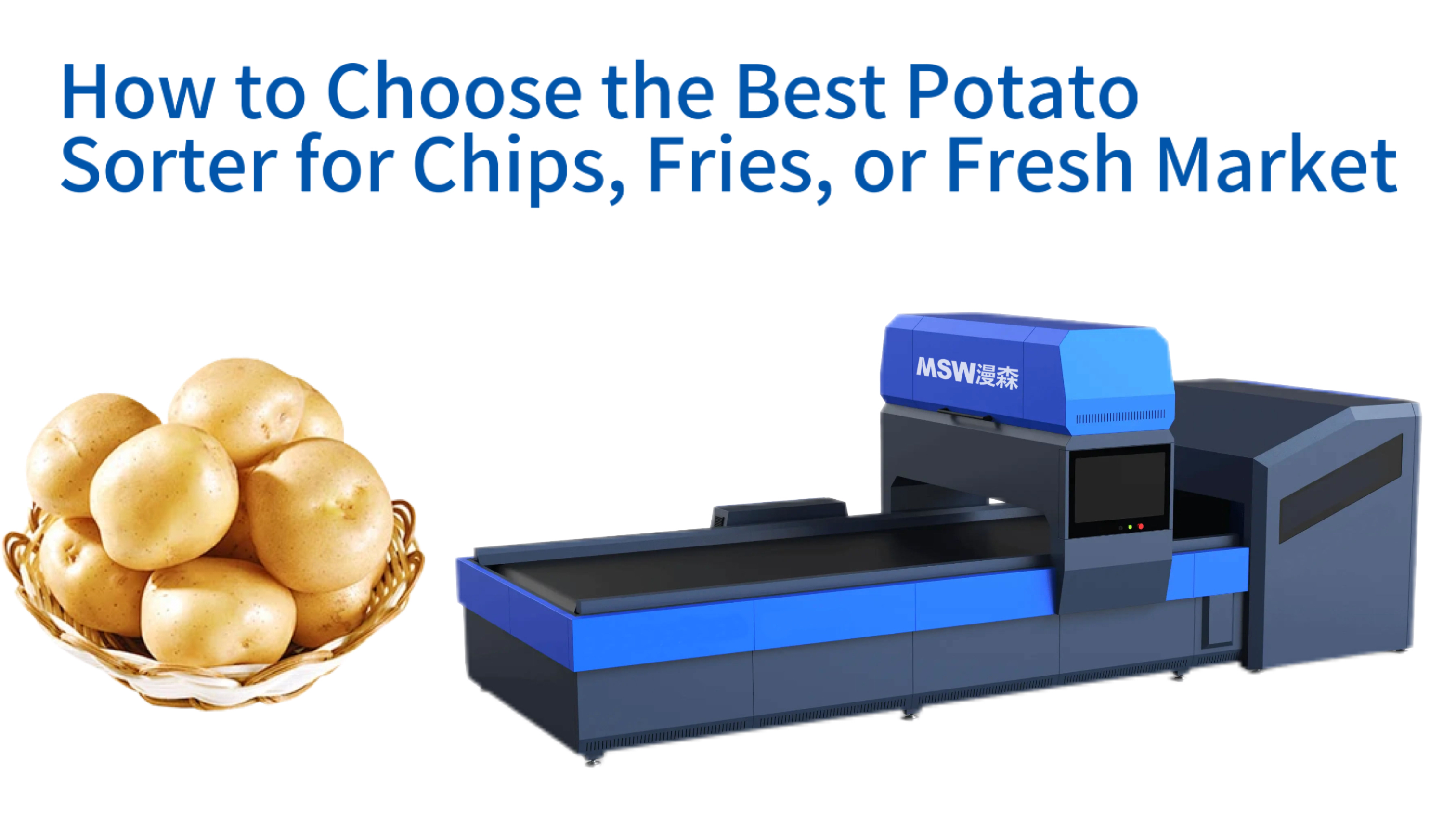
Selecting the right potato sorting equipment is a critical decision that directly impacts product quality, operational efficiency, and ultimately your bottom line. Whether you are processing potatoes for premium fresh market sales, manufacturing high-quality frozen fries, or producing perfectly uniform potato chips, the sorting technology you choose must align with your specific requirements. This comprehensive guide explores the fundamental principles of modern potato sorting, the key differences between available machine configurations, and the critical factors that should influence your purchasing decision. We will examine how artificial intelligence and advanced optical sensors have transformed potato sorting from a labor-intensive task into a precision-driven automated process, providing you with the knowledge needed to make an informed investment that will serve your business for years to come.
Understanding the Sorting Challenge: Why Potatoes Require Advanced Technology
The potato processing industry faces increasingly stringent quality standards from both consumers and regulatory bodies. Fresh market potatoes must exhibit consistent size, uniform color, and absolutely no external defects such as greening, scab, or mechanical damage. For chip and fry processors, the requirements become even more demanding, as internal defects like hollow heart, sugar ends that cause dark frying, and foreign material contamination can ruin entire production batches. Traditional manual sorting, where workers visually inspect potatoes on conveyor belts, is simply unable to keep pace with modern production volumes while maintaining consistent accuracy. Human inspectors experience fatigue, their judgment varies from person to person, and they cannot see inside a potato to detect internal quality issues.
Mechanical grading systems that rely solely on size or weight provide only a partial solution, as they completely ignore color variations, surface defects, and internal quality parameters. A potato that is perfectly sized but has a small rotten spot or internal bruising can still compromise product quality. This is where modern AI-powered potato sorters have revolutionized the industry. These sophisticated machines combine high-resolution cameras, multi-spectral sensors, and deep learning algorithms to analyze every single potato passing through the system, making real-time decisions about quality, color, size, and internal integrity at speeds measured in tons per hour. For businesses looking to maintain competitive advantage in an increasingly quality-focused market, understanding these sorting technologies is no longer optional but essential.
The Core Technology: How AI Potato Sorters See, Think, and Act
Multi-Spectral Vision Systems Capture Unseen Details
At the heart of every advanced potato sorter lies a sophisticated vision system that extends far beyond what the human eye can perceive. These systems utilize a combination of high-resolution color cameras, near-infrared sensors, and sometimes even X-ray technology to capture comprehensive data about each potato. The color cameras analyze surface characteristics including skin color uniformity, the presence of greening, scab lesions, mechanical damage, and any foreign material such as stones or dirt clods. Meanwhile, near-infrared sensors peer beneath the skin to detect internal quality issues like hollow heart, internal bruising, and sugar levels that affect frying characteristics. Some advanced models incorporate laser or X-ray transmission technology that can identify density variations, enabling the detection of internal defects that would otherwise remain hidden until after processing.
This multi-spectral approach provides an unprecedented level of quality assessment. When a potato passes through the inspection zone, the system captures dozens of individual data points per second, building a complete digital profile that includes size, shape, surface color, internal composition, and any anomalies present. This comprehensive data collection forms the foundation upon which artificial intelligence makes its sorting decisions. The sensors themselves are engineered for industrial environments, operating reliably under the dusty, high-vibration conditions typical of potato processing facilities, and maintaining calibration over thousands of hours of continuous operation. The result is a detection capability that consistently identifies quality issues that would be impossible for human inspectors to catch consistently.
Deep Learning Algorithms Continuously Improve Accuracy
The intelligence behind modern potato sorting systems comes from advanced deep learning algorithms that are trained on vast datasets of potato images. During the training phase, the artificial intelligence system is shown millions of examples of potatoes with various characteristics—perfect specimens, those with different types of defects, foreign materials, and everything in between. Through this process, the neural network learns to recognize the subtle patterns that distinguish acceptable product from material that must be rejected. Unlike traditional color sorters that rely on simple color threshold settings, AI-powered systems understand context. They can differentiate between a natural skin marking and a rot spot, recognize that a green-tinged potato is unacceptable while a slightly irregular shape might be fine for certain applications, and adapt to variations in natural product appearance.
Perhaps most importantly, these algorithms continue to learn and improve throughout their operational life. As the system processes more potatoes, it refines its understanding of what constitutes quality product for your specific application. If you process potatoes from multiple growing regions or varieties, the system automatically adjusts its recognition patterns to account for natural variations. This adaptive capability means that a well-trained AI sorter actually becomes more accurate over time, reducing false rejects that waste good product while ensuring that no defective material passes through. The system can also be configured with different quality profiles for different end uses—a fresh market potato destined for premium retail requires different specifications than potatoes destined for processing into chips or fries, and the AI system seamlessly switches between these profiles as production requirements change.
High-Speed Ejection Systems Deliver Precision Separation
Once the AI system has made its assessment of each potato, the final critical step is executing the sorting decision with extreme precision and speed. Modern potato sorters employ high-speed air ejection systems that use precisely timed bursts of compressed air to physically separate rejected material from the acceptable product stream. As potatoes travel through the inspection zone, their exact position is tracked in real-time. When a defective potato or piece of foreign material is identified, the system calculates the precise moment it will pass over the ejection nozzles and fires a targeted air burst that deflects that specific item into a reject chute, while acceptable potatoes continue their trajectory into the accept stream. This process happens in milliseconds, with ejection systems capable of firing thousands of times per second to handle even the highest throughput rates.
The precision of these ejection systems directly impacts both product quality and yield. A well-tuned system achieves what the industry calls a low "good-to-bad" ratio, meaning that for every defective potato ejected, only a minimal amount of good product is accidentally removed. Typical high-performance systems achieve rejection rates exceeding 98 percent for identified defects while maintaining good product loss below 2 percent. This balance is achieved through sophisticated algorithms that optimize ejection timing and air pressure based on potato size, speed, and position. For chip and fry processors, this precision is particularly critical because the value of the product is high and margins are tight. Similarly, fresh market packers rely on precise ejection to maintain pack-out rates while ensuring that every potato in the final package meets the quality specifications demanded by retail customers.
Matching Machine Configuration to Your Processing Needs
Chute-Type Potato Sorters for High-Volume Free-Flow Applications
Chute-type potato sorters represent the traditional workhorse configuration for high-throughput processing of uniform, free-flowing product. In these machines, potatoes are fed into a series of smooth stainless steel chutes that accelerate them to a controlled speed before they pass through the optical inspection zone. The chutes align the potatoes in single-file streams, ensuring that each tuber is presented to the sensors individually without overlapping or stacking. This configuration is particularly well-suited to processing large volumes of potatoes that have been pre-sized to a relatively uniform range, such as potatoes destined for chip manufacturing or frozen fry production. Chute-type machines can be configured with anywhere from 1 to 12 chutes and 64 to 768 sorting channels, providing the flexibility to match throughput capacity to production requirements ranging from 5 to over 50 tons per hour.
The primary advantage of chute-type sorting is its ability to process very high volumes with exceptional speed and precision. Because the potatoes are moving rapidly along a defined path, the system can make sorting decisions and execute ejections with minimal latency, achieving processing rates that are simply not possible with other configurations. Modern chute-type AI potato sorters incorporate advanced vibration feeding systems that ensure consistent flow and even distribution across all chutes, maximizing utilization of the available sorting capacity. The chute design itself has been optimized through computational fluid dynamics to minimize friction and prevent potato damage while maintaining the precise trajectory required for accurate ejection. For large-scale potato processors where throughput is the primary constraint, chute-type sorters provide the optimal combination of speed, accuracy, and reliability.
Belt-Type Potato Sorters for Large, Irregular, and Fragile Product
Belt-type potato sorters offer a fundamentally different approach that is ideally suited to handling large, irregularly shaped, or fragile potatoes. Instead of accelerating product down chutes, these machines use a wide belt conveyor to transport potatoes through the inspection zone. The belt provides a stable, cushioned surface that minimizes mechanical damage to the potatoes, making this configuration the preferred choice for fresh market packers handling premium product destined for retail. The belt also allows for inspection of larger potatoes that may be too big to effectively process in chute-type machines, as well as product that is irregular in shape and might otherwise tumble or stack in a chute system. Belt widths are available from 300mm up to 2800mm, allowing processors to match capacity to their specific requirements while maintaining the gentle handling that preserves product quality.
The belt configuration offers several additional advantages for specific applications. Because the belt presents the potatoes in a stable orientation, it enables the use of top and bottom camera arrays that inspect both sides of each potato simultaneously, ensuring that surface defects are detected regardless of which side is facing up. This capability is particularly valuable for fresh market potatoes where external appearance is paramount. Belt-type AI potato sorters also excel at handling mixed product streams where potatoes of varying sizes are processed together, as the belt can accommodate significant size variation without compromising inspection quality. For operations that process multiple potato varieties or handle both fresh and processing potatoes, the flexibility of belt-type sorting can simplify production planning and reduce equipment requirements. The gentle handling characteristics also make belt sorters the preferred choice for seed potato operations, where preserving the integrity of the seed is essential.
Considerations for Multi-Stage Sorting Systems
Many potato processing operations find that a single sorting pass is insufficient to achieve their quality objectives, particularly when processing variable raw material or when serving multiple market channels. Multi-stage sorting systems address this challenge by performing sorting operations at different points in the processing line. A typical configuration might begin with a primary sorter that removes gross contaminants such as stones, clods, and severely damaged potatoes immediately after harvest or upon arrival at the processing facility. This initial sort protects downstream equipment and prevents damage from foreign objects while removing the most obvious quality defects. The second sorting stage occurs after washing and sizing, when a more precise sorter performs final quality grading, separating potatoes by color, defect severity, and size for different market destinations.
The integration of multiple sorting stages requires careful consideration of equipment compatibility and data integration. Modern sorting systems can share quality data between stages, allowing the overall system to optimize performance based on real-time conditions. For example, if the primary sorter detects an unusually high level of certain defects, it can communicate this information to downstream sorters that can automatically adjust their acceptance criteria to maintain final product quality standards. This intelligent integration represents the cutting edge of potato processing technology, enabling processors to maximize yield while ensuring consistent quality. For operations considering significant capacity expansion or quality improvement initiatives, multi-stage sorting should be evaluated as a potential solution that can provide superior results compared to simply scaling up a single-stage system.
Critical Sorting Functions That Drive Product Quality
99.5% Removal
98% Detection
95% Detection
High Precision
Foreign Material Removal Protects Equipment and Consumers
Foreign material contamination represents one of the most significant risks in potato processing, threatening both processing equipment and consumer safety. Stones, metal fragments, glass, plastic, and other contaminants entering the processing line can cause catastrophic damage to slicing equipment, fryers, and packaging machinery, resulting in costly downtime and repairs. Even more concerning is the risk of contaminated product reaching consumers, which can lead to product recalls, regulatory action, and irreparable damage to brand reputation. Modern AI potato sorters are highly effective at detecting and removing foreign materials through a combination of sensor technologies. Color cameras identify visually distinct materials, while near-infrared sensors can detect materials with different chemical compositions even when they appear visually similar to potatoes.
For particularly challenging contaminants, some sorting systems incorporate X-ray technology that detects materials based on density differences. X-ray sorters can identify stones, metal fragments, glass, and even dense plastics that might otherwise pass through optical inspection systems undetected. These systems are capable of achieving removal rates exceeding 99.5 percent for identifiable foreign materials, providing a critical layer of protection for both equipment and product safety. The economic impact of effective foreign material removal extends beyond safety considerations; preventing equipment damage alone can save processors tens of thousands of dollars annually in repair costs and downtime. For potato chip and fry manufacturers where product purity is non-negotiable, investing in advanced foreign material detection capabilities is an essential component of quality assurance programs.
External Defect Detection Ensures Visual Quality
The visual appearance of potatoes has a direct impact on consumer purchasing decisions and product value, particularly for fresh market applications. External defects such as greening, scab, mechanical damage, rot, and sprouting all negatively impact marketability and must be removed before packing. AI-powered sorting systems excel at detecting these visual defects with a level of consistency and speed that manual inspection cannot match. The optical systems capture high-resolution color images that are analyzed pixel by pixel, identifying even subtle color variations that indicate greening or early-stage rot that might not be apparent to the human eye under typical inspection lighting. The system can be trained to recognize the specific defect characteristics that matter most for your market, whether that means removing any potato with any blemish or only rejecting those with defects above a certain size or severity threshold.
For fresh market operations, the ability to sort potatoes by both size and external quality in a single pass provides significant operational advantages. A single potato sorting machine can simultaneously grade by size into multiple categories while also removing defective product, eliminating the need for separate sizing and quality inspection equipment. This integration reduces equipment footprint, labor requirements, and product handling that can cause additional damage. For premium fresh market programs, some processors implement final sorting after packing to provide an additional quality check, using specialized sorters that inspect potatoes in their packaging to verify that only product meeting specifications reaches the consumer. These comprehensive quality control strategies, enabled by advanced sorting technology, allow fresh market packers to consistently deliver the high-quality product that retail customers demand.
Internal Quality Assessment Prevents Processing Defects
For potato processors manufacturing chips, fries, and other value-added products, internal quality is just as important as external appearance. Internal defects such as hollow heart, internal bruising, and sugar ends can cause significant processing issues and result in finished product that fails to meet quality specifications. Hollow heart creates structural weakness that causes chips to break and fries to have inconsistent texture. Sugar ends cause uneven browning during frying, resulting in products that are partially burnt and partially undercooked. These internal defects are invisible to the naked eye and cannot be detected by conventional optical sorting systems. Advanced AI potato sorters address this challenge by incorporating near-infrared and X-ray technology that can see inside the potato to assess internal condition before processing.
Near-infrared spectroscopy works by analyzing how different wavelengths of light are absorbed and reflected by the potato's internal structure. Healthy potato tissue has a characteristic spectral signature that changes in the presence of internal defects or abnormal sugar distribution. The sorting system analyzes this spectral data for each potato, identifying those with internal quality issues that would compromise finished product quality. X-ray transmission technology provides complementary information by measuring density variations within the potato, with hollow heart and other internal voids appearing as distinct low-density regions. By combining these technologies, modern sorting systems can achieve exceptional accuracy in identifying internal defects, with some systems reporting detection rates above 95 percent for hollow heart and other significant internal quality issues. For chip and fry processors, this capability represents a dramatic improvement in product consistency and reduction in waste.
Size Grading and Yield Optimization Maximizes Value
Potato size directly influences both market value and processing characteristics, making accurate size grading a fundamental requirement for any sorting operation. Fresh market potatoes are typically packed in specific size categories that command different price points, with oversized or undersized product often discounted significantly. For chip and fry processors, size uniformity is essential for consistent cooking times and product appearance. Modern AI potato sorters incorporate sophisticated size measurement capabilities that go far beyond simple length or width measurement. Using high-speed camera systems, these sorters capture three-dimensional data about each potato, calculating volume, projected area, and multiple dimensional measurements simultaneously. This detailed size information allows the system to sort into multiple size categories in a single pass, with accuracy and consistency that mechanical sizing equipment cannot match.
Beyond simple size grading, advanced sorting systems enable yield optimization strategies that can significantly improve overall profitability. For chip and fry processors, the system can be configured to direct potatoes of optimal size and quality to the main processing line while diverting smaller or slightly less perfect potatoes to secondary applications such as dehydrated potato products or animal feed. This maximizes the value extracted from each potato entering the facility. Similarly, fresh market packers can use detailed size and quality data to optimize pack configurations, ensuring that each package contains potatoes of consistent size while minimizing waste. The data generated by modern sorting systems also provides valuable insights for growers, helping them understand how their product performs and identify opportunities for improvement in growing and harvesting practices. This feedback loop between processor and grower ultimately benefits the entire supply chain by driving continuous quality improvement.
Application-Specific Considerations for Different Potato Markets
Fresh Market Potato Sorting Emphasizes Appearance and Shelf Life
The fresh market segment demands potatoes with impeccable external appearance, as consumers make purchasing decisions based almost entirely on visual inspection. Potatoes destined for retail must be free from greening, scab, mechanical damage, and any signs of rot or disease. They must also meet strict size specifications, with packers typically offering several size categories to serve different consumer preferences. For fresh market applications, potato sorters must be configured to prioritize external quality assessment while handling the product gently to prevent the very damage the sorting process is intended to eliminate. Belt-type sorters are often preferred for fresh market applications due to their gentle handling characteristics and ability to inspect both sides of each potato thoroughly. The sorting system must be capable of detecting subtle color variations that indicate early-stage greening or disease development that could affect shelf life after packing.
Fresh market packers increasingly use sorting systems to support value-added programs such as pre-washed and pre-bagged potatoes, which command premium pricing. For these applications, the sorting system must maintain exceptionally high standards of quality, as any defect in the final package is immediately apparent to the consumer. Many packers implement a two-stage sorting approach, with initial sorting at the time of harvest or upon arrival at the packing facility, followed by final sorting immediately before packaging. This approach allows the removal of any defects that develop during storage and ensures that only the highest quality product reaches the consumer. The integration of sorting systems with automated packaging equipment enables continuous, high-speed operation that maximizes throughput while maintaining quality standards. For fresh market packers serving major retail chains, the consistency and reliability provided by AI-powered sorting systems have become essential for maintaining supplier status and meeting increasingly stringent quality requirements.
Chip Manufacturing Requires Internal Quality and Uniformity
Potato chip manufacturing places unique demands on sorting technology because the final product's quality is determined by both raw material characteristics and processing parameters. Chips are thin slices that magnify any defects in the original potato, making internal quality assessment particularly critical. A potato with hollow heart produces chips that break easily and have an unappealing appearance. Potatoes with elevated reducing sugars produce chips that darken excessively during frying, resulting in burnt flavor and appearance. The sorting system for chip manufacturing must therefore incorporate the ability to assess both internal quality and sugar content, typically through near-infrared spectroscopy. The system must also ensure size uniformity, as chips from potatoes of different sizes cook at different rates, leading to inconsistent color in the finished product. Potato chip sorting machines are typically configured to process very high volumes, with throughput rates of 10 to 30 tons per hour common in large-scale operations.
The chip manufacturing environment also imposes specific requirements on sorting equipment regarding sanitation and durability. The presence of starch and other residues requires sorting systems that can withstand rigorous daily cleaning procedures without degradation of optical components or mechanical systems. Many chip manufacturers employ stainless steel construction and sealed components that resist corrosion and facilitate sanitation. The high-volume, continuous operation typical of chip production also demands sorting systems with exceptional reliability and minimal downtime. Leading chip producers implement predictive maintenance programs that use data from the sorting system to anticipate component wear and schedule maintenance proactively, avoiding unplanned downtime that disrupts production. For these operations, sorting technology is not simply a quality control tool but an integral component of a highly optimized, data-driven manufacturing process that operates around the clock to meet market demand.
Frozen French Fry Production Demands Precision and Consistency
Frozen french fry production represents one of the most demanding applications for potato sorting technology due to the combination of high volume, rigorous quality standards, and the significant value at stake. French fries must be uniform in size and color, free from defects, and processed from potatoes with optimal sugar content to achieve the desired golden color and crisp texture. The sorting system for fry production must handle extremely high throughput, often exceeding 30 tons per hour, while maintaining precise detection of both external and internal quality defects. The processing line typically includes multiple sorting stages, beginning with removal of gross contaminants and ending with final quality inspection before freezing. Food sorting systems for fry production incorporate advanced features such as laser profiling for accurate length measurement and multi-spectral sensors for sugar content assessment.
The economics of frozen fry production make sorting accuracy particularly critical, as the margins are tight and the cost of defective product reaching customers is high. Fry producers typically operate on a global scale, supplying major fast-food chains that demand absolute consistency across millions of servings. A single quality failure can result in rejected shipments and damaged customer relationships. This has driven fry producers to invest heavily in sorting technology, with many operations implementing continuous improvement programs that regularly upgrade sorting systems to incorporate the latest advancements in artificial intelligence and sensor technology. The integration of sorting systems with enterprise resource planning software enables real-time tracking of quality metrics, providing visibility into performance across multiple production lines and facilities. For frozen fry producers, sorting technology has evolved from a quality control tool to a strategic asset that enables consistent execution of demanding customer specifications and supports the continuous improvement culture that defines industry leaders.
Investment Value: Understanding the Business Case for Advanced Sorting
Labor Savings and Operational Efficiency Gains
The most immediate and quantifiable benefit of implementing advanced potato sorting technology is the reduction in labor requirements for inspection and sorting operations. A single AI-powered sorting system can replace 10 to 20 manual sorters per shift, depending on the application and throughput requirements. For operations running multiple shifts, the labor savings multiply quickly, with annual savings often reaching hundreds of thousands of dollars. Beyond the direct wage savings, advanced sorting eliminates the indirect costs associated with manual sorting, including supervision, training, benefits, and the administrative overhead of managing a large workforce. The quality variability inherent in manual sorting also imposes hidden costs, as inconsistent sorting leads to quality complaints, product returns, and lost customer goodwill that are difficult to quantify but have significant business impact.
Operational efficiency gains extend beyond labor reduction. Automated sorting operates continuously at consistent speed and accuracy, without the breaks, shift changes, and fatigue-related slowdowns that affect manual operations. This predictability enables better production planning and more efficient utilization of downstream processing equipment, as the flow of acceptable product to packaging or further processing is steady and reliable. The elimination of manual sorting stations also frees valuable floor space in processing facilities, which can be repurposed for production expansion or other value-adding activities. For operations experiencing labor shortages, which have become increasingly common in many processing regions, sorting automation provides a solution that maintains production capacity without reliance on a hard-to-find workforce. When evaluating the investment case for sorting technology, many processors find that the combination of direct labor savings, productivity gains, and risk reduction delivers a compelling return, with payback periods typically ranging from 12 to 24 months.
Quality Improvement and Risk Reduction
The quality improvements enabled by advanced sorting technology translate directly to reduced waste, fewer customer complaints, and protection of brand reputation. Manual sorting typically achieves defect removal rates of 60 to 80 percent under optimal conditions, with significant variability based on worker experience, fatigue, and workload. AI-powered sorting systems consistently achieve removal rates above 98 percent for identifiable defects, dramatically reducing the number of defective product reaching customers. For fresh market packers, this means fewer returns from retailers and less product being pulled from shelves due to quality issues. For chip and fry processors, it means fewer batches of finished product rejected due to quality deviations and more consistent product meeting the demanding specifications of fast-food chains and other major customers.
The risk reduction provided by advanced sorting extends beyond quality consistency to encompass food safety and regulatory compliance. The ability to reliably detect and remove foreign materials such as stones, glass, and metal fragments provides a critical layer of defense against contamination incidents that could trigger product recalls. With regulatory agencies increasingly focused on preventive controls, the implementation of validated sorting technology can support compliance with food safety requirements and provide documentation that demonstrates due diligence in quality assurance. The data generated by sorting systems also supports traceability initiatives, enabling processors to identify which lots of raw material produced which finished goods, facilitating rapid response if quality issues are identified. For processors supplying major retailers and food service chains, these capabilities are often required as a condition of doing business, making advanced sorting technology not just an investment in quality but a requirement for market access.
Yield Improvement Through Precision Sorting
Perhaps the most significant financial impact of advanced sorting technology comes from improved yield—the percentage of raw material that is converted into saleable product. In potato processing, where raw material costs typically represent 40 to 60 percent of total production costs, even small improvements in yield have substantial impact on profitability. Traditional sorting approaches often err on the side of caution, rejecting borderline product to ensure that no defective material reaches customers. This conservative approach results in significant loss of acceptable product, often 5 to 10 percent of total throughput. AI-powered sorting systems, with their ability to make nuanced quality assessments, can dramatically reduce these false rejects. By precisely distinguishing between product that is truly defective and product that is acceptable but has minor cosmetic imperfections, the system maximizes the amount of material that qualifies for its highest-value use.
The yield benefits of precision sorting extend beyond simple reject reduction. By sorting product into multiple quality grades, processors can direct material to its most profitable application. Potatoes that do not meet specifications for premium fresh market can be directed to processing applications where they still generate value, rather than being discarded entirely. Similarly, processing operations can sort potatoes destined for chip production, directing those with optimal sugar content to the main line while diverting those with slightly elevated sugars to secondary products where they are acceptable. This optimization of material utilization typically increases overall yield by 3 to 8 percent compared to traditional sorting approaches, representing millions of dollars in additional revenue annually for large-scale operations. When evaluating sorting technology investments, many processors find that yield improvements alone provide a compelling return, with the labor savings and quality benefits representing additional upside that accelerates payback and increases long-term profitability.
Making Your Selection: A Practical Guide to Choosing the Right Potato Sorter
Evaluating Your Production Requirements and Constraints
The first step in selecting a potato sorter is conducting a thorough analysis of your current and anticipated production requirements. This analysis should consider both quantitative factors such as throughput volume, operating hours, and product mix, as well as qualitative factors such as quality standards, customer requirements, and facility constraints. Start by documenting your current throughput, measured in tons per hour, and your future growth projections. Consider the characteristics of your raw material, including typical size range, variability, and common defect types. Evaluate your current quality performance, including defect rates, customer complaints, and waste levels, to establish a baseline for improvement. Also consider your facility constraints, including available floor space, existing equipment layout, and utility infrastructure such as compressed air capacity and electrical service.
This analysis should also consider your specific market requirements, as different end uses demand different sorting capabilities. Fresh market packers require systems optimized for external appearance and gentle handling, with the ability to sort by size and defect type simultaneously. Chip and fry processors need systems with internal quality assessment capabilities and the throughput to match high-speed processing lines. Operations serving multiple markets may require flexible systems that can switch between sorting profiles quickly. Engage with your team, including production managers, quality assurance personnel, and maintenance staff, to understand their perspectives on current challenges and desired improvements. A well-developed requirements document serves as the foundation for evaluating potential sorting solutions and ensures that your final selection aligns with your business objectives.
Understanding Technology Options and Their Trade-Offs
Once you have defined your requirements, you can begin evaluating the technology options available in the market. The primary decision points include the choice between chute-type and belt-type configurations, the selection of sensor technologies, and the level of AI sophistication required. Chute-type sorters generally offer higher throughput per unit of floor space and lower initial capital cost, making them attractive for high-volume processing of uniform product. Belt-type sorters provide better handling for large, irregular, or fragile product and enable more thorough inspection of both product sides, making them preferable for fresh market applications and operations processing variable raw material. The sensor package should be selected based on the specific defects you need to detect: color cameras for external appearance, near-infrared for internal quality and sugar content, and X-ray for foreign material detection in critical applications.
The level of AI sophistication is another important consideration. All modern sorters incorporate some level of artificial intelligence, but the capabilities vary significantly between basic systems that use AI for simple defect classification and advanced systems that employ deep learning for complex quality assessment. Advanced AI systems offer superior ability to handle natural product variation, learn from experience, and adapt to changing conditions. They also typically provide more comprehensive data collection and reporting capabilities that support continuous improvement initiatives. The trade-off is higher initial cost and potentially more complex operation and maintenance requirements. For operations with consistent raw material and straightforward quality requirements, a basic AI system may be perfectly adequate. For operations facing variable raw material, demanding quality specifications, or complex defect types, the additional capabilities of advanced AI often justify the higher investment.
Evaluating Supplier Capabilities and Support Infrastructure
The quality of the sorting equipment itself is only one factor in the success of your investment; the capabilities of the supplier and the support infrastructure they provide are equally important. Evaluate potential suppliers on their experience in your specific application, their track record of successful installations, and their ongoing commitment to product development. Request references from customers with similar operations and follow up to understand their experience with equipment performance, supplier responsiveness, and long-term reliability. The availability of local service and technical support is particularly important, as sorting equipment is critical to production and downtime can be extremely costly. Understand the supplier's service network, typical response times, and the availability of spare parts in your region.
Consider the training and ongoing support that the supplier provides. Sorting systems require skilled operators to achieve optimal performance, and the supplier should offer comprehensive training for your operations and maintenance personnel. Ask about the availability of remote support capabilities that allow the supplier to diagnose issues and provide guidance without the delay of onsite visits. Understand the supplier's approach to software updates and ongoing improvement, as the AI algorithms that power modern sorters continue to evolve, and you want a partner that will help you benefit from these advances over the life of your equipment. For operations that process multiple products or anticipate future changes in their business, consider the supplier's ability to provide application support for new materials or processes as your needs evolve. A supplier that views your relationship as a long-term partnership rather than a one-time transaction will provide significantly greater value over the life of the equipment.
Planning for Installation, Integration, and Continuous Improvement
The final step in the selection process is developing a comprehensive plan for installation, integration, and ongoing operation. Sorting equipment rarely operates in isolation; it must be integrated with upstream feeding systems and downstream processing equipment to function effectively. Work with your selected supplier to develop a detailed installation plan that addresses facility modifications, utility connections, and integration with existing equipment. Consider the staffing implications of your new system, including the need for trained operators and maintenance personnel, and develop a training plan that ensures your team is prepared before the equipment arrives. Develop a commissioning plan that includes verification of performance against your specifications, using actual product samples to confirm that the system achieves the defect removal rates and yield targets that justified the investment.
Once the system is operational, implement processes for monitoring performance and identifying opportunities for continuous improvement. Use the data generated by the sorting system to track key metrics such as defect rates, reject percentages, and machine utilization. Establish regular reviews of this data to identify trends that may indicate changes in raw material quality or opportunities for process optimization. Work with your supplier to implement software updates and algorithm improvements as they become available, ensuring that your system continues to benefit from ongoing advancements in sorting technology. Consider establishing a continuous improvement program that engages your operations team in identifying ways to further optimize sorting performance, leveraging their knowledge of your specific product and process to drive ongoing gains. With the right planning and ongoing management, your sorting system will deliver sustained value over its entire operational life, providing the quality, efficiency, and profitability improvements that justified the investment.
Selecting the right potato sorting technology requires careful consideration of your specific product requirements, processing environment, and business objectives. By understanding the capabilities and trade-offs of different system configurations and sensor technologies, and by working with a supplier who can provide the support and expertise needed for successful implementation, you can make an investment that delivers significant returns through improved quality, reduced labor costs, and enhanced yield. Whether your focus is on fresh market potatoes, potato chips, frozen fries, or other value-added products, the right sorting solution will be a cornerstone of your quality assurance program and a key driver of your competitive advantage in the marketplace. For more detailed information on specific sorting technologies and their applications, explore our resources on AI sorter technology, potato sorting solutions, and advanced detection methods that can further optimize your processing operations.