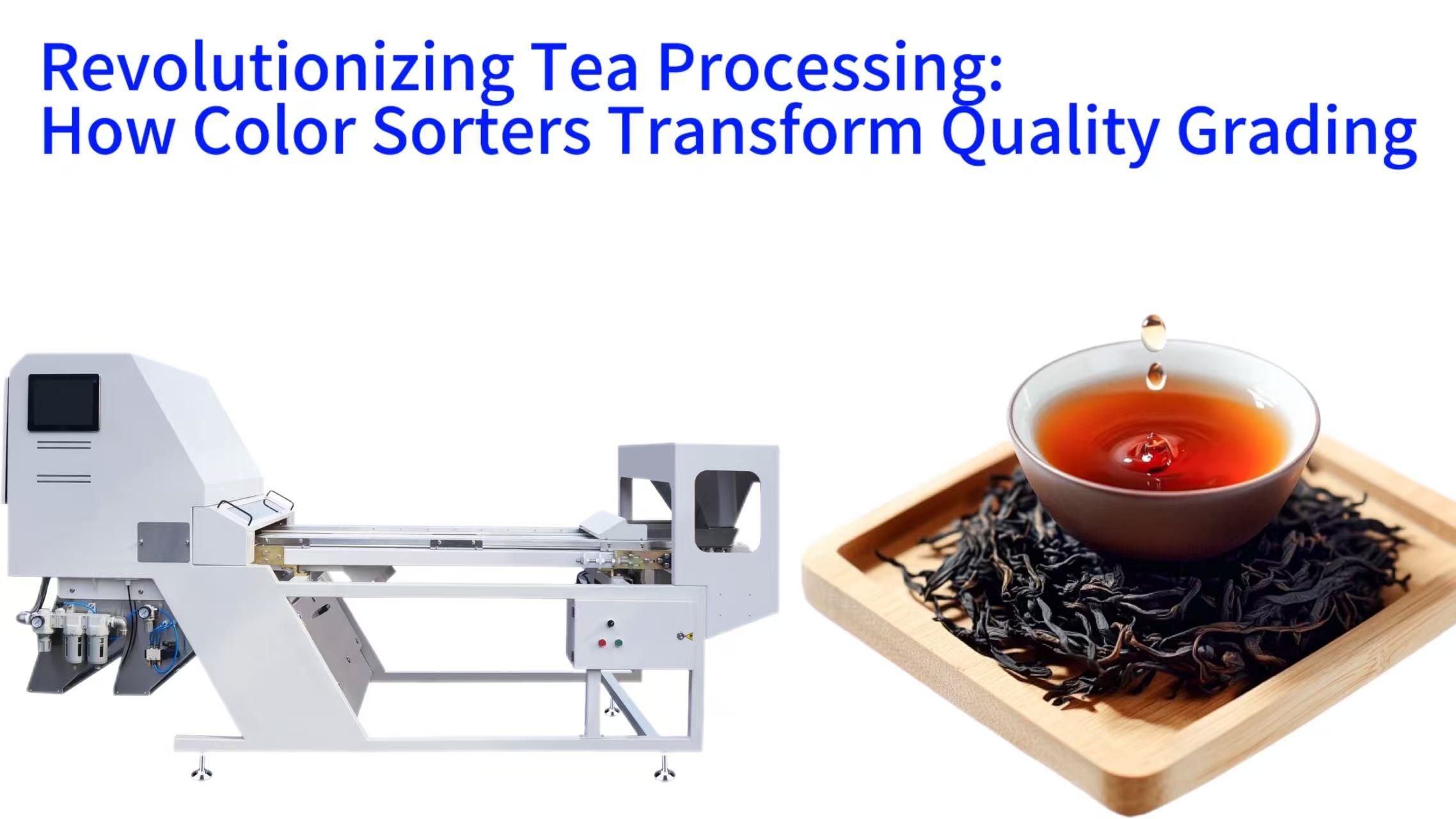
This comprehensive guide explores the transformative role of color sorting technology in modern tea production, detailing how advanced optical systems have revolutionized traditional grading methods. We will examine the fundamental relationship between tea color and quality, the technical principles behind color sorting machines, and their specific applications across different tea varieties. The article further covers operational best practices, real-world implementation cases, and emerging technological trends that are shaping the future of tea processing. By understanding these interconnected aspects, readers will appreciate how precision color sorting enhances product consistency, market value, and consumer satisfaction in the global tea industry.
Tea Color Sorter Workflow
Gentle Feeding & Distribution
Vibratory feeding systems create uniform monolayer presentation, with adjustable speed (1-5m/min) to prevent leaf damage, critical for delicate white and whole-leaf teas.
Multi-Spectral Imaging
High-res cameras (12MP+) capture 360° color data across 400-1000nm spectrum, detecting chlorophyll levels, oxidation marks, and subtle discoloration invisible to human eyes.
AI Quality Analysis
Tea-specific algorithms evaluate 500+ color parameters (hue, saturation, spectral reflectance) in 0.02ms, distinguishing natural variations from genuine defects with 99.7% accuracy.
Precision Ejection
Variable-pressure air jets (3-8bar) remove defective particles, with 0.05mm positional accuracy to avoid damaging adjacent leaves, handling 500-2000kg/h depending on tea type.
Grade Collection & Data Analytics
Multi-channel collection for 3-5 quality grades, with real-time data on defect rates, color distribution, and yield, feeding into upstream process optimization.
The Fundamental Relationship Between Tea Color and Quality
Color serves as one of the most reliable visual indicators of tea quality, directly reflecting the chemical composition, processing accuracy, and overall condition of the finished product. The specific hue, uniformity, and brightness of tea leaves provide experienced processors and consumers with immediate insights into the tea's flavor potential, freshness, and manufacturing precision. Scientific studies have demonstrated that color variations in tea correlate strongly with chemical markers like theaflavins, thearubigins, and chlorophyll content, which directly influence both taste characteristics and health benefits. This intrinsic connection makes color consistency a primary concern for producers aiming to deliver superior products that meet consumer expectations and justify premium pricing in competitive markets.
Beyond mere appearance, color abnormalities often signal underlying issues in the production chain, from harvesting through final processing. Discolored leaves may indicate improper fermentation, inadequate drying, storage problems, or even the presence of foreign materials that compromise both safety and taste. The human eye can detect some of these variations, but modern color sorting technology identifies subtle differences invisible to even trained professionals. This technological advancement has made precise color grading achievable on an industrial scale, transforming what was once an artisanal skill into a reproducible science. As global tea markets become increasingly quality-conscious, the ability to maintain color consistency has emerged as a key differentiator between ordinary and exceptional tea producers.
Color as an Indicator of Processing Precision and Freshness
The color spectrum of processed tea leaves provides a visual timeline of their journey from harvest to final product, with specific hues corresponding to precise chemical transformations achieved during manufacturing. For example, the vibrant green shades characteristic of high-quality green teas result from proper de-enzyming that preserves chlorophyll, while the coppery tones of well-oxidized black teas demonstrate optimal theaflavin development. When these color signatures deviate from established standards, they frequently indicate processing errors such as uneven heating, incorrect oxidation timing, or improper moisture control during drying. These variations not only affect visual appeal but often correlate with flavor defects including bitterness, flatness, or unwanted grassy notes that disappoint consumers.
Freshness represents another quality dimension directly visible through color characteristics, with premium teas displaying bright, vivid colors that gradually dull as the product ages or experiences improper storage conditions. The whitish silvery down on high-grade white teas, known as trichomes, diminishes with time and handling, while the glossy black sheen of freshly processed oolong teas becomes matte as volatile aromatic compounds evaporate. Modern color sorting systems can quantify these subtle changes, allowing producers to separate teas based on freshness indicators that human sorters might overlook. This capability is particularly valuable for specialty teas where visual characteristics command significant price premiums and serve as authenticity markers for discerning buyers.
Understanding Color Variations Across Different Tea Types
The world's major tea categories each possess distinctive color profiles that reflect their unique processing methods and chemical compositions, creating specialized grading criteria for different tea varieties. Green teas typically exhibit color spectra ranging from pale silver-green to deep jade, with premium grades characterized by uniform brightness and absence of yellowish or brownish tones that indicate oxidation or processing errors. Black teas display colors from golden-orange to deep burgundy-black, with optimal examples showing rich, vibrant hues without dullness or grayish casts that suggest staleness or improper fermentation. Oolong teas present particularly complex color patterns due to their partial oxidation, often featuring greenish-brown bases with reddish edges that require sophisticated assessment.
White teas derive their name from the silvery-white down that covers the buds, with premium grades showing this characteristic prominently against pale green leaf backgrounds. Dark teas like pu-erh develop deep amber to chocolate brown colors through post-fermentation, with consistency across batches indicating proper aging conditions. Each of these color standards has evolved through centuries of tea culture and now forms the basis for modern color sorter configurations. The technological challenge lies in programming sorting equipment to recognize the acceptable color ranges for each tea type while accounting for natural variations that don't necessarily indicate quality issues, requiring sophisticated optical systems and intelligent software algorithms.
Economic Impact of Color Consistency in Tea Markets
The commercial value of tea correlates directly with color consistency, creating significant financial incentives for producers to implement precise color grading systems. Market analyses consistently demonstrate that teas with uniform color characteristics command price premiums of 20-50% compared to similar teas with color variations, reflecting consumer perceptions of quality and manufacturing care. This price differentiation applies across market segments, from mass-market blends where color consistency ensures product recognition to specialty markets where visual perfection signifies artisanal quality. The economic implications extend beyond immediate pricing to encompass brand reputation, customer loyalty, and market positioning, making color control a strategic investment rather than merely a production expense.
International tea auctions, which establish benchmark prices for much of the world's tea trade, historically employed visual grading systems that prioritized color characteristics, and these traditions continue to influence modern trading practices. Even as analytical methods have advanced, the visual assessment remains crucial because consumers primarily select teas based on appearance, especially in loose-leaf formats where the leaves are fully visible. Producers who consistently deliver color-uniform products establish reputations for reliability that translate into long-term buyer relationships and reduced price negotiations. The implementation of advanced color sorting technology typically yields return on investment within 12-24 months through both premium pricing and reduced waste, making it one of the most economically justifiable upgrades for tea processing facilities.
Consumer Perception and Color Expectations in Different Markets
Consumer expectations regarding tea color vary significantly across different markets and cultural contexts, requiring producers to adapt their color standards to match regional preferences and traditions. In East Asian markets, for example, green teas typically command higher prices when they exhibit vivid jade-green colors, while in many Western markets slightly paler greens are equally acceptable provided they appear fresh and uniform. These cultural color preferences have deep historical roots, often reflecting traditional processing methods from specific growing regions that have become established as quality benchmarks. Understanding these market-specific expectations is crucial for exporters, as a tea considered premium in one region might be perceived as ordinary in another based solely on color characteristics.
The growth of specialty tea shops and online retail has further elevated the importance of color consistency, as consumers increasingly purchase teas based on photographs where visual appeal significantly influences buying decisions. Studies of consumer behavior indicate that color uniformity ranks among the top three visual factors influencing tea purchases, alongside leaf integrity and apparent cleanliness. This visual focus becomes particularly important in premium gift markets where presentation significantly impacts perceived value. Meanwhile, in the growing ready-to-drink tea segment, color consistency between production batches ensures brand recognition and prevents consumer confusion. These varied market demands necessitate flexible color sorting systems that can be adjusted for different quality standards while maintaining the efficiency required for commercial-scale production.
Technical Principles of Modern Tea Color Sorting Systems
Modern tea color sorting systems represent the convergence of optical engineering, high-speed computing, and precision mechanics, creating integrated solutions that dramatically outperform human sorting capabilities. These systems operate on a fundamental principle of detecting minute color differences between individual tea particles and separating them based on predefined quality parameters at speeds impossible to achieve manually. The core technological advancement lies in the ability to analyze each tea leaf's color signature in multiple dimensions beyond basic human vision, assessing hue, saturation, brightness, and spectral reflectance simultaneously. This multidimensional analysis enables the identification of subtle defects and variations that might escape even experienced human sorters, while maintaining consistent application of grading standards unaffected by fatigue or subjective judgment.
The operational sequence begins with feeding systems that present tea leaves in a controlled monolayer to optical chambers, where advanced imaging systems capture high-resolution color data from multiple angles. Sophisticated algorithms then compare this data against established quality benchmarks, making rejection decisions within milliseconds before precision ejection systems remove substandard particles using compressed air. This entire process occurs at rates exceeding thousands of individual assessments per second, enabling industrial-scale throughput while maintaining accuracy levels above 99% for clearly defined defects. The technological sophistication continues to advance with integration of artificial intelligence and machine learning, allowing systems to adapt to natural variations in raw materials while maintaining strict quality standards.
Optical Detection Systems and Color Analysis Technology
The optical detection components of tea color sorters represent some of the most technologically advanced elements, employing high-resolution CCD or CMOS cameras capable of distinguishing color differences imperceptible to the human eye. These imaging systems typically operate with resolutions exceeding 10 megapixels while capturing thousands of frames per second, creating a continuous digital stream of every particle passing through the sorting chamber. Complementary to the cameras, specialized lighting systems provide consistent, shadow-free illumination across the entire viewing area, utilizing LEDs with specific color temperatures and spectral characteristics optimized for tea sorting applications. This controlled lighting environment ensures that color assessment remains consistent regardless of ambient conditions, eliminating the variations that often plague manual sorting operations conducted under different lighting situations.
Beyond standard visible spectrum analysis, many advanced tea sorters incorporate near-infrared (NIR) sensors that detect chemical composition characteristics correlated with color appearance. This multi-spectral approach enables the identification of quality issues that might present similar visual colors but different molecular signatures, such as moisture variations that affect shelf life or fermentation inconsistencies that impact flavor development. The integration of advanced detection technologies creates a comprehensive quality assessment far beyond simple color matching, essentially providing a non-destructive chemical analysis of each tea particle. This technological convergence allows modern sorters to make rejection decisions based on both external color characteristics and internal quality parameters, significantly enhancing their value beyond basic color separation.
Processing Algorithms and Decision-Making Logic
The computational heart of modern tea color sorters resides in sophisticated processing algorithms that transform raw optical data into precise acceptance/rejection decisions within milliseconds. These algorithms typically employ both RGB (Red, Green, Blue) and HSV (Hue, Saturation, Value) color models to define acceptable parameters, with the flexibility to emphasize different aspects depending on the specific tea variety being processed. For green teas, for example, algorithms might prioritize saturation in green channels while establishing tight tolerances for brown or yellow hues that indicate quality issues. Meanwhile, black tea sorting might focus more on brightness consistency while allowing wider variation in red-brown spectrums that naturally occur during proper oxidation.
Modern systems increasingly incorporate machine learning capabilities that enable continuous improvement of sorting accuracy based on operational data and human feedback. These intelligent systems can distinguish between acceptable natural variations and genuine defects by analyzing patterns across thousands of samples, gradually refining their decision criteria without manual reprogramming. This adaptive capability proves particularly valuable for dealing with seasonal variations in raw tea material or adjusting to new quality standards as market preferences evolve. The most advanced systems now employ neural network architectures that process visual information similarly to human cognitive patterns, but with the consistency and speed that biological systems cannot match, creating a perfect synergy of human-like perception with machine precision and endurance.
High-Speed Ejection Mechanisms and Precision Engineering
The physical separation component of tea color sorters represents a remarkable feat of precision engineering, employing high-speed ejection systems that remove defective particles without disrupting the continuous flow of acceptable product. These systems typically utilize arrays of solenoid valves that release precisely timed bursts of compressed air to deflect rejected particles into separate collection channels, with response times measured in milliseconds. The engineering challenge lies in achieving sufficient force to reliably remove target particles while minimizing collateral impact on adjacent tea leaves, requiring careful calibration of air pressure, valve duration, and nozzle positioning specific to each tea variety's size, weight, and shape characteristics.
Different tea types present unique ejection challenges, from the delicate whole leaves of premium white teas that require gentle handling to the small particles of broken-grade teas that demand higher precision targeting. Modern sorters address these variations through customizable ejection configurations, including adjustable air pressure systems, nozzle arrays with different spacing patterns, and specialized valve technologies that optimize performance for specific product characteristics. The integration of high-speed ejection technology with advanced sensing systems creates a closed-loop control environment where ejection effectiveness is continuously monitored and adjustments are made automatically to maintain optimal performance. This precision engineering ensures that color sorting delivers tangible quality improvements without introducing mechanical damage that could undermine the very quality benefits the technology is meant to provide.
Integration with Broader Production Control Systems
Modern tea color sorters increasingly function as integrated components within comprehensive production management systems, sharing data and receiving instructions that optimize their performance within the broader manufacturing context. This integration enables sorters to automatically adjust their operating parameters based on upstream processing conditions, such as modifying color acceptance criteria when receiving tea from different fermentation batches or adapting to variations in drying equipment performance. The bidirectional data exchange also allows sorters to provide valuable feedback to earlier production stages, identifying consistent quality patterns that might indicate opportunities for process improvement in harvesting, withering, or oxidation operations.
The data generated by color sorters represents a valuable resource for quality management, providing detailed records of color distribution, defect rates, and yield percentages for each production batch. When integrated with factory management software, this information enables comprehensive traceability from finished product back to specific raw material lots, creating valuable quality assurance documentation for certification programs and customer requirements. The most advanced implementations feature real-time monitoring dashboards that display sorting performance metrics alongside other production data, enabling operators to maintain optimal efficiency across the entire manufacturing sequence. This systems approach transforms color sorters from isolated quality control checkpoints into active participants in continuous process improvement, maximizing their impact on both product quality and operational efficiency.
Sorting Technology Comparison: Traditional vs. Modern Systems
Traditional Manual Sorting
• Relies on trained workers' visual assessment with 70-85% accuracy
• Throughput limited to 2-5kg/h per worker with fatigue-related decline
• Subjective standards with 15-25% batch-to-batch variation
• High labor costs (60-70% of total processing expenses)
Modern Color Sorting Technology
• Multi-spectral imaging + AI analysis with 99.5%+ defect detection accuracy
• Continuous throughput: 500-2000kg/h with consistent performance
• Programmable standards with<3% batch variation across seasons
• 60-80% labor cost reduction with 12-24 month ROI
Tea Variety Specific Sorting Requirements and Solutions
The diverse world of tea presents unique sorting challenges for each major category, requiring specialized approaches that account for distinct color characteristics, leaf structures, and quality expectations. These variety-specific requirements have driven the development of customizable sorting technologies that can be precisely tuned to optimize performance for different tea types, from delicate white teas to fully oxidized black varieties. The technological flexibility to accommodate these variations represents a significant advancement over earlier sorting systems that employed one-size-fits-all approaches, often compromising effectiveness for certain tea categories. Modern sorters achieve this adaptability through programmable parameters covering optical settings, mechanical configurations, and ejection sensitivities that can be saved as dedicated recipes for different products.
The implementation of variety-specific sorting begins with comprehensive analysis of each tea type's ideal color spectrum, common defects, and market quality standards, establishing baseline parameters that guide machine configuration. These standards incorporate both objective color measurements and subjective quality perceptions that influence commercial value, creating technical specifications that balance scientific precision with market reality. Ongoing refinement of these parameters occurs through collaboration between equipment manufacturers, tea processors, and quality assessment specialists, ensuring that sorting criteria evolve alongside changing market expectations and agricultural practices. This continuous improvement cycle has significantly enhanced the value proposition of color sorting technology across the tea industry, making it increasingly accessible and effective for processors of all scales and specialties.
Green Tea Sorting Specifications and Technical Adjustments
Green tea sorting presents particular challenges due to the subtle color variations that distinguish premium grades from inferior qualities, requiring high sensitivity to slight deviations from ideal green spectra. The optimal color characteristics vary among green tea subtypes, with Japanese steamed greens typically displaying brighter yellow-green hues while Chinese pan-fired varieties show deeper jade tones, but all share the fundamental requirement of avoiding reddish or brownish discoloration that indicates oxidation. Modern sorters address these requirements through specialized optical configurations that emphasize discrimination within green color channels while establishing strict rejection thresholds for any particles showing oxidation indicators. This precise color separation ensures that finished green teas maintain the fresh, vibrant appearance that signifies proper processing and preservation of bioactive compounds.
Beyond color considerations, green tea sorting must account for physical characteristics like leaf structure and density that affect optical presentation and ejection effectiveness. Delicate whole-leaf grades require gentle handling to prevent breakage, necessitating adjustments to feeding systems, conveyor speeds, and air ejection pressures that minimize mechanical impact. Meanwhile, smaller-particle green teas like matcha precursors demand higher optical resolution to assess color uniformity despite limited surface area, often requiring camera upgrades or specialized lighting arrangements. The most advanced green tea sorters incorporate shape recognition capabilities that distinguish between desirable needle-style leaves and irregular fragments that might share similar color characteristics but represent different quality grades, providing multidimensional sorting that significantly enhances value recovery.
Black Tea Color Grading and Oxidation Assessment
Black tea sorting operates within a different color paradigm than green teas, focusing on the rich spectrum of brown, amber, and black hues that develop during proper oxidation while identifying undesirable extremes that indicate processing errors. Premium black teas typically exhibit coppery-orange colors that reflect optimal theaflavin development, with sorting systems calibrated to identify both under-oxidized particles that appear greenish and over-oxidized elements that show dull black tones without vibrant highlights. This color assessment requires sophisticated interpretation beyond simple brightness measurements, evaluating hue relationships and spectral balances that indicate chemical development within the leaves. The most effective black tea sorting incorporates historical quality data from specific growing regions and production methods, creating customized color profiles that reflect the distinctive characteristics valued in different market segments.
The physical presentation of black tea further complicates sorting operations, with traditional whole-leaf orthodox grades requiring different optical approaches than modern CTC (Crush, Tear, Curl) varieties with their uniform particle size but varied color distribution. Orthodox teas often feature twisted leaves that present uneven surfaces to optical sensors, necessitating multiple camera angles or rotational feeding systems that capture comprehensive color information from all leaf aspects. Meanwhile, CTC grades with their small, uniform particles enable high-speed processing but demand exceptional color resolution to distinguish subtle quality differentiations within limited surface areas. Modern sorting technology addresses these varied requirements through modular designs that can be configured with appropriate optical, feeding, and ejection components optimized for specific black tea styles and quality standards.
Oolong Tea Complexities and Specialized Sorting Approaches
Oolong teas present particularly complex sorting challenges due to their partial oxidation that creates distinctive color patterns combining green, brown, and reddish hues within individual leaves. The desirable "green leaves with red edges" appearance of many premium oolongs requires sorting technology capable of assessing color distribution rather than uniform coloration, evaluating the balance and contrast between different tonal areas on each leaf. This sophisticated analysis goes beyond standard whole-color assessment to incorporate spatial color pattern recognition, identifying leaves with the characteristic edge coloration that indicates proper bruising and oxidation control while rejecting those with uneven or excessive reddening that suggests processing errors. This capability represents the cutting edge of tea sorting technology, blending color science with pattern analysis traditionally performed only by experienced human sorters.
The physical diversity of oolong teas further complicates sorting operations, encompassing everything tightly rolled pellets that reveal little surface area to open leaf styles that display full coloration patterns. Each physical format requires customized optical arrangements to ensure comprehensive color assessment, with rolled oolongs often benefiting from pre-sorting agitation that partially opens leaves to reveal interior surfaces. The varying densities and aerodynamics of different oolong styles also necessitate adjustments to ejection systems, ensuring that targeted particles are reliably removed without excessive air usage that increases operational costs. These technical specializations make oolong sorting among the most sophisticated applications in the tea industry, requiring equipment specifically configured for these unique challenges rather than adapted from other tea sorting applications.
White Tea Delicate Handling and Minimal Processing Requirements
White tea sorting demands exceptional sensitivity to subtle color variations while maintaining gentle handling that preserves the delicate leaf structures and silvery trichomes that define premium grades. The characteristic appearance of high-quality white tea combines pale green leaf bases with abundant silvery-white bud coverage, creating a visual standard that sorting systems must recognize and preserve. This requires optical configurations specifically tuned to detect the fine trichomes that indicate tea bud content while identifying discoloration that suggests age or processing damage, often employing specialized lighting angles that enhance the contrast between the reflective trichomes and leaf surfaces. The preservation of these delicate structures throughout the sorting process represents a significant technical achievement, requiring careful control of every mechanical interaction from feeding through ejection.
The minimal processing approach that defines white tea quality means that sorting often represents one of the few mechanical interventions in the production chain, placing additional importance on maintaining the tea's natural appearance and structure. Modern white tea sorters address this requirement through innovative feeding systems that minimize leaf agitation, low-impact conveying arrangements that prevent bruising, and precisely calibrated ejection systems that use minimal air pressure to deflect unwanted particles. These gentle handling considerations extend throughout the machine design, including rounded surfaces, reduced drop heights, and vibration isolation that collectively preserve the delicate tea structures. The successful implementation of white tea sorting demonstrates how modern technology can enhance traditional quality standards without compromising the essential characteristics that define specialty tea categories.
Operational Advantages and Quality Improvements
The implementation of advanced color sorting technology delivers comprehensive operational benefits that extend far beyond basic color consistency, impacting virtually every aspect of tea production efficiency and end-product quality. These advantages begin with dramatically increased sorting accuracy that consistently exceeds human capabilities, achieving defect detection rates above 99% for clearly defined color variations while operating at speeds that would require hundreds of human sorters. This precision eliminates the quality variations that inevitably occur with manual sorting due to fatigue, distraction, or inconsistent standards between different workers, ensuring that every production batch meets identical specifications regardless of processing volume or duration. The resulting product consistency strengthens brand identity, reduces customer complaints, and establishes reputations for reliability that command market premiums.
Beyond quality consistency, modern color sorters deliver substantial economic benefits through reduced labor requirements, decreased product waste, and optimized value recovery from raw materials. A single automated sorter typically replaces 10-20 manual sorters while occupying significantly less floor space, creating dramatic reductions in labor costs and associated management overhead. The precision of automated systems also minimizes valuable tea being incorrectly rejected as waste, with advanced sorters achieving false rejection rates below 1% compared to 5-10% common with manual operations. This combination of labor efficiency and waste reduction typically yields return on investment within 12-24 months, while the quality improvements simultaneously enhance revenue through premium pricing and increased market share.
Quantifiable Quality Metrics and Consistency Improvements
The transition from manual to automated color sorting enables precise quantification of quality metrics that were previously subjective assessments, creating data-driven quality management systems with measurable performance indicators. Modern sorters continuously record detailed information about color distribution, defect rates, and yield percentages for each production batch, establishing comprehensive quality baselines and identifying variations that might indicate processing issues. This data transparency allows producers to precisely correlate sorting results with upstream processing parameters, identifying opportunities for improvement in harvesting, withering, oxidation, or drying operations that affect final color characteristics. The most advanced implementations incorporate statistical process control methodologies that detect subtle quality trends before they exceed acceptable limits, enabling proactive adjustments that maintain consistent quality.
The consistency achieved through automated sorting extends beyond individual production batches to encompass seasonal and annual variations, creating stable quality profiles that strengthen brand identity and customer loyalty. This longitudinal consistency proves particularly valuable for tea blenders who require predictable color characteristics across multiple sourcing seasons to maintain product standards, reducing the need for recipe adjustments that can compromise flavor consistency. The implementation of sensor-based sorting technology further enhances this consistency by incorporating additional quality dimensions beyond simple color, assessing physical characteristics and chemical indicators that collectively define product quality. This multidimensional consistency represents a significant competitive advantage in markets where consumers increasingly expect identical product characteristics with every purchase, regardless of natural variations in agricultural raw materials.
Production Efficiency and Throughput Enhancements
Modern color sorters dramatically enhance production efficiency through continuous high-speed operation that eliminates the throughput limitations inherent in manual sorting operations. While human sorters typically process 2-5 kilograms per hour with accuracy declining over time, automated systems maintain consistent accuracy while processing 500-2000 kilograms per hour depending on tea type and quality standards. This order-of-magnitude increase in processing capacity enables producers to manage larger volumes with existing facilities or reduce processing time for standard batches, creating flexibility that improves responsiveness to market demands. The continuous operation capability further enhances efficiency by eliminating shift changes, breaks, and other interruptions that reduce effective processing time in manual operations.
The efficiency benefits extend beyond the sorting operation itself to influence upstream and downstream processes through improved workflow integration and reduced bottlenecks. The consistent output quality from automated sorters simplifies subsequent blending and packaging operations by eliminating the need for rehandling or secondary sorting that often follows manual quality control. This integrated efficiency becomes particularly valuable during seasonal production peaks when processing capacity constraints typically force compromises between quantity and quality. Modern sorters address these challenges through scalable configurations that can operate multiple lines in parallel or utilize modular components that can be reconfigured for different tea types as production requirements change. This operational flexibility represents a significant advancement over earlier automated systems that often required dedicated setups for specific products, limiting their practical utility in facilities processing diverse tea varieties.
Labor Optimization and Human Resource Allocation
The implementation of automated color sorting technology creates opportunities for strategic reallocation of human resources from repetitive visual sorting tasks to value-added activities that enhance overall operational effectiveness. Rather than simply reducing workforce requirements, forward-thinking tea processors redeploy staff to quality supervision, machine operation, process improvement, and specialized hand-finishing of premium products that justify manual attention. This human-machine collaboration optimizes the respective strengths of automated consistency and human judgment, creating hybrid quality systems that deliver superior results than either approach alone. The transition typically includes comprehensive training programs that develop technical skills for operating and maintaining sophisticated sorting equipment, enhancing workforce capabilities while improving employment satisfaction through more engaging responsibilities.
The economic impact of labor optimization extends beyond direct wage savings to encompass improved working conditions, reduced turnover, and decreased training costs associated with high-skill positions compared to manual sorting roles. Modern sorting facilities typically feature cleaner, quieter, and safer environments than traditional manual sorting operations, contributing to employee satisfaction and retention. The reallocation of human resources to equipment operation and quality oversight also creates career advancement opportunities within production facilities, developing technical expertise that supports further automation initiatives. This strategic approach to workforce development has proven particularly valuable in regions where traditional tea processing represents important employment, enabling modernization while preserving jobs through skill enhancement rather than simple position elimination.
Waste Reduction and Sustainable Processing Practices
Precision color sorting technology significantly reduces waste throughout the tea production chain through accurate identification and separation of substandard material that can be diverted to appropriate value streams rather than simply discarded. Modern systems achieve false rejection rates below 1%, dramatically decreasing the quantity of acceptable tea incorrectly removed as waste compared to manual sorting where error rates typically range from 5-15%. This accuracy improvement directly impacts production yields and raw material utilization, reducing the agricultural footprint required to produce equivalent quantities of finished tea. The precise separation also enables more effective utilization of byproducts, with removed material often suitable for secondary products like tea bags or extracts rather than becoming waste, creating additional revenue streams from the same raw material input.
The environmental benefits of advanced sorting extend beyond waste reduction to include energy efficiency, water conservation, and chemical usage reductions throughout the production chain. Modern sorters incorporate energy-efficient components like LED lighting and optimized air systems that minimize power consumption while maintaining performance, with the latest models achieving up to 40% energy reduction compared to previous generations. The quality consistency achieved through precise sorting also reduces the need for reprocessing that consumes additional energy and water, while the accurate removal of contaminated material decreases the likelihood of entire batches being rejected due to localized quality issues. These sustainability advantages align with growing consumer interest in environmentally responsible production methods, creating marketing benefits alongside operational efficiencies for processors implementing advanced sorting technology.
Implementation Strategies and Operational Best Practices
Successful implementation of color sorting technology requires careful planning that addresses technical specifications, operational integration, and workforce adaptation to maximize return on investment and quality improvements. The process begins with comprehensive needs assessment that evaluates current quality issues, production volumes, product mix, and market positioning to determine appropriate equipment specifications and configuration options. This assessment should include detailed analysis of the specific color-related quality challenges affecting each tea variety processed, establishing clear objectives for the sorting system that align with broader business goals. Engaging equipment suppliers early in this planning process ensures that technical recommendations address operational realities while allowing sufficient time for facility modifications, utility upgrades, and staff training that support successful implementation.
Operational integration requires thoughtful consideration of material handling logistics both upstream and downstream from the sorting operation, ensuring smooth workflow without creating bottlenecks or unnecessary product handling. The physical placement of sorting equipment should optimize material flow while providing adequate access for operation, maintenance, and quality monitoring, with particular attention to environmental factors like ambient lighting, dust control, and temperature stability that affect optical performance. Successful implementations typically include pilot testing with representative tea samples to verify performance against established quality benchmarks before full operational deployment, allowing for parameter adjustments and operational refinements that optimize results. This systematic approach to implementation maximizes the technology's benefits while minimizing disruption to existing operations, creating a foundation for continuous quality improvement rather than simply installing new equipment.
Equipment Selection Criteria and Technical Specifications
Selecting appropriate color sorting equipment requires evaluation of multiple technical parameters against specific operational requirements, beginning with optical capabilities that match the color discrimination needs of the teas being processed. Key considerations include camera resolution and speed, lighting system design and stability, processing computer capabilities, and the sophistication of analysis algorithms that interpret optical data. These technical elements should be evaluated through demonstration with actual tea samples rather than standardized test materials, assessing performance with the specific color challenges and quality standards relevant to the operation. Beyond optical performance, mechanical specifications including throughput capacity, physical dimensions, utility requirements, and compatibility with existing material handling systems significantly influence operational effectiveness and implementation feasibility.
The selection process should also consider operational factors beyond basic technical specifications, including user interface design, maintenance requirements, service availability, and future upgrade potential that affect long-term viability. Equipment with intuitive control systems and comprehensive diagnostic capabilities reduces training requirements and minimizes downtime through easier troubleshooting and parameter adjustments. Service support availability proves particularly important for operations in remote tea-producing regions where technical expertise may be limited, making reliability and remote support capabilities valuable selection criteria. The potential for future upgrades should also influence selection decisions, as sorting technology continues advancing rapidly with improvements in optical systems, processing algorithms, and operational features that enhance performance and flexibility. This forward-looking perspective ensures that investments remain relevant despite technological evolution.
Parameter Optimization and Quality Standard Establishment
Effective color sorting operation requires precise parameter settings that balance detection sensitivity with practical production considerations, creating acceptance criteria that reflect genuine quality requirements rather than arbitrary color preferences. This optimization process begins with comprehensive analysis of representative tea samples that establish the natural color variation within acceptable quality ranges, defining baseline parameters that accommodate normal agricultural variations while identifying genuine defects. The process typically involves collaboration between quality control, production, and marketing personnel to ensure that sorting criteria align with customer expectations and commercial requirements, avoiding unnecessarily strict standards that increase waste without corresponding market value. This collaborative approach creates practical quality benchmarks that sorting parameters can reliably and consistently implement across production batches.
Parameter optimization represents an ongoing process rather than a one-time activity, requiring periodic review and adjustment as raw material characteristics change seasonally and market expectations evolve. Modern sorting systems facilitate this continuous improvement through comprehensive data logging that correlates parameter settings with sorting results, identifying opportunities for refinement that enhance either quality or efficiency. The most advanced implementations utilize statistical analysis of sorting data to optimize multiple parameters simultaneously, balancing competing objectives like defect removal, product recovery, and throughput to maximize overall operational effectiveness. This data-driven approach to parameter management transforms color sorting from a static quality checkpoint into an adaptive process that continuously improves in response to operational experience and changing requirements.
Staff Training and Operational Proficiency Development
Comprehensive training programs ensure that operational staff develop the technical knowledge and practical skills required to maximize color sorter performance while maintaining equipment reliability and minimizing downtime. Effective training encompasses both theoretical understanding of sorting principles and hands-on experience with parameter adjustment, performance monitoring, and basic troubleshooting that builds operator confidence and competence. This educational foundation should include specific instruction on the color characteristics and quality standards for each tea variety processed, enabling operators to make informed adjustments that maintain sorting effectiveness as raw material characteristics change. Training typically occurs in phases beginning with basic operation before progressing to advanced optimization and maintenance activities, with competency verification ensuring that staff capabilities match operational requirements.
Beyond initial implementation training, ongoing skill development maintains operational proficiency as technology evolves and staff responsibilities expand. This continuous education might include advanced technical sessions offered by equipment suppliers, cross-training with maintenance personnel to enhance troubleshooting capabilities, and regular quality review meetings that reinforce the connection between sorting parameters and end-product characteristics. The development of internal expertise proves particularly valuable for operations processing multiple tea varieties with different quality requirements, enabling rapid reconfiguration as production schedules change. This investment in human capital maximizes return on technology investments by ensuring that sophisticated equipment operates at optimal effectiveness while minimizing dependence on external technical support for routine adjustments and minor issues.
Performance Monitoring and Continuous Improvement Processes
Systematic performance monitoring provides the foundation for continuous improvement in color sorting operations, establishing key performance indicators that track both equipment effectiveness and quality outcomes over time. Essential metrics typically include throughput rates, product recovery percentages, defect removal efficiency, and false rejection rates that collectively quantify sorting performance against established benchmarks. These operational metrics should be correlated with downstream quality assessments and customer feedback to validate that technical performance translates into genuine quality improvements that deliver commercial value. Modern sorting systems facilitate this monitoring through integrated data logging and reporting capabilities that automatically track performance indicators, with advanced systems providing real-time alerts when metrics deviate from acceptable ranges.
Continuous improvement processes utilize performance data to identify opportunities for enhancement through parameter adjustments, procedural modifications, or equipment upgrades that address specific operational challenges. This systematic approach might include regular review meetings that analyze performance trends, investigate quality incidents, and evaluate improvement initiatives against established objectives. The most effective implementations incorporate cross-functional participation in improvement activities, engaging personnel from production, quality, maintenance, and commercial functions to ensure comprehensive perspective on sorting performance and its business impact. This collaborative approach to continuous improvement transforms color sorting from a standalone operation into an integrated quality management system that adapts to changing requirements while consistently delivering expected results.
Future Technological Developments and Industry Trends
The evolution of tea color sorting technology continues advancing toward increasingly sophisticated systems that integrate multiple sensing modalities, artificial intelligence, and comprehensive data analytics that transcend traditional color-based separation. Future developments focus on holistic quality assessment that considers chemical composition, physical structure, and historical performance data alongside visual characteristics, creating multidimensional quality evaluation that more closely aligns with human sensory perception. This technological progression moves beyond simple defect removal toward predictive quality optimization that anticipates how sorting decisions will influence final product characteristics after packaging, storage, and brewing. The integration of these advanced capabilities will further blur the distinction between quality control and quality creation, transforming sorting operations from corrective steps to proactive quality determination.
Industry-wide trends indicate growing integration between sorting systems and broader production management platforms, creating connected manufacturing environments where sorting data informs decisions throughout the production chain. This connectivity enables real-time adjustment of upstream processes based on sorting results, creating closed-loop quality systems that automatically compensate for raw material variations while maintaining consistent output standards. Parallel developments in data analytics will increasingly utilize sorting information to predict market acceptance, optimize production planning, and guide product development based on comprehensive quality understanding. These advancements collectively position color sorting technology as a central element in the digital transformation of tea processing, moving beyond mechanical separation to become intelligent quality management systems that enhance both operational efficiency and product value.
Artificial Intelligence and Machine Learning Integration
The integration of artificial intelligence represents the most significant technological advancement in tea color sorting, enabling systems that continuously improve their performance through experience rather than requiring manual parameter adjustments. AI-powered sorters utilize deep learning algorithms that analyze complex patterns in optical data to make nuanced quality distinctions that traditional systems might miss, such as identifying early indicators of quality issues before they become visually apparent. These systems develop increasingly sophisticated understanding of acceptable natural variations versus genuine defects through exposure to thousands of samples, reducing false rejections while improving defect detection in challenging scenarios where color differences are subtle or inconsistent. This adaptive capability proves particularly valuable for dealing with seasonal variations in tea characteristics or adjusting to new quality standards as market preferences evolve.
Machine learning components further enhance sorting effectiveness by correlating optical characteristics with downstream quality assessments, developing predictive models that anticipate how sorting decisions will influence final product performance. These systems might learn, for example, that certain color patterns not traditionally considered defects correlate with flavor issues after storage, enabling proactive removal before negative characteristics develop. The implementation of AI sorter technology also simplifies operation through natural language interfaces and automated optimization that reduces the technical expertise required for effective performance. As these systems mature, they will increasingly incorporate data from multiple sources including weather patterns, agricultural practices, and processing parameters to create comprehensive quality models that transcend simple visual assessment, fundamentally transforming how tea quality is understood and managed throughout the production chain.
Multi-Spectral Analysis and Chemical Composition Assessment
Future tea sorting technology will increasingly incorporate multi-spectral analysis that extends beyond visible light into infrared, ultraviolet, and other spectral ranges that reveal chemical characteristics invisible to standard optical systems. This expanded analytical capability enables sorters to assess chemical composition indicators like catechin levels, caffeine content, and moisture percentage that significantly influence tea quality but remain undetectable through color alone. The integration of NIR sorter technology already provides this capability in advanced systems, identifying chemical signatures correlated with flavor potential, storage stability, and geographical origin that create additional quality dimensions beyond visual appearance. This chemical awareness enables sorting decisions based on comprehensive quality understanding rather than superficial characteristics, aligning technical capabilities with the complex factors that actually determine tea value.
The combination of optical and chemical analysis creates opportunities for sophisticated quality optimization that would be impossible through either approach alone, such as identifying teas with ideal chemical composition despite minor visual imperfections or recognizing visually acceptable teas with chemical imbalances that affect flavor. This multidimensional assessment proves particularly valuable for specialty teas where chemical composition significantly influences market value, enabling precise segregation based on measurable quality indicators rather than subjective visual assessment. As multi-spectral technology advances, it will likely incorporate additional sensing modalities like laser-induced breakdown spectroscopy or Raman spectroscopy that provide even more detailed chemical analysis, creating sorting systems that essentially perform non-destructive laboratory-grade analysis at production speeds. This technological convergence will further narrow the gap between production sorting and sophisticated quality laboratory capabilities.
Connectivity and Industry 4.0 Integration
The ongoing digital transformation of manufacturing, often called Industry 4.0, increasingly influences tea color sorting through enhanced connectivity, data exchange, and automated decision-making that optimizes overall production effectiveness. Modern sorting systems feature comprehensive connectivity options that enable seamless integration with factory management software, cloud platforms, and mobile devices that provide operational visibility regardless of location. This connectivity facilitates real-time performance monitoring, remote parameter adjustment, and predictive maintenance that maximizes equipment availability while minimizing on-site technical requirements. The data generated by connected sorters becomes a valuable resource for broader operational optimization, identifying patterns and correlations that inform decisions beyond the sorting operation itself.
Industry 4.0 integration extends beyond basic connectivity to encompass automated data analysis, machine-to-machine communication, and artificial intelligence applications that create increasingly autonomous production environments. In these advanced implementations, sorters automatically adjust their operation based on input from upstream equipment like dryers or fermenters, optimizing their performance for specific batch characteristics without manual intervention. They might also communicate with downstream packaging systems to coordinate operations based on sorting results, ensuring that quality segregation translates appropriately into final product configuration. This comprehensive integration transforms sorters from isolated quality control points into active participants in optimized production systems that automatically maintain quality standards while maximizing efficiency across the entire manufacturing sequence.
Sustainability Focus and Environmental Impact Reduction
Future developments in tea color sorting technology will increasingly emphasize sustainability improvements through reduced energy consumption, enhanced material utilization, and decreased environmental impact across the production chain. Equipment manufacturers already focus on energy-efficient designs utilizing LED lighting, optimized air systems, and power management features that minimize electricity requirements without compromising performance. The next generation of sorters will likely incorporate additional sustainability features like heat recovery systems, water-free cleaning options, and components designed for disassembly and recycling that support circular economy principles. These environmental considerations extend beyond equipment operation to encompass full lifecycle impacts including manufacturing, transportation, and end-of-life processing that collectively determine technology sustainability.
The sorting process itself contributes significantly to environmental sustainability through precise material utilization that maximizes product recovery while minimizing waste, directly reducing the agricultural land, water, and inputs required to produce equivalent quantities of finished tea. Advanced systems further enhance this benefit through sophisticated byproduct management that identifies removed material suitable for alternative applications rather than simple disposal, creating additional value from the same agricultural resources. The implementation of agricultural product sorting technology specifically designed for tea and other specialty crops represents a growing focus within the equipment industry, developing solutions optimized for the unique requirements of high-value agricultural products rather than adapting technology from other industries. This specialized approach ensures that sustainability improvements address the specific environmental considerations relevant to tea production rather than implementing generic solutions with limited effectiveness.
Economic Benefits & Emerging Technology Trends
Quantifiable Economic Benefits
• Premium grade yield increase: 20-50% through precise color grading
• Labor cost reduction: 60-80% compared to manual sorting teams
• Waste reduction: 35-60% by minimizing false rejection of acceptable tea
• Market access expansion: 25-40% price premium in quality-sensitive markets
Next-Generation Technology Trends
• Hyperspectral analysis linking color to caffeine/polyphenol content
• AI self-calibration for seasonal tea characteristic variations
• Industry 4.0 integration with fermentation/drying process control
• Micro-sorting for single-origin traceability and terroir preservation