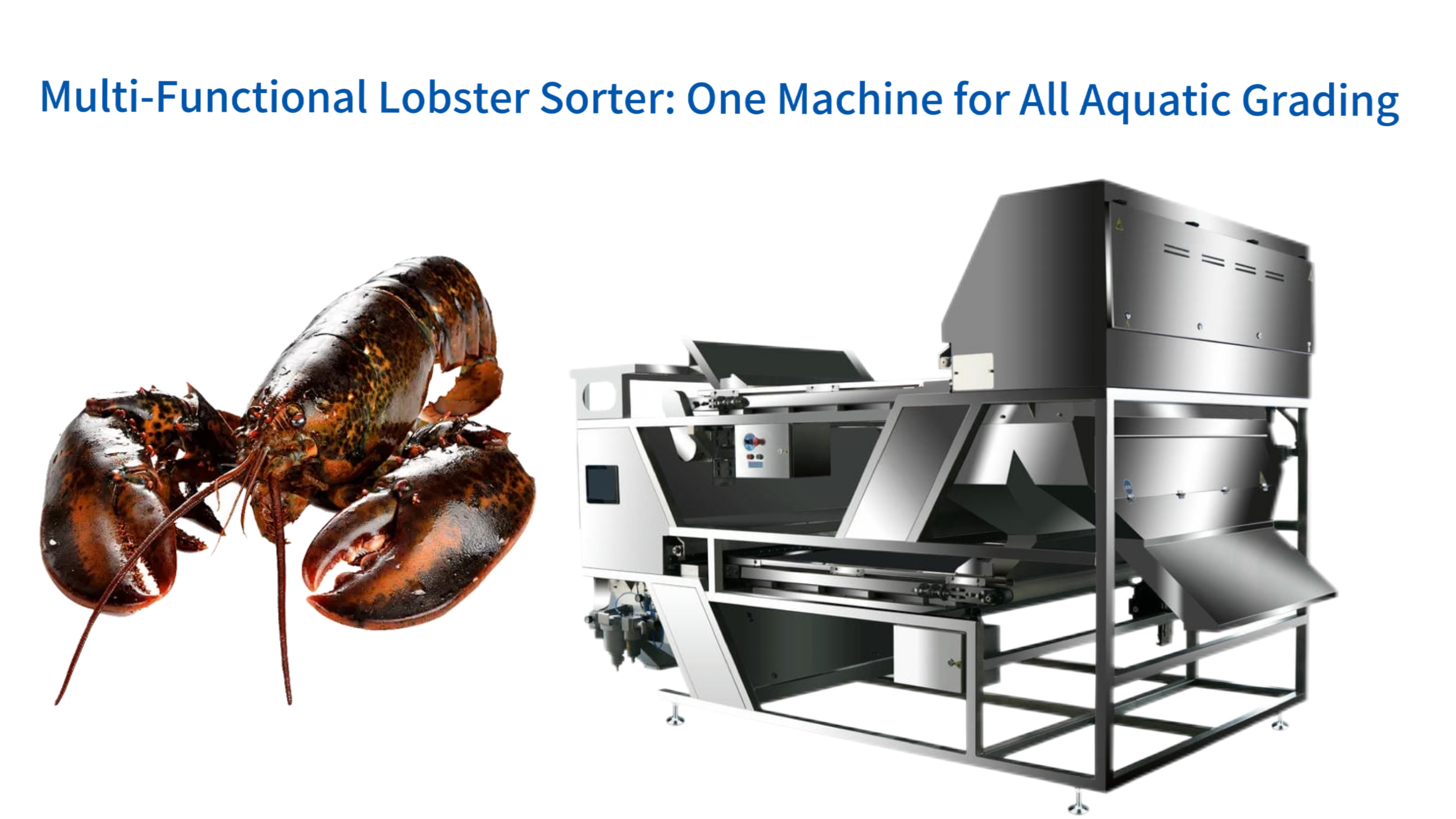
Full Working Flow of Multi-Functional Lobster Sorting Machine
The modern seafood processing industry faces the significant challenge of efficiently sorting live and processed aquatic products like lobsters, crabs, shrimp, and fish, which vary greatly in size, color, health, and species. The emergence of the multi-functional lobster sorting machine represents a major leap forward, moving far beyond traditional, manual, single-task methods. This advanced equipment integrates artificial intelligence, high-resolution optical sensors, and high-speed ejection systems to provide a versatile solution that adapts to the specific needs of different aquatic species. This article will explore the technology behind this innovation, its diverse applications for various seafood, the different machine configurations available, the economic benefits it provides for processors, and the essential maintenance practices required for long-term, reliable operation.
The Technological Leap: How AI is Transforming Seafood Grading
AI Sorter VS Manual Sorting Multi-Dimensional Comparison
The core of the modern lobster sorting machine is its sophisticated use of artificial intelligence, which fundamentally changes how aquatic products are graded. Unlike older systems that might only measure weight or a single color parameter, an AI-driven sorter uses deep learning algorithms. These algorithms are trained on thousands of images to recognize the subtle differences between a healthy, high-value lobster and one that is weak, damaged, or of a different species. This process allows the system to make decisions based on a combination of factors, including size, shell integrity, color hue, and even movement patterns, delivering a level of precision and consistency that human sorters cannot maintain over long shifts. This technological foundation turns a simple sorting machine into an intelligent decision-making hub.
As the AI-powered system processes more aquatic products, it continuously learns and refines its sorting criteria, a process known as machine learning. For example, when sorting shrimp, the system becomes progressively better at identifying a specific defect, like a discolored spot that indicates spoilage. This self-optimizing capability is crucial for processing facilities that handle a variety of catches, as the machine can be reconfigured for a new species quickly. The result is a significant reduction in sorting errors, less product waste, and a final output that consistently meets the highest quality standards for both the live market and further processing into value-added products like tails or prepared meals. The ai sorter is the brain behind this operational evolution.
Multi-Spectral Vision: Seeing Beyond the Human Eye
The perception layer of the lobster sorting machine relies on a powerful multi-spectral visual system. This goes far beyond a standard color camera, incorporating sensors that can detect information invisible to the human eye. High-resolution CCD cameras capture detailed color and shape data, but additional sensors, such as those operating in the near-infrared (NIR) spectrum, can analyze the chemical composition of a shellfish's shell. This technology can identify early signs of disease, shell calcification issues, or stress responses in live lobsters that are not apparent from their external color alone.
This advanced vision system allows the machine to perform a truly comprehensive inspection of every single item on the processing line. For a crab sorting application, it can instantly differentiate between a male and female crab based on subtle abdominal shape variations while simultaneously checking for shell damage or missing claws. By gathering this rich, multi-dimensional data, the sorting machine builds a complete "fingerprint" for each aquatic product. This detailed perception is the first critical step in making accurate, data-driven ejection decisions, ensuring that only products meeting the strictest criteria move forward in the packaging or processing chain.
Deep Learning Algorithms: Making Intelligent Decisions in Milliseconds
Once the multi-spectral sensors capture the visual data, the information is sent to the machine's decision-making core, which runs advanced deep learning algorithms. These algorithms are not programmed with simple "if-then" rules, such as "if color is not red, then reject." Instead, they have been trained on a vast library of images showing millions of examples of acceptable and unacceptable aquatic products. This training allows the AI to understand the complex, nuanced features that define quality, such as the specific way light reflects off a healthy shrimp shell or the typical shape of a lobster's carapace.
This AI-driven approach provides immense flexibility and accuracy that traditional methods cannot match. For a seafood sorting machine handling a mixed catch, the deep learning model can be instantly switched to recognize the target species. It can adapt to natural variations in lighting, product size, and orientation without requiring constant manual recalibration. The system makes its "accept" or "reject" decision in a matter of milliseconds, calculating the precise trajectory for the ejection system. This intelligent, adaptive decision-making is the key to maintaining high throughput while achieving exceptionally low false rejection rates, directly improving the facility's yield and profitability.
High-Speed Ejection System: Precise and Gentle Separation
The final action in the sorting process is executed by the high-speed ejection system, which translates the AI's decision into physical separation. After the sensors and algorithms analyze an aquatic product, its position is tracked in real-time as it continues along the machine. When the system identifies a product to be rejected—for example, an undersized lobster or a damaged shrimp—it sends a signal to activate a series of high-precision air nozzles or mechanical paddles at the exact moment the object passes by. This burst of high-pressure air or a swift mechanical movement gently but decisively diverts the specific item from the main product stream into a separate chute for culling or further inspection.
The precision of this ejection mechanism is vital for both product quality and operational efficiency. The system is engineered to have a very low "good product carryover" or "bandout ratio," meaning it only ejects the targeted defective items and leaves the good products in the main flow. Furthermore, the force used is calibrated to be gentle enough to avoid damaging live or delicate products like soft-shell crabs. This careful balance ensures that the machine maximizes the recovery of valuable, sellable products while effectively removing those that would compromise brand quality. The high-speed ejection technology complements the advanced advanced detection capabilities of the overall system.
Tailored Configurations for Diverse Processing Needs: Chute vs. Belt
The multi-functional lobster sorting machine is available in two primary configurations—chute-type and belt-type—each designed to handle specific material flow characteristics and product types. The choice between them depends on the physical nature of the aquatic products being processed, the desired throughput, and the layout of the existing processing facility. Both configurations share the same core AI-driven technology for vision and decision-making but differ in how the products are presented to the sensors. Understanding these differences is crucial for selecting a machine that will operate efficiently and provide the best return on investment for a given application.
While the core technology remains consistent, the physical presentation of the product to the sensors is what differentiates the two main types. The chute-type design is optimized for smaller, more uniform, and free-flowing items, while the belt-type configuration is built for larger, more delicate, or irregularly shaped products. Many modern processing plants may even use a combination of both types at different stages of their line, for instance, using a belt sorter for whole lobsters and a chute sorter for separated lobster meat or tail segments. This flexibility is a key advantage of AI-driven sorting technology, allowing it to be adapted to virtually any shape or size of aquatic product.
Chute-Type Lobster Sorting Machine: Precision for Uniform Granular Products
The chute-type lobster sorting machine is engineered for high-precision sorting of products that are relatively uniform in size and shape and can flow freely. In this design, products are fed from a vibrating feeder onto a series of polished, sloping chutes. As the individual items slide down these chutes, they align into a single file, presenting themselves to the multi-spectral cameras in a stable, predictable orientation. This configuration is particularly effective for sorting smaller items like peeled and deveined shrimp, lobster meat nuggets, crawfish tails, or various types of small, whole fish used in further processing.
The main advantage of the chute design is its ability to achieve very high channel counts, sometimes offering from 64 to over 700 channels, allowing for massive throughput in a compact footprint. For a processor handling thousands of kilograms of shrimp per hour, a chute-type machine provides the necessary speed and accuracy to grade the product by size, color, and quality. The machine's modular design allows for scalability, meaning a facility can start with a 2-chute, 128-channel unit and later expand to a 6-chute, 384-channel system as its business grows. This makes the chute-type ai sorting machine a highly adaptable solution for growing operations.
Belt-Type Lobster Sorting Machine: Versatility for Large and Delicate Items
The belt-type lobster sorting machine is the ideal solution for processing larger, more delicate, or irregularly shaped aquatic products that could be damaged in a chute system. Instead of sliding, products are placed on a wide, moving conveyor belt, typically ranging from 300mm to 2800mm in width. This belt carries the lobsters, whole fish, soft-shell crabs, or large squid steadily under the sensor array. This gentle transport method prevents the rolling, tumbling, or impact that can occur on chutes, maintaining the product's integrity and ensuring that the sensors get a clear, stable view of each item for accurate analysis.
This configuration excels at handling whole, live lobsters that need to be sorted by species, gender, shell hardness, and overall health without causing stress or injury. The belt's wide surface area allows for a high throughput of large items while keeping them in a single layer so the AI can inspect each one individually. Once the AI makes its decision, high-speed air nozzles positioned at the end of the belt carefully eject the sorted items into appropriate bins. The belt-type sorter's non-destructive handling makes it indispensable for premium live seafood markets where the presentation and condition of the product are the primary drivers of value. Explore the various belt-type ai sorting machine widths to find one that matches your throughput needs.
Full-Spectrum and Hyperspectral Options for Advanced Sorting
For processing applications that require the highest level of material identification, the lobster sorting machine can be equipped with full-spectrum or hyperspectral imaging capabilities. A full-spectrum sorter uses a wider range of light, including ultraviolet (UV) and near-infrared (NIR), to detect surface-level features invisible to the human eye. This technology is excellent for finding surface bruising on shellfish or identifying specific pigments that indicate a particular species or level of freshness. It offers a more complete picture of the product's external condition than standard color cameras alone.
Hyperspectral sorting takes this concept even further by analyzing dozens or even hundreds of narrow spectral bands for each pixel in an image. This creates a unique spectral signature for the material being scanned. For a seafood processor, a hyperspectral sorting machine can identify chemical differences that are invisible even to NIR sensors, such as specific types of bacterial spoilage, early-stage parasitic infestations, or the exact fat content in a fish fillet. While more costly, these advanced sensor options provide an unparalleled level of quality assurance, allowing processors to guarantee the safety, authenticity, and consistency of their premium products.
Core Sorting Functions for Aquatic Products
Distribution of Core Sorting Functions
| Size & Species Grading | 35% |
| Defect & Foreign Material Detection | 25% |
| Shell Quality & Color Assessment | 20% |
| Real-Time Data & Analytics | 20% |
The power of the multi-functional lobster sorting machine lies in its ability to perform several critical quality control functions simultaneously, far exceeding the capabilities of manual labor. It is not simply a "reject or accept" machine; it is a comprehensive grading and analysis station. The AI's ability to process multiple visual and spectral cues in real-time allows it to sort products by size, detect a wide range of foreign materials and defects, and even grade products by internal quality characteristics. This multi-tasking capability transforms a single point in the processing line into a powerful hub for quality assurance and data collection.
These core functions are all executed within a fraction of a second, creating a seamless and highly efficient sorting process. For a facility processing mixed seafood, this means one machine can be set up to sort a stream of shrimp by size into three different grades, simultaneously removing any pieces of shell, plastic from packaging, or discolored specimens. This level of integrated sorting reduces the need for multiple separate machines and inspection points, simplifying the production line, reducing labor costs, and significantly improving the final product's uniformity and safety.
Precise Size and Species Grading
Size grading is a fundamental requirement in the seafood industry, directly impacting product value. The lobster sorting machine uses its high-resolution cameras to measure the length, width, and even the volume of each product with extreme precision. The AI can be trained to sort lobsters into standard commercial size categories, such as "small," "medium," "large," and "jumbo," or grade shrimp by counts per pound. This automated sizing is done at high speed and with perfect consistency, eliminating the variability and fatigue that plagues manual size sorting.
Beyond simple size, the AI excels at distinguishing between different species, even those that look very similar to the human eye. For example, a processor receiving a mixed catch of different crab species can train the machine to identify the specific color patterns and carapace shapes of each one. The system can then automatically separate Dungeness crabs from Blue crabs or King crabs, directing each species to a different packaging line. This automated species verification is not only a powerful tool for inventory management and product pricing but also a critical safeguard against seafood fraud, ensuring that customers receive exactly what they pay for.
Comprehensive Defect and Foreign Material Detection
Ensuring a pure, defect-free product is the most critical task of any shrimp sorting machine or lobster sorter. The multi-spectral vision system is exceptionally adept at identifying a wide range of common defects. This includes broken claws or missing legs on lobsters, cracked shells, discoloration indicating spoilage or freezer burn, and deformities. For shrimp, the AI can spot issues like black spot (melanosis), broken tails, or a soft shell. The system can be trained to recognize these specific flaws with high precision, rejecting only the defective units.
Furthermore, the machine is a powerful guardian of food safety, as it is highly effective at detecting foreign materials (FM) that can contaminate a seafood stream. It can identify and eject inorganic foreign objects like pieces of plastic from processing equipment, metal shavings, glass fragments, and wood splinters. It can also remove organic contaminants such as parasites, small stones, or even other species of aquatic life that have been accidentally included in the harvest. By automating both defect and FM removal, the AI sorter provides a dual layer of quality and safety protection that is difficult and costly to achieve through manual inspection alone.
Shell Quality and Color Consistency Assessment
For many premium aquatic products, especially live crustaceans, shell quality and color consistency are primary indicators of health, market readiness, and value. The AI-driven sorting machine can be trained to assess shell integrity, identifying specimens with weak, soft, or visibly damaged shells that would have a poor survival rate in transport. This allows a processor to segregate robust, hard-shelled lobsters for the long-haul live market, while directing softer-shelled ones to a cooked or frozen product line, optimizing the value for each type.
Color consistency is equally important for both fresh and processed products. The optical sensors can measure subtle variations in hue and saturation, sorting cooked lobster tails by their appealing red color or grading raw shrimp for uniformity. The AI can even detect uneven cooking or freezing patterns that manifest as color changes on the shell or meat. This level of precision allows processors to deliver a consistently high-quality visual product that meets the strict specifications of high-end retailers and food service companies, thereby commanding a premium price in the marketplace.
Real-Time Data and Production Analytics
Beyond the physical act of sorting, the AI system is a powerful source of real-time production data. Every decision the machine makes—every accept, reject, and classification—is logged and analyzed by its onboard computer. This data is then presented to plant managers through user-friendly dashboards and reports. They can see at a glance the percentage of grade A vs. grade B product in the current batch, the rate of foreign material contamination, and the overall throughput of the line. This shift from "experience-driven" to "data-driven" management allows for immediate corrections and long-term process improvements.
This analytical capability provides immense strategic value. For example, if the data shows a sudden spike in soft-shell lobsters being rejected, it might indicate a problem in the supplier's holding or harvest conditions that can be addressed. Over time, the historical data helps managers track supplier performance, optimize processing parameters for different seasons or harvests, and predict maintenance needs for the sorter itself. The smart material feeding system's data, when combined with the sorter's output, gives a complete picture of plant efficiency. Investing in a smart sorter is therefore an investment in the intelligence and transparency of the entire production operation.
Multi-Species Adaptability: A True All-in-One Solution
The defining feature of a multi-functional lobster sorting machine is its remarkable adaptability to sort a wide range of different aquatic species. This "one machine, multiple uses" capability is a game-changer for processing facilities that handle a diverse supply of seafood. By simply switching the AI's software model to a different pre-trained profile, the same physical machine can be reconfigured to grade shrimp with high precision in one hour, sort whole fish by species and size the next, and then gently handle live crabs. This flexibility reduces the need to purchase dedicated sorting equipment for every product type, significantly lowering capital expenditure and factory footprint.
This adaptability extends to both the chute-type and belt-type configurations, each providing its own set of advantages for different product forms. The key is the machine's advanced software and robust hardware design, which allows for quick changeovers. The operator can load a new sorting recipe that includes all the visual parameters, ejection timing, and quality thresholds for the new species. This makes the AI sorter an invaluable asset for smaller processors with seasonal catches, co-packers who work with various clients, or large facilities that value the ability to quickly pivot their production lines based on market demand and raw material availability.
Whole Lobsters and Crabs: Prioritizing Live Health and Grade
For whole, live crustaceans, the agricultural product sorting technology is adapted to prioritize criteria for survival and visual grade. A belt-type machine is typically used to gently transport live lobsters or crabs. The AI is trained to assess leg and claw presence, overall movement (an indicator of health and vigor), shell hardness, and the absence of parasites or shell disease. Based on this comprehensive health assessment, the machine can sort the animals into "Premium Live Export," "Local Live Market," and "Processing" streams.
The same machine can then be reconfigured for whole crab processing. The AI model is switched to recognize the specific carapace patterns, claw-to-body ratios, and abdominal shapes that distinguish male from female crabs, as well as different species. The system can sort a mixed delivery of whole crabs by species, gender, and size simultaneously. This ability to perform complex, multi-parameter sorting on live, moving animals with care and precision is a capability that is simply impossible to achieve with any traditional mechanical or manual method, ensuring both animal welfare and maximum market value.
Shrimp and Prawns: High-Volume Grading by Size and Quality
When the application shifts to shrimp and prawns, the multi-functional sorter, particularly in a chute-type configuration, excels at extremely high-volume throughput. The machine is calibrated to grade these products primarily by size (count per kilogram or pound), color uniformity, and the presence of physical defects. The AI can be trained on the specific look of a head-on, shell-on shrimp versus a peeled and deveined (P&D) tail. For P&D product, the model will look for a clean cut, complete deveining, and the absence of "broken" or "mushy" meat.
The sorter’s ability to handle large volumes with consistent accuracy is its primary value for shrimp processors. For example, a single machine can process several tons of raw, frozen shrimp per hour, sorting them into three or more distinct size grades. Simultaneously, it will eject any shrimp with black spots, broken tails, or pieces of foreign material. This automated, high-speed operation dramatically reduces the need for a large team of manual sorters, who are prone to fatigue and inconsistent judgment. The result is a uniformly graded, high-quality output that meets the demands of retail and food service buyers worldwide.
Fish Fillets and Value-Added Portions: Ensuring Visual Perfection
For processed fish products like fillets and steaks, a belt-type sorting machine is essential for providing a stable, flat presentation to the sensors. The AI is trained to perform a meticulous visual inspection of the fish's flesh. It can identify and reject portions containing pin bones, dark belly flaps (in species where it's undesirable), bruises from handling, blood spots, and inconsistencies in fat content or marbling. For premium products like salmon or tuna, the machine can even be used to grade fillets by the intensity of their flesh color, a key quality attribute.
This application ensures that only visually perfect, portion-controlled cuts reach the final packaging for high-value markets like airlines, hotels, and gourmet grocery stores. The machine’s ability to consistently find subtle defects, such as a small bruise or a pin bone, protects the brand's reputation for quality. Furthermore, by automatically directing fillets with minor, non-safety-related defects to a "secondary" stream for use in value-added products like fish cakes or chowder, the processor can minimize waste and maximize the overall yield and profitability of every fish that enters the facility. Advanced ai xray sorting machine technology can also be integrated for detecting internal bones.
The Economic and Operational Value of AI Sorting
Investing in a multi-functional lobster sorting machine is a strategic financial decision that delivers a compelling return on investment (ROI) for seafood processing businesses. The value is realized through a combination of direct cost savings, increased yields, and the ability to access higher-value markets. By automating a labor-intensive, repetitive task, the machine immediately reduces a facility's reliance on large sorting crews, solving the chronic industry problems of labor shortages and high turnover. The capital expenditure for the machine is typically recouped within 12 to 18 months through labor savings and reduced waste alone.
Beyond labor, the machine's precision directly impacts the bottom line by maximizing product value and minimizing losses. Its low "good product carryover" rate ensures that profitable, sellable items are not accidentally ejected with the culls. Its ability to grade products into precise market categories allows a processor to sell each item at its highest possible price point rather than as a bulk mix. Furthermore, by producing a consistently pure, high-quality output, the AI sorter enables a company to build a reputation for reliability and secure premium contracts with major retailers and export partners that demand the most stringent quality control.
Reducing Labor Costs and Dependency
The most direct and immediate economic benefit is the substantial reduction in manual labor costs. A single AI-powered sorting machine can operate continuously for 24 hours a day, replacing the work of a team of 10 to 30 manual sorters per shift. In addition to the direct wage savings, businesses save on the associated costs of payroll taxes, workers' compensation insurance, paid time off, and recruitment fees. For a facility running two or three shifts, the elimination of a sorting crew represents a massive, ongoing improvement to the operational budget.
More importantly, it solves the critical challenge of labor availability. Seafood processing is often located in remote areas where finding a large, consistent workforce is difficult. The work itself is repetitive, cold, and can be physically demanding, leading to high turnover rates that disrupt production and increase training costs. By automating the most labor-intensive sorting tasks, the processor can re-focus its human employees on more skilled, less monotonous roles in machine operation, maintenance, and quality assurance, creating a more stable, satisfied, and productive workforce.
Maximizing Yield and Minimizing Product Giveaway
The precision of AI-driven sorting directly translates into a higher yield of sellable product from every kilogram of raw material. The system's ability to make accurate, consistent decisions means that very few good products are mistakenly rejected. In traditional manual sorting, conservative operators may reject items they are unsure of, leading to significant "good product giveaway." Conversely, aggressive sorters may miss defects. The AI achieves a perfect balance, consistently separating only the true defects and out-of-spec items, thereby maximizing the volume of product that moves forward to packaging and sale.
This yield improvement has a profound impact on profitability, especially for high-value species. For a processor of premium lobster tails, even a one percent increase in yield from reducing good-product carryover can translate into tens of thousands of dollars in additional annual revenue. The machine also enables a more sophisticated approach to yield management. For instance, it can be programmed to create three product streams: "Premium Tails," "Secondary Tails for value-added," and "Reject." This kind of intelligent, multi-stream sorting ensures that every single piece of seafood is directed to its most profitable use, squeezing every last bit of value from the raw material.
Enhancing Product Quality, Safety, and Brand Reputation
In the modern food industry, product quality and safety are paramount, and a single recall or customer complaint about a foreign object can devastate a brand's reputation built over decades. The lobster sorting machine acts as a final, highly reliable quality gate, consistently removing defects and foreign materials that human inspectors can easily miss. This provides an auditable layer of safety and consistency, which is a powerful selling point to customers and regulators. The data logs from the machine can even be used to trace quality issues back to specific suppliers or production times.
By delivering a product that is consistently pure, perfectly graded, and visually flawless, a processor elevates its brand from a commodity provider to a premium, trusted partner. This enhanced reputation allows the company to command higher prices, build stronger relationships with buyers, and expand into new, more demanding markets. The AI sorter is not just a tool for efficiency; it is an investment in brand equity and long-term business sustainability. The belt-type ai color sorting machine is a prime example of technology that directly safeguards brand value.
Maintenance and Operational Best Practices
To ensure the long-term reliability and peak performance of a multi-functional lobster sorting machine, a consistent and proactive maintenance program is essential. While these machines are built for robust, 24/7 operation in demanding food-processing environments, they are sophisticated electro-mechanical systems with sensitive components. A well-planned maintenance schedule, carried out by properly trained personnel, will prevent unexpected downtime, extend the lifespan of the equipment, and ensure that sorting accuracy never degrades over time. This proactive approach is far more cost-effective than dealing with emergency repairs and lost production.
Most manufacturers provide a detailed maintenance guide, and following these recommendations is the first and most important step. The program should be broken down into daily, weekly, monthly, and annual tasks. It should cover everything from simple cleaning and visual inspections to more complex tasks like sensor calibration and software updates. Keeping a detailed maintenance log is also a critical best practice, as this record helps technicians identify recurring issues, predict when parts are likely to fail, and demonstrate due diligence during food safety audits.
Daily Cleaning and Visual Inspection
The most critical daily task is a thorough cleaning of all surfaces that come into contact with the aquatic products. This includes the belt or chutes, the infeed hopper, and the collection bins. Seafood residue, such as salt, oils, and small particles, can accumulate quickly and, if not removed, will lead to bacterial growth, cross-contamination risks, and unpleasant odors. Cleaning also prevents the buildup of debris that could interfere with the belt tracking, block the air nozzles, or obstruct the optical sensors, all of which would negatively impact sorting accuracy.
During this daily cleaning routine, operators should perform a careful visual inspection of key components. Check the air nozzles for any signs of clogging and the belt for cuts, fraying, or excessive wear. Inspect the camera and sensor windows to ensure they are perfectly clean and free of condensation or scratches. Look for any loose wires, leaking air lines, or unusual noises from the conveyor motor. Addressing these small issues immediately when they are discovered during a daily inspection can prevent them from escalating into major, production-stopping failures.
Weekly and Monthly Calibration and Servicing
On a weekly basis, the focus should shift to maintaining the system's precision. This involves verifying the calibration of the color sensors and other spectral units. Manufacturers provide easy-to-use calibration tools, often a reference card or tile with known colors or properties. Running this calibration routine ensures that the system's "eyes" are still seeing the world accurately. The ejection system should also be tested; operators can run a test pattern to confirm that every air nozzle is firing with the correct force and timing.
Monthly service tasks are more in-depth and should be performed by a trained maintenance technician. This typically includes lubricating all moving parts like bearings and drive chains, checking the tension on the conveyor belt and drive belts, and tightening all electrical and pneumatic connections. The technician should also inspect the main air filtration system and replace filters as needed, as clean, dry air is vital for the high-speed ejection valves. Finally, they should connect to the machine's diagnostic software to run a full system check and review the log files for any recurring error codes or performance warnings.
Annual Professional Maintenance and Software Updates
At least once a year, the multi-functional sorting machine should undergo a comprehensive service performed by a certified technician from the manufacturer or a highly qualified local provider. This annual service goes beyond standard maintenance and includes a full disassembly, cleaning, and inspection of major assemblies. The technician will check for hidden wear on internal components, replace any parts that are nearing the end of their service life (such as air valve diaphragms or drive belts), and conduct a complete recalibration of the entire system from the feeder to the ejection chutes.
Equally important is the management of the machine's software. The manufacturer will periodically release updates to the operating system and the AI algorithms. These updates often include improved detection models, new features, performance optimizations, and important security patches. During the annual service, the technician should ensure the machine is running the latest approved software version. They can also provide refresher training to operators on any new features or best practices. This combination of hardware maintenance and software evolution ensures the machine remains a state-of-the-art asset for its entire operational life, providing a lasting return on the initial investment. The xrt sorting machine shares many of these robust maintenance requirements.