Global Plastic Production & Recycling Statistics
| Metric | Value | Unit |
|---|---|---|
| Global Plastic Production | 400+ million | tons/year |
| Effective Recycling Rate | < 10% | of total production |
| AI Sorter Identification Accuracy (Common Plastics) | > 98% | for packaging plastics |
| Chute-type Sorter Processing Rate | 5-10 | tons/hour |
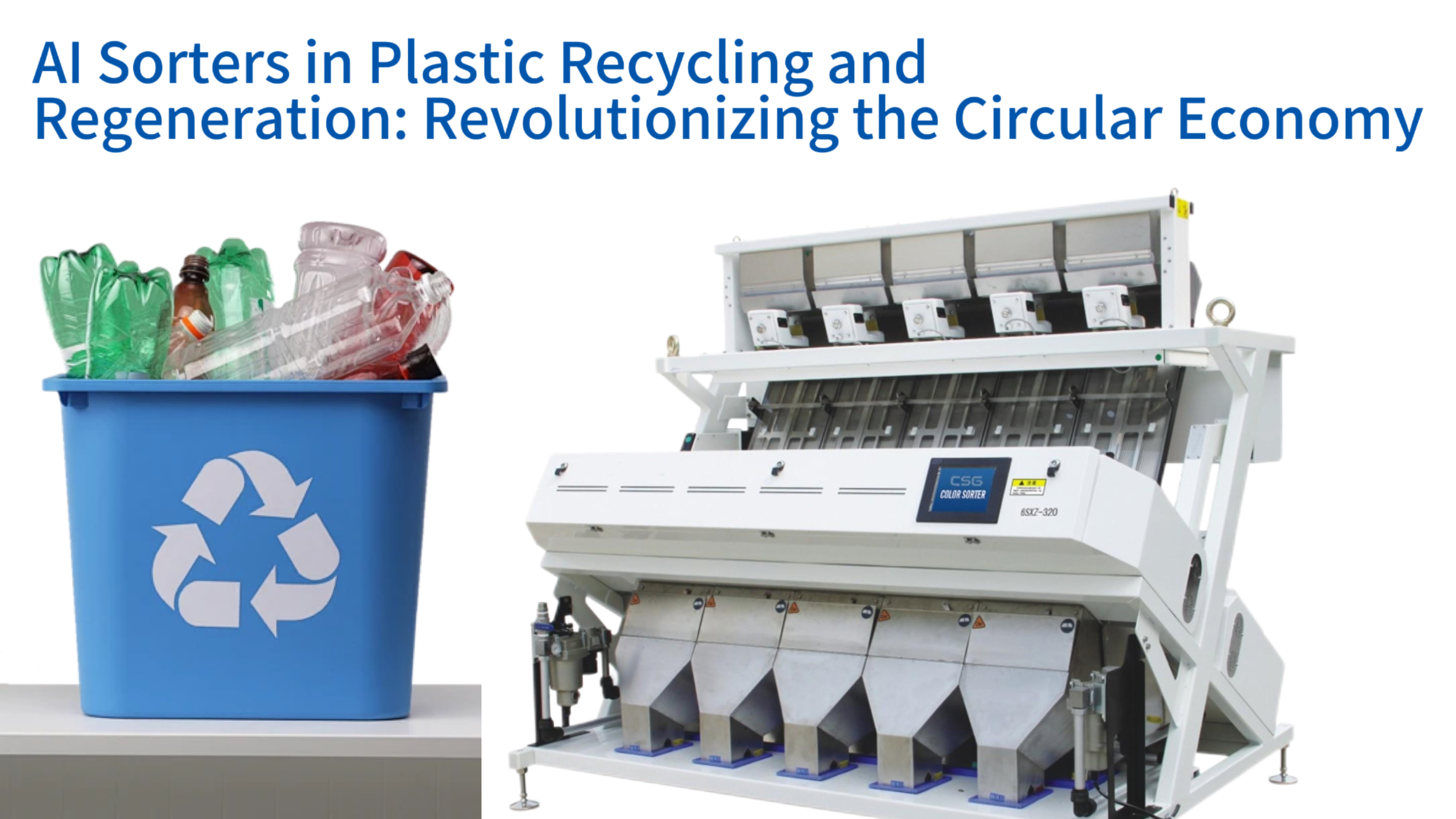
Every year, the world produces over 400 million tons of plastic, but less than 10% of it is effectively recycled. The rest ends up in landfills, oceans, or incinerators, creating a global environmental crisis. At the heart of this challenge lies a fundamental problem: how do we efficiently separate the myriad of different plastics—bottles, films, automotive parts—into pure, high-quality materials that can be used again? Traditional methods like density separation or manual picking are slow, inaccurate, and unable to handle the complexity of modern plastic waste. Enter the AI sorter. This intelligent machine combines artificial intelligence with advanced optical sensors to identify and separate plastics based on their material composition, color, and even shape, at speeds and accuracies never before possible. By transforming contaminated mixed waste into valuable pure polymers, AI sorters are the essential technology driving the transition from a linear "take-make-dispose" economy to a truly circular one for plastics.
Understanding AI Sorters: Core Definitions and Principles in Plastic Recycling
AI Sorter Core Working Principle
An AI sorter is an intelligent piece of equipment that integrates artificial intelligence with cutting-edge optical sensing systems to perform multi-dimensional inspection and classification of shredded plastic materials. Unlike older machines that could only see color, an AI sorter understands what a material is made of. It can differentiate between a polyethylene terephthalate (PET) bottle and a polyvinyl chloride (PVC) one, even if they are both transparent. This capability is crucial because different polymers have different chemical structures and melting points; mixing them ruins the quality of the recycled product. The core of the system is its ability to analyze each fragment in milliseconds, using deep learning to make decisions that were once only possible by trained human sorters, but with far greater consistency and speed.
The technology relies on a combination of sensors working together. Near-infrared (NIR) sensors identify the polymer type by analyzing how it absorbs specific wavelengths of light. High-resolution RGB cameras capture color and texture, while laser sensors can map the three-dimensional shape of each piece. All this data is fused by deep learning algorithms that have been trained on millions of images and spectral signatures of various plastics. This allows the machine to recognize subtle differences—for instance, between a piece of white polypropylene (PP) and a piece of white high-density polyethylene (HDPE)—that are invisible to the naked eye. Furthermore, these AI sorters continuously learn from the materials they process, improving their accuracy over time and adapting to new types of plastic waste as they appear in the recycling stream.
The Core Role of Near-Infrared Spectroscopy in Plastic Sorting
Sensor Technology Comparison for Plastic Sorting
| Sensor Type | Wavelength Range | Key Capability | Limitations |
|---|---|---|---|
| NIR (Near-Infrared) | 900-1700 nm | Polymer chemical identification | Poor for black plastics |
| MWIR (Mid-Wave Infrared) | 3-5 μm | Black plastic identification | Affected by air moisture |
| RGB Camera | Visible spectrum | Color & texture analysis | Cannot identify polymer type |
| Laser Profiler | Laser wavelength | 3D shape/morphology | No chemical information |
Near-infrared spectroscopy is the workhorse of modern plastic sorting. When NIR light, in the wavelength range of 900 to 1700 nanometers, shines onto a plastic fragment, specific chemical bonds like C-H, O-H, and N-H absorb energy at characteristic wavelengths. This creates a unique spectral "fingerprint" for each polymer type. PET, for example, has a distinct absorption pattern that is completely different from polypropylene (PP) or polystyrene (PS). The AI sorter captures this reflected light in real-time, compares it to a vast onboard database, and identifies the polymer in a fraction of a millisecond. This allows the machine to sort materials based on their chemistry, not just their appearance, solving the long-standing problem of separating plastics that look identical but are chemically incompatible.
The accuracy of NIR-based identification directly impacts the purity and value of the final recycled material. Modern AI sorters achieve identification accuracies of over 98% for common packaging plastics. This high level of precision is essential for producing food-grade recycled PET (rPET), which can be used to make new beverage bottles. However, NIR technology faces challenges with dark-colored plastics, which absorb too much light, and with multi-layer materials. To overcome these, advanced systems combine NIR with other technologies, such as mid-wave infrared or laser sensors, to ensure even the most challenging materials are correctly identified. For recyclers processing complex waste streams like electronic waste or automotive shredder residue, this multi-sensor approach is indispensable for recovering high-value engineering plastics like ABS and polycarbonate.
Application of Deep Learning Algorithms in Complex Plastic Identification
The real-world waste stream is incredibly messy. Plastics come in countless shapes, thicknesses, and states of degradation. They might be covered in labels, dirt, or food residue. This is where deep learning algorithms shine. Unlike traditional rule-based software, deep learning models are trained on massive datasets of labeled images and spectra. Through this training, they learn to recognize the characteristic features of different materials, even when those features are partially obscured. For instance, the algorithm can learn to distinguish between a clear PET flake and a clear PVC flake based on subtle differences in texture and light refraction, a task that is nearly impossible for a simple color sorter. This ability to understand context and subtle cues makes deep learning incredibly powerful for handling the variability of real-world plastic waste.
Another key advantage of deep learning is its adaptability. When new types of packaging enter the market—like a new bio-based plastic or a multi-material barrier film—the AI model can be updated with new training data. Operators can collect a few hundred samples of the new material, label them, and use this data to retrain the algorithm. This advanced detection capability ensures that the sorting system remains effective over time, without needing a complete hardware overhaul. The algorithms can also be fine-tuned to meet specific customer requirements, such as sorting for a particular shade of blue or rejecting flakes with a certain level of yellowing, enabling recyclers to produce customized, high-value products for specialized markets.
The Execution Principle of High-Speed Ejection Systems
Identifying a contaminant is only half the battle; the machine must then physically remove it from the product stream. This is accomplished by an array of high-speed ejector valves, typically powered by compressed air. The AI sorter's computer tracks the precise position and velocity of every single fragment as it travels on the conveyor belt or down the chute. When a targeted fragment reaches the optimal ejection point, the system fires a precisely timed and targeted blast of air. Modern ejector systems can fire thousands of times per second, with each blast lasting only a few milliseconds. This incredible speed and precision allow the machine to remove defective pieces without disturbing the good product around them, maximizing yield and purity.
The design of the ejection system is critical for both performance and efficiency. The nozzles are arranged in a dense array, often with a pitch of just a few millimeters, to ensure that even very small fragments can be individually targeted. The system can dynamically adjust the ejection pressure based on the size and weight of the material—using a gentle puff for light film fragments and a more powerful blast for thick bottle caps. This intelligent control, often managed by the same AI that performs the identification, minimizes compressed air consumption, which is a significant operational cost. By integrating high-speed ejection with precise recognition, AI sorters achieve separation efficiencies that are impossible with manual sorting or older, less accurate machinery.
Synergistic Effects of Multispectral Fusion Technology
No single sensor can capture all the information needed to perfectly sort every type of plastic. Multispectral fusion technology solves this by combining data from multiple sensors—such as NIR, RGB cameras, and laser profilers—to create a complete "fingerprint" for each object. For example, a piece of black plastic might absorb too much NIR light for polymer identification, but a laser profiler can measure its shape and surface texture, while a mid-wave infrared sensor can still capture some spectral information. By fusing all this data, the AI algorithm can make a confident identification that would be impossible with any single sensor. This synergistic approach is the key to handling the most complex and challenging waste streams.
The power of multispectral fusion is evident in applications like sorting black plastics from automotive shredder residue or removing silicone sealants from PET bottle bales. The silicone might have a similar color to the PET, but it has a completely different chemical signature that is picked up by the NIR sensor. Similarly, a piece of wood or rubber might look like a dark plastic flake, but its unique spectral and textural features are flagged by the fused data. This multi-layered analysis ensures that even low levels of contamination are detected and removed, producing a final product that meets the stringent quality demands of manufacturers. This sensor-based sorting machine approach represents the pinnacle of current sorting technology, enabling the recovery of valuable resources from materials that were previously considered unrecyclable.
Main Types of AI Sorters and Their Application Scenarios in Plastic Recycling
AI Sorter Types & Application Scenarios
Single layer material presentation
Multi-angle inspection
Gentle material handling
Vacuum hold-down for films
Whole post-consumer bottles
Plastic trays & automotive parts
Pre-sorting before shredding
E-waste engineering plastics
High-speed processing (5-10 tons/hour)
Free-flowing material design
Precision ejection of small fragments
Final purification stage
PET bottle flake purification
HDPE regrind sorting
PP granules quality control
Removal of PVC/contaminants
Space-efficient design
No moving transport parts
Final quality gatekeeper
Vertical material curtain scanning
Plastic pellet quality control
Medical-grade plastic sorting
Clear packaging resin inspection
Removal of discolored pellets
The physical form of plastic waste varies dramatically, from whole beverage bottles to tiny flakes and thin films. To handle this diversity, AI sorters come in different configurations, each optimized for a specific type of material handling. Choosing the right machine for each step of the recycling process is essential for building an efficient and profitable plant. Generally, these machines fall into three main categories: belt-type sorters for larger, irregular items; chute-type sorters for small, free-flowing granules; and free-fall sorters for final polishing of plastic pellets. By combining these different types, recyclers can create a fully automated line that transforms mixed waste into pure, market-ready commodities.
Belt-Type AI Sorters for Large and Irregular Plastic Materials
Belt-type AI sorters are the ideal solution for processing larger items like whole post-consumer bottles, plastic trays, or automotive parts. These machines use a wide, flat conveyor belt to transport the material in a single, stable layer past the inspection zone. The belt ensures that items are presented consistently, without tumbling or overlapping, which is crucial for accurate imaging. This design allows for inspection from multiple angles, ensuring that labels or contaminants on the bottom of a bottle are also detected. For a plastic recycler, a belt sorter is often the first step in the process, used to sort whole bottles by color and material before they are shredded. This pre-sort greatly simplifies downstream processing and improves the quality of the final flake.
The gentle handling provided by belt sorters is particularly important for fragile or valuable items. For example, when sorting engineering plastic components from e-waste, preventing breakage helps maintain the value of the material. Belt sorters can also be equipped with special features like vacuum hold-downs to keep thin, flexible items like film or labels flat on the belt, ensuring they are properly scanned. By integrating a belt-type AI sorting machine at the beginning of a recycling line, operators can remove large contaminants, sort by major polymer groups, and significantly increase the capacity and efficiency of the entire plant. This upfront sorting reduces the load on downstream equipment and ensures that only the right materials proceed to the more delicate stages of separation.
Chute-Type AI Sorters for Plastic Flakes and Granules
Once plastic bottles or parts have been shredded into small flakes, the next stage of purification typically employs a chute-type AI sorter. These machines are designed for high-speed, high-volume processing of free-flowing granular materials. The flakes are fed into a series of narrow, inclined chutes and accelerate as they slide down. At the bottom of the chute, they pass through an inspection zone where NIR sensors and cameras scan every single particle. This design allows for processing rates of 5 to 10 tons per hour, making it ideal for large-scale recycling operations. The high-speed scanning ensures that even small defects, like a single colored flake in a stream of clear PET, are detected and can be ejected.
Chute sorters are the workhorses of the plastic recycling industry, used for final purification of materials like PET bottle flake, HDPE regrind, and PP granules. They are critical for removing residual contaminants such as PVC labels, aluminum cap fragments, and flakes of the wrong color. By passing the material through one or more stages of chute sorting, recyclers can achieve the high purities required for demanding applications, including food-grade packaging. The precision of these chute-type AI sorting machines directly translates into higher selling prices for the recycled material, making them a vital investment for any company aiming to produce premium recycled polymers.
Free-Fall AI Sorters for Online Quality Control of Plastic Pellets
After plastic flakes are melted and extruded into pellets, a final quality check is often performed by a free-fall AI sorter. This compact machine is designed to be integrated directly into the production line, typically just before the packaging station. The pellets are dropped from a height, creating a thin, vertical curtain of material. As they fall, they pass through an optical scanning system that inspects them for any remaining defects, such as discolored pellets, "angel hair" (fine strings of plastic), or black specks caused by thermal degradation. The machine then uses precisely aimed air jets to eject any off-spec pellets from the stream. This final step ensures that only perfect, uniform pellets are shipped to customers.
The free-fall design is space-efficient and has no moving parts for material transport, which simplifies maintenance and cleaning. It is particularly valuable for producing high-value materials like medical-grade plastics or clear packaging resins, where any contamination is unacceptable. By acting as the final gatekeeper, the free-fall sorter provides manufacturers with the confidence that their product meets the highest quality standards. This plastic pellet sorting machine is an essential tool for companies looking to compete in the premium recycled plastics market, where purity and consistency are paramount.
Core Functions of AI Sorters in the Plastic Recycling Sector
Modern AI sorters are not just simple separators; they are sophisticated material processing centers capable of performing a wide range of functions. These core functions—from identifying polymer types to sorting by color and removing contaminants—work together to transform complex, mixed waste into pure, high-value streams. By understanding and leveraging these functions, recyclers can tailor their processes to produce materials that meet the exact specifications of different downstream industries, from packaging to automotive. The versatility of AI sorters allows them to handle everything from common packaging plastics to rare engineering resins.
Precise Identification and Separation of Polymer Types
The most fundamental function of an AI sorter in plastic recycling is to separate materials based on their polymer type. Using NIR technology, the machine can instantly identify common plastics like PET, HDPE, PP, PS, PVC, ABS, and PC. This allows a recycler to take a mixed stream of, for example, post-consumer bottles and separate it into individual, pure streams of clear PET, blue PET, natural HDPE, and colored HDPE. Each of these pure streams has a much higher market value than a mixed bale. The precision of this identification is critical; a small amount of PVC contamination in a PET bale, for instance, can ruin an entire melt and lead to costly quality issues for the end-user.
This function extends beyond packaging plastics into more specialized areas. In recycling electronic waste, AI sorters can distinguish between different engineering plastics like ABS, HIPS, and PC/ABS blends. These materials are chemically different and must be separated to produce high-quality recyclates. The sorter's ability to recognize these polymers, even when they contain flame retardants or other additives, is key to unlocking the value locked in e-waste. For automotive recycling, the machine can identify PP compounds, ABS, and polyamide (nylon) from shredder residue, enabling the recovery of materials for use in new car parts. This ABS sorting machine capability helps create a true circular economy for high-performance plastics.
Color Sorting and Transparency Control
Color is a major factor determining the value and application of recycled plastic. Clear, transparent materials are the most valuable, as they can be used in a wide range of products, including new food-grade packaging. AI sorters use high-resolution RGB cameras to capture the true color of each plastic fragment with a resolution down to 0.1mm. This allows them to perform incredibly fine color separations, such as splitting mixed PET bottles into clear, light blue, dark blue, and green fractions. This detailed sorting allows recyclers to maximize revenue by selling each color stream to the appropriate market—clear for bottles, green for strapping, and mixed colors for lower-value applications like fiberfill.
Transparency control is a related function that goes beyond simple color. The AI can assess the degree of clarity or opacity of a material. For example, in a stream of PP from post-consumer packaging, the sorter can separate high-clarity transparent PP (used for food containers) from opaque or colored PP (used for caps or other items). This level of differentiation allows recyclers to produce a premium, high-clarity recycled PP that can compete with virgin material in many applications. By integrating a dedicated color sorter into their line, companies can significantly upgrade the quality and value of their output.
Efficient Removal of Contaminants and Impurities
Plastic waste is never 100% pure. It always contains a certain amount of non-plastic contaminants like metal, glass, paper, wood, rubber, and textiles. These materials must be removed because they can damage processing equipment (like shredders and extruders) and ruin the quality of the final recycled plastic. AI sorters are exceptionally good at detecting and ejecting these foreign objects. Metal contaminants, even small fragments, can be detected by their distinct spectral signature or by integrated metal detectors. Wood and paper, which have different chemical compositions, are easily identified by NIR sensors and rejected. This multi-pronged approach ensures that the final product is free from physical contaminants that could cause problems for manufacturers.
The removal of "problem" contaminants like silicone, hot-melt adhesives, and PVC is a particular strength of AI sorters. These materials are often present in small amounts but have a disproportionately large negative impact on the quality of recyclate. For instance, a single PVC label in a bale of PET can cause the entire batch to be downgraded. AI sorters, using advanced spectral analysis, can identify these materials even in small quantities and reliably eject them. This x-ray sorter technology, often used in conjunction with NIR, can also detect dense contaminants like metal or glass that might be hidden within a flake. By rigorously removing all types of impurities, AI sorters enable the production of high-purity recyclates suitable for demanding applications.
Black Plastic Recognition and Sorting
Black plastics, widely used in automotive parts, electronics, and food trays, have long been a nightmare for recyclers. The carbon black pigment used to color them absorbs virtually all visible and near-infrared light, rendering traditional optical sorters blind to them. This has meant that millions of tons of valuable black plastic have historically been sent to landfill or incineration. However, advances in sensor technology, specifically mid-wave infrared (MWIR) and laser-based systems, have finally provided a solution. AI sorters equipped with MWIR sensors can "see" through the black surface and detect the underlying molecular signature of the polymer, allowing them to distinguish between black PP, black ABS, and black PE.
This breakthrough is transforming the economics of recycling for industries like automotive and electronics, where black plastics are dominant. Using an AI sorter with this capability, a recycler can now process black plastic waste and produce pure streams of different polymers, dramatically increasing their value. For example, black ABS from old televisions can be separated from black PP from car bumpers, and each can be sold for a premium price to compounders who can use them to make new products. The development of specialized black plastic sorting machines is a major step forward in closing the loop on these challenging materials and reducing the environmental impact of plastic waste.
Sorting of Thin Films and Flexible Packaging
Plastic films and flexible packaging, such as shopping bags, shrink wrap, and agricultural film, represent a large and growing portion of plastic waste. However, their light weight, tendency to tangle and cling, and often mixed-material composition make them extremely difficult to sort using conventional equipment. AI sorters are now being deployed to tackle this challenge. Specialized belt-type sorters with vacuum belts can hold the film flat against the conveyor, preventing it from curling up and ensuring that it passes through the inspection zone in a consistent manner. Advanced illumination, such as backlighting, helps to reveal the edges and features of transparent films, enabling the AI to identify the material type.
The ability to sort films by polymer type—for instance, separating polyethylene (LDPE/LLDPE) films from polypropylene (PP) films—is crucial for producing high-quality film recyclates. Sorted PE film can be reprocessed into new garbage bags or construction film, while sorted PP film can be used for injection molding applications. Furthermore, AI sorters can remove contaminants from film streams, such as paper labels, tape, and other non-film materials. By successfully tackling the challenge of film sorting, these film plastic sorting machines are helping to divert a massive waste stream from landfills and turn it into a valuable resource, supporting the transition to a circular economy for all types of plastics.
Main Plastic Types Processed by AI Sorters and Application Scenarios
Plastic Types & Recycling Value Comparison
| Plastic Type | Main Applications | Key Sorting Challenge | Recycled Product |
|---|---|---|---|
| PET | Beverage bottles, food packaging | PVC contamination | New bottles, fiber, strapping |
| HDPE/PP | Containers, films, automotive parts | Similar density separation | Pipes, crates, automotive parts |
| ABS/PC | Electronics, automotive components | Flame retardant additives | Engineering components |
| Black Plastics | Automotive parts, electronics | NIR light absorption | New automotive components |
AI sorters are versatile tools capable of handling a wide spectrum of plastics, from the most common packaging materials to high-value engineering resins. Understanding the specific requirements and challenges associated with each plastic type is key to optimizing the sorting process and maximizing material value. The following sections detail how AI sorters are applied to some of the most important plastic waste streams in the recycling industry today.
AI Sorters in PET Bottle Recycling
PET (polyethylene terephthalate) bottles for beverages, water, and other liquids represent one of the most successful and widespread recycling streams globally. AI sorters play a pivotal role in both the pre-sorting of whole bottles and the final purification of PET flakes. In the first stage, a belt-type AI sorter scans whole bottles as they come from a material recovery facility (MRF). It identifies bottles by their polymer type (rejecting any non-PET bottles like PVC or PLA) and sorts them by color—clear, light blue, green, and mixed colors. This pre-sorting significantly improves the efficiency of the downstream washing and flaking process and reduces the amount of dye needed later.
After the bottles are washed and ground into flakes, chute-type AI sorters take over for final purification. These machines perform a second, more detailed inspection, removing any remaining fragments of PVC labels, PP or PE caps, aluminum, and colored flakes. Through multiple stages of sorting, the purity of the PET flakes can be raised to over 99.9%, meeting the stringent standards required for food-grade applications. This high-purity rPET can then be used to produce new beverage bottles, achieving true "bottle-to-bottle" circularity. The precision of PET sorting machines is the critical link that allows this valuable material to remain in the economy rather than becoming waste.
AI Sorters in Polyolefin (PE/PP) Recycling
Polyolefins—polyethylene (PE) and polypropylene (PP)—are the most produced plastics in the world, used in everything from packaging films and bottles to automotive parts and household goods. Their similar densities make them difficult to separate using traditional sink-float methods, but AI sorters with NIR technology can differentiate them with ease. This is crucial because mixing PE and PP degrades the mechanical properties of the recycled material. AI sorters are used to separate mixed polyolefin streams into pure PE and pure PP, each of which can be sold into different markets—PE for film and blow molding, PP for injection molding and automotive applications.
Within the polyolefin category, AI sorters also perform valuable color sorting. For example, in recycling HDPE milk and water bottles, the machine separates the natural (white/translucent) bottles from colored ones. The natural HDPE commands a much higher price because it can be used in a wider range of applications. Similarly, in PP recycling, clear food-grade PP containers can be separated from colored packaging. This ability to produce high-purity, color-sorted polyolefin streams is essential for meeting the demanding specifications of manufacturers who want to incorporate recycled content into their products. Advanced PP sorting machines are helping to drive the circular economy for these ubiquitous materials.
AI Sorters in Engineering Plastics Recycling
Engineering plastics like ABS, PC, PA (nylon), and POM are high-performance materials used in durable goods such as electronics, automotive components, and appliances. They have high inherent value, but their recycling is challenging due to the variety of grades, the presence of additives (like flame retardants or glass fibers), and the complexity of dismantling end-of-life products. AI sorters equipped with advanced NIR sensors and specialized spectral libraries are now able to identify and sort these engineering plastics from complex waste streams like e-waste shredder residue and automotive shredder residue (ASR). This capability is unlocking a new source of high-quality recycled materials.
The ability to sort engineering plastics by both polymer type and grade is particularly important. For instance, an AI sorter can distinguish between flame-retardant ABS (used in electronics) and non-flame-retardant ABS (used in automotive), allowing each to be recycled separately into appropriate applications. It can also separate ABS from its close cousin HIPS (high-impact polystyrene), which are often found together in e-waste. By producing pure streams of these valuable polymers, recyclers can sell them at prices close to virgin materials, making the recycling of complex durable goods economically viable. These PCB sorting machine applications often integrate AI sorting to recover plastics from shredded circuit boards as well.
AI Sorters in Automotive Shredder Residue (ASR) Recycling
Automotive shredder residue, or ASR, is the complex mixture of materials left over after ferrous and non-ferrous metals have been recovered from shredded end-of-life vehicles. ASR typically contains a mix of plastics (PP, PE, ABS, PU foam), rubber, textiles, glass, and dirt. Traditionally, this material has been landfilled. However, with advanced AI sorting, it is now possible to recover valuable plastics from this challenging stream. The process typically involves several stages of sorting, including density separation to remove heavy materials, followed by AI-based NIR sorting to identify and recover specific polymers like PP and ABS.
Sorting ASR presents unique difficulties. The plastics are often heavily contaminated with dirt, oil, and other residues, and they may be degraded by age and UV exposure. Furthermore, many automotive plastics are black, requiring the use of advanced MWIR or laser sensors for identification. Despite these challenges, AI sorters are proving effective at recovering high-quality polypropylene (often from bumpers and interior trim) and ABS (from dashboards and other components). The recovered materials can be used to produce new automotive parts or other durable goods, significantly reducing the environmental footprint of the automotive industry. By applying these industrial waste sorting machines to ASR, recyclers are turning a costly waste problem into a valuable resource stream.
Detailed Sorting Principles and Technical Mechanisms of AI Sorters
The seemingly magical ability of an AI sorter to pick one type of plastic from a fast-moving stream of mixed fragments is the result of a sophisticated interplay of physics, optics, and computer science. Understanding the underlying principles—from molecular spectroscopy to 3D imaging—helps to appreciate the precision and power of these machines. Each technology addresses a different aspect of the identification challenge, and together they form a comprehensive system for material analysis.
Principles of Polymer Identification via Near-Infrared Spectroscopy
The foundation of most plastic sorting is near-infrared (NIR) spectroscopy. This technique exploits the fact that molecules vibrate at specific frequencies. When illuminated with NIR light (wavelengths from about 780 to 2500 nanometers), the chemical bonds in a plastic—such as C-H (carbon-hydrogen), O-H (oxygen-hydrogen), and N-H (nitrogen-hydrogen)—absorb energy at characteristic wavelengths. This absorption creates a unique spectral pattern, a molecular "fingerprint," for each type of polymer. PET, for example, has a strong absorption feature related to its ester bonds, while PP has a very different pattern due to its simple hydrocarbon chain. The AI sorter shines NIR light onto each fragment, measures the intensity of the reflected light across many wavelengths, and compares the resulting spectrum to a library of known plastic signatures to make an identification.
The accuracy of this identification depends on several factors. The cleanliness and surface condition of the plastic can affect the signal. Dark colors, especially black, absorb most of the NIR light, making the spectral signal very weak. Complex materials like multi-layer packaging or plastics containing high levels of additives can produce mixed spectra that are harder to interpret. To overcome these challenges, modern sorters use advanced signal processing algorithms, such as principal component analysis, to extract the most relevant information from the spectral data. They also integrate data from other sensors, like NIR sorters with enhanced sensitivity, to improve identification rates for difficult materials. The result is a real-time, non-destructive analysis that can keep pace with industrial-scale material flows.
Principles of Color Recognition via Multispectral Imaging
While NIR tells us what a material is made of, color sorting determines its visual appearance and, consequently, its market value. AI sorters use high-resolution, multispectral imaging systems for this task. Unlike a standard RGB camera that captures just red, green, and blue light, a multispectral system can capture images in several specific, narrow wavelength bands across the visible and sometimes near-infrared spectrum. This allows the sorter to be highly sensitive to subtle color differences. For example, it can easily distinguish between a light blue PET bottle and a dark blue one, or detect the yellowing that indicates polymer degradation. By analyzing the intensity of light in each spectral band for every pixel in the image, the AI builds a detailed color profile for each fragment.
The lighting system is just as important as the camera. To ensure consistent and accurate color measurement, AI sorters use powerful, high-frequency LED lights that provide a stable and uniform illumination. For transparent or translucent materials, backlighting is often used to highlight the internal color and any defects. For highly reflective or metallic materials, diffuse lighting is employed to minimize glare and hotspots. The combination of advanced cameras and optimized lighting allows the AI to capture true-color images at a resolution down to 0.1mm, enabling it to detect tiny specks of contamination or small areas of discoloration. This optical sorter technology is essential for producing visually consistent, high-quality recycled plastic products.
Principles of 3D Morphology and Structure Analysis
Beyond chemical composition and color, the physical shape and structure of a plastic fragment can provide valuable sorting clues. AI sorters are increasingly incorporating 3D analysis capabilities using technologies like laser profilometry and stereo vision. A laser profilometer projects a line of laser light onto the passing material and measures the distortion of that line as it scans across the surface. This allows the system to build a precise height profile of each fragment, revealing its thickness, contours, and overall three-dimensional shape. Stereo vision, using two cameras slightly offset, can also be used to reconstruct a 3D model of the object.
This 3D information is used for several purposes. It can help distinguish between thick-walled bottle fragments and thin-walled film fragments, even if they are the same color and polymer. It can identify parts with complex geometries, such as specific automotive components, based on their shape. It can also detect broken or damaged fragments, which can be separated out if they are not desired in the final product. Furthermore, shape analysis can help to differentiate between a solid piece of plastic and a hollow one (like a bottle preform), which might have different processing characteristics. By adding this precision acceleration of data, the AI gains a much more complete understanding of the material it is sorting.
Principles of Black Plastic Identification via Mid-Wave Infrared Technology
As mentioned, black plastics pose a unique challenge because the carbon black pigment absorbs both visible and near-infrared light. To solve this, advanced AI sorters employ mid-wave infrared (MWIR) technology, which operates in the 3 to 5 micrometer wavelength range. In this range, the absorption by carbon black is significantly reduced, allowing the characteristic absorption bands of the polymer's molecular vibrations to become detectable. While the signal is still weaker than for lighter colors, it is sufficient for the AI to identify the underlying polymer—whether it is black PP, black ABS, black PE, or another material. This technology essentially allows the sorter to "see through" the black color to the material itself.
Implementing MWIR sorting requires careful engineering to overcome environmental interference. Water vapor and carbon dioxide in the air also absorb MWIR light, which can corrupt the signal. Sorters use sophisticated techniques like referencing and background subtraction to isolate the signal coming from the plastic. They may also combine MWIR with other sensors, such as laser scatter sensors, to gather complementary information about the surface texture and reflectance. The integration of MWIR technology into laser sorter systems has been a game-changer, finally providing a viable method for recycling the millions of tons of black plastic waste that were previously unrecoverable, thereby closing the loop on these materials.
Core Value and Return on Investment for Plastic Recycling Companies
AI Sorter ROI Analysis for Plastic Recycling Facilities
| Metric | Manual Sorting | Traditional Optical Sorting | AI-Powered Sorting |
|---|---|---|---|
| Labor Cost | $25-35/ton | $8-12/ton | $2-4/ton |
| Material Purity | 70-85% | 85-92% | 98-99.9% |
| Material Value Increase | Baseline | +15-25% | +40-60% |
| Typical Payback Period | N/A | 2-3 years | 12-18 months |
| Capacity (tons/hour) | 0.5-1 | 3-5 | 5-10 |
For plastic recycling companies, the investment in AI sorters is not just a technological upgrade but a strategic business decision with tangible financial returns. The core value of these machines lies in their ability to simultaneously reduce operating costs and increase revenue by producing higher-quality, more valuable recycled materials. While the upfront capital expenditure for an AI sorter is higher than for traditional sorting equipment, the return on investment (ROI) is typically achieved within 12 to 18 months for medium to large-scale facilities, making it one of the most attractive investments in the recycling sector.
Cost Reduction Through Automation and Efficiency
The most immediate financial benefit of AI sorters is the dramatic reduction in labor costs. Manual sorting is labor-intensive, requiring teams of workers to stand at conveyor belts for hours, picking contaminants from plastic streams. Labor costs for manual sorting typically range from $25 to $35 per ton of material processed. AI sorters automate this entire process, reducing labor costs to just $2 to $4 per ton—a reduction of over 90%. This alone can represent millions of dollars in annual savings for a facility processing 10,000 tons or more per month.
Beyond labor, AI sorters reduce costs through increased operational efficiency. These machines can operate 24 hours a day, 7 days a week, with minimal downtime for maintenance—far exceeding the capacity of human sorters, who require breaks, shift changes, and time off. AI sorters also process material at much higher rates (5-10 tons per hour for chute-type machines) compared to manual sorting (0.5-1 ton per hour per worker), increasing overall facility throughput without corresponding increases in floor space or overhead costs. The precision of AI sorting also reduces waste—fewer good materials are mistakenly rejected, and fewer contaminants are passed through to downstream processes, reducing the cost of reprocessing or disposing of contaminated batches.
Revenue Enhancement Through Higher Material Quality and Value
The second major source of ROI for AI sorters is the significant increase in the value of the recycled material produced. Purity is the single most important factor determining the market price of recycled plastic. A bale of mixed PET might sell for $300 per ton, while a bale of 99.9% pure clear PET can sell for $600 to $800 per ton—doubling the revenue per ton of material. AI sorters consistently achieve purities of 98% or higher, compared to 70-85% for manual sorting and 85-92% for traditional optical sorters. This ability to produce food-grade or industrial-grade recyclates opens access to premium markets that were previously unavailable to many recyclers.
AI sorters also enable recyclers to capture value from materials that were previously unrecyclable or low-value. Black plastics, for example, historically had little to no market value, but with MWIR-equipped AI sorters, they can now be sorted into pure streams of black PP, ABS, or PE and sold at premium prices to automotive and electronics manufacturers. Similarly, the ability to separate mixed polyolefins (PE and PP) into pure streams allows recyclers to sell each material at its full market value, rather than selling a mixed stream at a steep discount. By unlocking these high-value markets, AI sorting ROI is further enhanced, creating a sustainable competitive advantage for forward-thinking recycling companies.
Long-Term Strategic Value and Market Positioning
Beyond direct financial returns, AI sorters provide significant long-term strategic value. As governments around the world implement stricter recycling regulations and extended producer responsibility (EPR) laws, the ability to produce high-quality recycled materials will become a requirement for doing business, not just a competitive advantage. Companies that invest in AI sorting technology today are positioning themselves to comply with future regulations and capture the growing market for recycled content, which is being driven by consumer demand and corporate sustainability commitments.
AI sorters also future-proof recycling facilities against changes in the waste stream. As new types of plastics and packaging enter the market, the adaptive nature of AI algorithms allows sorters to be updated with new training data, rather than requiring expensive hardware replacements. This flexibility ensures that recycling facilities can continue to process emerging materials and maintain their competitiveness in a rapidly evolving industry. For these reasons, AI sorters are not just a piece of equipment but a core strategic asset that drives both immediate profitability and long-term business resilience in the circular economy.
Future Trends and Technological Developments in AI Plastic Sorting
The field of AI plastic sorting is evolving rapidly, driven by advances in sensor technology, machine learning algorithms, and the growing imperative to create a fully circular economy for plastics. Several key trends are shaping the future of this technology, promising even higher levels of efficiency, accuracy, and versatility in the years to come.
Integration of AI with Robotics and Material Handling
The next frontier in plastic sorting is the integration of AI vision systems with robotic arms for precise material handling. While current AI sorters use air jets for ejection, future systems will combine computer vision with collaborative robots (cobots) that can physically grasp and separate individual items with micron-level precision. This hybrid approach will be particularly valuable for sorting complex, irregular items like automotive parts, electronic components, or large plastic pieces that are difficult to process with traditional sorters. The robots can adapt their grip and handling based on the size, shape, and fragility of each item, reducing breakage and increasing recovery rates for high-value engineering plastics.
Continuous Learning and Real-Time Adaptation
Future AI sorting systems will move beyond static training datasets to continuous, real-time learning. These "self-learning" sorters will use edge computing and cloud connectivity to share data across multiple facilities, allowing the AI to learn from millions of data points every day. When a new type of plastic is encountered at one facility, the algorithm can be updated and shared with all connected sorters within hours, rather than requiring weeks of manual retraining. This collective intelligence will dramatically improve the ability of sorters to handle the constant evolution of packaging materials and ensure that no valuable plastic is left unrecognized.
Hyperspectral Imaging and Quantum Sensors
Advancements in hyperspectral imaging—capturing hundreds of narrow wavelength bands across the electromagnetic spectrum—will provide even more detailed chemical information about plastic materials. This will enable the identification of not just polymer types but also specific additives, fillers, and contaminants at the molecular level. In the longer term, quantum sensors may revolutionize plastic sorting by providing unprecedented sensitivity and speed, allowing for the detection of trace contaminants (parts per million) that currently escape detection. These advanced sensing technologies will push the purity of recycled plastics even higher, potentially reaching 99.99% or better, opening new applications in medical, aerospace, and other high-precision industries.
Digital Twin Technology for Process Optimization
Digital twin technology—creating a virtual replica of a physical sorting system—will enable real-time optimization of AI sorter performance. By simulating the behavior of different materials, sensor settings, and ejection parameters in a virtual environment, operators can fine-tune the system for maximum efficiency and purity without disrupting production. Digital twins will also allow for predictive maintenance, identifying potential equipment failures before they occur and scheduling maintenance during off-peak hours, further increasing uptime and reducing operational costs. This integration of physical and digital systems represents the next level of smart manufacturing in the recycling industry.
Conclusion: AI Sorters as the Cornerstone of the Circular Plastic Economy
AI sorters have emerged as the indispensable technology driving the transformation of the plastic recycling industry from a low-efficiency, low-value operation to a high-tech, high-value cornerstone of the circular economy. By combining advanced sensor technology with powerful machine learning algorithms, these systems solve the fundamental challenge of plastic recycling: efficiently separating complex mixed waste into pure, high-quality materials that can be reused in new products. The impact of AI sorters extends far beyond individual recycling facilities—they are enabling a fundamental shift from a linear "take-make-dispose" model to a truly circular system where plastic waste is no longer a problem but a valuable resource.
The economic benefits of AI sorters—reduced labor costs, increased material value, and improved operational efficiency—are clear and measurable, with typical payback periods of just 12 to 18 months. But their true value lies in their ability to unlock the full potential of plastic recycling, making it economically viable to recover materials that were previously destined for landfills or incineration. As technology continues to advance, AI sorters will become even more capable, adaptable, and integrated into the broader recycling ecosystem, further closing the loop on plastic waste.
For the planet, AI sorters represent a critical tool in the fight against plastic pollution and climate change. By increasing the effective recycling rate of plastics from less than 10% to potentially 50% or more, these machines reduce the need for virgin plastic production (which is highly carbon-intensive) and prevent millions of tons of plastic from entering the environment each year. In this way, AI sorters are not just good for business—they are essential for creating a sustainable future where plastic is used responsibly, recycled effectively, and kept in the economy for as long as possible.