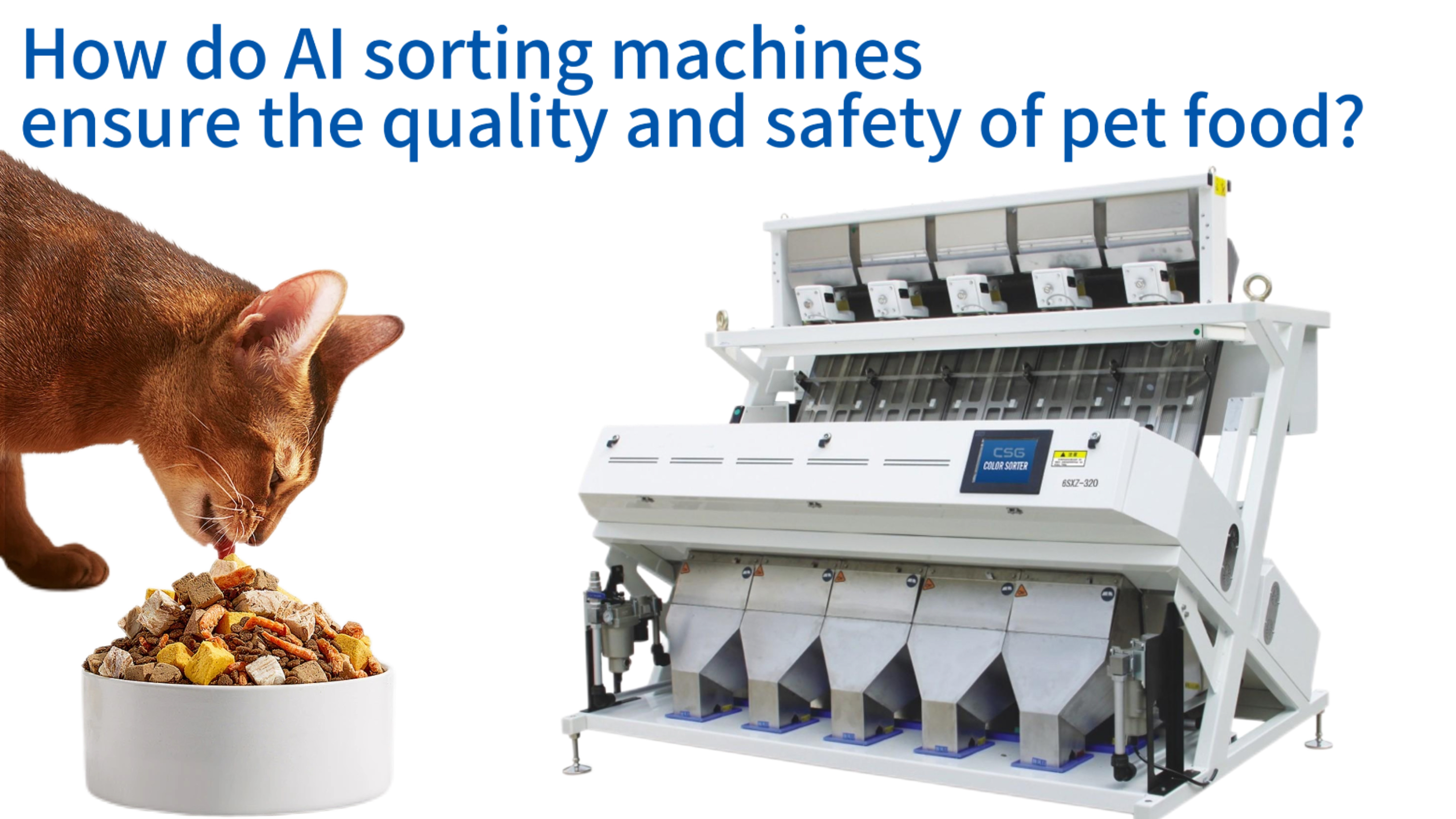
Have you ever wondered how the kibble in your dog's bowl is made? Or how manufacturers ensure that every piece of pet food is safe and free from harmful objects? An AI sorter is a revolutionary piece of technology that acts as a super-powered, intelligent eye for the factories that make pet food. Unlike older machines that could only see simple colors, an AI sorter uses advanced artificial intelligence to learn and identify everything from the perfect piece of freeze-dried chicken to tiny stones or plastic fragments. This technology is crucial because, just like the food we eat, pet food must be pure and nutritious. With over 600 million cats and 900 million dogs living as pets around the world, the demand for high-quality, safe food is massive . This page will explore how AI sorters work, the different types used in the industry, the incredible things they can detect, and how they ultimately protect the health of our furry friends while helping manufacturers produce better food.
Understanding the Basics: What is an AI Sorter and How Does It Think?
How AI Sorters "Think" and Operate
1. Image Capture
Thousands of images/second
2. AI Analysis
Shape/Texture/Size/Structure
3. Decision Making
Accept/Reject (Milliseconds)
4. Continuous Learning
Self-optimizing accuracy
Performance Metrics: Process several tons/hour | Trained on millions of images | >98% accuracy for material identification
At its core, an AI sorter is a smart machine that integrates artificial intelligence with advanced optical sensors to inspect and sort items at incredible speeds. Think of it as a high-definition camera combined with a supercomputer. The machine takes thousands of images per second as pet food ingredients or finished kibble flows past it. But instead of just looking for a specific color, the AI uses deep learning algorithms to analyze the material's characteristics—its shape, texture, size, and even its internal structure . This is a massive leap forward from traditional color sorters, which could easily be fooled by items that were the same color but different in composition, like a piece of white plastic mixed in with white rice.
The "intelligence" part of an AI sorter comes from its ability to learn and improve over time. Engineers initially "train" the machine by showing it millions of images of both good and bad products . For example, they might show it thousands of pictures of perfect, healthy kernels of corn and thousands of pictures of corn that is moldy, broken, or has a stone mixed in. The AI builds a digital understanding of what to accept and what to reject. As the machine processes more material on the factory floor, it continuously refines its recognition patterns, becoming even more accurate. This self-optimizing capability makes it exceptionally valuable for complex tasks, like distinguishing between different types of grain to ensure a gluten-free product remains pure . This entire process happens in milliseconds, allowing the machine to process several tons of food every single hour.
The Main Types of AI Sorters and Where They Work Best
AI Sorter Types: Features & Performance
Just as you use different tools for different jobs, factories use different types of AI sorters depending on the kind of pet food being made. The three most common types are belt-type sorters, chute-type sorters, and free-fall sorters, each designed to handle specific materials gently and efficiently. The choice of machine depends on whether the food is a delicate, irregularly shaped treat or a hard, tiny piece of kibble. These machines are often integrated with other material handling systems to create a seamless and highly efficient production line .
Belt-Type AI Sorters: The Gentle Giant for Delicate Treats
Belt-type AI sorters are the perfect solution for handling fragile or oddly shaped pet food items. Imagine trying to sort delicate, airy freeze-dried raw meat chunks or soft, chewy jerky strips. If you dropped these items down a chute, they might break or crumble. A belt sorter solves this problem by gently carrying the food on a flat, wide conveyor belt. The belt-type AI sorting machine moves the product in a smooth, single layer past the sensors. This stability allows for incredibly clear images and a thorough inspection from all sides. Because the transport is so gentle, the number of broken pieces during sorting is dramatically reduced, which is especially important for high-value products like functional treats or special dietary additions. This method ensures that every delicate morsel arrives at its destination intact and perfectly inspected.
The versatility of belt sorters extends beyond just pet food. They are also widely used in other industries, such as recycling, to sort mixed materials like plastics and metals. In the context of pet food, however, their primary role is to protect the product's integrity while ensuring the highest level of quality. Some advanced belt sorters can even integrate multiple technologies, combining cameras, lasers, and metal detectors all in one machine . This "3-in-1" approach saves valuable factory floor space and provides a comprehensive inspection in a single pass, catching everything from color deviations to tiny metal fragments that could be harmful to a pet.
Chute-Type AI Sorters: The Speed Demon for Dry Kibble
For the millions of tons of dry, crunchy kibble produced every year, the chute-type AI sorter is the workhorse of the industry. This machine is designed for high-speed, high-volume processing of granular items that flow easily, like extruded kibble or individual grains of rice. In a chute sorter, the product is fed into a series of narrow channels or slides. As the kibble flows down these chute-type AI sorting machine slides, it accelerates and passes through a powerful inspection zone. High-resolution cameras and sensors capture images of every single piece as it falls, analyzing its color, shape, and size in a split second. This method is incredibly efficient, with a single machine capable of processing between 5 and 10 tons of product per hour.
If the AI detects a defective piece—perhaps a discolored, burnt, or broken kibble—it triggers a precise blast of compressed air from a high-speed ejection system. This puff of air is so fast and accurate that it kicks the bad piece out of the stream without affecting the good pieces around it. This technology is critical for maintaining a consistent, high-quality appearance in the final product, which is something pet owners have come to expect. It's also the final line of defense against any cross-contamination, ensuring that when a factory switches from making one recipe to another, any stray kibbles from the previous batch are removed before they can be packaged .
Free-Fall Sorters: The Compact Final Checkpoint
As its name suggests, a free-fall sorter relies on gravity to move the product. This type of machine has a very compact, vertical design that is easy to integrate into an existing production line, often right before the packaging stage. Pet food, typically kibble or small treats, is dropped from a height, creating a thin, controlled curtain of falling material. As the pieces fall, they pass through an optical scanning system that inspects them from all sides. This design is space-efficient and has no moving parts for conveying the product, which simplifies maintenance. The advanced detection systems in these sorters are highly effective at finding and removing lightweight contaminants that other methods might miss.
This final sorting step acts as a crucial quality checkpoint. After the product has been dried, cooled, and coated with flavors, it makes one last trip through the free-fall sorter. This ensures that any foreign objects that might have been introduced in the final stages of production, or any pieces that were damaged during handling, are removed before the food goes into the bag. By effectively removing these final contaminants, the free-fall sorter gives manufacturers and pet owners alike the confidence that the food inside the package is exactly as it should be: safe, pure, and ready for the bowl.
The Superpowers of an AI Sorter: What It Can Detect and Remove
Contaminant Detection Breakdown
Removal Rate
AI Sorter Detection Capabilities
The true magic of an AI sorter lies in its "superpowers"—the specific abilities that go far beyond what the human eye or older machines can do. These machines are equipped with a suite of advanced sensors that act like different sets of eyes, each one tuned to see a different reality. By combining these visions, an AI sorter can analyze not just the surface of a piece of food, but also its chemical makeup and internal structure. This multi-faceted inspection is what guarantees the safety and consistency of modern pet food.
Finding Hidden Dangers: Precision Removal of Foreign Objects
The most critical job of any sorter is to protect pets from physical harm. AI sorters are incredibly effective at identifying and removing a wide range of hard, inedible objects that can accidentally get mixed into the raw materials. These include dangerous items like metal shards, glass fragments, and small stones . In the past, a small piece of metal or glass could go unnoticed until it ended up in a pet's bowl. Today, AI sorters can spot these dangers, even if they are very small or hidden amongst similar-looking food. By removing these hard contaminants, the sorter not only protects the animal but also safeguards downstream equipment like grinders and mixers from costly damage, reducing factory maintenance and downtime.
But the dangers aren't just hard and heavy. Lightweight contaminants pose a different kind of challenge. Things like plastic film, bits of paper, string, or even hairnets from factory workers can sometimes find their way into the product stream . These items are difficult for traditional sorters to detect because they are often similar in color to the food or move irregularly. AI sorters, however, use advanced imaging and texture analysis to identify these "light" contaminants. By learning what these materials look like, the AI can command the air jets to gently but effectively blow them out of the product flow, ensuring the final food is visually pure and free from any foreign materials.
Analyzing What's Inside: Composition Analysis and Quality Grading
One of the most impressive abilities of an AI sorter is its capacity to analyze the internal composition of food, a task once only possible in a laboratory. This is achieved through technologies like Near-Infrared (NIR) spectroscopy. An NIR sensor shines a light just beyond the visible spectrum onto the material and measures how it is absorbed . Different molecules—like protein, fat, and moisture—absorb this light in unique ways, creating a "fingerprint." For a pet food manufacturer, this means they can sort raw materials based on their quality. For example, the sorter can accurately distinguish between pieces of pure meat and pieces that contain a high ratio of bone, ensuring that the final product's protein and ash content meets the precise recipe requirements .
This capability extends to other critical quality checks. The sorter can analyze the moisture content of ingredients, helping to separate fresh meat from frozen or over-dried material. This is vital for maintaining a consistent texture and nutritional profile in the finished food. It can also differentiate between types of proteins or even detect allergens, such as separating gluten-free oats from rogue grains of wheat or barley . This level of precision allows manufacturers to not only meet strict food safety regulations but also to create premium products with guaranteed nutritional benefits, building trust with consumers.
Ensuring the Perfect Look: Color and Shape Consistency Control
We all eat with our eyes first, and the same is increasingly true for pet owners choosing food for their companions. AI sorters act as the ultimate quality control inspectors for the appearance of pet food. They use high-resolution RGB cameras, with resolutions down to 0.1mm, to scrutinize every piece of kibble or treat. The color sorter functionality can detect and remove pieces that are the wrong color, whether that's a burnt, discolored, or unusually pale piece. It can spot subtle color variations that indicate problems, like a dark spot of mold on a piece of dried meat or an oxidized area on a piece of jerky that could signal rancidity. This ensures that every piece in the bag has the appetizing, uniform color that consumers expect from a trusted brand.
Beyond just color, these smart machines are masters of shape analysis. Using 3D imaging and advanced algorithms, they can measure the length, width, and thickness of every single piece of food. This allows them to identify and remove broken kibble, misshapen treats, or pieces that are simply too small or too large for the bag. For products like dental chews, ensuring a consistent size is crucial so that the chew is effective and safe for a dog of a specific size. By guaranteeing that every piece of food meets strict size and shape standards, AI sorters elevate the overall product quality, making it more visually appealing and enhancing the unboxing experience for the pet owner.
Conquering the Impossible: Eliminating Hair and Fibers
One of the most persistent and difficult challenges in food processing has always been the removal of hairs and fine fibers. These contaminants are often transparent, very thin, and can blend into the background, making them nearly invisible to standard cameras and the human eye. However, AI sorters equipped with multi-spectral or hyperspectral imaging have turned the tide on this problem. These advanced sensors can see in wavelengths that highlight materials like hair and plant fiber, making them stand out starkly against the food product. The AI algorithms are then trained to recognize the unique, thread-like texture of these contaminants, ensuring they are reliably detected .
This technology can distinguish between different types of fibers, such as animal hairs that might have come from the raw meat itself and plant-based fibers from ingredients or packaging. This precise identification prevents good product from being wasted and ensures that only the most pure ingredients make it through. By conquering the challenge of hair and fiber removal, AI sorters provide a final product that is not only safe and nutritious but also meets the highest standards of visual purity, which is a major factor in building and maintaining consumer trust and loyalty.
The Science of Sorting: How the Technology Actually Works
The Science Behind AI Sorting Technology
NIR Spectroscopy (Meat/Bone Separation)
NIR Light (900-1700nm)
Material Interaction
Spectral Signature
AI Matching (98% Acc)
Multi-Sensor Inspection System
RGB Camera
(0.1mm res)
NIR Sensor
(Moisture)
XRT Scanner
(Internal Defects)
Laser Sensor
(Structure)
AI Fusion
(360° View)
Technical Specs: NIR Wavelength 900-1700nm | RGB Resolution 0.1mm | Inspection Speed: Milliseconds per piece | XRT for internal defect detection
Behind every successful ejection is a complex dance of physics and data analysis. The "scientific" part of an AI sorter involves specialized hardware and software working in perfect harmony. Different sensors are chosen based on the specific challenge, whether it's distinguishing meat from bone or detecting a small piece of clear plastic. The principles behind these technologies are fascinating and are what truly set AI sorters apart from their predecessors.
Seeing Beyond Sight: The Science of Bone and Meat Separation
The ability to separate meat from bone automatically is a perfect example of applied science. This process relies on NIR spectroscopy, which analyzes how materials interact with light in the 900 to 1700 nanometer wavelength range. Meat and bone have fundamentally different molecular structures, so they absorb and reflect NIR light in unique spectral patterns. The AI sorter shines this specialized light on the material as it passes by. The reflected light is captured by a sensitive sensor, and the NIR sorter instantly compares the spectral signature against a library of known signatures for pure meat, bone, and cartilage. The system can achieve an accuracy of over 98% in real-time, calculating the meat-to-bone ratio for every single piece.
This real-time analysis is not just about identifying two simple categories. The deep learning algorithms are sophisticated enough to distinguish between pure meat, meat with a small piece of bone attached, and flexible cartilage. This granular level of sorting allows manufacturers to precisely control the composition of their raw materials. For a high-end, all-meat product, the sorter can be set to reject anything with a bone signature. For a product where some bone content is acceptable for nutritional balance, the machine can ensure the ratio stays within a strict tolerance, guaranteeing that the final product's nutrient profile on the package label is accurate and reliable.
Detecting the Invisible: The Science of Moisture and Internal Structure
Water content is a critical factor in food quality and safety, and AI sorters have sophisticated ways to measure it. This is done using infrared moisture sensors that are tuned to the specific wavelengths where water molecules strongly absorb light. By measuring how much of this specific light is absorbed, the sorter can instantly calculate the moisture level of an item. This is incredibly useful for ensuring that raw materials are consistent. For example, it can distinguish between fresh, chilled meat and meat that has been frozen and thawed, which can affect texture and cooking properties. It can also identify pieces of kibble that are dry on the outside but still moist on the inside, a sign of improper drying that could lead to mold growth during storage, protecting the product from food sorting failures later in the supply chain.
Going even deeper, some advanced sorters use technologies like X-ray transmission (XRT) or multi-sensor laser systems to look inside the food itself. This allows the machine to detect internal defects that are invisible on the surface. For instance, it can find a pit fragment still embedded inside a piece of dried fruit or a hard piece of plastic hidden within a meatball . Laser sorters can analyze structural differences, helping to distinguish between different types of kibble that may look identical but are made from different recipes . This "internal vision" provides a level of food safety and quality assurance that was simply impossible before, acting as a powerful shield against consumer complaints and product recalls.
The Business of Better Food: Value and Return on Investment
While the technology is impressive, the decision to invest in AI sorters is ultimately a business one. For pet food manufacturers, these machines offer a clear and compelling return on investment (ROI) through several key avenues. They dramatically reduce costs, protect brand reputation, and even open doors to new markets. The initial investment in an AI sorter is often recovered in less than a year, making it one of the most impactful upgrades a factory can make. It's not just an expense; it's a tool for growth and security.
The most immediate and obvious benefit is the significant reduction in labor costs. A single AI sorter can do the work of 15 to 20 human inspectors, working 24 hours a day without tiring or losing focus . This frees up employees to focus on more skilled tasks like managing the production line and maintaining equipment. Furthermore, machines don't get sick, take vacations, or need breaks, ensuring that the quality inspection process is continuous and unwavering. By automating this tedious and demanding job, manufacturers also reduce the risk of human error and create a more efficient, profitable operation.
Beyond labor savings, AI sorters are a powerful form of brand protection. By reducing the presence of foreign materials by over 90%, they drastically lower the risk of customer complaints and the catastrophic costs of a product recall . A recall can cost millions of dollars in lost product, legal fees, and irreparable damage to a brand's reputation. These machines also help manufacturers meet the strict import standards of markets like the European Union and North America, allowing them to export their products and reach new customers. Finally, the data collected by the sorter provides valuable insights into the production process, helping manufacturers identify issues with raw material suppliers or optimize their processes for even higher yields and better quality.
Conclusion: The Future of Pet Food Safety is Intelligent
The Future of AI in Pet Food Safety
Current State
90%+ contaminant removal
Multi-sensor inspection
Real-time quality control
Proactive hazard removal
Future Evolution
Even higher precision
AI predictive analytics
Full production integration
Enhanced nutrient verification
Industry Impact
Higher safety standards
Consumer trust growth
Global market access
Premium product quality
Key Takeaway: AI sorters have transformed pet food production from reactive quality control to proactive safety assurance, with continuous advancements driving industry-wide improvement.
The journey of a single piece of pet food from farm to bowl is longer and more complex than most people realize. AI sorters stand as silent, intelligent guardians at every critical step of that journey. From the moment raw ingredients arrive at the factory to the final seconds before the food is sealed in its bag, these machines work tirelessly to ensure that what our pets eat is safe, nutritious, and visually appealing. They represent a profound shift from reactive quality control, where problems were caught at the end of the line, to proactive quality assurance, where potential hazards are removed from the very beginning. This technology is not just changing how pet food is made; it's raising the bar for the entire industry.
As the humanization of pets continues to grow, so will the demand for food that meets the highest standards of safety and quality. AI sorting technology will continue to evolve, becoming even more precise, more intelligent, and more integral to the production process. The next time you pour a bowl of kibble for your dog or cat, you can have a little more confidence, knowing that a sophisticated artificial intelligence likely played a key role in ensuring every piece in that bag is perfect. To explore more about how these amazing machines are used in other industries, from recycling to mining, feel free to browse our other resources.