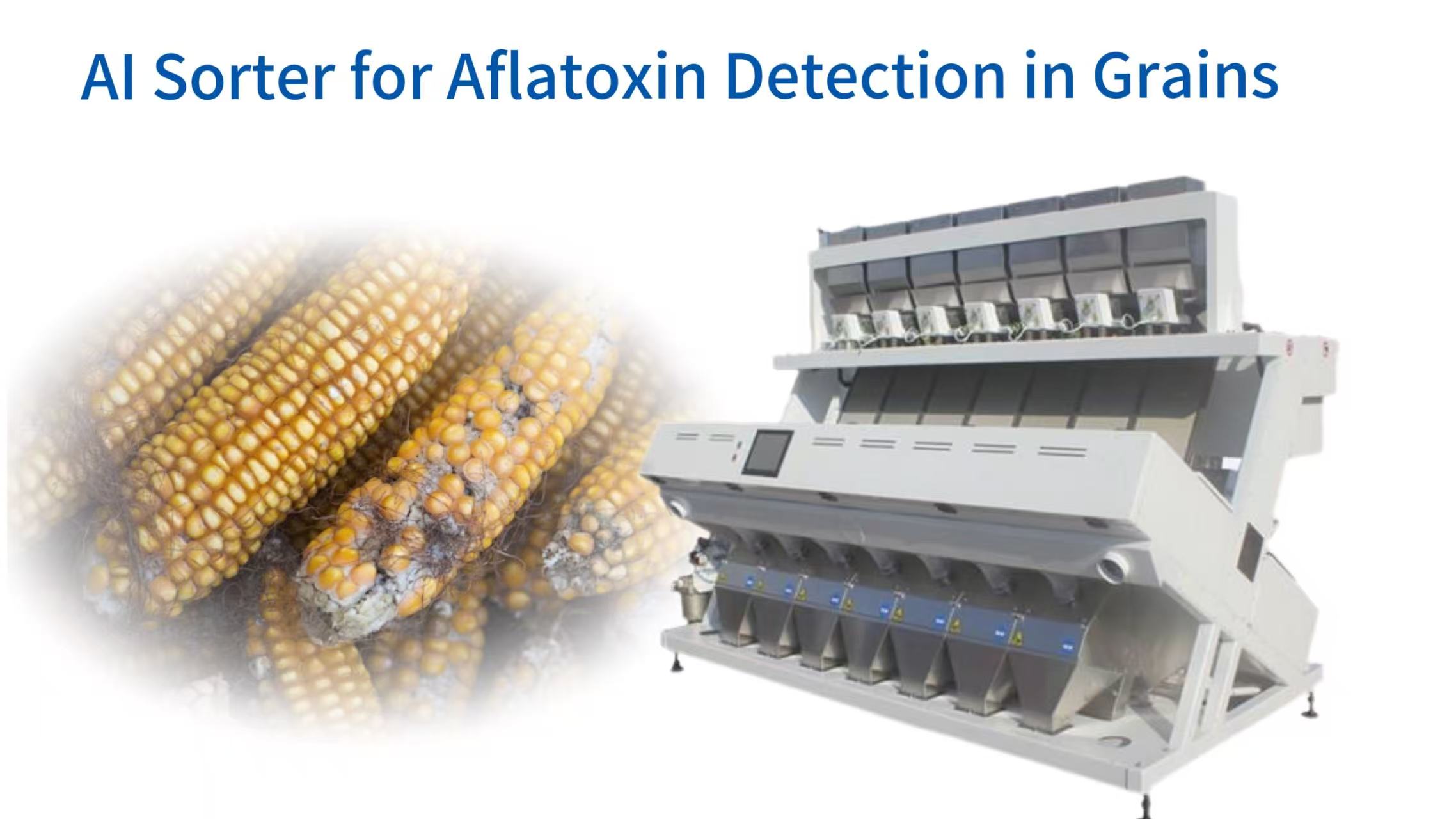
This article explores how modern AI sorting technology addresses the critical challenge of aflatoxin contamination in grain processing. We will examine the underlying optical detection methods, the shift from traditional color sorting to intelligent spectral analysis, and the practical benefits for food safety and operational efficiency. The discussion covers the science of toxin detection, the specific advantages of advanced machine configurations, and the real-world impact on grain quality management, providing a comprehensive overview for a broad audience interested in food safety technology. The integration of deep learning with spectral sensors marks a significant evolution from conventional automated systems, moving beyond simple color-based decisions to complex material identification that protects the food supply chain from invisible risks.
Understanding Aflatoxin in Grains and the Need for Advanced Sorting
Aflatoxins are toxic compounds produced by certain molds, primarily Aspergillus species, which commonly grow on crops like corn, peanuts, and other grains, especially under warm and humid conditions. These toxins pose significant health risks to humans and animals, leading to strict regulatory limits on their presence in food and feed products worldwide. Traditional methods for identifying aflatoxin-contaminated grains rely heavily on laboratory testing of samples, which is time-consuming and cannot remove individual contaminated kernels from a bulk supply, leaving a hidden risk in the final product. The economic impact of aflatoxin contamination includes rejected shipments, brand damage, and potential health liabilities that can destabilize an entire grain processing operation.
Conventional grain sorting technologies, such as traditional color sorting machines, are effective at distinguishing objects based on color differences but fail to detect the subtle surface changes or internal damage caused by aflatoxin-producing fungi, which may not always alter the grain's visible color. This limitation creates a critical need for a more sophisticated, non-destructive method that can scan each individual kernel in high volume and identify contamination that is invisible to the human eye. The challenge is further compounded by the fact that contaminated grains can be intermixed with healthy grains, and the toxins can spread during storage and transport, making early detection and removal at the processing stage the most effective control point for ensuring food safety.
The Hidden Nature of Fungal Contamination
Fungal growth that produces aflatoxin often begins within the interior of a grain kernel, where it causes damage long before any external signs become visible. This internal colonization means that even experienced quality inspectors using visual examination cannot identify many contaminated kernels, allowing them to pass undetected through the processing line. The fungus thrives in warm, humid conditions, and even small pockets of moisture during storage can trigger localized outbreaks that spread contamination throughout a silo or container.
Research has shown that aflatoxin levels can vary dramatically between individual kernels within the same batch, with a small percentage of highly contaminated grains responsible for the majority of the total toxin load. Removing just these few highly contaminated kernels can bring an entire batch into compliance with safety regulations, demonstrating the enormous value of precise, single-kernel sorting. This principle, known as the "hot spot" phenomenon, makes individual kernel inspection far more effective than bulk sampling and testing for ensuring final product safety.
Limitations of Traditional Color-Based Sorting
Traditional optical sorters operate by comparing the color of each object against preset thresholds, ejecting those that fall outside the acceptable range for a specific product. While this approach works well for removing distinctly discolored grains, such as those that are clearly black, burnt, or off-color, it cannot identify grains that are infected with aflatoxin-producing mold but retain a normal appearance. Many contaminated grains look identical to healthy grains under visible light, making them invisible to conventional belt type color sorting machines that lack spectral analysis capabilities.
Furthermore, traditional sorters require manual adjustment of threshold settings when product characteristics change, which limits their ability to adapt to natural variations in grain crops. Farmers harvesting from different fields or during different seasons will encounter variations in grain color, size, and surface texture that can confuse conventional systems. An AI-powered approach overcomes these limitations by learning the full range of acceptable variation and focusing on the specific spectral markers of contamination rather than simple visual appearance.
How AI Sorters Detect Aflatoxin Beyond Human Vision
AI Sorter Aflatoxin Detection Workflow
Multi-Spectral Imaging
UV + Visible + NIR Light
Spectral Signature Capture
Kernel Data Analysis
Deep Learning AI Judgment
Real-time Recognition
High-Speed Ejection
Remove Contaminated Kernels
The core innovation of an AI sorter for aflatoxin detection lies in its use of multi-spectral imaging combined with deep learning algorithms. Unlike standard cameras that only capture red, green, and blue light, advanced sensors utilize specific wavelengths, particularly in the ultraviolet (UV) and near-infrared (NIR) ranges, to reveal material characteristics invisible to the naked eye. When aflatoxin-producing molds damage a grain kernel, they alter its cellular structure and chemical composition, creating unique spectral signatures that these sensors can detect. The system captures thousands of data points per kernel as it passes through the inspection zone, building a detailed spectral profile for analysis.
The artificial intelligence component of the machine is trained on massive datasets containing thousands of images of both healthy and aflatoxin-contaminated grains. Through this training, the deep learning model learns to recognize the complex patterns and subtle anomalies associated with fungal damage and toxin presence, even when no visible color change has occurred. Once the AI model is deployed, it can make real-time decisions within milliseconds, identifying a contaminated kernel with remarkable accuracy and instructing the ejection system to remove it from the product stream. This approach allows grain processors to achieve levels of food safety that were previously impossible with conventional automated sorting equipment.
Multi-Spectral Imaging for Invisible Detection
Multi-spectral imaging systems employed in modern AI sorters capture data across multiple bands of the electromagnetic spectrum, including ultraviolet, visible, and near-infrared wavelengths. Each type of material has a unique reflectance pattern across these bands, known as its spectral signature, which functions like a fingerprint for that substance. Aflatoxin-contaminated grains exhibit distinctive changes in their spectral signatures, particularly in the UV range where fungal metabolites fluoresce under illumination, providing a clear indicator of contamination that is completely invisible to human eyes or standard cameras.
The integration of multiple spectral sensors within a single belt type AI sorting machine allows for simultaneous collection of color, structural, and chemical information from each kernel. Advanced systems combine data from UV-induced fluorescence, NIR reflectance for moisture and protein content analysis, and high-resolution color imaging for surface texture assessment. This fusion of data streams provides a comprehensive picture of each kernel's quality, enabling the AI model to make highly reliable contamination decisions based on multiple independent indicators.
Deep Learning Algorithm Training and Deployment
The deep learning models that power aflatoxin detection systems undergo extensive training using carefully curated datasets of grain samples with known contamination levels. During training, the model is presented with thousands of images of healthy and contaminated grains, and it learns to extract the distinguishing features that separate these two categories. The training process involves adjusting millions of internal parameters within the neural network to minimize classification errors, gradually building a robust understanding of what contamination looks like across different grain varieties and growing conditions.
Once trained, the model is deployed on high-performance computing hardware integrated directly into the sorting machine, where it performs real-time analysis on each kernel as it passes through the inspection zone. Modern systems can process several hundred thousand kernels per minute, with decision times measured in microseconds from the moment the kernel is imaged to the moment the ejection command is issued. The AI model continues to learn during operation, using feedback from quality control testing to refine its decisions and adapt to seasonal variations or new contamination patterns that may emerge over time.
High-Speed Ejection System Precision
The final critical component of an effective aflatoxin sorting system is the high-speed ejection mechanism that physically removes identified contaminated kernels from the product stream. After the AI model makes its contamination decision, the system must calculate the exact trajectory of the target kernel and activate the appropriate air nozzle at precisely the right moment. This requires extremely accurate timing systems and high-speed valves capable of operating at frequencies exceeding one thousand cycles per second to ensure that only the targeted kernel is ejected while neighboring good kernels continue on their path.
Proper precision acceleration of the grain stream is essential for maintaining consistent spacing between kernels as they travel from the feed system through the inspection zone to the ejection point. The high speed ejection system typically uses multiple air nozzles arranged in an array, with each nozzle serving a specific zone across the width of the material stream. Advanced systems incorporate real-time monitoring of ejection accuracy and can automatically adjust timing parameters to compensate for variations in grain size, shape, or stream velocity, maintaining consistent performance even under changing operating conditions.
Types of AI Sorters for Grain Processing Applications
AI Sorter Types Comparison
The selection of an appropriate AI sorter for aflatoxin detection depends on several factors, including the type of grain being processed, the required throughput capacity, and the specific characteristics of the contaminant materials. Different machine configurations offer varying advantages for different applications, and understanding these options helps processors make informed investment decisions. Two primary configurations dominate the grain sorting market: the chute-type system designed for free-flowing granular materials and the belt-type system designed for more delicate or unevenly shaped products. Both configurations can be equipped with the same core AI and spectral sensing technologies, but their mechanical designs optimize material handling for different product types.
Modern AI sorters also offer flexibility in terms of channel count and physical size, allowing processors to match machine capacity to their production requirements. Smaller machines with fewer channels are suitable for specialty grain processors or quality control applications, while larger multi-chassis systems can handle the massive throughput requirements of commercial grain elevators and export terminals. The common thread across all configurations is the integration of deep learning AI with advanced spectral sensors, providing consistent detection capability regardless of machine size or configuration.
Chute-Type AI Sorters for Free-Flowing Grains
A chute type AI sorting machine is specifically designed for processing free-flowing granular materials such as rice, wheat, corn, and soybeans. In this configuration, grains are fed from a hopper onto a series of smooth, polished channels or chutes that accelerate the material under gravity, spreading the individual kernels into a single-file or nearly single-file stream. This separation ensures that each kernel passes through the optical inspection zone without overlapping with neighboring kernels, allowing the AI system to analyze and make decisions on every individual piece. The chute design is highly efficient for small, round, or uniformly shaped grains that flow easily and maintain consistent orientation as they travel down the chute surface.
Chute-type machines can be configured with anywhere from one to twelve channels, with each channel having its own dedicated optical path and ejection system. The total channel count determines the overall throughput capacity, with larger machines capable of processing many tons of grain per hour while maintaining high detection accuracy. The modular nature of chute-type designs means that processors can select machines with exactly the number of channels needed for their specific application, avoiding unnecessary expense for excess capacity while leaving room for future expansion by adding additional modules to an existing system.
Belt-Type AI Sorters for Delicate or Irregular Grains
For grains that are particularly delicate, irregular in shape, or prone to damage from impact, a belt type AI sorting machine offers significant advantages over chute-based designs. Instead of dropping grains down a steep chute, belt-type sorters use a horizontal or gently inclined conveyor belt to carry materials through the inspection zone. The belt provides a stable, cushioned surface that reduces the velocity of impact between kernels and between kernels and machine surfaces, minimizing breakage and preserving product integrity. This gentle handling is particularly important for high-value products like peanuts, almonds, and other tree nuts where broken pieces represent a direct financial loss.
The belt configuration also offers advantages for products with irregular shapes or varying sizes that might not flow consistently down a fixed chute. The belt carries all materials at a uniform speed, regardless of their shape or surface texture, ensuring that every piece passes through the inspection zone with consistent orientation relative to the optical sensors. Belt-type sorters are available with belt widths ranging from 300mm to 2800mm, allowing processors to match capacity to their specific production requirements while maintaining the gentle handling characteristics essential for delicate grain products.
Core Benefits of AI Aflatoxin Sorting for Grain Processors
The adoption of AI-powered aflatoxin detection and sorting technology delivers measurable benefits across multiple dimensions of grain processing operations. From enhanced food safety and regulatory compliance to reduced product waste and improved operational efficiency, the advantages extend throughout the supply chain from initial grain reception to final product shipping. Processors who invest in this technology gain both immediate quality improvements and long-term competitive advantages in markets increasingly demanding verified food safety controls. The combination of superior detection accuracy, lower operating costs, and actionable production data creates a compelling business case for upgrading from conventional sorting methods.
Quantifiable returns on investment typically occur within six to eighteen months of installation, driven primarily by reduced product give-away, lower labor costs for manual inspection, and avoidance of costly product recalls or shipment rejections. As regulatory standards for aflatoxin continue to tighten in major importing countries, the ability to reliably demonstrate effective toxin control becomes an essential requirement rather than an optional enhancement. Early adopters of AI sorting technology have reported significant reductions in customer complaints, improved relationships with quality-focused buyers, and access to premium markets with stricter safety requirements.
Superior Detection Accuracy and Lower False Rejection
AI-based detection systems consistently outperform traditional optical sorting methods in both the percentage of contaminated kernels identified and the rate of false rejections of healthy product. Field data from commercial installations has demonstrated aflatoxin removal rates exceeding ninety-nine percent when properly configured AI sorters are deployed, compared to typical removal rates of sixty to eighty percent for conventional color-only systems. The reduction in false rejections is equally significant, with AI systems correctly identifying and retaining healthy grains that might be mistakenly ejected by simpler systems due to normal color variations or harmless surface imperfections.
The financial impact of improved accuracy is substantial for high-volume grain processors. Every ton of healthy grain incorrectly rejected represents direct product loss, while every contaminated kernel that passes through undetected creates potential liability and brand risk. AI systems balance these competing priorities more effectively than traditional methods by learning the full distribution of normal product variation and focusing detection efforts on the specific spectral signatures of contamination rather than superficial visual characteristics. The result is cleaner product with less waste, improving both safety and profitability simultaneously.
Reduced Operating Costs and Labor Requirements
Automated AI sorting eliminates the need for manual inspection stations where workers attempt to visually identify contaminated grains as they pass on moving belts. These manual stations are not only inefficient, with human detection rates for subtle contamination falling below fifty percent under production conditions, but they also represent significant ongoing labor costs that are increasingly difficult to sustain in tight labor markets. A single AI sorter can replace ten to thirty manual inspectors while delivering superior accuracy, providing immediate and permanent labor cost savings that quickly recover the capital investment in the equipment.
Beyond direct labor replacement, AI sorters reduce operating costs through lower energy consumption per ton processed, reduced maintenance requirements compared to multiple manual inspection stations, and decreased product give-away from inaccurate ejection decisions. The automated nature of the system allows production lines to operate at consistent speeds without the slowdowns inherent in manual inspection processes, increasing overall plant throughput without additional facility or equipment investments. Processors who have automated their contamination sorting report typical operating cost reductions of forty to sixty percent compared to manual inspection methods.
Production Data and Quality Traceability
Modern AI sorting systems generate extensive production data that provides valuable insights for quality management and process improvement. The system records the number of contaminated kernels removed, the ejection rate by channel or by product source, and trends in contamination levels over time. This data can be correlated with incoming grain test results, storage conditions, and processing parameters to identify patterns and implement preventive measures that reduce contamination at its source. Processors gain visibility into their supply chain quality that was previously unavailable, enabling more informed purchasing decisions and supplier management.
The traceability provided by AI sorter data supports comprehensive food safety programs and regulatory compliance documentation. When quality audits or customer inquiries require verification of contamination control measures, processors can produce detailed records showing the quantity of contaminated material removed from each production lot, along with timestamps and operational parameters. This level of documentation provides confidence to customers, regulators, and internal quality teams that the food safety system is functioning effectively, reducing the burden of manual recordkeeping and sample retention that would otherwise be required to demonstrate due diligence in contamination control.
Implementation Considerations for AI Aflatoxin Sorting
Successful implementation of AI aflatoxin sorting technology requires careful planning and consideration of multiple factors beyond the selection of the sorting machine itself. Processors must evaluate their incoming material characteristics, production flow requirements, and integration with existing equipment to ensure optimal performance. The physical layout of the processing facility, including available space for equipment installation and access for maintenance, influences the choice between different machine configurations and sizes. Additionally, operators and maintenance personnel require appropriate training to maximize the benefits of the advanced technology and respond effectively to any issues that arise during operation.
Before making a final purchasing decision, processors should arrange for material testing using their specific grain products to validate the performance of candidate sorting systems. Reputable manufacturers offer testing services where customer-supplied samples are run through demonstration equipment, with results documented to show expected contamination removal rates and product yields. These tests provide objective data for comparing different machines and configurations, ensuring that the selected equipment will deliver the required performance under actual operating conditions rather than relying on manufacturer claims or generic specifications.
Proper Material Preparation and Feeding
The effectiveness of any sorting system depends heavily on the quality of material preparation and feeding upstream of the sorter. Incoming grain must be properly cleaned to remove dust, fines, and other loose particles that could interfere with optical detection or cause sensor fouling during operation. A dedicated smart material feeding system is essential for maintaining consistent material flow and proper kernel spacing as the product enters the sorter. Variations in feed rate or uneven distribution across the width of the inspection zone will degrade sorting accuracy regardless of the sophistication of the AI detection algorithms.
Operators must also ensure that grain moisture content and temperature are within acceptable ranges for the specific sorting technology being deployed. Excess moisture can cause clumping or sticking of kernels, disrupting the uniform flow required for accurate single-kernel inspection. Similarly, extreme temperatures may affect the performance of electronic components or cause condensation on optical surfaces, requiring environmental controls or protective measures in the installation location. Attention to these material conditioning details during the planning phase prevents performance issues after the equipment is installed and operating.
Integration with Existing Processing Lines
AI sorting equipment must be integrated effectively with existing processing equipment, including upstream cleaners and dryers and downstream packaging or storage systems. The physical interface between the sorter and adjacent equipment must accommodate the required material flow rates while providing access for maintenance and cleaning. Electrical and pneumatic connections must be compatible with facility infrastructure, and control systems may need to communicate with plant-wide monitoring or data collection networks. Early coordination with equipment manufacturers and facility engineers prevents integration delays and ensures smooth startup.
Processors should also consider the placement of sorters within their overall material flow to maximize contamination removal effectiveness. Positioning sorters immediately after initial cleaning and before further processing steps ensures that contaminated material is removed before it can spread contamination to other product or equipment surfaces. Additional sorting stages may be beneficial for high-risk products or applications with particularly stringent safety requirements, with the first sorter performing bulk removal of obvious contamination and subsequent sorters providing final polishing to achieve the highest purity levels.
The Future of AI in Grain Safety and Quality Control
The application of artificial intelligence to aflatoxin detection represents just the beginning of a broader transformation in grain safety and quality control technology. As computational power continues to increase and sensor technology becomes more sophisticated, AI sorters will gain the ability to detect an expanding range of chemical and biological contaminants beyond aflatoxin. Researchers are already developing systems capable of identifying other mycotoxins, pesticide residues, and even certain pathogens using similar spectral analysis principles combined with deep learning. The same equipment that protects against aflatoxin today may soon serve as a comprehensive safety screening platform for multiple food safety hazards.
Advancements in computing hardware are also making more sophisticated AI models practical for real-time deployment on sorting equipment. Future systems will incorporate larger neural networks trained on more diverse datasets, improving detection accuracy for subtle contamination and reducing false rejection rates even further. Edge computing capabilities will allow sorters to share data and learn from each other across networks, enabling rapid deployment of improved models as new contamination patterns or product varieties are encountered. The technology will continue to evolve, providing grain processors with increasingly powerful tools for protecting their customers and their brands.
Integration with Supply Chain Data Systems
Future AI sorting systems will connect seamlessly with broader supply chain data platforms, enabling end-to-end traceability from farm to finished product. When a sorting system detects contamination, it will be able to trace the affected material back to specific suppliers, growing regions, or harvest lots based on data encoded in the grain stream through blockchain or other tracking technologies. This visibility will allow processors and their customers to quickly identify the source of quality problems and implement targeted corrective actions, reducing the scope and cost of any necessary recalls while protecting the reputation of unaffected suppliers.
The data generated by AI sorters will also feed into predictive quality models that help processors anticipate contamination risks before they become problems. By correlating sorter output with weather data, storage conditions, and transportation histories, machine learning systems can identify patterns that precede contamination events and recommend preventive measures. Processors who adopt these integrated systems will gain competitive advantages through superior quality consistency, reduced waste, and the ability to provide unprecedented transparency to their customers about the safety controls applied to every batch of product.
Advancements in Sensor Technology and Detection Range
Ongoing developments in sensor technology will expand the range of detectable contaminants and quality attributes beyond what is currently possible with multi-spectral imaging. Hyperspectral sensors, which capture hundreds of contiguous spectral bands rather than just a few discrete wavelengths, provide much richer information about material composition and condition. Although current hyperspectral systems are too expensive and computationally demanding for widespread deployment in grain sorting, continuing cost reductions and performance improvements will make this technology practical for commercial applications in the coming years, enabling detection of an even wider range of chemical and biological hazards.
Other emerging sensor technologies, including raman spectroscopy and laser-induced breakdown spectroscopy, offer complementary capabilities for specific detection applications. These methods can identify molecular and elemental composition with remarkable specificity, potentially enabling direct detection of aflatoxin molecules themselves rather than relying on indirect spectral indicators of fungal damage. As these technologies mature and become more affordable, they will be integrated into AI sorting systems, providing grain processors with direct confirmation of toxin removal rather than the current approach of removing suspect grains based on correlated indicators.
Conclusion and Key Takeaways
AI-powered sorting technology has fundamentally changed the approach to aflatoxin contamination management in grain processing, moving from reactive testing and sample-based quality control to proactive, individual kernel inspection and removal. The integration of multi-spectral imaging, deep learning algorithms, and high-speed ejection systems enables detection of contamination that remains invisible to both human inspectors and conventional optical sorting equipment. Grain processors who implement this technology gain significant advantages in food safety, operational efficiency, and market access while reducing waste and labor costs compared to traditional manual and automated sorting methods.
The successful application of AI sorting for aflatoxin detection depends on proper implementation, including careful machine selection based on product characteristics, appropriate material preparation and feeding, and effective integration with existing processing lines. When these factors are properly addressed, processors can expect rapid returns on their investment through reduced give-away, lower operating costs, and avoidance of contamination-related losses. As sensor and artificial intelligence technologies continue to advance, the capabilities of these systems will expand further, making AI sorting an increasingly essential component of modern grain processing operations committed to food safety excellence. Contact our technical team to arrange material testing and receive a customized recommendation for your specific grain sorting application.