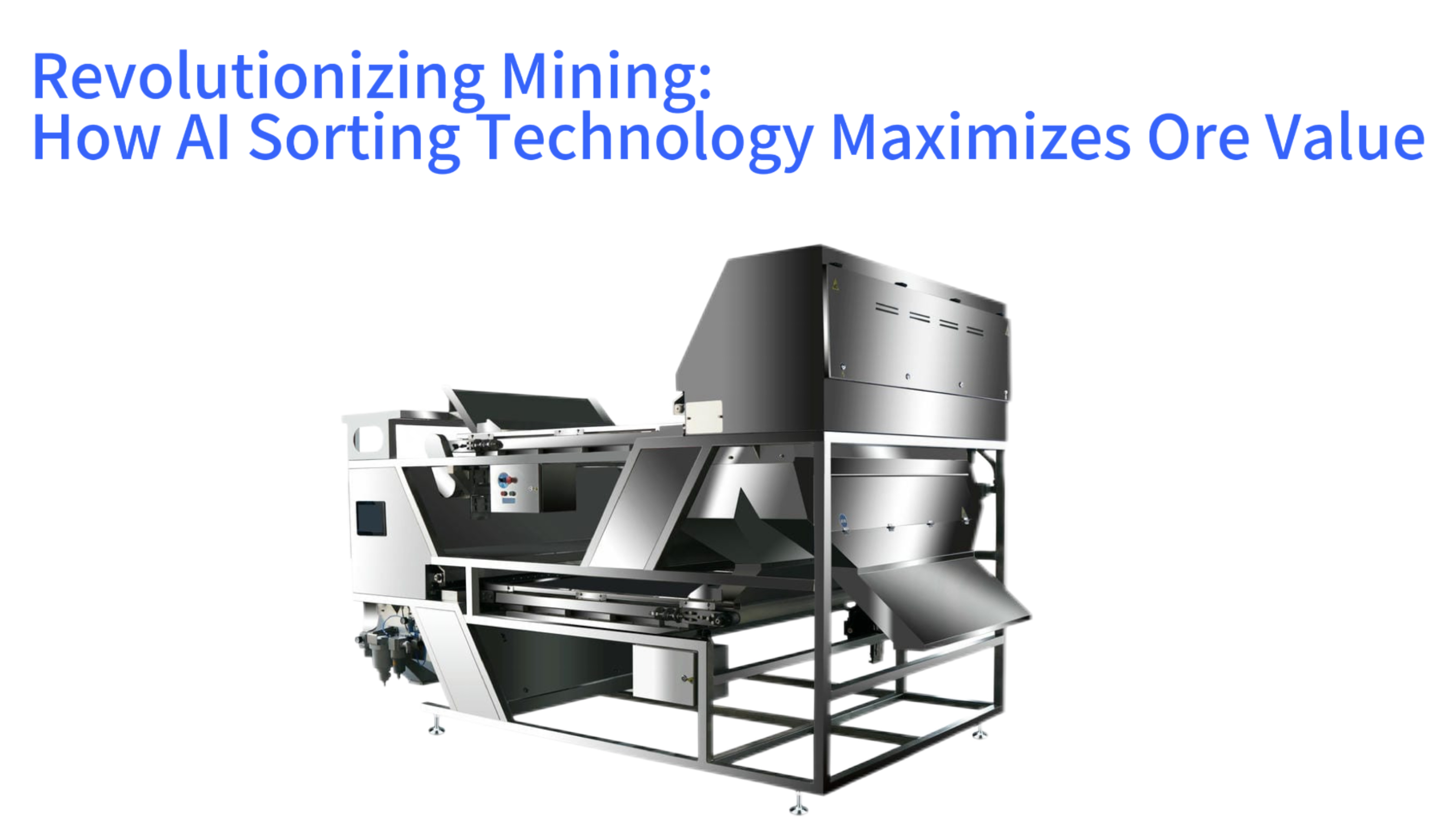
This comprehensive guide explores how AI-driven intelligent sorting technology is transforming modern mineral processing by enhancing ore grade, reducing operational costs, and optimizing efficiency. Designed for mining professionals and industry stakeholders, the content delves into the core working principles of AI sorters, quantifiable economic benefits they deliver, real-world applications across different mineral types, and practical frameworks for evaluating and implementing this transformative technology. By examining both technical mechanisms and business outcomes, readers will gain actionable insights to maximize resource value, achieve significant return on investment, and maintain competitiveness in an evolving industry landscape.
Core Steps of AI Ore Sorting Technology
Ore Sizing
Crushing to suitable particle size
Data Sensing
Hyperspectral/X-ray scanning
AI Analysis
Real-time mineral identification
High-speed Sorting
Waste rejection & ore collection
The Mining Industry’s Challenges: Why Traditional Methods Fall Short
The global mining sector faces unprecedented pressures that expose the limitations of conventional processing techniques. As accessible high-grade ore deposits diminish and operational costs rise, mining operations must adapt to remain viable while meeting environmental and economic demands. Understanding these challenges is critical to recognizing why innovative solutions like AI-powered sorting have become essential for sustainable growth.
Declining Ore Grades and Rising Energy Costs
Over the past decade, average ore grades across major mineral commodities have declined by approximately 30%, forcing mines to process significantly more material to extract the same amount of valuable minerals. This increase in throughput directly translates to higher energy consumption, with comminution alone accounting for 50-70% of a typical mine’s total energy use. For example, copper mines now process up to 10 times more rock per ton of metal produced compared to operations 50 years ago, driving electricity costs up by an average of 4% annually for many producers.
The combination of lower grades and rising energy prices creates a vicious cycle: mines must spend more on energy to process lower-quality ore, squeezing profit margins even as market competition intensifies. Traditional processing methods, which treat all mined material uniformly, fail to address this inefficiency, leading to unnecessary energy expenditure on waste rock that contains little to no economic value.
Processing Plant Bottlenecks and High Operational Expenses
Conventional crushing and grinding circuits represent the most energy-intensive stages of mineral processing, yet they often process large volumes of barren rock that could be removed earlier in the workflow. Studies show that up to 60% of material entering some processing plants is waste gangue, meaning mines waste substantial energy and wear-and-tear on equipment processing material that will never contribute to revenue. This inefficiency is compounded by the high cost of grinding media—steel balls and rods—which can account for 15-20% of a mill’s operational budget.
These bottlenecks also limit plant capacity, as crushers and mills operate at maximum capacity even when processing low-value material. This reduces the ability to process higher-grade ore efficiently and often requires costly plant expansions to increase throughput, further straining capital budgets. Traditional sorting methods, such as manual picking or basic color sorting, lack the precision to remove waste effectively at early stages, perpetuating this cycle of inefficiency.
Environmental Regulations and Tailings Management Pressures
Stringent environmental regulations worldwide have made tailings management one of the most significant challenges for modern mines. Tailings storage facilities require substantial capital investment and ongoing maintenance, with the average cost of constructing a new tailings dam exceeding $50 million for mid-sized operations. Additionally, regulations now mandate stricter water usage and treatment standards, with some regions limiting water withdrawal from local sources by up to 40% to protect ecosystems.
Traditional processing generates large volumes of tailings, increasing both environmental risk and compliance costs. A single copper mine can produce over 100 million tons of tailings annually, each ton requiring careful management to prevent contamination of soil and water. These pressures have led to growing interest in technologies that reduce tailings volume at the source, making AI-powered sorting an attractive solution for minimizing environmental impact while cutting compliance expenses.
Over-Reliance on Operator Experience and Consistency Issues
Traditional sorting methods often depend on skilled operators to visually identify valuable ore, a process prone to human error and inconsistency. Even experienced workers cannot maintain peak accuracy for 8-hour shifts, with sorting precision dropping by up to 25% during extended work periods. This variability leads to inconsistent ore grades entering processing plants, disrupting downstream efficiency and reducing overall recovery rates.
Automation has helped mitigate some issues, but basic sensor-based systems lack the adaptability to handle variations in ore characteristics. For example, changes in mineralogy due to varying geological conditions can render fixed-parameter sorting systems ineffective, requiring constant manual recalibration. This reliance on human intervention limits 24/7 operation efficiency and creates opportunities for costly mistakes in material handling.
What is AI-Powered Sorting? A Technological Leap Beyond Traditional Color Sorting
AI-powered sorting represents a paradigm shift from conventional mineral processing techniques, combining advanced sensing technology with machine learning to achieve unprecedented precision in material separation. Unlike basic color sorters that rely on limited visual data, AI systems integrate multi-dimensional analysis to distinguish between valuable minerals and waste rock with remarkable accuracy, even when differences are imperceptible to human eyes or standard sensors.
AI-Powered Ore Sorting Architecture
Sensor Layer
Hyperspectral Imaging
Laser Profiling
X-ray Transmission
AI Engine
Machine Learning Models
Real-time Analysis
Pattern Recognition
Actuator System
High-speed Ejection
Precision Sorting
Automated Control
From RGB to Multispectral: The “Eyes” of AI Sorters
Modern AI sorters utilize sophisticated sensor technologies that extend far beyond the visible spectrum, including near-infrared (NIR), hyperspectral imaging, and X-ray transmission (XRT). Advanced detection systems capture data on material composition, density, and molecular structure, creating a comprehensive profile of each particle rather than just surface color. For instance, hyperspectral sensors can identify over 200 different mineral types by analyzing how they interact with specific wavelengths of light, a capability far beyond traditional RGB cameras.
These sensors operate at high speeds, collecting up to 1 million data points per second to analyze particles ranging from 2mm to 300mm in size. This allows AI sorters to process material at rates of 100-500 tons per hour while maintaining accuracy rates above 95% for many applications. By combining data from multiple sensors—such as NIR for chemical composition and laser profiling for physical structure—AI systems create a holistic understanding of each particle’s value.
Deep Learning Brains: How Algorithms Learn to Identify Valuable Minerals
The true power of AI sorting lies in its machine learning algorithms, which are trained on thousands of labeled samples to recognize patterns indicative of valuable minerals. These neural networks analyze sensor data to identify subtle differences in composition, texture, and density that separate economic ore from waste. For example, a system trained on gold ore can distinguish pyrite (fool’s gold) from native gold by detecting minute variations in density and spectral response, even when the two minerals appear visually identical.
Training involves exposing the algorithm to diverse datasets representing different ore types, geological variations, and processing conditions, ensuring it can adapt to changing material characteristics in real-world operations. Once deployed, the system continues learning from operational data, refining its accuracy over time—unlike traditional systems that remain static after calibration. This adaptive learning enables AI sorters to maintain high performance even as ore quality fluctuates, a critical advantage in mines with variable mineralogy.
Core Hardware: Comparing Chute-Type and Belt-Type Sorter Configurations
AI sorting systems are available in two primary configurations—chute-type and belt-type—each optimized for specific applications and particle sizes. Chute-type AI sorting machines use gravity to feed material down a sloped channel, with sensors and ejection mechanisms positioned along the chute to separate particles mid-flow. These systems excel at processing coarse material (50-300mm) at high capacities, making them ideal for primary sorting after crushing.
Belt-type AI sorting machines transport material on a conveyor belt, allowing sensors to scan particles from multiple angles for more detailed analysis. They are better suited for finer material (2-100mm) and applications requiring higher precision, such as processing industrial minerals where purity is critical. Belt-type systems typically offer lower throughput than chute-type machines but achieve higher accuracy rates for smaller particles, with some models capable of distinguishing particles differing by just 1% in mineral content.
Self-Optimization: How AI Systems Improve with More Processing Volume
A defining feature of AI sorters is their ability to improve performance over time through continuous learning. As the system processes more material, it collects additional data that refines its predictive models, adapting to subtle changes in ore characteristics without manual intervention. For example, if a mine encounters a new geological zone with different mineral associations, the AI system will gradually adjust its sorting parameters to maintain optimal recovery rates, a process that would require days of testing and recalibration with traditional methods.
This self-optimization extends to operational efficiency as well, with AI systems learning to minimize air or water usage for ejection mechanisms while maintaining separation accuracy. Some advanced systems even predict maintenance needs by analyzing performance data, reducing downtime by up to 30% compared to manually monitored equipment. This combination of adaptive learning and predictive maintenance makes AI sorters not just more accurate but also more reliable than conventional sorting technologies.
Direct Business Value: How AI Sorting Transforms Mining Economics
The adoption of AI-powered sorting delivers tangible financial benefits that directly impact a mine’s bottom line, from reduced operational costs to expanded resource reserves. By removing waste rock early in the processing chain, these systems address multiple inefficiencies in traditional workflows, creating value through both cost savings and revenue enhancement.
Increasing Ore Grade to Processing Plants
AI sorting upgrades ore grade by removing waste material before it enters crushing and grinding circuits, significantly improving the quality of feed to downstream processes. Mines implementing these systems typically see a 20-50% increase in feed grade, which directly translates to higher metal recovery rates. For example, a gold mine using AI sorting might increase feed grade from 1.0 g/t to 1.8 g/t, boosting gold recovery by 30% while processing the same tonnage of material.
Higher feed grades also improve the efficiency of flotation and leaching processes, as reagents are used more effectively on valuable material rather than being wasted on gangue. This grade improvement can extend the life of existing processing plants by increasing their effective capacity, allowing mines to defer costly expansions while maintaining or increasing production levels.
Reducing Energy and Consumable Costs Dramatically
By rejecting up to 80% of waste rock before it reaches energy-intensive grinding circuits, AI sorting delivers substantial energy savings. Studies show that mines implementing these systems reduce overall energy consumption by 30-50% for comminution processes, with some operations cutting electricity costs by over $1 million annually. For example, a copper mine processing 5 million tons per year could save approximately 20 GWh of electricity—enough to power 2,000 households—by implementing AI sorting at the primary crushing stage.
These systems also reduce consumption of grinding media, liners, and chemical reagents, further lowering operational expenses. Grinding media costs alone can decrease by 40-60%, as less material passes through mills and wear on equipment is reduced. Additionally, water usage for processing can drop by 20-40% in arid regions, where water scarcity often limits production capacity.
Minimizing Tailings Volume and Enhancing Environmental Performance
AI sorting reduces tailings generation by removing waste at the source, decreasing the volume of material requiring disposal by up to 70% in some applications. This reduction directly lowers the cost of tailings management, including dam construction, maintenance, and closure liabilities. For a mid-sized mine, this can translate to savings of $2-5 million annually in tailings-related expenses, while also reducing environmental risk and improving compliance with regulatory standards.
The environmental benefits extend beyond tailings reduction, as lower energy consumption decreases greenhouse gas emissions by an average of 25-35% for processing operations. Some mines using AI sorting have achieved carbon footprint reductions of over 10,000 tons of CO₂ annually, aligning with global sustainability goals and improving social license to operate in communities concerned about environmental impact.
Unlocking Previously Uneconomic Low-Grade Deposits
AI sorting makes low-grade and complex ore deposits economically viable by reducing processing costs and improving recovery rates. Deposits with grades previously considered too low for development—such as gold ores below 0.5 g/t or copper ores below 0.3%—can now be profitably mined with AI sorting, effectively expanding a mine’s resource base. One study found that AI sorting enabled a zinc mine to recover an additional 15% of metal from previously discarded low-grade stockpiles, adding millions of dollars in revenue without new exploration.
This capability also extends mine life by utilizing resources that would otherwise remain untapped, reducing the need for costly greenfield developments. For aging mines facing resource depletion, AI sorting can add 5-10 years to operational life by efficiently processing lower-grade ore bodies, preserving jobs and community economic benefits while maximizing return on existing infrastructure investments.
Calculating ROI: Evaluating the Economic Impact of AI Sorting
Determining the return on investment for AI-powered sorting requires analyzing both direct cost savings and indirect benefits, with most systems achieving payback within 6-18 months of implementation. A comprehensive ROI assessment must consider capital expenditure, operational savings, revenue enhancements, and long-term strategic value to fully capture the technology’s financial impact.
6-18
Months Payback Period
20-40%
Water Consumption Reduction
30-50%
Processing Cost Savings
Key Cost Factors: CAPEX and OPEX Analysis
Capital expenditure for AI sorting systems varies based on capacity, configuration, and sensor technology, with typical costs ranging from $500,000 to $3 million for a complete installation. Chute-type systems for coarse ore processing generally have lower upfront costs, while belt-type systems with advanced hyperspectral sensors represent higher initial investment but deliver greater precision for fine material applications. Additional costs include installation, integration with existing plant controls, and operator training, which typically add 15-20% to the base equipment price.
Operational expenses for AI sorters are relatively low compared to traditional processing equipment, primarily consisting of electricity for sensors and ejection systems, and periodic maintenance of wear parts. These costs typically amount to $0.50-2.00 per ton of material processed, a fraction of the $5-15 per ton cost of grinding and flotation for many minerals. When considering the savings from reduced energy, water, and reagent use, the net operational cost of AI sorting is often negative—meaning the system pays for itself through ongoing savings while generating additional revenue from improved recovery.
Core Revenue Drivers: ROI Calculated from Savings and Gains
The primary ROI drivers for AI sorting include energy savings (30-50% reduction in comminution costs), reduced consumable expenses (40-60% lower grinding media costs), and increased metal recovery (5-15% higher production). For a copper mine processing 10 million tons annually with a 0.5% copper grade, a 10% increase in recovery translates to an additional 500 tons of copper production per year—worth approximately $4 million at current market prices. When combined with $2-3 million in annual energy and consumable savings, the ROI becomes substantial even for higher-cost AI systems.
Secondary ROI factors include extended equipment life (20-30% longer lifespan for crushers and mills due to reduced throughput), lower maintenance costs (15-25% reduction in repair expenses), and deferred capital expenditure on plant expansions. For example, a mine able to increase effective plant capacity by 20% through AI sorting can avoid spending $10-20 million on a new grinding circuit, representing significant long-term value beyond direct operational savings.
Indirect Benefits: Extended Equipment Life and Increased Capacity
By reducing the volume of material passing through crushers, mills, and pumps, AI sorting significantly extends equipment lifespan and reduces maintenance requirements. Studies show that mills processing AI-sorted ore experience 30% less liner wear and require 25% fewer grinding media replacements, lowering maintenance downtime by 15-20%. This improved equipment availability increases overall plant capacity by allowing more consistent operation and reducing unplanned shutdowns.
The capacity gains from AI sorting often eliminate the need for costly plant expansions, as existing equipment can process higher-grade ore more efficiently. A mine with a nominal capacity of 5 million tons per year might achieve effective capacity of 6 million tons by upgrading feed grade with AI sorting, representing a 20% increase in production without capital investment in new equipment. These indirect benefits can account for 30-40% of the total ROI from AI sorting implementations.
Conducting a Preliminary Feasibility Study
A feasibility study for AI sorting begins with ore characterization, analyzing samples from different geological zones to determine sorting potential. Most technology providers offer testing services to evaluate how effectively their systems can separate valuable minerals from waste, providing data on expected recovery rates, grade improvement, and mass rejection. These tests typically involve processing 1-5 tons of representative ore samples in a laboratory or pilot-scale facility, generating detailed performance metrics to inform investment decisions.
The study should also include a detailed cost-benefit analysis, comparing the capital and operational costs of AI sorting against projected savings and revenue increases. Sensitivity analysis is critical to account for variables like ore grade fluctuations, energy prices, and metal market conditions, ensuring the investment remains viable across different scenarios. Many providers offer ROI calculators or case studies from similar operations to help mines estimate potential returns, often identifying quick-win applications where AI sorting delivers the highest value.
Real-World Applications: AI Sorting Across Mineral Types
AI-powered sorting has demonstrated effectiveness across a broad range of mineral commodities, from industrial minerals requiring high purity to metallic ores needing efficient pre-concentration. The technology’s adaptability allows it to address specific challenges in different applications, delivering customized benefits based on mineral characteristics and processing requirements.
 Industrial Minerals: Enhancing Purity and Market Value
For industrial minerals like limestone, quartz, and feldspar, AI sorting improves product purity by removing contaminants that affect quality and market value. Quartz sorting machines using hyperspectral sensors can detect trace amounts of iron oxide (as low as 0.1%) that cause discoloration, achieving purity levels above 99.9%—a requirement for high-value applications like semiconductor manufacturing or optical glass production. This level of precision enables producers to command premium prices, often 20-30% higher than standard-grade material.
In limestone processing for cement production, AI sorting removes silica-rich waste that reduces clinker quality, allowing plants to use lower-grade limestone deposits while maintaining product specifications. This not only extends resource life but also reduces CO₂ emissions from clinker production by up to 10%, aligning with sustainability goals in the construction materials industry.
Metallic Ores: From Copper and Gold to Lithium
In metallic ore applications, AI sorting delivers dramatic improvements in pre-concentration, particularly for gold, copper, and lithium deposits. Gold mines using XRT-based AI sorters achieve upgrade ratios of 20:1 or higher, rejecting 95% of waste rock while retaining over 95% of gold values. This allows mines to process significantly more material through existing leaching circuits, increasing gold production by 15-20% without expanding processing capacity.
For lithium ores like spodumene, lithium ore laser sorters distinguish between spodumene and gangue minerals based on optical properties, achieving recovery rates above 90% for coarse particles. This pre-concentration reduces the amount of material requiring fine grinding and acid leaching, cutting processing costs by 40-50% and making lower-grade lithium deposits economically viable in a competitive market.
Coal: Efficiently Separating Waste and Reducing Ash Content
AI sorting technology improves coal quality by reducing ash content and sulfur levels, addressing both environmental regulations and customer specifications. Using a combination of NIR and XRT sensors, coal sorters identify and remove mineral matter (clay, shale, pyrite) from run-of-mine coal, lowering ash content by 5-15% and sulfur by 20-30%. This not only increases the calorific value of the coal but also reduces emissions during combustion, helping power plants meet stricter air quality standards.
For coal preparation plants, AI sorting reduces the need for heavy media separation or froth flotation, cutting water usage by 30-50% and eliminating the cost of media materials like magnetite. In regions with water scarcity, this represents a critical advantage, allowing operations to maintain production levels while complying with water use restrictions.
Diamonds and Gemstones: Non-Destructive Precision Recovery
In diamond and gemstone mining, AI sorting offers non-destructive separation of valuable stones from host rock, a capability unmatched by traditional methods like dense media separation. Using advanced imaging and spectroscopy, AI systems detect diamonds as small as 0.5 carats embedded in kimberlite or lamproite, achieving recovery rates above 98% while minimizing damage to gem-quality stones. This precision reduces the volume of material requiring manual sorting by up to 90%, significantly lowering labor costs and increasing recovery of high-value gemstones.
The non-destructive nature of AI sorting is particularly valuable for colored gemstones like sapphire or emerald, where physical damage during processing can destroy value. By identifying gem-bearing material before crushing or grinding, AI systems preserve stones that would otherwise be broken, adding substantial value to production while reducing waste.
Integration and Future Trends: Incorporating AI Sorting into Operational Blueprints
Successfully integrating AI-powered sorting into existing mining operations requires careful planning to align technology with workflow, infrastructure, and business objectives. As the technology continues to evolve, understanding both current integration strategies and future developments is essential to maximizing long-term value.
Current
Multi-sensor fusion
Basic AI models
2025-2027
LIBS technology
Advanced neural networks
2028-2030
Autonomous sorting
Real-time geological feedback
Long-term
Full-process AI optimization
Zero-waste processing
Optimal Placement in Mining and Processing Flowsheets
The ideal location for AI sorting equipment depends on ore characteristics, particle size distribution, and downstream processing requirements. For coarse ore processing (50-300mm), sorters are typically installed after primary crushing but before secondary crushing and grinding, allowing maximum waste rejection at the earliest possible stage. This placement reduces load on subsequent equipment and minimizes energy consumption for comminution.
For finer material (2-50mm), AI sorters are often positioned after secondary crushing or screening, targeting specific size fractions that benefit most from pre-concentration. In some operations, multiple sorting stages are implemented—coarse sorting for waste rejection and fine sorting for grade enhancement—creating a multi-stage process that optimizes recovery across different particle sizes. This strategic placement requires detailed analysis of ore liberation characteristics to ensure sorting occurs after minerals have sufficiently separated from gangue.
Seamless Integration with Existing Control Systems
Modern AI sorting systems are designed for integration with plant-wide control networks, using standard protocols like OPC UA or Modbus to exchange data with SCADA and DCS systems. This connectivity allows operators to monitor sorting performance in real-time, adjust parameters remotely, and integrate sorting data into overall process optimization. For example, sorting data on ore grade can automatically adjust grinding circuit settings to maintain optimal throughput and recovery, creating a closed-loop system that adapts to changing feed conditions.
Integration also enables predictive maintenance by sharing equipment performance data with asset management systems, identifying potential issues before they cause downtime. Sensors on sorting machines monitor vibration, temperature, and component wear, generating alerts when maintenance is required—often weeks before failure would occur. This proactive approach reduces unplanned shutdowns by up to 30% compared to reactive maintenance strategies.
AI Sorting in the Era of Smart Mines and Automation
AI-powered sorting represents a critical component of the emerging smart mine ecosystem, complementing other technologies like autonomous haulage, drone mapping, and digital twins. By providing real-time data on ore characteristics, sorting systems feed valuable information into geological models and mine planning software, improving resource estimation accuracy and enabling dynamic scheduling of mining activities. For example, sorting data can identify variations in ore grade across different mining blocks, allowing operators to prioritize high-grade material and adjust extraction plans accordingly.
The convergence of AI sorting with robotics and process automation creates opportunities for fully autonomous mineral processing plants, where material handling, sorting, and downstream processing are coordinated without human intervention. These systems can optimize production in real-time based on market conditions, energy prices, and ore quality, maximizing profitability while maintaining strict environmental compliance. As mining companies pursue greater automation, AI sorting will play an increasingly central role in connecting geological data with operational execution.
Continuous Technological Evolution and Future Potential
Ongoing advancements in sensor technology and machine learning algorithms continue to expand the capabilities of AI sorting systems. New developments include multi-modal sensors that combine hyperspectral imaging with laser-induced breakdown spectroscopy (LIBS) for elemental analysis, enabling even more precise mineral identification. These advanced sensors can detect trace elements at concentrations below 100 parts per million, opening new applications in critical mineral processing and environmental remediation.
Future AI sorting systems will also incorporate generative AI to simulate sorting performance for different ore types and processing scenarios, allowing operators to optimize settings before processing new material. This predictive capability will reduce the time required to commission new sorting systems and adapt to changing ore characteristics, further improving efficiency and reducing startup costs. As computing power increases and algorithms become more sophisticated, AI sorting will continue to push the boundaries of what is possible in mineral processing, unlocking new resources and improving sustainability across the mining industry.
Taking the First Step: Key Considerations for Implementation
Implementing AI-powered sorting requires a structured approach that balances technical feasibility with business objectives, ensuring the technology delivers maximum value for specific operational conditions. By addressing critical factors early in the planning process, mining operations can minimize risk and accelerate the path to positive returns.
Implementation Checklist
Material Characterization: Particle Size, Liberation, and Moisture
Thorough material characterization is essential to determine the suitability of AI sorting for a particular ore body, focusing on particle size distribution, mineral liberation, and moisture content. Liberation analysis identifies the particle size at which valuable minerals separate from gangue—typically 10-50mm for many metallic ores—indicating the optimal size range for sorting. Moisture content above 8-10% can interfere with sensor performance, requiring drying or specialized sensor technology for wet ore applications.
Particle shape and density also influence sorting effectiveness, with irregularly shaped particles sometimes challenging for ejection systems to separate accurately. Testing different particle size fractions and moisture levels in a laboratory setting provides critical data to select the appropriate sorting technology and configuration, avoiding costly mistakes in equipment selection.
Capacity Requirements and Plant Layout Constraints
Aligning sorting system capacity with overall plant throughput is critical to avoid bottlenecks or underutilization. AI sorters are available in configurations ranging from small-scale units processing 50 tons per hour to large-scale systems handling over 500 tons per hour, requiring careful matching to operational needs. For existing plants, space constraints may limit equipment size, necessitating modular designs or modifications to material handling infrastructure.
Plant layout must also account for material flow, ensuring sorted ore and waste can be efficiently transported to subsequent processing stages or waste facilities. This may require adjustments to conveyor systems, chutes, or stockpile arrangements to integrate sorting equipment without disrupting existing workflows. Detailed 3D modeling of plant layouts can identify potential conflicts early in the design process, minimizing costly retrofits during installation.
Evaluating Technology Providers: Criteria for Selection
Selecting the right technology provider involves evaluating factors beyond equipment cost, including testing capabilities, technical support, and industry experience. Reputable providers offer comprehensive ore testing to validate sorting performance, providing transparent data on recovery rates, grade improvement, and mass rejection. This testing should be conducted on representative samples from the mine to ensure results reflect actual operational conditions.
Technical support and after-sales service are equally important, as timely assistance can minimize downtime and ensure optimal performance. Providers with global service networks and local support teams can respond quickly to issues, while training programs ensure operators and maintenance staff have the skills to maximize system efficiency. Case studies from similar operations provide valuable insight into real-world performance, helping mines assess a provider’s track record with their specific mineral type and processing challenges.
Requesting and Interpreting Ore Sorting Tests
The final step before implementation involves conducting full-scale ore sorting tests to validate performance projections and refine system specifications. These tests typically process 10-50 tons of ore through a pilot-scale sorting system, generating detailed data on recovery, grade, and mass balance. Results should be compared against baseline data from traditional processing to quantify improvements in efficiency and economics.
Interpreting test results requires understanding both technical performance and business impact, considering factors like payback period, return on investment, and long-term strategic value. Many providers offer detailed analysis of test data, translating technical metrics into financial projections that align with the mine’s business case. By using test results to optimize system configuration and operating parameters, mines can ensure their AI sorting implementation delivers maximum value from day one of operation.