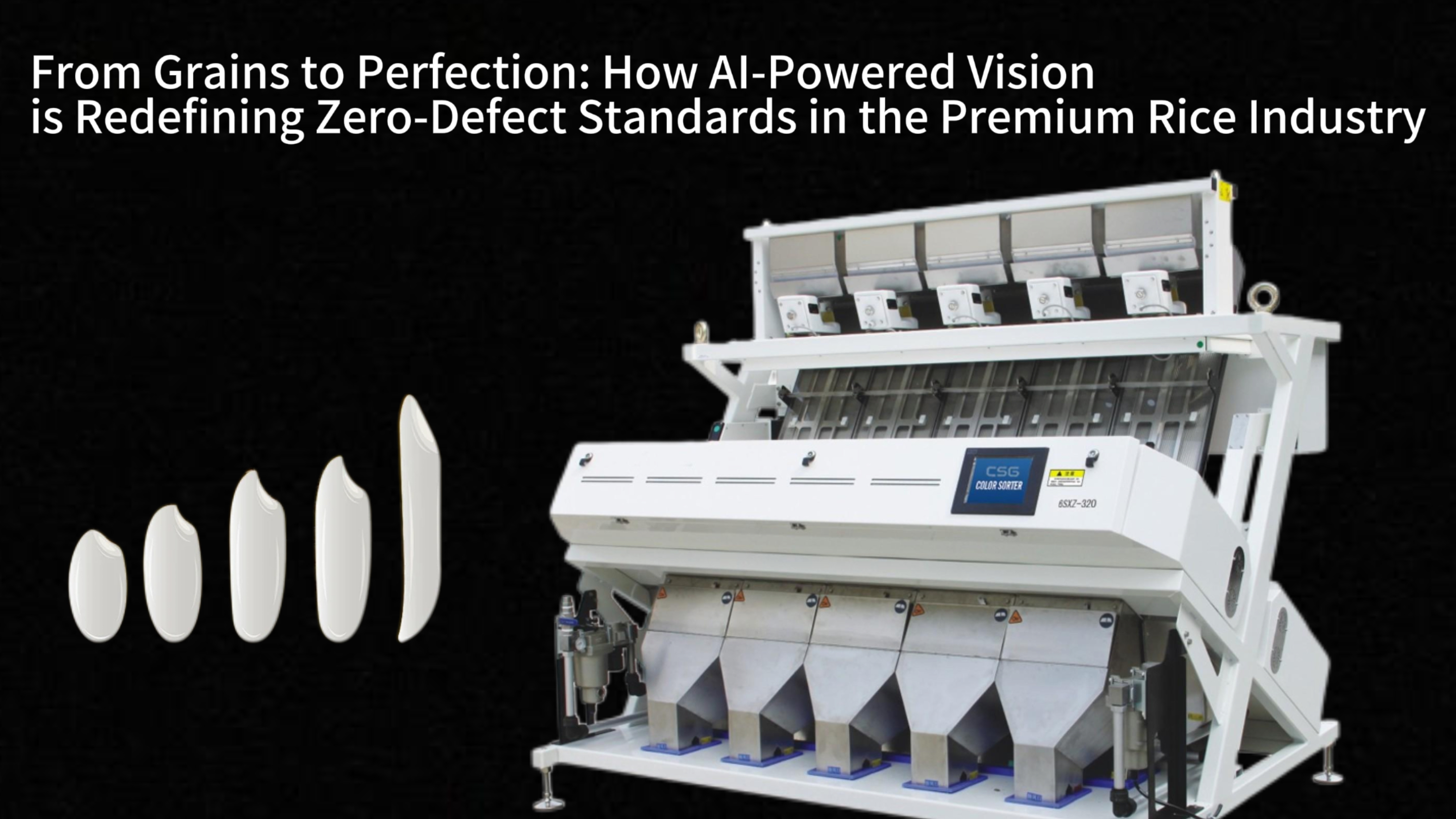
For premium rice brands, the promise of purity, consistency, and flawless appearance is paramount. Consumers pay a premium for grains that are uniform in color, size, and entirely free from defects, foreign materials, or broken pieces. Achieving this level of perfection consistently, at an industrial scale, has been one of the most significant challenges in food processing. This article explores the transformative role of AI Intelligent Color Sorters in helping these brands meet and exceed nearly zero-defect product standards. We will delve into the specific technological advancements, from multi-spectral detection to self-learning algorithms, that make this possible. Drawing from over 15 years of experience in the field, including the development of proprietary sorting technologies, we will examine how these machines identify and eliminate defects invisible to the human eye, integrate seamlessly into modern production lines, and ultimately protect brand reputation while ensuring unparalleled food safety and quality.
The Critical Challenge of Imperfection in Premium Rice
Premium Rice: Traditional Limitations vs. Zero-Defect Standards
Zero-Defect Standard (Statistically Insignificant - PPM)
| Defect Category | Acceptable Level (PPM) | Sorting Accuracy Requirement |
|---|---|---|
| Discolored Grains (Red/Green/Black) | < 5 PPM | > 99.99% |
| Pecky Rice (Insect Damaged) | < 3 PPM | > 99.99% |
| Foreign Materials (Stone/Glass/Metal) | < 1 PPM | > 99.995% |
| Broken/Immature Kernels | < 10 PPM | > 99.98% |
Traditional Optical Sorting Workflow (Limitations)
Producing rice that meets a near-zero-defect standard is an immense challenge due to the natural variability of agricultural products. Unlike manufactured goods, every batch of rice can contain a wide array of imperfections introduced during growth, harvesting, drying, and milling. These defects are not merely cosmetic; they directly impact taste, cooking performance, shelf life, and most importantly, consumer trust. A single discolored, stained, or damaged grain in an otherwise perfect package can undermine the perceived value of an entire brand. Furthermore, traditional sorting methods, which often rely on basic optical sensors or even manual inspection, are fundamentally inadequate for this task. They lack the sophistication to consistently identify subtle yet critical defects like slight yellowing, internal discoloration, or minute biological impurities, creating a quality ceiling that premium brands must break through to lead the market.
Limitations of Traditional Optical Sorting Methods
Conventional color sorters, while an improvement over manual labor, operate on relatively simple principles. They typically use basic RGB cameras to compare the color of each grain against a pre-set acceptance range. However, rice presents a complex sorting scenario where many defects share similar color profiles with good grains. A kernel with a slight yellow tinge from heat damage or a nearly invisible fungal stain can easily pass through these systems. These machines also struggle with defects that are not primarily color-based, such as subtle cracks, immature grains, or those with internal hollow spots. Their rigid, rule-based logic cannot adapt to the natural variations between different rice varieties or changes in harvest conditions, often requiring constant manual recalibration and resulting in inconsistent output quality that falls short of the zero-defect ambition.
The High Cost of Quality Failures for Brands
The financial and reputational repercussions of failing to achieve consistent quality are severe for premium brands. A single recall due to foreign material contamination or a surge in customer complaints about defective grains can erase years of brand equity built on a promise of excellence. Beyond the immediate costs of returns and lost inventory, the long-term damage to consumer confidence is often irreparable. In a competitive market, where consumers have numerous choices, a reputation for inconsistency is a significant liability. Therefore, investing in technology that virtually eliminates the risk of such failures is not merely an operational upgrade but a core strategic imperative for any brand that positions itself at the high end of the rice market, where expectations are uncompromising.
Defining the "Zero-Defect" Standard in Food Processing
In the context of premium rice processing, "zero-defect" is a pragmatic, data-driven goal rather than an abstract ideal. It refers to reducing defective and foreign material content to levels so low they are statistically insignificant—often measured in parts per million (PPM). This standard encompasses a wide range of specific reject categories: colored grains (red, green, black), pecky rice (grains damaged by insects), diseased kernels, stones, glass, plastic, metal fragments, and even other cereal grains. Achieving this requires a sorting system capable of extreme accuracy (exceeding 99.99%) across all these defect types simultaneously, without significantly sacrificing good product yield or throughput speed, a balance that only the most advanced sorting technology can maintain.
The Core Technology: AI and Advanced Vision Systems
AI Intelligent Color Sorter: Core Technology Architecture
Imaging Hardware Performance: Traditional vs. AI Sorters
| Hardware Specification | Traditional Optical Sorter | AI-Powered Intelligent Sorter |
|---|---|---|
| Camera Type | Basic RGB Camera | High-Res CCD/CMOS Camera |
| Frame Rate | < 1,000 FPS | > 5,000 FPS |
| Lighting System | Standard Incandescent | Stable Full-Spectrum LED (Custom Wavelengths) |
| Additional Sensors | None | NIR, X-Ray (Optional) |
| Ejection Response Time | ~10 Milliseconds | < 1 Millisecond |
AI Vision System Workflow (End-to-End)
✅ High-Res CCD/CMOS Cameras
✅ Full-Spectrum LED Lighting
✅ NIR Spectral Sensing
✅ No Shadows/Highlights
✅ Image Enhancement
✅ Contrast Optimization
✅ Spectral Data Alignment
✅ Noise Reduction
✅ Neural Network Pattern Matching
✅ Learned Defect Classification
✅ Subtle Anomaly Detection
✅ Adaptive Decision Making
✅ Independent Air Valves
✅ Sub-Millisecond Timing
✅ No Adjacent Good Grain Loss
✅ 99.9%+ Ejection Accuracy
At the heart of the modern zero-defect strategy is the AI Intelligent Color Sorter. This technology represents a quantum leap from its predecessors by combining ultra-high-resolution imaging with the pattern-recognition power of artificial intelligence. The machine functions as a hyper-alert, infinitely patient inspector that examines every individual grain in microscopic detail at phenomenal speeds. It doesn't just see color; it analyzes texture, shape, structural integrity, and even chemical composition through supplemental sensors. This holistic view of each grain allows the system to make nuanced rejection decisions that mirror the judgment of a master grader, but with the speed, consistency, and stamina impossible for any human team, operating 24/7 without fatigue or variation in standard.
High-Resolution Cameras and Intelligent Lighting
The foundation of precise sorting is a flawless image. AI sorters are equipped with high-speed, high-resolution CCD or CMOS cameras, often capturing over 5,000 frames per second. These are paired with specialized, stable LED lighting systems that illuminate the rice stream with consistent, full-spectrum light, eliminating shadows and highlights that could obscure defects. Some advanced systems use specific wavelengths of light to enhance contrast for particular defect types; for instance, certain lights can make yellowed grains appear more pronounced against white rice. This perfect capture of visual data is the essential first step, providing the raw material for the AI's powerful analysis. You can learn more about the foundational technologies that make this possible in our overview of advanced detection systems.
Deep Learning Algorithms for Defect Recognition
This is where the true intelligence resides. Unlike traditional sorters programmed with simple "accept/reject" color thresholds, AI sorters are trained using deep learning. They are fed thousands of images of both good rice and every known category of defect. The neural network learns to identify the complex, sometimes subtle patterns that characterize a pecky kernel, a heat-damaged grain, or a tiny piece of husk. Over time, the system doesn't just apply rules; it recognizes defects based on learned experience. This allows it to identify novel or borderline defects it wasn't explicitly trained on, by comparing them to its vast internal model of what constitutes "good" and "bad." This adaptive intelligence is key to handling the natural variation in agricultural products.
Beyond RGB: The Role of Multi-Spectral Analysis
To see the invisible, premium AI sorters often incorporate sensors beyond standard visible light cameras. Near-Infrared (NIR) sensors are particularly valuable for rice sorting. NIR technology can probe beneath the surface of a grain, detecting differences in moisture content and chemical composition. This is critical for identifying internal defects that have no surface manifestation, such as certain types of mold or fungal infection that begin inside the kernel. By combining traditional RGB color data with NIR spectral data, the sorter gains a multidimensional understanding of each grain's quality, enabling it to reject internally compromised grains that would have passed as perfect through any other system, thereby delivering a genuinely superior level of purity. Explore the specific applications of this technology on our page dedicated to NIR sorting machines.
Precision Ejection with High-Speed Air Jets
Detection is only half the battle; precise removal is equally critical. Once the AI processor decides to reject a grain, it must communicate this decision to the ejection system within milliseconds. Sophisticated sorters use an array of ultra-fast, independently controlled air valves, often arranged in a dense matrix. When a defective grain reaches the ejection point, the corresponding valve fires a tiny, focused puff of compressed air to knock it out of the product stream and into the reject chute. The timing of this action must be accurate to within a fraction of a millisecond to avoid hitting adjacent good grains. This combination of intelligent decision-making and physical precision is what allows for 99.9%+ accuracy without wasteful over-ejection of good product. The mechanics behind this are further detailed in our resource on high-speed ejection technology.
Targeting Rice-Specific Defects with Unprecedented Accuracy
Rice-Specific Defects: Detection Capabilities & Corresponding Technologies
Defect Detection Success Rate: Traditional vs. AI Sorters (%)
| Rice Defect Type | Traditional Optical Sorter | AI-Powered Sorter (with NIR/X-Ray) | Key Detection Technology |
|---|---|---|---|
| Discolored/Stained Grains | 75 - 85% | 99.99% | High-Res RGB + Custom LED Wavelengths |
| Internal Mold/Fungal Infection | < 10% | 99.97% | Near-Infrared (NIR) Spectral Analysis |
| Pecky (Insect Damaged) Rice | 60 - 70% | 99.99% | Deep Learning + Texture Recognition |
| Foreign Materials (Stone/Glass/Metal) | 80 - 90% | 99.995% | Shape Recognition + X-Ray (Optional) |
| Broken/Immature/Chalky Kernels | 70 - 80% | 99.98% | Size/Shape Grading + Density Analysis |
Defect Targeting Workflow (AI Sorter)
The power of AI Intelligent Color Sorters is fully realized in their application to the specific defect profile of rice. These machines are configured and trained to become specialists in rice quality, targeting every known imperfection with a tailored strategy. From the broad category of discolored grains to the most challenging hidden defects, the sorter applies its suite of sensors and algorithms to ensure only the most perfect grains continue down the production line. This targeted approach moves quality control from a general filter to a precise, surgical process that systematically eradicates each class of defect, layer by layer, guaranteeing the final output meets the most stringent specifications set by quality-conscious brands and regulatory bodies alike.
Elimination of Discolored and Stained Grains
Discoloration is a primary visual defect in rice, arising from weather damage, fungal infection (like "peck" from insects), or improper drying. AI sorters excel at this task. Their high-resolution cameras can distinguish between the desirable, creamy white of a premium grain and the off-whites, yellows, reds, or browns of defective ones. More importantly, the AI can learn the specific hue and pattern of staining for different rice varieties, allowing it to be finely tuned for Basmati, Jasmine, or Arborio, for example. This ensures that the sorter is optimized for the particular product, minimizing good grain loss while maximizing the removal of all visually unappealing kernels, resulting in a bag of rice with impeccable, uniform color.
Detection of Internal Defects and Immature Kernels
Some of the most damaging defects are not clearly visible on the surface. Immature kernels (called "green" or "chalky" grains) have a different density and internal structure, which can affect cooking texture. More seriously, internal molds or early-stage spoilage can begin inside the grain. This is where multi-spectral capabilities, particularly NIR, become invaluable. By analyzing the spectral signature of each grain, the sorter can identify anomalies in internal composition that indicate immaturity or early microbial activity. Rejecting these grains is crucial not just for aesthetics but for food safety, shelf stability, and ensuring consistent cooking performance—a hallmark of a true premium product that standard sorting cannot guarantee.
Removal of Foreign Materials and Inorganic Contaminants
Consumer safety demands the absolute removal of foreign materials. Rice can contain stones, glass, clumps of soil, metal fragments, or other cereal grains from the field or during transport. AI sorters tackle this with a combination of high-resolution shape recognition and, in some configurations, specialized sensors. The system can be trained to recognize the sharp edges and crystalline structure of glass, the dense opacity of stones, or the elongated shape of a weed seed. For the most critical applications, such as detecting low-density plastics or specific stones, technologies like X-ray sorters can be integrated. This multi-layered defense ensures that inorganic contaminants, which pose the greatest physical hazard, are eliminated with near-certainty.
Size and Shape Grading for Ultimate Consistency
Beyond defect removal, premium brands often require precise size and shape grading to ensure every grain cooks evenly. AI vision systems can perform this task simultaneously with color sorting. The cameras accurately measure the length and width of each kernel. The AI can then be programmed to separate grains that are too long, too short, or broken. This allows producers to create product lines with specific grain size specifications, adding another layer of value and consistency. A perfectly sorted, uniformly sized batch of rice is the ultimate visual and functional indicator of quality, directly justifying a premium price point in the marketplace.
Integration into the Modern Rice Processing Line
Modern Rice Processing Line: AI Sorter Integration & Data Feedback
Full Processing Workflow (AI Sorter as Final Quality Gatekeeper)
Data Feedback Loop (Continuous Process Improvement)
For the technology to deliver its full value, the AI Intelligent Color Sorter must be more than a standalone unit; it must become an integrated, communicating component of the entire processing line. Modern systems are designed for this role, featuring industrial connectivity and smart controls. Typically positioned after hulling, milling, and polishing stages, the sorter acts as the final quality gatekeeper before packaging. It receives the milled rice, performs its high-precision sorting, and sends the accepted product forward. Crucially, data from the sorter—such as real-time rejection rates by defect type—can be fed back to line controllers, providing unprecedented visibility into the quality of the incoming batch and enabling proactive adjustments upstream, transforming quality control from a reactive checkpoint into a predictive, holistic process.
Optimal Positioning in the Production Flow
The strategic placement of the sorter is key to efficiency. It is most effective after the rice has been milled and polished, as these processes expose the full surface of the grain and remove the bran layer that can obscure defects. Placing the sorter here ensures it is evaluating the final product form. However, some facilities employ a multi-pass strategy, using one sorter after milling and a second, finer-tuned sorter just before packaging for a final "polishing" sort. The choice between a chute-type model for maximum precision on free-flowing grains or a belt-type model for gentler handling or larger capacities depends on the specific line configuration and throughput requirements, ensuring the technology adapts to the factory, not the other way around.
Data Analytics and Continuous Process Improvement
One of the most underrated advantages of AI sorters is their role as data generators. Every decision the machine makes is logged. Operators can access dashboards showing the percentage of grains rejected for yellowing, for stones, for broken pieces, etc., in real-time and over time. This data is a goldmine for process improvement. A sudden spike in yellow grains might indicate an issue with the upstream dryer. An increase in broken kernels could signal that the milling equipment needs adjustment. This transforms quality assurance from a pass/fail test into a continuous feedback loop for optimizing the entire production chain, reducing waste, improving yield, and guaranteeing consistent input quality for the sorter itself.
Hygienic Design and Easy Maintenance
In a food processing environment, equipment must be designed for hygiene and easy cleaning. Premium AI sorters feature stainless steel or food-grade coated surfaces, smooth exteriors without crevices where product or dust can accumulate, and easy-access panels for cleaning the optical chambers and product pathways. Furthermore, modern software includes maintenance reminders and diagnostic tools. For instance, the system might alert operators when camera lenses need cleaning or when air pressure is dropping. This proactive maintenance, supported by the machine's own intelligence, ensures the sorter operates at peak performance and hygiene levels at all times, which is non-negotiable for a zero-defect food production standard.
The Tangible Benefits: Quality, Safety, and Brand Equity
AI Sorter: Tangible Benefits (Quality, Safety, Brand & Financial)
Key Performance Indicators (KPI): Before vs. After AI Sorter Implementation
| KPI Category | Before AI Sorter (Traditional Method) | After AI Sorter Implementation | Improvement Rate |
|---|---|---|---|
| Product Defect Rate (PPM) | > 500 PPM | < 20 PPM (Near Zero-Defect) | > 96% |
| Good Grain False Reject Rate | 5 - 8% | < 0.5% | > 90% |
| Overall Production Yield | 85 - 90% | 98 - 99% | > 9% |
| Recall Risk (Annual) | High (1 - 3x Potential) | Negligible (Near Zero) | > 99% |
| Consumer Complaint Rate (Quality) | 2 - 5% of Sales | < 0.1% of Sales | > 98% |
| Premium Price Sustainability | Volatile (Brand Risk) | Stable (Consistent Value) | Significant |
Brand Equity Building Workflow (Driven by AI Zero-Defect Quality)
The investment in an AI Intelligent Color Sorter translates into a compelling array of tangible and intangible benefits that directly strengthen a premium rice brand. The most obvious is the dramatic elevation in product quality—bags of rice that are visually flawless, cook perfectly, and are free from unpleasant surprises. This consistent quality builds immense consumer trust and loyalty. Furthermore, by virtually eliminating the risk of foreign material contamination, brands significantly reduce their exposure to costly recalls, legal liability, and brand-damaging publicity. The machine becomes a powerful insurance policy, protecting not just the current batch but the long-term reputation of the company, an asset far more valuable than the machine itself.
Guaranteed Food Safety and Regulatory Compliance
Food safety regulations globally are becoming increasingly stringent. Contaminants like mycotoxins (associated with certain molds), allergens (like other grains), and physical hazards (stones, glass) are subject to strict limits. An AI sorter, especially one equipped with multi-spectral capabilities, is a critical tool for compliance. By removing grains with potential internal mold and guaranteeing the elimination of physical contaminants, the sorter provides documented, reliable assurance that the product meets or exceeds all safety standards. This is not just about avoiding penalties; it's about fulfilling a fundamental ethical obligation to consumers, which is the bedrock of any respected food brand. The integration of various sensor technologies for this purpose is explored in our section on sensor-based sorting.
Maximizing Yield and Reducing Operational Waste
There is a common misconception that ultra-high accuracy sorting leads to high waste of good product. In fact, the opposite is true with intelligent systems. Because AI sorters make such nuanced decisions, they are far less likely to mistakenly eject good grains that are merely slightly atypical in shape or have a harmless speck. This "false reject" rate is minimized. Simultaneously, by catching nearly 100% of true defects, they prevent substandard product from consuming valuable resources in downstream packaging, warehousing, and shipping, only to be rejected later. This optimization of the good-to-bad separation directly boosts overall yield and operational efficiency, improving the bottom line while achieving higher quality—a rare win-win scenario in manufacturing.
Building and Protecting Premium Brand Value
Ultimately, in the premium segment, consumers are buying a promise. They trust that the brand delivers an exceptional, worry-free experience every single time. The relentless consistency enabled by AI sorting solidifies this trust. When a consumer never encounters a broken, discolored, or foreign object in your product, their perception of your brand becomes synonymous with reliability and excellence. This allows the brand to command and sustain a higher price point. It also creates a formidable barrier to competition. A brand known for flawless quality is incredibly difficult to challenge. Therefore, the sorter is not just a machine on the factory floor; it is a direct contributor to brand equity and market positioning, an essential tool for marketing claims of purity and perfection that can be consistently and honestly upheld. Discover more about tailored solutions for different products on our rice sorting machine solutions page.
The Future of Rice Sorting and Conclusion
Future of Rice Sorting: Autonomy, Sensor Fusion & IIoT Integration
Rice Sorting Technology Evolution Timeline
✅ Manual Inspection (Fatigue / Inconsistency)
✅ Basic RGB Optical Sorters
✅ Rigid Color Threshold Rules
❌ No Internal Defect Detection
❌ No Data Analytics / Feedback
✅ AI Deep Learning Defect Recognition
✅ High-Res CCD/CMOS + NIR Sensors
✅ Precision Air Jet Ejection (99.99% Accuracy)
✅ Real-Time Data Dashboards
✅ Integration into Modern Processing Lines
✅ Hyperspectral + Laser + X-Ray Sensor Fusion
✅ Cloud Fleet Learning (Global Algorithm Sharing)
✅ Fully Autonomous IIoT Smart Factory Node
✅ Self-Optimizing Parameters & Closed-Loop Control
✅ Near 100% Zero-Defect (Sub 1 PPM Across All Defects)
The evolution of sorting technology points toward even greater integration, intelligence, and autonomy. Future AI sorters will likely feature more sophisticated sensor fusion, combining data from visible light, NIR, laser, and even hyperspectral imaging in a single, unified analysis. Cloud connectivity will allow for fleet learning, where one machine's experience in sorting a specific rice variety can be safely and anonymously shared to improve the algorithms of all similar machines globally. Furthermore, integration with broader Industrial Internet of Things (IIoT) platforms will make the sorter a fully autonomous node in a smart factory, self-optimizing its parameters based on incoming product quality and final package specifications, pushing the boundaries of zero-defect production even further.
The Path Toward Fully Autonomous Quality Control
The end goal is a fully closed-loop quality system. Imagine a processing line where the AI sorter not only removes defects but also analyzes the defect profile and automatically sends adjustment signals to upstream equipment. For example, if it detects an increase in moisture-related defects, it could adjust the dryer settings. This level of autonomy would minimize human intervention, reduce variability, and ensure that the entire line self-corrects to maintain the target quality standard. While this represents a future state, the current generation of AI sorters with robust data output is the foundational step toward this vision, providing the critical intelligence needed for the line to begin "thinking" about quality as a holistic system.
Making the Investment Decision for Long-Term Growth
For a premium rice brand considering this technology, the decision should be framed as a long-term strategic investment in brand integrity and market leadership, not merely a capital equipment purchase. The key factors to evaluate include the specific defect challenges of your product, the required throughput, the machine's learning capability and ease of use, and the supplier's expertise and support. It is highly advisable to conduct a material test with your own rice to see the performance firsthand. From our 15 years of experience in pioneering these optical sorting technologies, including the development of patented ejection and recognition systems, we have seen that the brands which embrace this advanced standard in quality control are the ones that define and lead their categories for years to come.
In conclusion, AI Intelligent Color Sorters have moved from being an advantage to a necessity for premium rice brands aiming for a nearly zero-defect standard. By harnessing artificial intelligence and advanced vision, they solve the intrinsic challenges of agricultural product variability with unprecedented accuracy and consistency. The result is a transformative impact on product safety, brand equity, and operational efficiency. As this technology continues to evolve, it will further solidify its role as the indispensable guardian of quality, ensuring that the promise of perfection in every bag is not just a marketing slogan, but a daily, deliverable reality for the world's most discerning rice producers and their customers.
Insights based on 15 years of industry experience in advanced optical sorting solutions.