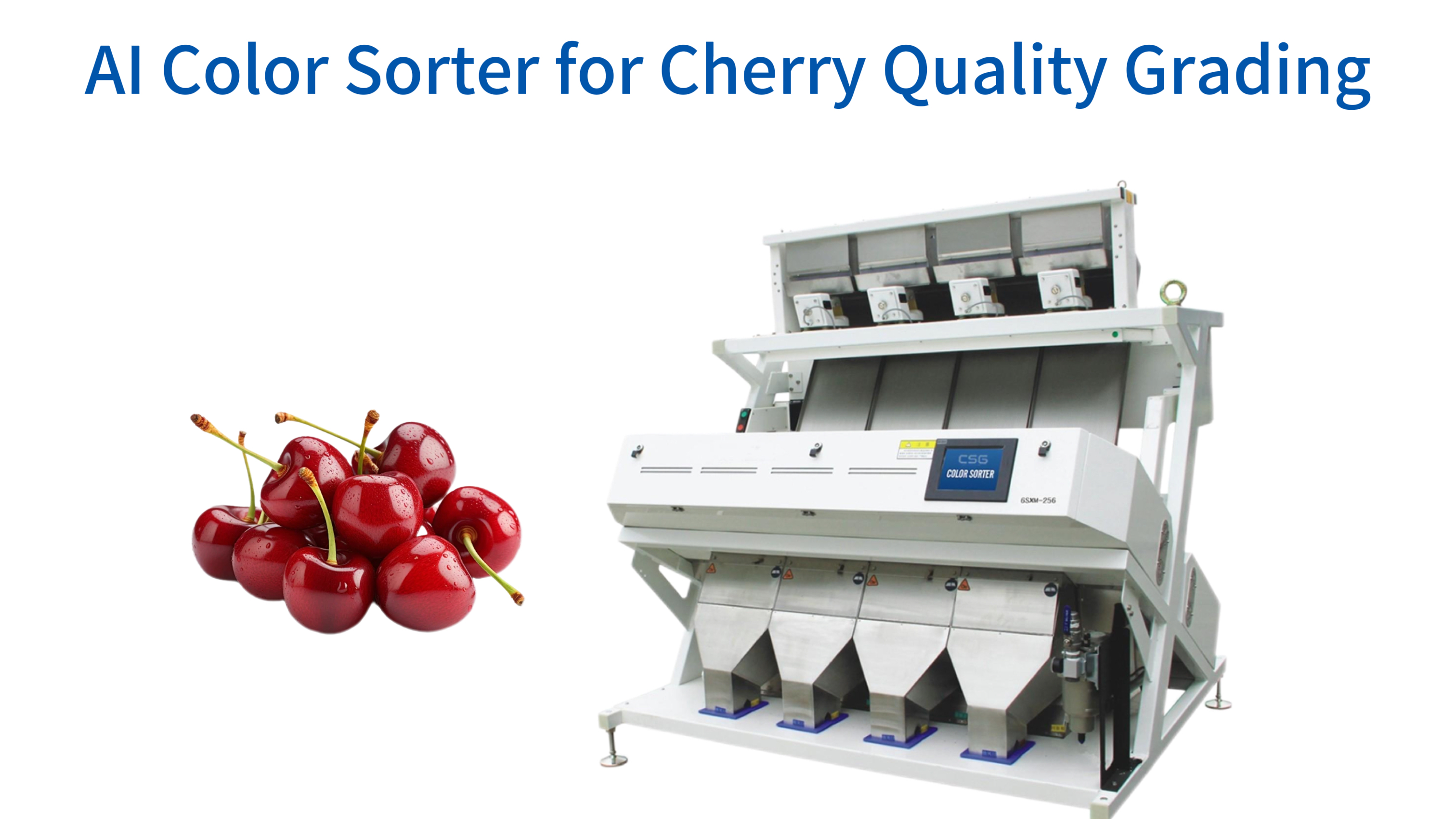
The global cherry industry has experienced remarkable growth, with production expanding across North America, Europe, Asia, and the Southern Hemisphere to meet insatiable consumer demand for this premium fruit. Cherries command some of the highest prices in the produce aisle, but with that value comes extraordinary expectations—consumers demand visually perfect fruit with uniform color, optimal size, firm texture, and intense sweetness. For packers, the challenge is immense: sorting millions of delicate cherries that vary naturally in color, size, and quality, while identifying subtle defects like cracks, splits, bruises, and stem damage that can render fruit unmarketable. Traditional manual sorting is increasingly inadequate—human inspectors cannot maintain consistency at high speeds, often miss subtle defects, and struggle with the natural color variation within varieties. Enter the AI color sorter—a revolutionary technology that combines high-resolution imaging, multi-spectral sensors, and deep learning algorithms to inspect every cherry individually with precision beyond human capability. This page explores how AI-powered color sorters are transforming cherry packing operations, the comprehensive quality factors they assess, and the tangible benefits they deliver to growers and packers worldwide.
The Growing Need for Automated Precision in Cherry Sorting
Manual vs AI Cherry Sorting Performance
Cherries present unique challenges for post-harvest handling that make automated sorting not just beneficial but essential. These delicate fruits are highly susceptible to mechanical damage—bruising, cracking, and stem loss can occur with rough handling, and once damaged, they deteriorate rapidly. At the same time, the market for fresh cherries has become increasingly segmented, with premium grades commanding significantly higher prices for superior appearance, size consistency, and taste. Retailers now specify strict quality parameters, including minimum size (measured in rows or millimeters), uniform color, freedom from defects like cracks or splits, and often minimum Brix (sugar content) levels. Meeting these demands while handling thousands of tons during the brief, intense harvest window requires technology that can inspect every cherry individually with consistent, objective criteria.
The limitations of manual sorting have become increasingly apparent as production volumes grow and labor becomes scarce. Human inspectors cannot maintain focus at the speeds required—modern packing lines process several tons per hour, equivalent to thousands of cherries per minute. Manual sorting is also inherently subjective, with consistency varying between workers and even for the same worker over time. Subtle defects like slight bruising, early-stage decay, or minor cracks are easily missed, while the natural variation in cherry color (from light red to dark mahogany within the same variety) can lead to misclassification. Moreover, labor shortages in many growing regions make reliance on manual sorting increasingly risky. As a result, the industry has rapidly adopted AI-powered color sorters, which now handle the majority of the world's premium cherry crop from packhouses across the United States, Europe, Chile, Australia, and beyond.
Market trends driving premium cherry segments
The premiumization of cherries is evident across global markets. Consumers are willing to pay more for cherries that not only look good but taste exceptional—sweet, firm, and flavorful. This has led retailers to specify internal quality parameters such as minimum Brix levels in their contracts. For example, some premium programs require Brix above 18° for cherries sold under specific brand labels. Packers who can guarantee such quality gain access to higher-value channels and build brand loyalty. The export market for cherries has also expanded dramatically, with fruit traveling from Southern Hemisphere producers to North America, Europe, and Asia, requiring extended shelf life that depends on impeccable sorting to remove fruit with hidden defects that could spoil during transit.
In parallel, consumer preferences vary by region—in China, for instance, domestic consumers strongly prefer large, dark cherries with stems intact, viewing the stem as an indicator of freshness . This has driven equipment manufacturers to develop gentler handling systems that preserve stems while still achieving high sorting accuracy. The ability to tailor sorting criteria to specific market demands has become a key competitive advantage, and AI-powered sorters provide the flexibility to adjust parameters instantly for different customers or export destinations. For more on how data integration enhances market responsiveness, explore our advanced detection systems.
Limitations of traditional sorting methods
Traditional mechanical grading based on size alone fails to address the quality factors that truly matter to consumers. A cherry can be the perfect size yet be soft, cracked, or internally decaying. Manual sorting attempts to address this but is inherently limited. Studies show that human inspectors achieve only 70-80 percent accuracy in detecting defects at commercial line speeds, with significant variation between individuals and fatigue over time. The presence of stems, which are essential for fresh market cherries, further complicates manual sorting—stems can be mistaken for defects or can hide defects on the fruit surface.
Furthermore, internal quality issues like low sugar content or early-stage internal breakdown are completely invisible to the human eye. Destructive sampling, where a small percentage of cherries are crushed for Brix measurement, provides only a rough batch average and misses the significant variability within a crop. This reactive approach means that substandard fruit often reaches consumers, leading to complaints, returns, and brand damage. The industry's shift toward non-destructive, individual-cherry inspection with AI-powered sensors directly addresses these fundamental limitations, enabling proactive quality management that was previously impossible.
Why cherries demand specialized sorting technology
Cherries are among the most challenging fruits to sort due to their small size, delicate nature, and critical quality attributes. A single tree can produce cherries ranging from small (9-10 rows) to jumbo (11.5+ rows), with colors from light red through deep mahogany as they ripen. The skin is thin and easily damaged, and the stem—a key freshness indicator for many markets—is fragile and easily detached. Any mechanical interaction from infeed to discharge must be meticulously refined to minimize damage while maintaining precise positioning for accurate inspection.
Additionally, cherries are prone to specific defects that require sophisticated detection. Cracks and splits can be hairline-thin and difficult to spot; bruises may not be visible on the surface but affect internal quality; stem damage or absence reduces market value; and defects like double cherries or misshapen fruit affect visual appeal. The small size of cherries also demands extremely high-resolution imaging—defects of just 1-2mm can render a fruit unmarketable. This combination of challenges has driven the development of specialized AI color sorters designed specifically for cherries, incorporating gentle handling, multi-spectral imaging, and deep learning algorithms trained on millions of cherry images.
The economic impact of sorting accuracy
Sorting accuracy directly affects the bottom line in cherry operations. Every percentage point improvement in defect removal reduces customer complaints and returns, while minimizing false rejects (good cherries mistakenly ejected) increases yield and profitability. Given the high value of premium cherries—often $4-8 per pound at retail—even small improvements in accuracy translate to significant financial impact. For a facility processing 2,000 tons annually, a 3 percent reduction in false rejects could save hundreds of thousands of dollars in recovered product value.
Beyond direct yield improvements, accurate sorting enables premium pricing. Cherries graded for uniformity of color, size, and freedom from defects command higher prices in retail markets, while those with minor defects can be diverted to processing (brining, freezing, or juicing) where they still retain value. The ability to sort into multiple quality grades—for example, premium export, domestic fresh, and processing—maximizes overall revenue from the crop. With payback periods for advanced sorters typically ranging from 12 to 24 months for high-volume operations, the economic case for investment is compelling and explains the rapid adoption of this technology worldwide.
What is an AI Color Sorter for Cherries and How Does It Work?
AI Cherry Color Sorter Working Process
An AI color sorter for cherries is an advanced optical inspection system that combines high-resolution imaging, multi-spectral sensors, and deep learning algorithms to evaluate every cherry individually at commercial speeds. At its core, the system uses specialized cameras—typically including RGB (color), infrared, and sometimes laser or hyperspectral sensors—to capture detailed information about each cherry's external appearance and internal condition. As cherries pass through the inspection zone on specialized rollers or conveyors, the sensors collect data on color, size, shape, surface defects, stem condition, and spectral signatures related to internal quality. This data is processed in real-time by AI algorithms trained on millions of cherry images to classify each fruit based on user-defined quality parameters. If a cherry fails to meet standards—due to color mismatch, size outside specification, crack, bruise, missing stem, or low Brix—a high-speed air ejector precisely removes it from the product stream, all within milliseconds.
The integration of multiple sensor types is what makes these systems so powerful. Visible-light RGB cameras capture color and surface defects with exceptional resolution—often detecting flaws smaller than 1mm. Infrared or NIR sensors assess internal qualities like sugar content and can detect hidden defects like internal browning. Some advanced systems also include laser sensors for three-dimensional shape analysis or specialized stem detection cameras. The data from these various sensors is fused using sophisticated algorithms that provide a comprehensive quality assessment far beyond what any single sensor could achieve. This multi-sensor approach, combined with AI-powered decision-making, enables detection of defects and quality attributes that were previously impossible to identify non-destructively.
The evolution from simple color sorters to AI-powered systems
First-generation optical sorters for cherries relied on basic color cameras and simple threshold-based algorithms. These systems could separate red from green (for sweet versus tart cherries) and detect obvious color defects, but they struggled with subtle issues like cracks, stem damage, or internal quality. They also frequently misclassified natural features like the stem attachment point as defects, leading to unnecessary false rejects. The introduction of multi-spectral imaging added new capability by capturing information beyond visible light, but the real breakthrough came with the application of deep learning and artificial intelligence.
Today's AI-powered sorters are trained on massive datasets of cherry images collected across multiple seasons, growing regions, and varieties. For example, TOMRA's LUCAi™ deep learning platform is trained on millions of real fruit defects, with data and images accumulated over decades of industry experience. This training enables the AI to distinguish between truly defective cherries and harmless natural variations like slight color differences or the stem cavity. The system learns to recognize subtle patterns associated with specific defects—a hairline crack, for instance, has a characteristic signature that might be invisible to conventional cameras but detectable with the right combination of lighting and algorithms. As more data is collected, the algorithms continuously improve, making the sorters more accurate over time.
Core sensing technologies: RGB, infrared, and laser
Modern cherry sorters employ a suite of complementary sensing technologies, each providing different information about the fruit. High-resolution RGB cameras capture color and visual appearance—critical for sorting by ripeness (light red, medium red, dark red, mahogany) and detecting surface defects like cracks, splits, scars, or insect damage. These cameras typically operate at resolutions capable of detecting defects smaller than 1mm, essential for cherry applications where even minor blemishes affect marketability.
Infrared and near-infrared (NIR) sensors take inspection beneath the surface. NIR spectroscopy measures how cherries absorb light at specific wavelengths correlated with chemical composition—sugars (Brix), water content, and firmness. This enables non-destructive measurement of internal sweetness, allowing packers to guarantee minimum Brix levels. Infrared sensors are also effective at detecting certain internal defects, like bruising or internal breakdown, that may not be visible on the surface. Some advanced systems incorporate laser sensors for three-dimensional shape analysis, detecting misshapen cherries, double cherries, or those with abnormal contours that affect visual appeal.
The role of 360-degree imaging and stem detection
One of the key innovations in modern cherry sorters is the ability to view each fruit from all sides. Traditional sorters could only inspect the side facing the camera, potentially missing defects on the hidden side. Advanced systems now use specialized roller technology that gently rotates each cherry as it passes through the inspection zone, presenting the entire surface to multiple cameras. This comprehensive viewing ensures that defects are detected regardless of their location on the fruit, and it enables more accurate size measurement and shape analysis.
Stem detection is particularly critical for cherries, as many premium markets require stems intact as a sign of freshness. Advanced sorters incorporate dedicated stem detection algorithms that identify the presence, condition, and length of stems. The system can differentiate between a healthy green stem and a dry, brown, or damaged stem, and can even detect cherries where the stem has been completely removed. This capability allows packers to sort into stem-on and stem-off grades, or to reject fruit with damaged stems that would detract from appearance. The combination of 360-degree imaging and specialized stem detection ensures that every cherry is fully evaluated for all quality attributes that matter in the market.
Deep learning algorithms trained on millions of cherry images
The intelligence behind modern sorters comes from deep learning algorithms trained on vast datasets of cherry images. These training sets include examples of every conceivable defect type, captured under varying lighting conditions and across different varieties and growing regions. The algorithm learns the characteristic patterns associated with different defects—the way light reflects from a crack, the color signature of a bruise, the texture of stem damage. What makes deep learning particularly powerful is its ability to generalize from training examples to new situations. Once trained, the algorithm can identify defects it has never seen before if they share underlying characteristics with the training data.
The system also provides clear defect classification, confidence levels, and severity scoring, allowing operators to fine-tune sorting parameters and get the best value from every cherry. For example, a packer might choose to reject only cherries with severe cracks while allowing those with minor, superficial scarring to pass for lower-grade markets. As the system operates, it can continue to learn, with operators able to provide feedback that refines the model over time. This continuous improvement cycle ensures that sorting accuracy keeps getting better, adapting to new varieties, changing growing conditions, and evolving market requirements.
Integration with gentle handling and conveyance systems
Advanced sensing is only half the story—the other half is getting cherries to the sensors without damaging them. Modern AI sorters are designed with holistic approaches to fruit handling, recognizing that every mechanical interaction from infeed to discharge affects final quality. Features like reduced drop heights, padded transfer points, and carefully engineered singulation systems ensure that cherries arrive at the inspection zone in perfect condition, with stems intact and no bruising.
Typical systems begin with a high-capacity vibratory feeder that evenly distributes cherries into a single layer to minimize overlapping—critical because if cherries are touching, the system cannot inspect each individually. From there, cherries transfer to specialized rollers or belts designed for small, delicate fruit. For stem-on markets, the handling system must be particularly gentle to avoid stem detachment. Throughout the process, speeds are optimized to balance throughput with gentle handling. Modern sorters can achieve throughputs of 2-5 tons per hour depending on configuration, enabling packers to process entire crops efficiently while maximizing quality.
Comprehensive Quality Factors Detected by AI Cherry Sorters
Quality Parameters Detected by AI Cherry Sorters
| Quality Factor | Detection Method | Accuracy |
|---|---|---|
| Color/Ripeness | High-res RGB | >99% |
| Size (Row Count) | 360° Imaging | ±0.1mm |
| Surface Defects | RGB + Laser | >98% |
| Stem Condition | Dedicated AI | >99% |
| Brix (Sweetness) | NIR Spectroscopy | ±1.0° Brix |
| Internal Defects | Hyperspectral | >95% |
Modern AI color sorters evaluate an extensive range of quality parameters, providing a complete picture of each cherry's condition. This multi-dimensional assessment enables packers to grade cherries with precision that far exceeds human capability, sorting into multiple quality tiers based on combinations of external and internal attributes. The ability to detect both visible and hidden defects simultaneously in a single pass represents a revolution in quality assurance, ensuring that only cherries meeting all criteria reach premium markets.
The following sections detail the key quality factors that AI sorters can detect, explaining how each attribute is measured and why it matters for consumer satisfaction and commercial value. Many of these measurements are made simultaneously using the same sensor suite, with deep learning algorithms separating signals from different properties. This integration is what makes AI-powered sorting such a transformative technology for the cherry industry.
Color sorting for ripeness and uniformity
Color is one of the most important external quality attributes for cherries, directly indicating ripeness and influencing consumer perception. Sweet cherry varieties typically progress from light red to dark mahogany as they ripen, with darker colors generally indicating higher sugar content and better flavor—though this varies by variety (Bing cherries are prized for dark color, while Rainier cherries are valued for their distinctive yellow-red blush). AI sorters use high-resolution RGB cameras to assess cherry color with exceptional precision, typically classifying into multiple categories such as light red, medium red, dark red, and mahogany.
This color grading ensures that packaged cherries have uniform appearance, which is essential for meeting retailer specifications and consumer expectations. For example, premium export grades might require 90 percent dark red or mahogany cherries, while lower grades can include a mix. The ability to sort by color also enables packers to capture maximum value from their crop—fully ripe dark cherries command the highest prices for fresh market, while lighter cherries can be held for further ripening or directed to processing. Some sorters can even detect subtle color variations associated with specific varieties or growing conditions, enabling variety-level segregation.
Size grading: row sizing for market segments
Size is a fundamental grading parameter for cherries, with most markets specifying size by "row" count—the number of cherries that fit in a standard box width. Larger cherries (smaller row numbers) command significantly higher prices. AI sorters measure cherry diameter with high precision using camera-based vision systems that calculate dimensions as fruit rotate through the inspection zone. Modern systems can measure size to within fractions of a millimeter, enabling tight grading bands that maximize value. For example, jumbo cherries (9.5 row or larger) can be separated for premium clamshells, while medium cherries (10-11 row) go to standard packs, and small cherries are directed to processing or bulk sales.
The 360-degree imaging ensures that size is measured accurately regardless of fruit orientation, and the system can also assess shape uniformity—cherries that are misshapen, double, or elongated can be detected and removed. Some sorters can be configured to identify multiple size grades in the same run, allowing single-pass sorting into several size categories. This capability streamlines packing operations, eliminating the need for separate size grading equipment and reducing handling that could damage fruit. For growers aiming to supply specific retailer size specifications, precise size grading is essential for compliance and premium pricing.
Surface defect detection: cracks, splits, and scars
Surface defects are a primary cause of cherry rejection. Cracks and splits—often caused by rain during harvest—can be hairline-thin but render fruit unmarketable due to decay risk and poor appearance. Bruises from mechanical damage may not break the skin but affect internal quality and shelf life. Scars from rubbing against branches or other fruit, insect damage, and sunburn all detract from visual appeal. High-resolution RGB cameras capture these defects with sufficient detail to detect even minor blemishes.
The challenge is distinguishing between harmless natural features (like the stem cavity or lenticels) and genuine defects. Deep learning algorithms trained on thousands of cherry examples learn these subtle differences. For instance, a crack has a characteristic linear pattern and light reflection that differs from a natural stem scar. The algorithms can also assess defect severity—a minor superficial scar might be acceptable for some markets, while a deep crack requires rejection. By quantifying defect extent, sorters enable more nuanced grading decisions that maximize recovery while maintaining quality standards.
Stem detection and condition assessment
For many premium cherry markets, stems are essential—they signal freshness and are part of the fruit's visual appeal. AI sorters incorporate dedicated stem detection capabilities that identify the presence, color, and condition of stems. Using high-resolution imaging and specialized algorithms, the system can differentiate between a healthy green stem, a dry or brown stem (indicating age or damage), and cherries where the stem has been completely removed (stemless).
Stem condition assessment is particularly valuable for export markets where fruit must travel long distances. Cherries with green, fresh-looking stems have better perceived freshness and longer potential shelf life. Sorters can be configured to reject cherries with damaged or missing stems for premium grades, while allowing stemless fruit to pass for processing or lower-grade markets. Some advanced systems can even measure stem length, enabling sorting for specific market preferences—some Asian markets, for example, prefer longer stems as a sign of freshness and careful handling.
Brix measurement for sweetness grading
Internal sweetness, measured as soluble solids content (Brix), is increasingly recognized as a key quality differentiator for cherries. Consumers expect sweet, flavorful fruit, and repeat purchases depend on consistent taste experiences. NIR spectroscopy integrated into modern sorters enables non-destructive measurement of Brix for every cherry, allowing packers to guarantee minimum sweetness levels. The technology works by analyzing how cherries absorb near-infrared light at wavelengths correlated with sugar concentration—typically in the 800-950nm range. Calibration models developed using refractometer readings from sampled cherries achieve accuracy within ±1.0° Brix in commercial applications.
This capability is particularly valuable for premium programs where sweetness is a selling point. Packers can segregate high-Brix cherries for specialty markets or export to regions with strong preferences for sweet fruit, while lower-Brix cherries are directed to processing or domestic markets where price is the primary consideration. As consumer awareness of Brix grows, the ability to market "sweetness-guaranteed" cherries becomes a powerful competitive advantage. The non-destructive nature of NIR measurement means that every cherry can be assessed without waste, unlike traditional destructive sampling that only provides batch averages.
Firmness and soft cherry detection
Firmness is critical for both eating quality and shelf life. Soft cherries are prone to bruising during packaging, develop off-flavors faster, and are more susceptible to decay. AI sorters detect soft cherries through multiple mechanisms. Some systems use optical properties, as soft fruit have different light scattering characteristics than firm ones. Hyperspectral imaging can detect the internal water/sugar distribution changes associated with softening. Other systems incorporate mechanical sensors that gently contact the fruit to assess firmness non-destructively.
Soft cherry detection is particularly challenging because not all soft fruit are alike—some result from overripeness, others from internal breakdown, and still others from mechanical damage. The AI algorithms learn to distinguish these different types based on their characteristic signatures, enabling more nuanced sorting decisions. For example, slightly soft but otherwise sound cherries might be acceptable for immediate sale or processing, while fruit with advanced breakdown is rejected entirely. By removing soft cherries before packing, sorters significantly improve the quality and consistency of the final product, reducing complaints and extending shelf life.
Internal defect detection: bruising and hidden decay
Some of the most damaging cherry defects are invisible from the outside. Bruising from mechanical handling may not break the skin but causes internal browning and softening that affects eating quality. Hidden decay from fungal infections may not show surface symptoms until the fruit is consumed. These internal defects have historically been impossible to detect without destroying the fruit, leading to significant quality risks. Hyperspectral imaging and advanced NIR sensors now make internal defect detection possible by analyzing how light penetrates and interacts with internal tissue.
For example, bruised tissue has different light scattering properties due to cell damage, creating spectral signatures that AI algorithms can recognize. Fungal infections produce chemical changes that affect spectral signatures before visible symptoms appear. By detecting these internal issues, sorters can remove affected fruit before it enters the supply chain, dramatically reducing the risk of consumer complaints. This capability is particularly valuable for fruit destined for export or long-term storage, where hidden defects could otherwise lead to losses after significant investment in transport and cold chain.
Foreign material removal: stems, leaves, and debris
Foreign material (FM) contamination is a serious food safety and quality issue. Loose stems, leaves, twigs, and other debris can find their way into harvested cherries, and their removal is essential for food safety compliance and customer satisfaction. AI sorters are highly effective at detecting and removing FM, using the same multi-sensor suite that evaluates cherry quality. Stems and leaves have distinct color and spectral signatures that differentiate them from fruit; insects may be detected by shape or spectral characteristics; and inorganic materials like plastic or metal are identified by their unique reflectance properties.
For cherry packers, effective FM removal is not just about quality—it's a food safety imperative that protects consumers and meets regulatory requirements. Modern sorters achieve FM detection rates exceeding 99 percent for common contaminants, providing peace of mind and reducing liability. The ability to remove foreign material automatically also reduces the need for manual inspection, saving labor and improving consistency.
Main Types of AI Color Sorters for Cherry Applications
Comparison of AI Cherry Sorter Types
| Sorter Type | Throughput | Footprint | Best For | Key Features | Price Range |
|---|---|---|---|---|---|
| Belt-type | 2-5 tons/hour | Large | High-volume packhouses | Gentle handling, stable imaging, 600-1200mm belt width | $250k-$400k |
| Chute-type | 1-3 tons/hour | Compact | Mid-scale operations | Multi-lane design, high speed, small footprint | $150k-$300k |
| Multi-sensor | 1-4 tons/hour | Medium | Premium export markets | RGB+NIR+Laser, full quality assessment | $300k-$400k |
| Compact | 0.5-1 ton/hour | Very small | Small-scale/farm gate | Mobile, modular, simplified interface | $50k-$150k |
| Integrated Line | 3-6 tons/hour | Custom | Full packing systems | Complete solution, end-to-end integration | $400k+ |
The cherry industry has access to a range of sorting solutions, each with different configurations optimized for specific throughput requirements, facility layouts, and application needs. Understanding the options helps packers select the right technology for their operation, whether they are small-scale growers diversifying into direct sales or large industrial packers shipping millions of pounds annually. The following sections describe the main types of AI sorters used in cherry processing, highlighting their characteristics and typical applications.
Many manufacturers offer modular systems that can be configured with different belt widths, sensor suites, and ejection options, allowing customization to specific needs. For example, belt widths commonly range from 600mm to 1200mm, with wider belts providing higher throughput capacity. Some systems are designed as standalone units, while others integrate into comprehensive packing lines with upstream and downstream equipment. The trend toward fully integrated solutions, where a single supplier provides everything from receiving to packaging, is growing as packers seek to streamline operations and reduce integration complexity.
Belt-type color sorters for high-volume packhouses
Belt-type sorters are widely used for large-scale cherry packing operations. Fruit is conveyed on a flat belt past the sensor array, which can be positioned above the belt or integrated into the housing. The belt provides stable support, reducing fruit movement and ensuring consistent imaging. Belt widths from 600mm to 1200mm accommodate different throughput requirements, with wider belts enabling higher capacities. For example, an 1200mm belt-width color sorting machine can process several tons of cherries per hour, making it ideal for major packhouses handling millions of pounds annually.
These sorters excel with cherries where gentle handling is crucial. The belt speed can be adjusted to optimize inspection time per fruit while maintaining high flow rates. Belt-type designs often incorporate multiple sensors across the width to ensure complete coverage, and fruit is typically singulated using vibratory feeders or alignment guides. Some systems include rotating rollers to present multiple sides of the fruit to cameras, though full 360-degree viewing may require specialized roller sections. Maintenance is straightforward, with easy access to belts and sensors, making belt-type sorters a popular choice for high-volume operations.
Chute-type sorters for compact footprints
For packers with limited floor space or those handling smaller volumes, chute-type sorters offer a compact and efficient solution. Fruit slides down an inclined chute, often with multiple lanes, and passes through the inspection zone. Each cherry is individually accelerated and positioned, allowing for precise measurement and ejection. Chute-type designs are known for their high speed and ability to handle large volumes in a small footprint, as the vertical orientation reduces floor space requirements compared to belt systems.
Chute-type sorters are particularly well-suited for cherries because they can achieve high throughputs while maintaining individual fruit inspection. The multiple lanes allow for fine-tuned ejection, with different grades separated using diverter gates at the end of each chute. These systems are often more affordable than equivalent belt systems, making them attractive for mid-sized operations. They also excel at stem detection because the chute orientation provides good visibility of the fruit's entire surface as it slides past the cameras.
Multi-sensor combinations (color + NIR + laser)
To achieve truly comprehensive quality assessment, many modern sorters combine color cameras with NIR sensors and laser systems. This multi-sensor approach evaluates both external appearance (color, size, surface defects) and internal attributes (Brix, firmness, hidden defects) in a single pass. For example, the multi-sensor optical sorter can simultaneously measure color, detect cracks, assess stem condition, and estimate Brix—providing a complete quality profile for every cherry.
Data fusion from multiple sensors enables sophisticated grading decisions. A cherry might have perfect color but a low Brix reading, diverting it from premium fresh market to processing. Another might have excellent internal quality but a missing stem, making it suitable for stemless markets or bulk packs. This holistic assessment maximizes value by directing each cherry to its optimal market channel. For packers aiming to meet the most stringent retailer specifications, multi-sensor systems provide the comprehensive quality assurance needed to compete in premium markets.
Compact sorters for small-scale and farm gate operations
Not all cherry operations need massive throughput. Small-scale packers, organic farms, or growers selling directly at farmers' markets can benefit from compact AI sorters designed for lower volumes. These units typically have narrower belts or fewer chutes and a smaller footprint, making them affordable and easy to install in existing facilities. Despite their size, they incorporate the same core AI technology and accuracy as larger machines, allowing small producers to offer guaranteed quality to their niche markets. Compact sorters can process 500-1000 pounds per hour, sufficient for many local operations.
These machines are often modular, allowing growers to start with a basic configuration and add features like NIR sensors or additional ejection channels later. They may also be mobile, mounted on wheels for use at different points in the orchard or packing shed. The user interface is simplified for ease of use, and maintenance is designed to be manageable without specialized technicians. By democratizing access to AI sorting, compact units empower small producers to compete on quality and build direct-to-consumer brands that command premium prices.
Integrated line solutions for complete packing systems
Comprehensive cherry packing lines often incorporate multiple sorting stages, each optimized for specific functions. A typical configuration might include a pre-sorter to remove debris and undersized fruit, a color sorter for external quality, and a dedicated stem detection module. Some manufacturers offer fully integrated line solutions that include everything from receiving to packaging, ensuring seamless integration and single-source responsibility. For packers building new facilities or major upgrades, these integrated solutions simplify project management and ensure that all components work together optimally.
Integrated lines can include specialized equipment like water dump tanks for gentle receiving, cluster cutters to separate stemmed cherries, drying tunnels to remove moisture before optical inspection, and multiple sorters arranged in series for progressively finer grading. The trend toward full-line solutions reflects the growing complexity of cherry packing operations and the value of having a single partner responsible for overall system performance.
Cherry Varieties and Specific Applications for AI Sorting
While AI sorters are capable of handling all cherry types, different varieties and end-use applications may have specific sorting requirements. Understanding these nuances helps packers configure their systems for optimal performance across their product mix. The following sections explore how AI sorting is applied to major cherry categories and market segments.
The flexibility of modern sorters means that a single machine can typically handle multiple varieties by switching between calibration models and adjusting color parameters. This versatility is valuable for packers who source from multiple growers or pack for diverse markets. As new cherry varieties continue to be developed—with traits like enhanced sweetness, firmness, or extended shelf life—the ability to adapt sorting criteria quickly becomes increasingly important.
Sweet cherries: Bing, Rainier, and premium varieties
Sweet cherries dominate the fresh market, with varieties like Bing (dark red to mahogany), Rainier (yellow with red blush), and newer premium cultivars like Skeena, Lapins, and Regina. For dark sweet cherries, color sorting focuses on achieving uniform dark red or mahogany appearance, with darker fruit generally commanding higher prices. Rainier cherries require careful color sorting to achieve the characteristic yellow background with red blush—too much red suggests overripeness, while too little indicates insufficient maturity. The delicate skin of Rainiers also makes them more susceptible to bruising, requiring especially gentle handling.
For all sweet cherries, size grading is critical, with larger fruit (9.5 row and above) achieving premium prices. Stem condition is particularly important for sweet cherries destined for fresh market, as consumers associate intact green stems with freshness. Brix measurement is increasingly important for premium programs, with some packers guaranteeing minimum sweetness levels. AI sorters configured for sweet cherries must balance all these parameters, sorting into multiple grades based on combinations of color, size, stem condition, and internal quality.
Tart cherries for processing
Tart cherries (also called sour cherries) are primarily destined for processing—pies, jams, juices, dried fruit, and frozen products. Quality priorities differ from sweet cherries. Color sorting typically focuses on removing defective fruit rather than achieving uniform appearance, though some products may have color specifications. Size is less critical, though uniformity may matter for certain applications like dried cherries. Stem condition is irrelevant for processing, as stems are removed during processing.
For tart cherries, the primary goals are removing defective fruit (rotten, moldy, or damaged) and foreign material, while maximizing yield. Throughput is often prioritized over ultra-precise grading, though AI sorters still provide significant value by automating defect removal. Some processors use multiple sorters—one for initial bulk sorting to remove gross defects, followed by a final quality sorter before packaging. The lower value per pound of tart cherries means that sorters must be highly efficient to justify investment, but the volumes involved make even small improvements in yield economically significant.
Export market requirements
Export markets have particularly stringent cherry quality requirements. Fruit destined for Asia, for example, must meet strict size, color, and stem condition standards, with long transit times demanding impeccable sorting to remove fruit with hidden defects that could spoil during shipping. Many export contracts specify maximum tolerance levels for defects—often less than 1 percent—requiring sorting accuracy that only AI-powered systems can consistently achieve.
Different export markets have varying preferences. Chinese consumers prefer large, dark cherries with stems intact, viewing the stem as a freshness indicator. European markets may accept lighter-colored fruit depending on variety. Some markets have specific phytosanitary requirements that affect sorting—for example, fruit destined for certain countries must be free from specific pests or diseases, requiring detection capabilities that AI sorters can provide. For packers serving multiple export destinations, the ability to switch between product profiles instantly is essential for efficient operation.
Organic cherry certification compliance
Organic cherry production has grown significantly as consumer demand for organic fruit increases. Organic packers face additional quality challenges—without synthetic fungicides, organic cherries may be more susceptible to certain defects, and post-harvest handling must prevent contamination. AI sorters help organic packers meet these challenges by removing defective fruit before it can spread decay in storage, reducing reliance on post-harvest treatments. The non-destructive nature of sorting also aligns with organic principles by minimizing waste—only truly unmarketable fruit is rejected, while the maximum amount of acceptable fruit is recovered.
Some organic certification bodies recognize the value of automated sorting in reducing food waste and improving quality consistency. By enabling more precise grading, AI sorters help organic producers maximize the value of their crop while maintaining the high standards expected by organic consumers. For organic packers targeting export markets, the traceability data provided by modern sorters supports certification and compliance documentation.
The Science Behind AI Sorting: How Cherry Quality Parameters Are Measured
Spectral Detection Principle for Cherry Quality
RGB (400-700nm) + NIR (700-2500nm)
Reflection, Absorption, Scattering
Spectral Signature Collection
Trained on millions of samples
Brix, Size, Defect Classification
Accept/Reject/Grade Assignment
400-700nm (Visible): Color, surface defects, stem condition
840nm & 910nm (NIR): Sugar content (Brix) measurement
970nm (NIR): Water content and firmness assessment
900-1400nm (NIR): Organic acids and internal defects
The remarkable capabilities of AI sorters are built on solid scientific foundations in optics, spectroscopy, and machine learning. Understanding these principles helps users appreciate both the power and the limitations of the technology, enabling more effective operation and troubleshooting. This section explores the key scientific concepts that make AI sorting possible.
While the technology is sophisticated, the fundamental principles are accessible. Light interacts with matter in predictable ways, and those interactions contain information about composition and structure. AI algorithms learn to decode that information, translating raw sensor data into actionable quality decisions. The combination of physical measurement and intelligent interpretation is what makes modern sorters so effective.
Interaction of light with cherry tissue
When light strikes a cherry, several interactions occur. Some light is reflected from the surface, providing information about color, surface texture, and defects. Some light penetrates the skin and enters the flesh, where it may be scattered by cell structures or absorbed by specific molecules before either being re-emitted (diffuse reflectance) or passing through the fruit. The pattern of absorption and scattering encodes information about the cherry's internal composition and structure.
Different wavelengths of light interact differently with cherry tissue. Visible light (400-700nm) is primarily affected by pigments—anthocyanins responsible for red and purple colors in sweet cherries, carotenoids in Rainier cherries, and other compounds. Near-infrared light (700-2500nm) penetrates deeper and is absorbed by molecular bonds—C-H bonds in sugars, O-H bonds in water, and C-O bonds in organic acids. By analyzing the full spectrum of reflected or transmitted light, the sorter can simultaneously assess both external appearance and internal chemistry.
How spectral signatures reveal internal quality
Every chemical component in a cherry has a characteristic absorption spectrum—a pattern of which wavelengths it absorbs most strongly. Sugars absorb strongly around 840nm and 910nm; water has major absorption bands near 970nm and 1450nm; organic acids absorb in the 900-1400nm region. By measuring the intensity of absorption at these key wavelengths, the sorter can estimate sugar content (Brix) and other internal parameters. This is essentially the same principle used by laboratory instruments like refractometers, but applied non-destructively and at high speed.
For internal defects, the mechanism is often more about scattering than absorption. Bruised tissue, for example, has disrupted cell structure that scatters light differently than healthy tissue. This affects the spectrum in ways that AI algorithms can recognize, even though no specific chemical change has occurred. Similarly, internal decay changes cell structure and water distribution, producing characteristic spectral patterns. The ability to detect these structural changes through their effect on light scattering is what makes multi-spectral imaging so powerful for internal defect detection.
The training process for AI defect recognition
AI algorithms don't "know" what defects look like in advance—they must be trained on examples. The training process begins with collecting thousands of images of cherries with known quality status. Each image is labeled by human experts based on destructive inspection—for example, "this cherry has a crack," "this cherry has a bruise," "this cherry is sound." The AI algorithm analyzes these labeled images, learning to associate specific patterns in the image data with each defect type. Over many training cycles, the algorithm builds an internal model of what each defect looks like.
For leading systems, this training has involved millions of real fruit defects, with data and images collected across multiple seasons, varieties, and growing regions. This extensive training enables the system to recognize defects even when they appear in varieties or conditions not specifically included in the training set. The algorithm learns general features of defects—the way light reflects from a crack, the color signature of a bruise—rather than simply memorizing specific examples. Once deployed, the system can continue to learn from new data, with operators able to provide feedback that refines the model over time.
Calibration and validation for accuracy
While AI algorithms handle defect recognition, quantitative measurements like Brix require careful calibration. To build a Brix prediction model, the sorter must be trained using cherries with known Brix values measured by refractometer. The system records the NIR spectrum of each cherry and uses statistical techniques (typically partial least squares regression) to find the relationship between spectral features and Brix. The resulting calibration model is then validated on independent test sets to ensure it generalizes accurately to new cherries.
Calibration must account for factors like fruit temperature, variety, and growing region that can affect spectra. Most sorters include automatic calibration routines using built-in reference materials to compensate for lamp aging or sensor drift. Periodic validation with known samples ensures continued accuracy. Some systems offer remote calibration support, where experts analyze validation data and adjust models as needed. The accuracy of Brix measurement is typically within ±1.0° for well-calibrated systems, sufficient for commercial grading applications.
Economic and Operational Benefits for Cherry Packers
Economic Benefits of AI Cherry Sorters (2,000 Tons/Year Operation)
ROI Calculation
| Initial Investment | $300,000 |
| Annual Labor Savings | +$150,000 |
| Yield Improvement (3%) | +$120,000 |
| Premium Pricing (20%) | +$200,000 |
| Waste Reduction | +$30,000 |
| Total Annual Benefit | $500,000 |
| Payback Period | 7.2 months |
Investing in AI color sorting technology delivers multiple economic and operational benefits that extend far beyond simple defect removal. From direct cost savings to strategic market positioning, the advantages of automated sorting are transforming cherry packhouses worldwide. The following sections quantify these benefits and illustrate how they contribute to a strong return on investment.
For most packers, the payback period for an AI sorter ranges from 12 to 24 months, driven by labor savings, yield improvements, premium pricing, and reduced waste. As labor costs continue to rise and quality expectations increase, the economic case for automation becomes ever stronger.
Labor savings and reduced dependency on seasonal workers
Manual sorting of cherries is labor-intensive, requiring dozens of workers on the packing line during the brief, intense harvest window. Finding and training enough seasonal workers is increasingly difficult in many growing regions, and labor costs continue to rise. AI sorters dramatically reduce this labor requirement. A single modern sorter can replace 15-30 manual sorters, depending on throughput, while operating 24/7 with consistent accuracy. This not only saves direct labor costs but also eliminates the management burden of recruiting, training, and supervising seasonal teams.
The labor savings extend beyond the sorting line itself. With automated sorting, packers can reduce overtime, avoid the costs of temporary housing for seasonal workers, and eliminate the quality variability inherent in manual sorting. For operations in regions with labor shortages, automation may be the only way to process the full harvest. The consistency of AI sorting also means that new operators can be trained quickly—the intuitive interfaces and automated product profiles reduce the skill level required to achieve high-quality results.
Yield improvement through reduced false rejects
False rejects—good cherries mistakenly identified as defective and ejected—represent direct product loss and reduced revenue. Traditional sorters based on simple threshold algorithms often have significant false reject rates because they cannot distinguish between harmless natural features (like the stem cavity) and genuine defects. AI-powered sorters dramatically reduce false rejects by learning the subtle differences. For premium cherries worth several dollars per pound, even a 1-2 percent reduction in false rejects translates to substantial annual savings.
For a large packer processing 2,000 tons annually, a 2 percent reduction in false rejects could recover 40 tons of product worth $200,000-$300,000 at wholesale prices. The economic impact is even greater for premium export grades, where each pound of fruit saved represents high-value sales. The precision of AI algorithms also means that borderline fruit—cherries that might be acceptable for some markets but not others—can be accurately sorted to the appropriate grade, maximizing overall recovery. This yield optimization is one of the most compelling economic benefits of AI sorting technology.
Premium pricing through consistent quality
Consistent, documented quality commands premium prices in the marketplace. Retailers and food service buyers are willing to pay more for cherries that meet strict specifications with reliable consistency. AI sorters enable packers to guarantee quality attributes—size uniformity, color consistency, stem condition, minimum Brix, freedom from defects—that differentiate their product in competitive markets. Some premium programs achieve price premiums of 20-30 percent over commodity fruit, directly attributable to the quality assurance enabled by advanced sorting.
The ability to sort into multiple quality grades also allows packers to capture maximum value from each crop. Premium fruit can be directed to the highest-value channels (export, high-end retail), while standard grades go to volume markets, and processing-grade fruit is still recovered for alternative uses. This tiered marketing approach optimizes overall revenue and reduces the risk of having to discount entire batches due to mixed quality. As consumer expectations continue to rise, the ability to deliver guaranteed quality becomes an increasingly important competitive advantage.
Extended shelf life and reduced waste throughout supply chain
Removing defective cherries before packing has a multiplier effect throughout the supply chain. Soft, cracked, or decaying fruit in a package can accelerate spoilage of surrounding fruit through ethylene production and mold spread. By eliminating these problem cherries, AI sorters extend the shelf life of the entire package. Retailers benefit from reduced markdowns and shrink, while consumers enjoy fresher fruit for longer after purchase. This extended shelf life reduces food waste at every stage—one of the most important sustainability benefits of advanced sorting.
For exporters shipping long distances, extended shelf life is critical. Cherries that must travel for weeks by sea and through distribution channels must arrive with sufficient remaining life for retail display and consumer use. Sorting out fruit with hidden defects or reduced storage potential ensures that only the most robust fruit is committed to long journeys. This reduces the risk of out-of-condition arrivals and the associated financial losses. The waste reduction extends to the entire value chain, contributing to sustainability goals by ensuring that only marketable fruit consumes resources for packaging, cold storage, and transport.
Traceability and data-driven quality management
Modern AI sorters generate extensive data on every batch processed—total volume, grade distribution, defect rates, average Brix, and more. This data can be used to create detailed quality reports that document the condition of shipped fruit. In the event of a customer complaint, the data can help investigate the issue and demonstrate that the fruit met specifications at the time of sorting. For growers, the data provides feedback on crop quality that can inform decisions about variety selection, cultural practices, and harvest timing.
Some sorters integrate with enterprise resource planning (ERP) systems or cloud platforms, enabling seamless data flow and remote monitoring. This connectivity supports broader digital transformation initiatives and provides managers with real-time visibility into packing line performance. For packers aiming for certifications like GlobalG.A.P., BRC, or organic standards, having documented quality data is a strong asset. The ability to provide traceability from orchard to packhouse to retailer is increasingly expected in the global food trade, and AI sorters provide the data foundation to meet these expectations.
Return on investment: typical payback period
The initial investment in an AI color sorter varies based on configuration, capacity, and sensor suite, typically ranging from $150,000 to $400,000 for a full-scale cherry system. However, the combination of labor savings, yield improvements, premium pricing, and waste reduction delivers compelling returns. Many packers report payback periods of 12 to 24 months, with some achieving payback in a single season for high-volume operations.
Consider a mid-sized packer processing 1,000 tons annually. If the sorter reduces labor costs by $100,000 per year, improves yield by 2 percent (recovering 20 tons of product worth $5,000/ton = $100,000), and enables premium pricing on 30 percent of volume (300 tons at $1,000/ton premium = $300,000), the total annual benefit exceeds $500,000—well above the typical investment. Even conservative estimates show strong returns. Financing options and leasing programs also make the technology accessible to smaller operations. When evaluating ROI, it's important to consider not just direct savings but also the strategic value of being able to offer guaranteed quality, which can open new markets and strengthen customer relationships.
Why Choose Advanced AI Sorting Solutions for Your Cherry Line?
Selecting the right AI sorting partner is as important as the technology itself. A trusted provider brings deep industry knowledge, robust equipment, and comprehensive support that ensures your investment delivers maximum value. Advanced solutions are designed specifically for cherries, with configurations that address the unique challenges of delicate fruit handling, stem preservation, and the diverse quality parameters that matter in cherry markets. The following sections outline the key attributes to look for in a sorting solution and how they contribute to your success.
From custom engineering to after-sales service, the right partner ensures that your sorter integrates seamlessly, performs reliably, and adapts as your business evolves. With decades of combined experience in fruit sorting, leading manufacturers have refined their offerings to meet the exacting demands of the cherry industry.
Specialized expertise in cherry sorting
Cherries present unique challenges that require specialized expertise. Leading manufacturers have dedicated significant R&D to understanding cherry optics, developing gentle handling systems that preserve stems, and training AI algorithms on cherry-specific defects. Look for a provider with a proven track record of installations in cherry applications, preferably with references you can contact. The best suppliers continuously invest in R&D, staying at the forefront of sensor technology, AI algorithms, and gentle handling innovations. They partner with growers, packers, and research institutions to advance the science of cherry quality evaluation.
Gentle handling engineered for stem preservation
Preserving cherry stems through the sorting process is essential for many premium markets. Advanced solutions are designed from the ground up with gentle handling as a core principle, with every mechanical interaction optimized to minimize stem loss. Reduced drop heights, padded transfer points, and specialized roller designs ensure that cherries maintain their stems and avoid bruising throughout the process. This focus on gentle handling delivers tangible benefits—cherries that emerge from the sorter with stems intact have better visual appeal and command higher prices.
Proven AI algorithms with extensive cherry training datasets
The accuracy of AI sorting depends critically on the quality and breadth of the training data. Look for providers who have invested in building comprehensive training datasets covering multiple varieties, growing regions, seasons, and defect types. Extensive training ensures that the algorithms can handle the natural variability in real-world fruit and maintain accuracy across different conditions. Ask potential suppliers about their training methodology—how many images, from how many sources, covering what range of defects? The best providers treat algorithm development as a continuous process, refining models over time to improve accuracy and adapt to new varieties or defect types.
Customizable configurations for different packhouse needs
No two cherry operations are exactly alike. Advanced solutions offer modular designs that can be customized with various belt widths, sensor options, and ejection configurations. Sensor suites can be configured for basic color sorting or expanded to include full NIR capabilities for internal quality assessment. Customization extends to software as well—the user interface can be configured to display the metrics most important to your operation, and product profiles can be created for each variety or customer. This flexibility ensures that you get a machine that fits your specific needs and can adapt as your business grows.
Comprehensive after-sales support and training
Even the best sorter requires ongoing support to maintain peak performance. Leading providers offer comprehensive after-sales services including installation, operator training, maintenance programs, and rapid response to issues. They maintain stocks of spare parts and can ship critical components quickly—essential during peak harvest when downtime is most costly. Training is particularly important for AI systems. Operators need to understand how to use product profiles, interpret real-time data, and provide feedback that helps the system learn. The best suppliers provide on-site training, detailed documentation, and ongoing access to technical support.
Integration with existing and future line components
An AI sorter should fit seamlessly into your current operation. Advanced solutions are designed for easy integration with standard conveyor systems and common upstream/downstream equipment. The supplier's engineers can work with you to assess your line and recommend optimal sorter placement. For packers building new facilities or major upgrades, some suppliers offer fully integrated line solutions that include everything from receiving to packaging. This approach simplifies project management, ensures compatibility between components, and provides single-source responsibility for performance.
Visit our website for more information
To explore how an AI color sorter can transform your cherry packing operation, we invite you to browse our website for detailed product specifications, case studies, and application videos. You'll find information on our full range of sorting solutions, from compact units for small packers to high-capacity systems for global exporters. Our team of application specialists is ready to answer your questions and provide a personalized consultation based on your specific varieties, volumes, and quality goals.
For a deeper dive into related technologies, explore our resources on cherry sorting machine applications and AI-powered sorting technology. We are committed to helping cherry packers achieve excellence through innovation, partnership, and a relentless focus on quality. Your journey toward precision sorting and guaranteed quality starts here.