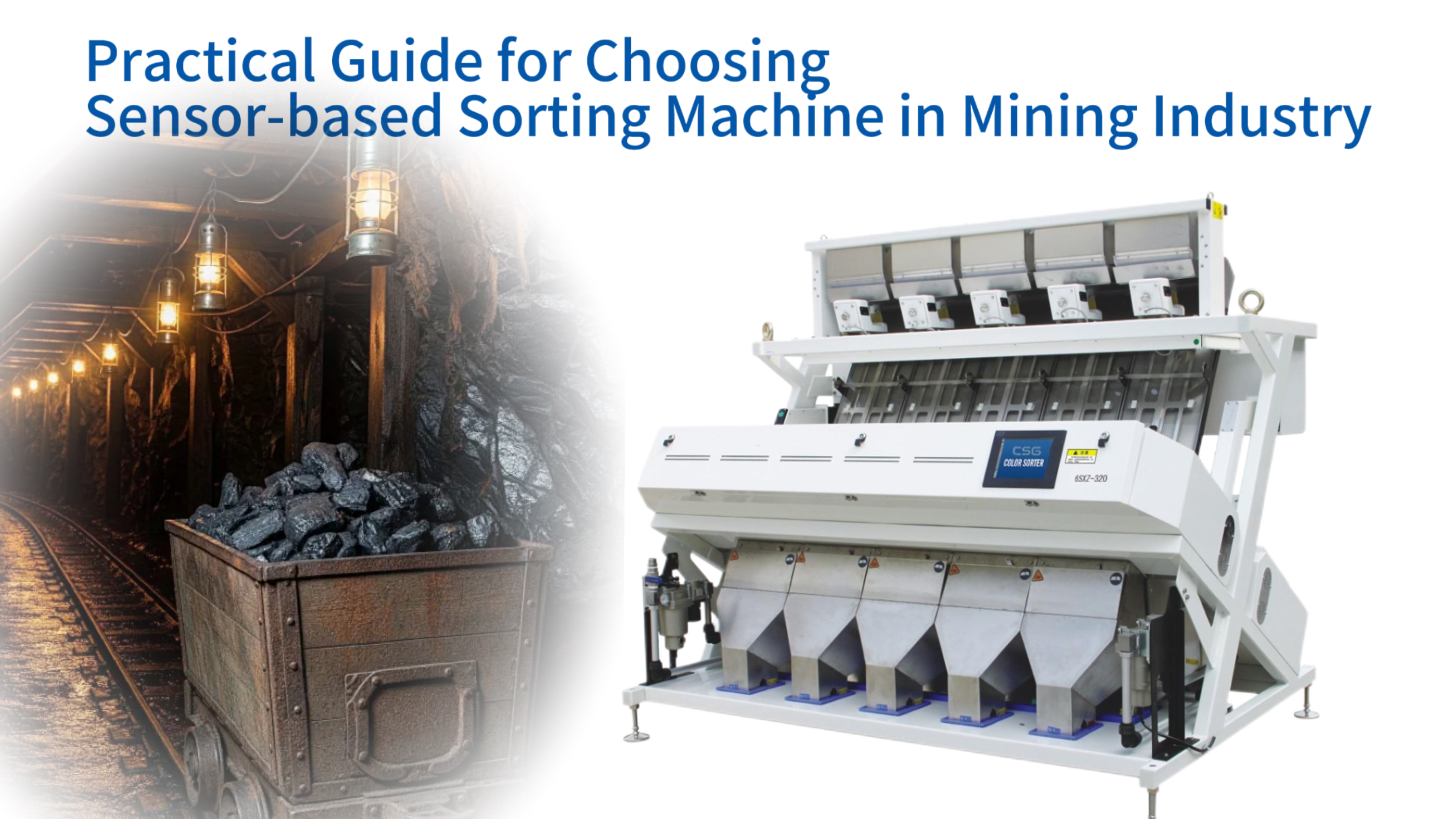
The mining industry stands at a pivotal moment where technology convergence is redefining what constitutes economically recoverable ore. Sensor-based sorting machines represent one of the most significant advancements in mineral processing, offering the ability to upgrade run-of-mine material before it enters the comminution circuit. These systems analyze individual particles using sophisticated sensor arrays and eject valuable material or waste with remarkable precision. For mining operators facing declining head grades, increasing energy costs, and stricter environmental regulations, the decision to integrate sensor-based sorting technology carries profound implications for profitability and sustainability. This guide provides a comprehensive framework for navigating the selection process, examining the technical specifications, material characteristics, operational parameters, and economic considerations that determine whether a sorting solution delivers on its theoretical promise. By understanding the interplay between sensor technologies, mechanical configurations, and ore-specific properties, mining professionals can make informed decisions that transform their processing operations.
Understanding the Fundamental Value Proposition of Sensor-Based Sorting
Key Performance Improvements from Sensor-Based Sorting
| Metric | Reduction/Improvement | Description |
|---|---|---|
| Energy Consumption | Up to 50% | Reduction in comminution energy for equivalent processed ore tonnes |
| Water Usage | Up to 40% | Reduction in overall water consumption for arid mining operations |
| Recovery Rate | 5-15% | Increase in overall mineral recovery rates |
| Payback Period | Months | Typical ROI timeline for appropriately matched applications |
Sensor-based sorting introduces a paradigm shift in mineral processing by enabling early waste rejection at the coarsest possible particle size. Traditional comminution circuits consume approximately fifty percent of a mine's total energy budget, with much of that energy expended on grinding material that ultimately reports to the tailings dam. By removing waste rock before it enters the mill, sorting technology reduces energy consumption by up to fifty percent for equivalent processed ore tonnes and decreases water usage by a similar margin. These reductions translate directly to lower operating costs and diminished environmental footprint, making previously uneconomical low-grade deposits financially viable. The technology also delivers operational flexibility, allowing mines to blend sorted products to meet specific concentrator feed requirements or market specifications.
The economic impact of sensor-based sorting extends beyond immediate cost savings to fundamental improvements in mine planning and resource recovery. Mines can now exploit heterogeneous orebodies that would have been impossible to process economically with conventional methods alone. Selective mining combined with sorting enables the recovery of valuable mineralization from dilution materials and low-grade stockpiles that would otherwise be permanently lost. Studies from operating mines demonstrate that sensor-based sorting can increase overall recovery rates by five to fifteen percent while simultaneously upgrading mill feed grades. This dual benefit of recovering more metal while processing less waste creates compelling economic returns, with payback periods often measured in months rather than years for appropriately matched applications.
Energy Efficiency Gains Through Pre-Concentration
The physics of comminution dictates that energy requirements increase exponentially as particle size decreases. Breaking rock from one hundred millimeters to ten millimeters consumes significantly less energy than grinding from ten millimeters to one hundred microns. Sensor-based sorting operates at the coarsest end of this spectrum, typically processing material in size ranges from ten millimeters to one hundred fifty millimeters. By removing barren waste at this coarse stage, the technology ensures that downstream mills only expend energy on material containing valuable minerals. A typical installation processing thirty percent waste rejection can reduce specific energy consumption in the grinding circuit by approximately thirty percent, with proportional reductions in steel media consumption and liner wear. These savings accumulate continuously throughout the mine life, representing substantial operational cost reductions.
The energy benefits extend beyond the mill to the entire material handling system. Conveyors, pumps, and thickeners all operate with reduced loads when waste is removed early in the process. Haulage costs to the waste dump decrease because rejected material travels a shorter distance from the sorter rather than from the mill. Water recycling systems treat lower volumes, and tailings storage facilities require less capacity. The cumulative effect of these reductions often exceeds the direct energy savings from comminution alone. For mines operating in remote locations with expensive power generation, the kilowatt-hour savings from sensor-based sorting can transform marginal operations into profitable enterprises.
Water Conservation in Arid Mining Environments
Water scarcity presents an existential challenge for mining operations in many global regions. Traditional mineral processing relies heavily on water for transport, classification, and separation. Sensor-based sorting operates as a dry process, requiring no water for the sorting step itself. This characteristic proves particularly valuable for mines in water-stressed areas where securing sufficient water for conventional processing limits production capacity or creates conflict with other water users. The water saved through dry pre-concentration remains available for essential downstream processes or for surrounding communities and ecosystems. Some mining operations have reported reducing their overall water consumption by more than forty percent after implementing sensor-based pre-concentration.
The financial implications of water conservation extend beyond reduced abstraction costs. Mines avoid the capital expenditure associated with developing new water sources, constructing pipelines, and building larger tailings storage facilities. The reduced tailings volume resulting from waste rejection also decreases the long-term water inventory trapped in tailings dams, lowering closure liabilities and post-mining water treatment obligations. Environmental approval processes often proceed more smoothly for projects demonstrating responsible water stewardship through technologies like sensor-based sorting. These regulatory advantages can shorten project development timelines and reduce permitting risks for new mining ventures.
Extending Mine Life Through Low-Grade Processing
The economic cutoff grade that defines ore versus waste fundamentally determines the extractable reserves of any mining operation. Sensor-based sorting effectively lowers this cutoff grade by reducing the cost of processing lower-grade material. Material previously classified as uneconomical waste becomes feed for the sorter, which upgrades it to mill-acceptable grades. This capability extends mine life by unlocking value from marginal resources and stockpiled low-grade material. Many mines possess substantial low-grade stockpiles accumulated over decades of operation, representing significant embedded value that conventional processing cannot economically recover. Sensor-based sorting provides the key to unlocking this value without requiring additional mining.
The life extension benefits compound over time as mines deepen and grades naturally decline. Rather than facing premature closure when head grades fall below the economic threshold, mines equipped with sorting technology continue operating profitably. This extended operational life spreads fixed costs over more tonnes, improves net present value calculations, and sustains employment and economic benefits for surrounding communities. The social license to operate strengthens when communities see mining operations as long-term partners committed to maximizing resource recovery rather than short-term extractors. From a strategic perspective, the ability to process lower grades also insulates mining companies from commodity price volatility, providing operational resilience during market downturns when every percentage point of cost reduction matters.
Reducing Environmental Footprint and Tailings Generation
Tailings management represents one of the mining industry's most significant environmental and financial challenges. The catastrophic failures of tailings storage facilities have heightened public scrutiny and regulatory oversight, making tailings reduction a priority for responsible operators. Sensor-based sorting directly addresses this challenge by removing waste rock before it ever enters the processing circuit. The material rejected by the sorter consists of coarse, dewatered rock suitable for use as construction aggregate, backfill, or stable landform rehabilitation. This contrasts sharply with the fine, wet tailings produced by conventional processing, which require permanent containment and ongoing management. Every tonne of waste rejected by the sorter represents one less tonne of tailings requiring storage.
The environmental benefits cascade through the entire mining lifecycle. Reduced tailings volumes mean smaller dams with lower construction costs, reduced seepage risks, and simplified closure requirements. The coarse waste rock from sorting can be blended with overburden during rehabilitation, creating more geotechnically stable landforms that support vegetation regrowth. Mines can implement progressive rehabilitation concurrent with operations rather than waiting for final closure. The reduced chemical consumption from processing less material also decreases the potential for acid mine drainage and other water quality impacts. These environmental advantages increasingly influence investment decisions, as institutional investors apply environmental, social, and governance criteria to mining company evaluations. Sensor-based sorting thus serves both operational and corporate responsibility objectives simultaneously.
Matching Sensor Technology to Ore Characteristics
The effectiveness of any sorting installation depends fundamentally on selecting the appropriate sensor technology for the specific ore characteristics. Different sensors detect different physical and chemical properties, and the optimal choice varies with mineralization type, gangue composition, particle size distribution, and throughput requirements. X-ray transmission sensors measure atomic density, making them ideal for ores where the valuable mineral has significantly higher density than the gangue. This technology excels in coal beneficiation where coal density around 1.3 grams per cubic centimeter contrasts sharply with rock densities exceeding 2.5 grams. Similarly, XRT effectively sorts sulfide ores from siliceous gangue and diamond-bearing kimberlite from barren waste rock. The technology provides the additional advantage of working independently of surface conditions, analyzing the full particle volume rather than just surface characteristics.
Near-infrared spectroscopy offers complementary capabilities for minerals with characteristic spectral signatures in the infrared range. This technology identifies specific mineral species based on their molecular vibrations, proving particularly valuable for industrial minerals like limestone, talc, and quartz where mineralogical purity determines market value. NIR sensors also detect clay minerals, carbonates, and hydrated phases that may indicate alteration zones associated with certain deposit types. For operations processing complex ores with multiple valuable minerals or problematic gangue components, combining multiple sensor technologies in a single machine provides comprehensive analysis capability. Multi-sensor systems integrate data from XRT, NIR, color cameras, and laser scanners, using advanced fusion algorithms to make sorting decisions based on the complete material signature rather than any single property.
X-Ray Transmission for Density-Based Separation
X-ray transmission technology represents the most established and widely deployed sensor platform for mining applications. The fundamental principle involves directing X-rays through each particle and measuring the attenuation, which correlates directly with atomic density. High-density materials containing valuable elements absorb more X-rays, appearing darker in the resulting image than low-density waste particles. Modern XRT systems achieve spatial resolution sufficient to analyze particles as small as three millimeters while maintaining throughput capacities exceeding two hundred tonnes per hour. The technology operates effectively across the full particle size range encountered in primary crushing circuits, from ten millimeters to one hundred fifty millimeters, making it suitable for pre-concentration applications immediately following secondary or tertiary crushing.
The application of XRT sorting extends across diverse commodity sectors with equal effectiveness. In copper ore sorting operations, the technology distinguishes sulfide minerals with densities around 4.5 grams per cubic centimeter from quartz and feldspar gangue typically below 2.7 grams. Iron ore beneficiation benefits from the extreme density contrast between hematite or magnetite and siliceous gangue. Coal preparation plants utilize dual-energy XRT to separate coal from rock based on both density and effective atomic number, achieving ash reductions of fifty percent or more in a single pass. The technology's insensitivity to surface moisture, coatings, or fines means it maintains accuracy under the variable conditions typical of mining operations. Field data from operating installations consistently demonstrates recovery rates exceeding ninety-five percent with waste rejection purities above ninety percent when appropriately applied.
Near-Infrared Spectroscopy for Mineral Identification
Near-infrared spectroscopy opens sorting possibilities for minerals that lack sufficient density contrast for XRT separation but possess distinctive spectral fingerprints. The technology illuminates particles with broad-spectrum infrared light and analyzes the reflected wavelengths, which exhibit characteristic absorption patterns corresponding to specific molecular bonds. Hydroxyl-bearing minerals like clays, micas, and amphiboles show strong absorption features, as do carbonates, sulfates, and certain hydrated oxides. This capability proves particularly valuable for industrial mineral applications where contamination by specific mineral species degrades product quality. Limestone processors, for example, use NIR sorting to remove dolomite contamination that would otherwise violate specifications for cement manufacture or flue gas desulfurization.
Recent advances in NIR sensor technology have dramatically improved signal-to-noise ratios and spectral resolution while reducing costs. Linear variable filter systems now enable simultaneous acquisition of full spectra across the entire sensor width, eliminating the scanning mechanisms that limited throughput in earlier generations. Machine learning algorithms trained on extensive mineral libraries can identify subtle spectral variations that distinguish between mineral species with similar gross compositions. This capability enables sorting decisions based on alteration mineralogy that correlates with valuable mineralization, effectively using gangue mineralogy as a proxy for ore value. The combination of NIR with other sensor technologies in AI-powered sorting systems provides comprehensive material characterization that approaches the capabilities of laboratory analytical instruments while operating at industrial throughput rates.
Laser-Induced Breakdown Spectroscopy for Elemental Analysis
Laser-induced breakdown spectroscopy represents the frontier of sensor-based sorting technology, offering direct elemental analysis at the particle level. The technology focuses a high-energy laser pulse onto each particle surface, creating a micro-plasma that emits light at wavelengths characteristic of the elements present. Spectrometers analyze this emission to determine elemental composition, enabling sorting decisions based directly on metal content rather than proxies like density or mineralogy. While historically limited by throughput constraints and high capital costs, recent developments have increased analysis rates sufficiently for commercial applications in specific niches. Precious metal operations where every gram of contained value justifies intensive analysis have been early adopters, using LIBS to recover gold-bearing quartz veins from barren waste rock.
The operational advantages of direct elemental analysis must be balanced against the technology's current limitations. LIBS analyzes only the particle surface to a depth of micrometers, potentially missing internal compositional variations in heterogeneous particles. The technique requires clean, dry surfaces for reliable analysis, imposing feed preparation requirements that may offset sorting benefits. Throughput remains lower than XRT or optical systems, typically ranging from ten to fifty tonnes per hour depending on particle size and required detection limits. Nevertheless, for applications where other sensor technologies cannot provide adequate discrimination, LIBS offers a path to economic recovery of values otherwise lost to tailings. Ongoing development of higher-power lasers and more sensitive spectrometers continues to expand the technology's capabilities and reduce costs.
Electromagnetic Sensors for Conductive and Magnetic Minerals
Electromagnetic sensing technologies exploit the electrical and magnetic properties of minerals to achieve separation where optical or density-based methods fall short. Induction balance sensors detect conductive minerals by measuring the eddy currents induced when particles pass through an alternating magnetic field. This technology efficiently recovers native copper, massive sulfides, and other conductive materials from non-conductive gangue. The response depends on both conductivity and particle size, with careful calibration required to optimize recovery for specific ore types. Magnetic susceptibility sensors similarly detect ferromagnetic and paramagnetic minerals, enabling recovery of magnetite, pyrrhotite, and certain chromium and nickel minerals from non-magnetic gangue.
The integration of electromagnetic sensors into multi-sensor sorting systems enhances overall discrimination capability for complex ores. A copper porphyry operation might combine XRT for bulk density sorting of sulfide-bearing particles with electromagnetic sensing for detecting native copper in oxide zones. An operation processing ultramafic nickel ores could use magnetic susceptibility to recover nickel-bearing serpentine while rejecting barren host rock. The complementary nature of different sensor technologies means that multi-sensor systems consistently outperform any single technology when applied to mineralogically variable ores. Advanced data fusion algorithms integrate the various sensor outputs into a single decision criterion, optimizing the trade-off between recovery and rejection based on economic parameters defined by the operator.
Selecting the Appropriate Mechanical Configuration for Material Handling
Belt-Type vs Chute-Type Sorters Comparison
| Characteristic | Belt-Type Sorters | Chute-Type Sorters |
|---|---|---|
| Material Handling | Gentle handling, minimal breakage (ideal for fragile materials like diamonds) | Higher breakage rate, robust for competent ores |
| Throughput | Lower capacity per unit width | Higher capacity per unit width (optimized for high-tonnage applications) |
| Maintenance | More moving parts, higher maintenance requirements | Fewer moving parts, lower maintenance |
| Capital Cost | Higher for equivalent throughput | Lower capital cost for high-capacity needs |
| Particle Presentation | Consistent velocity/orientation, dual-sided inspection possible | Gravity-driven, good for wide size ranges (10-150mm) |
The mechanical configuration of a sorting machine fundamentally determines its suitability for specific applications, independent of the sensor technology employed. Two primary configurations dominate the market: belt-type sorters and chute-type sorters, each with distinct advantages optimized for different material characteristics and throughput requirements. Belt-type machines convey material on a high-speed belt under the sensor array, providing excellent particle presentation and separation. The belt accelerates particles to consistent velocity, spreads them into a monolayer, and presents them to sensors with stable orientation. This configuration proves ideal for fragile materials where impact damage must be minimized, for particles requiring inspection from multiple angles, and for applications where precise ejection timing depends on consistent particle trajectories.
Chute-type sorters take a fundamentally different approach, utilizing gravity to accelerate particles down an inclined surface before they pass through the sensor zone. This configuration eliminates moving parts in the feed presentation system, reducing maintenance requirements and capital costs for high-tonnage applications. Particles sliding or rolling down the chute achieve consistent velocity without the mechanical complexity of a belt drive system. The absence of a belt also eliminates the risk of material sticking to the conveying surface, a significant advantage for sticky ores containing clay or moisture. Chute-type machines typically achieve higher throughputs for a given machine width because particles accelerate more rapidly under gravity than on a belt, allowing closer particle spacing without compromising detection accuracy.
Belt-Type Sorters for Fragile Materials and Precise Control
The belt-type configuration provides gentle handling essential for materials susceptible to breakage during processing. Diamonds represent the extreme example where preserving particle integrity carries enormous economic importance, but many industrial minerals also suffer value degradation from fines generation. Belt sorters accelerate particles gradually through friction with the belt surface rather than through impact with chute walls, minimizing additional fines creation beyond that already present in the feed. The controlled environment also facilitates inspection of both sides of each particle when multiple sensor arrays are positioned above and below the belt. This dual-sided inspection capability proves particularly valuable for detecting defects or contaminants that may only be visible on one surface.
Operational flexibility represents another significant advantage of belt-type configurations. Belt speed can be adjusted across a wide range to optimize the trade-off between throughput and detection resolution. Slower speeds improve resolution by providing more sensor measurements per particle, beneficial for challenging separations or very small particles. Higher speeds maximize throughput for easier applications where detection requirements are less stringent. The belt surface can be selected from various materials and textures to suit specific product characteristics, with options ranging from smooth food-grade belts for agricultural products to textured belts with cleats for steep inclines. This flexibility makes belt sorters the preferred choice for operations processing diverse material types or requiring frequent changeovers between different products. A 1400mm belt width AI sorting machine represents a common configuration balancing throughput with detection resolution for mid-sized operations.
Chute-Type Sorters for High-Capacity Applications
When throughput maximization drives the selection criteria, chute-type sorters typically deliver the highest capacity per unit of machine width. The gravity acceleration mechanism allows particles to achieve higher velocities than belt systems, increasing the mass flow rate possible while maintaining single-layer presentation. Chute machines also accommodate wider particle size ranges within a single pass, with some designs processing material from ten millimeters to one hundred fifty millimeters simultaneously. This size range capability simplifies circuit design by eliminating the need for multiple narrow-size fractions with dedicated machines. The robust construction with minimal moving parts reduces maintenance requirements and improves availability for continuous operation in demanding mining environments.
The simplicity of chute-type machines translates to lower capital costs for equivalent throughput capacity compared to belt systems. Fewer mechanical components mean reduced manufacturing costs and lower spares inventories. Installation requirements are less demanding, with simpler foundations and alignment procedures. These cost advantages become increasingly significant as throughput requirements scale upward. Large mining operations processing thousands of tonnes per hour can achieve substantial capital savings by selecting chute-type machines for their pre-concentration stages. The trade-off involves slightly higher particle breakage rates compared to belt systems, though modern chute designs with wear-resistant linings and optimized geometry minimize this effect. For competent ores where additional fines generation has minimal economic impact, the throughput and cost advantages of chute-type machines prove decisive.
Modular and Scalable Design Considerations
Mining operations evolve over time, with throughput requirements often increasing as mines expand production or depleting as reserves approach exhaustion. The modularity of modern sorting machine designs accommodates this evolution through scalable configurations that grow with operational needs. Manufacturers offer machines with varying numbers of processing channels, from compact sixty-four channel units suitable for pilot testing or small-scale operations up to massive seven hundred sixty-eight channel machines capable of processing entire mine outputs. This scalability enables operators to start with a single module for proving the technology, then expand capacity by adding parallel modules as confidence grows and production requirements increase. The ability to scale incrementally reduces initial capital commitment while preserving the option for future expansion.
The modular approach extends to sensor configuration as well as mechanical capacity. Machines designed with modular sensor arrays allow operators to upgrade sensor technology as improved detectors become available without replacing the entire machine. This future-proofing capability protects capital investments and ensures that sorting performance keeps pace with advancing technology. For operations processing multiple ore types with different optimal sensor configurations, modular designs allow rapid reconfiguration between production campaigns. A single machine might operate with XRT sensors for one ore type, then switch to NIR configuration for another, with changeovers completed within a single maintenance shift. This flexibility proves particularly valuable for contract processing operations or mines with diverse mineralogy requiring different separation strategies.
Assessing Material Preparation Requirements for Optimal Performance
The performance of any sensor-based sorting system depends critically on feed material preparation quality, regardless of the sophistication of the sorting technology itself. Effective sorting requires that particles be presented to the sensors as a monolayer with consistent velocity and trajectory, separated sufficiently to prevent overlapping that would obscure individual particle analysis. This presentation quality depends entirely on upstream processes: crushing to appropriate size distribution, screening to remove fines, washing to remove surface coatings, and feeding to achieve uniform distribution across the machine width. Operations that neglect these preparation requirements invariably experience degraded sorting performance, regardless of the nominal capabilities of their sorting equipment. Understanding and budgeting for adequate feed preparation represents one of the most common oversights in sorting project planning.
The relationship between particle size and sorting efficiency follows well-established principles that guide circuit design. Coarse particles above approximately thirty millimeters are easiest to sort because their size facilitates reliable detection and ejection. Each coarse particle carries significant contained value, making correct sorting decisions economically impactful. As particle size decreases toward ten millimeters, detection becomes more challenging and ejection accuracy diminishes due to aerodynamic effects on smaller particles. Below ten millimeters, throughput capacity drops dramatically while separation efficiency declines, often making screening out these fines for separate processing more economical than attempting to sort them. Most successful sorting installations incorporate multiple size fractions processed on dedicated machines optimized for each size range, with the finest material bypassing sorting entirely or reporting to conventional processing.
Crushing and Screening Strategies for Optimal Particle Size Distribution
The design of the crushing circuit preceding sorting operations must balance competing objectives of liberating valuable minerals while minimizing fines generation and preserving particle integrity. Closed-circuit crushing with effective screening ensures that all material entering the sorters falls within the optimal size range for the chosen machine configuration. Oversize particles returning to the crusher for further size reduction prevent blockages in the sorting machine and ensure consistent presentation. Undersize removal through screening eliminates fines that would otherwise interfere with detection of larger particles and consume sorting capacity without contributing proportionate value. The specific size ranges requiring removal depend on the sorting technology employed, with typical lower limits around six to ten millimeters for XRT and three to five millimeters for optical sorters.
The economic optimization of crushing and screening involves trade-offs between liberation, throughput, and energy consumption. More stages of crushing improve liberation by exposing fresh surfaces and reducing particle size, but each stage consumes energy and generates additional fines. The optimal configuration maximizes the value recovered through sorting while minimizing the total cost of comminution and subsequent processing. For many operations, this optimum involves relatively coarse crushing followed by screening into multiple size fractions, with each fraction processed on machines specifically configured for that size range. The coarse fraction reporting to the primary sorter may undergo additional crushing after sorting if further size reduction is required for downstream processing. This staged approach allows recovery of value from coarse material before committing energy to fine grinding of waste.
Washing and Surface Preparation for Reliable Detection
Surface contamination represents a significant obstacle to accurate sensor-based sorting, particularly for optical and NIR technologies that analyze surface properties. Clays, dust, moisture films, and oxidation products can mask the underlying material characteristics, leading to misclassification and reduced separation efficiency. Effective washing before sorting removes these surface coatings, exposing the fresh mineral surfaces that sensors require for accurate analysis. The washing system must be designed for the specific contaminants present, with sufficient residence time and agitation to achieve thorough cleaning without causing particle degradation. Water recycling systems minimize consumption while maintaining washing effectiveness, with closed-loop designs retaining fines for disposal separate from the sorted products.
The importance of washing varies dramatically with ore type and sensor technology. High-clay ores from tropical weathering environments typically require intensive washing with scrubbers and desliming screens to remove coatings that would otherwise defeat both optical and NIR sorting. Dry ores from arid regions may require only dust removal through air classification before sorting. XRT technology shows greater tolerance for surface contamination than optical methods because it analyzes bulk density rather than surface properties. Nevertheless, even XRT benefits from removal of clinging fines that could obscure particle boundaries or interfere with ejection. The cost and complexity of washing must be weighed against the improvement in sorting performance, with test work on representative samples providing the data needed for informed decisions.
Feed System Design for Uniform Particle Distribution
The transition from bulk material handling to precisely controlled particle presentation occurs in the feed system, arguably the most critical yet underappreciated component of any sorting installation. Vibratory feeders accelerate material from the conveyor onto the sorter's final presentation surface, whether belt or chute. The feeder must distribute particles uniformly across the full machine width while accelerating them to match the sorter's operating velocity. Variable frequency drives enable adjustment of vibration intensity to accommodate changing feed rates and material characteristics. Multiple stages of screening and feeding may be required to achieve the single-layer presentation essential for accurate detection, with cascade arrangements spreading material progressively as it approaches the sensor zone.
Sophisticated feed systems incorporate sensors and controls that actively manage material presentation in real time. Ultrasonic or optical sensors monitor material depth and distribution, adjusting feeder parameters to maintain optimal conditions. Reject gates divert material when feed rate exceeds capacity or when presentation quality degrades beyond acceptable limits. Automatic cleaning systems remove material buildup that could disrupt flow patterns. These active management systems enable sorting operations to maintain efficiency despite variations in feed characteristics that would otherwise degrade performance. The integration of feed control with sorting decisions represents a growing trend, with machine learning algorithms coordinating the entire material handling chain from surge bin to product conveyors.
Evaluating Throughput Requirements and Machine Sizing
Sorting Machine Sizing Parameters
| Parameter | Typical Range | Notes |
|---|---|---|
| Machine Width | 600mm - 2800mm | 600mm = pilot/small scale; 2800mm = high-capacity primary sorters |
| Ejection Channels | 64 - 768 channels | Higher count = better precision (up to 10 valves/cm width) |
| XRT Throughput | Up to 200+ t/h | For particles 3mm - 150mm |
| LIBS Throughput | 10 - 50 t/h | Lower throughput due to surface analysis requirements |
| Optimal Particle Size | 10 - 150mm | Below 10mm = reduced efficiency & throughput |
Throughput capacity fundamentally influences sorting machine selection, with implications for both capital cost and separation efficiency. Manufacturers specify nominal capacities based on ideal conditions: optimal particle size distribution, perfect presentation, and easily separable material. Actual achievable capacity for a specific application typically falls below these nominal values, sometimes substantially so. Conservative sizing based on thorough test work prevents the operational frustration of machines unable to keep pace with mine production. The consequences of undersizing extend beyond reduced throughput to include degraded separation efficiency as operators push machines beyond their design capacity to meet production targets. This degradation manifests as increased misclassification, with valuable material lost to waste and contaminants reporting to product.
The relationship between throughput and separation efficiency follows fundamental principles of probability and statistics. Each particle requires sufficient time in the sensor field for adequate measurement, and sufficient spacing between particles for unambiguous identification. Higher throughput inevitably compresses this available time and spacing, increasing the probability of measurement errors and overlapping particles. The optimal operating point balances throughput against efficiency based on the economic value of correct sorting decisions. High-value commodities justify operating at lower throughput to maximize recovery, while low-value materials may tolerate some efficiency loss to achieve the tonnage needed for economic viability. Machine sizing must account for this trade-off, with larger machines providing the capacity to maintain both high throughput and high efficiency simultaneously.
Matching Machine Width to Particle Size Distribution
The physical width of a sorting machine directly determines its potential throughput, but effective width utilization depends on particle size. Larger particles require more lateral spacing to prevent overlapping, reducing the number of particles that can be processed per unit width. The relationship follows approximately inverse proportionality: doubling particle diameter reduces the number of particles per unit area by a factor of four. This scaling effect means that machines processing coarse material require greater width for equivalent mass throughput than machines processing fines. Typical machine widths range from six hundred millimeters for small-scale or pilot applications up to twenty-eight hundred millimeters for high-capacity primary sorters. The selection of appropriate width balances the capital cost of wider machines against the throughput requirements and particle size distribution of the application.
Multi-stage sorting configurations often combine machines of different widths optimized for specific size fractions. A primary coarse sorter with maximum width processes material above fifty millimeters, rejecting waste before further crushing. The crushed undersize reports to a medium-sized machine processing the twenty to fifty millimeter fraction, with the finest material potentially split across multiple smaller machines. This staged approach maximizes overall capacity while maintaining optimal presentation for each size range. The total capital investment for multiple machines often proves comparable to a single massive machine capable of processing the full size range, while achieving superior separation efficiency through size-specific optimization. Operating flexibility also improves, as individual machines can be maintained or upgraded without shutting down the entire sorting circuit.
Channel Count and Ejection System Configuration
The number of ejection channels in a sorting machine determines the spatial resolution of waste removal and directly impacts the purity of sorted products. Each channel corresponds to an individually controlled air valve that can be activated to eject particles detected as waste. Higher channel counts enable more precise targeting, reducing the volume of good material ejected with waste and improving product recovery. Modern machines offer channel counts ranging from sixty-four to seven hundred sixty-eight, with corresponding valve densities up to ten valves per centimeter of machine width. The optimal channel count depends on particle size and the economic consequences of misclassification. Fine particles require higher channel density for accurate ejection, while coarse particles can be effectively sorted with lower channel counts.
Ejection system design extends beyond simple channel count to encompass valve technology, air pressure control, and timing precision. High-speed solenoid valves capable of cycling thousands of times per second enable precise bursts of compressed air that deflect individual particles without disturbing neighbors. The air pressure must be carefully regulated to provide sufficient force for ejection without creating turbulence that disrupts particle trajectories. Advanced control systems calculate the exact timing required for each valve activation based on particle velocity and trajectory, compensating for variations in material properties and operating conditions. The integration of ejection control with detection systems represents a sophisticated real-time computing challenge, with modern machines processing terabytes of sensor data and executing millions of valve activations per hour of operation. A 512-channel AI sorting machine exemplifies the scale of modern ejection systems, providing the resolution needed for demanding applications.
Integrating Data Analytics and Machine Learning for Continuous Improvement
The transition from conventional sorting to AI-driven sorting represents a paradigm shift in how separation processes are optimized and controlled. Traditional sorters operate based on fixed parameters set by operators during commissioning, with performance gradually degrading as material characteristics drift from the original calibration. AI-powered systems continuously analyze their own performance, identifying patterns in misclassifications and automatically adjusting detection algorithms to improve accuracy. This self-optimizing capability derives from machine learning models trained on vast datasets comprising millions of particles with known characteristics and sorting outcomes. The models identify subtle correlations between sensor signatures and actual particle value that human operators would never detect, enabling discrimination far beyond the capabilities of fixed-threshold systems.
The implementation of machine learning in sorting applications requires careful attention to data quality, model validation, and computational infrastructure. Training datasets must accurately represent the full range of material variability expected during operation, including the full spectrum of ore types, alteration styles, and contaminant phases. Models must be validated on independent test sets to ensure they generalize to new material rather than simply memorizing the training examples. The computational systems hosting these models must operate reliably in the harsh industrial environment, with sufficient processing power to execute complex algorithms in real time while maintaining the low latency required for precise ejection timing. Cloud connectivity enables continuous model updating based on aggregated data from multiple installations, accelerating learning and propagating improvements across the installed base. The competitive advantage conferred by these capabilities increasingly drives sorting technology selection, as mines recognize that AI-powered systems deliver sustained performance advantages over the life of the operation.
Real-Time Quality Monitoring and Process Control
Modern sorting installations incorporate comprehensive monitoring systems that provide operators with unprecedented visibility into process performance. In-line analyzers measure product quality continuously, providing real-time feedback on grade, recovery, and contamination levels. These measurements integrate with the sorting control system, enabling automatic adjustment of operating parameters to maintain target specifications despite feed variations. Operators monitor performance through intuitive dashboards displaying key metrics, trends, and alarms, with drill-down capabilities for detailed analysis of specific issues. The wealth of operational data supports continuous improvement initiatives, with performance analysts identifying opportunities for optimization that would be invisible without comprehensive monitoring.
The integration of sorting data with mine-wide information systems enables optimization across the entire value chain. Geological models feed into sorting strategy selection, with different ore domains triggering appropriate machine configurations for optimal recovery. Production scheduling considers sorting capacity and performance when allocating material from different mine areas. Maintenance planning utilizes predictive analytics based on machine operating data, scheduling interventions before failures occur rather than reacting to breakdowns. This holistic approach to data integration transforms sorting from an isolated processing step into a strategic enabler of overall operational excellence. Mines that master this integration consistently outperform competitors who treat sorting as a standalone technology rather than an integrated component of the digital mine.
Digital Twins for Simulation and Optimization
The concept of digital twins has emerged as a powerful tool for sorting system design and optimization. A digital twin is a virtual replica of the physical sorting installation, incorporating detailed models of material characteristics, sensor responses, ejection dynamics, and material flows. Engineers use the twin to simulate proposed system configurations before committing to capital expenditure, identifying potential bottlenecks and optimizing designs for specific applications. Once the physical system is operational, the twin continues to serve as a testbed for evaluating potential process improvements without risking production. Changes to operating parameters can be simulated to predict their effects, with only the most promising modifications implemented in the actual operation.
The fidelity of digital twins continues to improve as computational capabilities advance and understanding of sorting physics deepends. Modern twins incorporate discrete element modeling of particle flows, finite element analysis of mechanical components, and ray-tracing simulations of sensor performance. These sophisticated models accurately predict system behavior across the full range of operating conditions, enabling virtual commissioning that reduces startup risks and accelerates time to full production. The integration of digital twins with machine learning systems creates a powerful feedback loop: the twin simulates potential improvements, the best are implemented in the physical system, and actual performance data refines the twin's models for future simulations. This virtuous cycle continuously drives performance improvement while minimizing operational disruption.
Calculating Economic Returns and Investment Justification
Economic Performance Metrics
| Economic Factor | Value/Range | Impact |
|---|---|---|
| Payback Period | 12-36 months | Typical for well-matched sorting applications |
| Internal Rate of Return (IRR) | >25% | Common IRR for successful implementations |
| Equipment Lifespan | 10+ years | With proper maintenance (sensor upgrades may be needed) |
| Energy Cost Savings | ~30% | Reduction in grinding circuit energy for 30% waste rejection |
The decision to invest in sensor-based sorting technology ultimately rests on financial analysis demonstrating acceptable returns relative to the capital required. Comprehensive economic evaluation must account for both the quantifiable benefits directly attributable to sorting and the strategic advantages that may be more difficult to monetize but equally important for long-term competitiveness. Direct benefits include reduced comminution energy consumption, decreased water usage, lower reagent consumption in downstream processing, and increased mill throughput from pre-concentration. These savings can be modeled with reasonable accuracy based on test work and engineering studies, providing the foundation for discounted cash flow analysis and return on investment calculations. The typical payback period for well-matched sorting applications ranges from twelve to thirty-six months, with internal rates of return often exceeding twenty-five percent.
Beyond direct operational savings, sorting generates value through mechanisms that may be less obvious but equally significant. The ability to process low-grade stockpiles creates value from material previously considered worthless, effectively discovering new reserves without exploration expenditure. Reduced tailings volume extends tailings storage facility life and reduces closure liabilities. Improved product quality may command premium pricing or open new markets previously inaccessible due to specification constraints. Environmental benefits increasingly carry financial weight through carbon pricing mechanisms, water use charges, and regulatory incentives for sustainable practices. Comprehensive financial analysis incorporating these factors often reveals that sorting delivers substantially greater value than suggested by simple operating cost comparisons alone.
Total Cost of Ownership Across Equipment Lifecycle
Prudent investment decisions require understanding not only the initial capital cost but the complete total cost of ownership over the equipment's operational life. This comprehensive view encompasses installation costs, operating consumables, maintenance requirements, energy consumption, and eventual decommissioning. Installation costs vary significantly with site conditions, with remote locations requiring substantial infrastructure investment for power supply, material handling, and operator access. Operating consumables include compressed air, which can represent a significant ongoing cost for high-throughput installations, as well as wear parts subject to replacement at scheduled intervals. Energy consumption depends on machine configuration and operating parameters, with belt-type sorters typically consuming more power than chute-type equivalents due to drive motor requirements.
Maintenance requirements influence both costs and availability, with well-designed machines minimizing both through robust construction and accessible service points. Predictive maintenance programs leveraging machine data can reduce unexpected downtime while optimizing spare parts inventory. The availability of local service support and spare parts stock influences both maintenance costs and the downtime associated with repairs. Manufacturers with established service networks in the mining region offer advantages in response times and technical support quality. The expected operational life of sorting equipment typically exceeds ten years with proper maintenance, though sensor technology may require upgrades during this period to maintain competitiveness with advancing capabilities. Factoring these long-term costs into the initial investment decision prevents unpleasant surprises during operation.
Test Work and Pilot Trials for Risk Mitigation
The uncertainty inherent in applying sorting technology to new ore types necessitates thorough test work before committing to full-scale investment. Laboratory-scale tests using representative samples establish fundamental separability, identifying whether sufficient contrast exists between valuable and waste particles for effective sorting. Successful laboratory results justify progression to pilot-scale trials using continuous processing equipment that replicates full-scale operating conditions. Pilot trials generate the data needed for process design, providing information on yield, grade, recovery, throughput capacity, and sensitivity to operating parameters. The samples processed during pilot trials should be large enough to represent the full variability expected during commercial operation, typically multiple tonnes for each major ore type.
The investment in comprehensive test work, while significant, represents a small fraction of the potential cost of a failed full-scale installation. Test work identifies ore types that are not amenable to sorting, preventing wasted capital on unsuitable applications. For amenable ores, test work defines the optimal configuration and operating parameters, maximizing the value delivered by the commercial installation. The data generated during test work also supports the financial analysis underpinning investment decisions, providing confidence in projected performance. Many sorting equipment manufacturers offer test facilities where potential customers can process their own samples under controlled conditions, often with the option to witness trials and participate in sample analysis. These collaborative test programs build confidence and ensure that the final system design reflects the specific requirements of the application.
Making the Final Selection and Implementation Decision
The culmination of the selection process involves synthesizing all available information into a coherent decision that balances technical capabilities, economic returns, and operational risks. This decision should reflect a thorough understanding of how the sorting technology integrates with existing and planned processing infrastructure, how it performs across the full range of expected feed conditions, and how it contributes to the strategic objectives of the mining operation. The selection matrix should weigh factors according to their importance for the specific application, recognizing that the optimal solution for one operation may prove suboptimal for another with different priorities. Technical performance, while fundamental, must be balanced against commercial considerations including capital cost, delivery timeline, and the strength of the supplier's support organization.
The implementation planning phase following equipment selection determines whether the theoretical benefits identified during selection are realized in practice. Detailed engineering designs the interface between the sorting system and existing infrastructure, addressing material handling connections, control system integration, and operator interfaces. Installation planning coordinates the various trades and activities required for successful commissioning, minimizing disruption to ongoing operations. Operator training ensures that the personnel responsible for running the equipment understand both its capabilities and its limitations, with the knowledge to optimize performance and troubleshoot issues. Commissioning procedures systematically verify that each system component functions as designed before full production begins, with performance testing confirming that the installation meets the specifications that justified the investment.