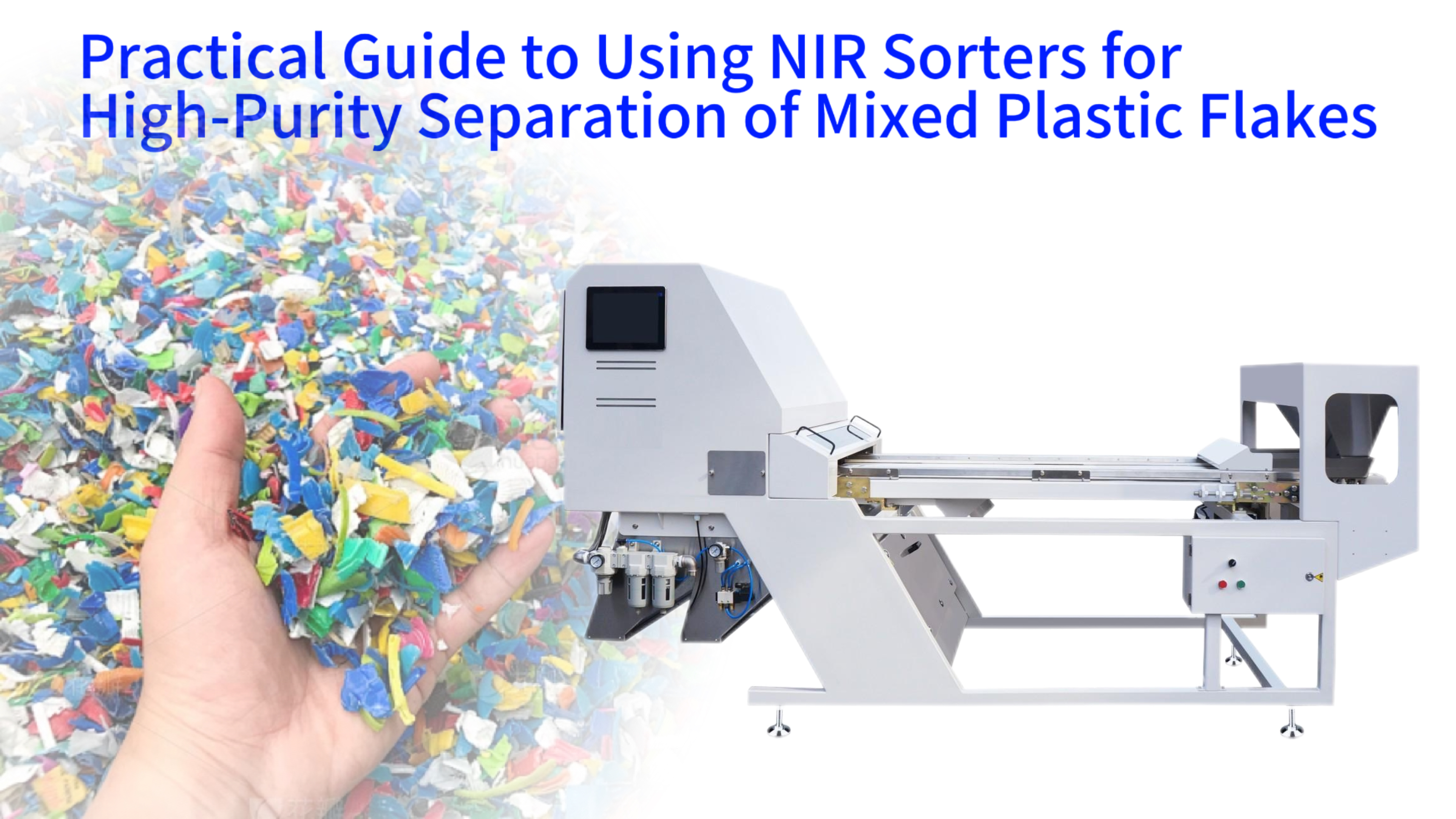
Core Workflow of NIR Plastic Flake Sorting
Mixed plastic flakes enter the system
Spectral fingerprint capture
AI/pattern matching vs. library
Air jet deflection of target flakes
High-purity polymer streams
In the modern recycling industry, achieving high-purity material streams is not just a goal but a necessity for economic viability and environmental responsibility. One of the most significant challenges lies in separating mixed post-consumer plastic flakes, where different polymer types like PET, HDPE, PP, and PVC are entangled. This article provides a comprehensive look at how Near-Infrared (NIR) sorting machines tackle this complex task. We will explore the fundamental technology behind these systems, examine the specific challenges of flake sorting, detail the step-by-step process from feeding to ejection, and analyze the tangible benefits for recycling operations. Furthermore, we will discuss the critical factors for optimizing performance and glance at the future trends, including the integration of artificial intelligence, that are pushing the boundaries of sorting accuracy and efficiency in plastic recycling facilities worldwide.
The Foundational Science Behind NIR Sorting Technology
To understand how NIR sorters achieve remarkable results with plastic flakes, one must first grasp the core scientific principle they exploit. Every material, including different types of plastics, has a unique molecular structure. This structure determines how the material interacts with light, specifically with wavelengths in the near-infrared spectrum, which are invisible to the human eye. An NIR sorter functions like a sophisticated material detective, using a controlled light source to illuminate each passing plastic flake and a sensitive spectrometer to analyze the reflected light signature. This signature, often called a spectral fingerprint, is as distinctive for a piece of PET as a human fingerprint is to a person. The system compares this captured fingerprint against a pre-loaded library of known material spectra stored in its computer. This allows the machine to make a near-instantaneous and highly accurate identification of whether a flake is PET, HDPE, PVC, or another polymer, forming the basis for all subsequent sorting actions. This technology represents a significant leap from traditional methods that relied on visible characteristics like color, which are ineffective for separating clear PET from clear PP, for instance.
The precision of this spectroscopic analysis is what enables the high-purity outcomes. Modern NIR sensors can scan thousands of flakes per second, capturing detailed spectral data across multiple wavelengths. This multi-dimensional analysis allows the system to distinguish not only between major polymer families but also between subtypes and even detect certain additives or contaminants. For example, it can differentiate between PET intended for food-grade applications and PET containing certain dyes or flame retardants. This level of detail is crucial for producing recycled plastic that meets stringent quality specifications for use in new products, such as food-contact packaging or high-performance automotive components. The reliability of this identification process, often achieving accuracy rates well above 99% for key polymers, is the cornerstone upon which efficient and profitable plastic flake sorting operations are built, making it a cornerstone of advanced detection systems in recycling.
Molecular Fingerprinting of Plastics
The concept of molecular fingerprinting is central to NIR sorting. When near-infrared light strikes a plastic flake, the energy from specific wavelengths is absorbed by the chemical bonds within the polymer—bonds between carbon and hydrogen atoms, for instance. The amount and pattern of absorption are directly dictated by the type, strength, and quantity of these bonds. Polyethylene terephthalate (PET), with its aromatic ring structure and ester groups, absorbs light in a distinctly different pattern than the simpler, long hydrocarbon chains of polyethylene (HDPE or LDPE). The spectrometer meticulously measures the intensity of reflected light across a broad range of NIR wavelengths, creating a detailed graph or "fingerprint" for that instant. Sophisticated algorithms then analyze the shape and peaks of this graph in real-time. This process is so refined that it can often compensate for variations in flake color, surface contamination from labels or dirt, and minor differences in flake thickness, focusing purely on the intrinsic polymer chemistry to make a correct identification.
This ability to see beyond surface appearance is what grants NIR technology its power. A black plastic flake, which would appear identical to any other black flake to a human operator or a traditional color camera, still has a unique NIR signature based on its base polymer. This allows sorters to separate black PET from black HDPE, a task nearly impossible with other optical methods. Furthermore, the fingerprint library is not static; it can be expanded and refined. Operators can "teach" the machine new signatures by presenting samples of new or uncommon polymers, ensuring the system adapts to evolving waste streams. This foundational science of spectroscopy transforms a chaotic mix of plastic fragments into a stream of data points, each representing a flake's true chemical identity, ready for precise digital decision-making.
The Role of High-Speed Scanning and Data Processing
The effectiveness of NIR sorting in an industrial setting hinges on its ability to perform these sophisticated analyses at incredible speeds. A typical high-capacity flake sorting line may process several tons of material per hour, which translates to millions of individual flakes. To handle this, NIR sorters employ high-intensity, stable halogen or LED light sources and arrays of rapid spectrometers. As flakes are presented in a single layer—whether sliding down a chute or carried on a fast-moving belt—they pass through a scanning zone where they are illuminated and measured in a fraction of a second. The data processing unit attached to the sorter is a powerful industrial computer that receives this torrent of spectral data. Its first task is to perform a validity check, ensuring the captured signal is strong and clear enough for analysis, rejecting readings from overlapping flakes or those tumbling in an unfavorable orientation.
Once a valid spectrum is confirmed, the processing unit executes complex pattern recognition algorithms to compare it against the reference library. This decision-making process, from scan to identification, often takes less than 10 milliseconds. The speed and reliability of this processing are critical. Any delay or error would result in mis-sorted material, contaminating the output stream. Modern systems use multi-core processors and dedicated signal processing hardware to ensure no bottleneck. This high-speed, automated analysis replaces the slow, inconsistent, and physically demanding work of manual sorting, enabling recycling plants to achieve a scale and purity level that was previously unattainable, and is a key feature of all modern sensor-based sorting machines.
Overcoming the Challenge of Flake Geometry and Presentation
A unique challenge in sorting plastic flakes, as opposed to whole bottles or containers, is their inconsistent geometry. Flakes are irregular in shape, size, and surface texture. They can be curled, flat, jagged, or have uneven thickness. This variability can interfere with the NIR scanning process. A curled flake may present a different effective path length for the light, potentially altering the spectral signature. To overcome this, NIR sorting systems for flakes incorporate several design and processing strategies. The feeding system is paramount; it must spread the flakes into a consistent, monolayer presentation to ensure each one is individually scanned. Vibratory feeders or specialized spreader belts are used for this purpose. Additionally, advanced sorting algorithms are calibrated using real-world flake samples of various shapes and orientations during the setup phase.
These algorithms are designed to be robust, focusing on the most stable and characteristic peaks in the NIR spectrum that are less affected by minor geometric variations. Some systems may also employ multiple sensors or scan the same flake from different angles to build a more comprehensive profile and average out orientation-based noise. The goal is to achieve a high "recognition rate," meaning the system can confidently identify a very high percentage of flakes in the stream, regardless of how they are tumbling. Consistent and controlled presentation, enabled by sophisticated smart material feeding systems, is therefore just as important as the spectrometer itself in achieving the high overall purity targets demanded by the market for recycled plastic.
Key Technical Performance Metrics of NIR Sorters
Key Stages in the High-Purity Flake Sorting Process
4 Core Stages of High-Purity Plastic Flake Sorting
Screening (remove fines/oversized chunks)
Drying (eliminate moisture-induced noise)
Air classification (remove films/labels)
Vibratory feeder for even distribution
Single-layer presentation (no clumping)
Consistent speed/trajectory stabilization
NIR light illumination & reflection capture
Spectral fingerprint vs. reference library
Confidence score-based decision making
Timed air jet pulse (ms-level accuracy)
Target flake deflection to dedicated bins
Purified stream collection (no re-mixing)
The journey of mixed plastic flakes through an NIR sorter is a precisely choreographed sequence of events, transforming a blended feed into purified polymer streams. This process is not a single action but a series of interconnected stages, each optimized to support the ultimate goal of separation. It begins long before the flakes reach the scanner, with critical preprocessing to ensure the feedstock is suitable for optical sorting. The heart of the operation is, of course, the high-speed spectroscopic identification, but this is only valuable if coupled with an equally rapid and precise physical action to divert the selected flakes. Finally, the sorted output must be efficiently managed to prevent re-mixing. Understanding each stage in detail reveals why modern NIR sorters are engineering marvels of efficiency, capable of making and executing millions of sorting decisions per hour with minimal error, directly contributing to the production of high-value recycled plastic raw materials.
The reliability of this multi-stage process is what allows recyclers to offer consistent, specification-grade recycled polymers. A breakdown or inefficiency at any point—whether in feeding, scanning, or ejection—directly impacts the purity of the final product and the profitability of the operation. Therefore, each component, from the vibratory feeder to the air compressor for the ejectors, is selected and maintained to meet rigorous industrial standards. The entire system is often controlled by a central interface where operators can monitor throughput, purity levels, and machine status in real-time, allowing for quick adjustments to maintain optimal performance as the composition of the input material fluctuates throughout a production run.
Stage 1: Pre-Sorting and Material Preparation
Before mixed flakes even reach the NIR sorter, they undergo essential preparation. The incoming material, often from a shredding and washing line, may contain a broad size range, excessive moisture, or large non-plastic contaminants. Effective pre-sorting is crucial to protect the sensitive NIR optics and ensure accurate scanning. Typically, flakes are passed over screens to remove fines (very small particles) and oversized chunks. A drying step is frequently necessary, as water droplets on flake surfaces can scatter and absorb NIR light, creating spectral noise and leading to misidentification. The material may also pass through an air classifier or wind sifter to remove loose films and labels. The goal is to present the NIR sorter with a consistent stream of clean, mostly dry, and similarly sized plastic flakes.
This preparation stage directly influences the sorter's efficiency and the purity of its output. Well-prepared material allows the sorter to operate at its maximum designed throughput and recognition rate. Conversely, feeding wet, clumped, or poorly sized material can cause blockages in the feeder, force the machine to operate below capacity, and increase the rate of false rejects or missed targets. Investing in proper upstream processing equipment is therefore a critical part of implementing a successful NIR sorting line. This holistic approach to material flow ensures that the advanced technology of the sorter is not bottlenecked by simple mechanical issues, maximizing the return on investment for the entire recycling plant.
Stage 2: Mono-Layer Feeding and Stabilization
Once prepared, the flakes must be presented to the scanner in an ideal manner. This is the role of the feeding system, a component whose importance cannot be overstated. For chute-type sorters, a vibratory feeder gently spreads the flakes across the width of the machine, causing them to slide down an array of parallel channels. In belt-type sorters, a similar feeder spreads material onto a high-speed, flat or cleated conveyor belt. In both cases, the objective is identical: to create a steady, single layer of flakes where each piece is separated from its neighbors and moving at a consistent, known speed. This stabilization is vital because the system's software calculates exactly when and where a scanned flake will reach the ejection zone based on its detected speed and trajectory.
Any clumping or uneven feeding leads to flakes obscuring each other during scanning (creating "hidden" flakes that are not sorted) or interfering with each other's path during ejection. Advanced feeding systems use feedback sensors and adjustable vibration amplitudes to maintain optimal distribution even as feed rates vary. For fragile or lightweight flakes, gentle handling is key to preventing breakage or being blown away by air currents. The precision of this feeding stage sets the stage for everything that follows; even the world's best spectrometer cannot identify a flake it cannot see clearly. This requirement for controlled presentation is a common thread across many sorting applications, from plastics to specialized agricultural products.
Stage 3: Spectral Analysis and Real-Time Decision Making
As the stabilized stream of flakes enters the scanning chamber, they are exposed to the NIR light source. High-resolution spectrometers, positioned precisely, capture the reflected light from each flake. The instant a spectrum is captured, the onboard computer begins its analysis. This involves normalizing the data to account for minor fluctuations in light intensity, then comparing the spectral curve against the library. The software assigns a confidence score to each possible material match—for example, "98% PET, 1% HDPE, 1% unknown." Based on predefined thresholds, the system makes a binary decision: accept or reject. In more complex multi-way sorting setups, it might decide between multiple output streams (e.g., "divert to PET bin," "divert to HDPE bin," "divert to reject bin").
This decision-making happens in a continuous, real-time loop. The software also tracks the statistical distribution of materials in the feed, which can be valuable data for plant managers. The speed of this stage is what enables high throughput. Modern processors can handle the data from multiple scanning lines simultaneously. Furthermore, the decision logic can be finely tuned. For instance, if the priority is achieving ultra-high purity in the PET output stream, the confidence threshold for identifying PET can be set very high, meaning any flake with an ambiguous signature is rejected as a potential contaminant. This trade-off between purity and yield is a key operational parameter that can be adjusted based on market demands for the output materials.
Stage 4: Precision Ejection and Product Collection
The final, physical act of separation is executed by the ejection system. Once a flake is identified for removal (e.g., a HDPE flake in a stream being purified for PET), the system calculates its exact position and trajectory. At the precise millisecond it passes in front of a bank of nozzles, a brief, powerful pulse of compressed air is fired from the corresponding nozzle. This blast of air deflects the target flake off its natural path and into a separate collection chute or conveyor. The "good" flakes continue undisturbed into the main product stream. The timing of this air pulse is critical—an error of a few milliseconds would cause the jet to hit the wrong flake or miss entirely, contaminating the output.
The ejection system, often involving hundreds of solenoid valves, must be extremely reliable and fast. The valves open and close in just a few milliseconds to create the short, sharp air pulse needed. The air supply must be clean, dry, and at a consistent pressure to ensure each ejection has the same force. This high-speed ejection technology is what physically enforces the digital decisions made microseconds earlier. The purified streams are then conveyed to their respective collection points, such as bulk bags or silos, ready for the next processing step like extrusion or pelletizing. The efficiency of this stage directly determines the final yield and purity of the sorted products, completing the transformation from mixed waste to valuable secondary raw materials.
Configuring the Ideal NIR Sorter for Plastic Flakes
Selecting and configuring the right NIR sorter is not a one-size-fits-all decision for plastic flake recycling. The optimal choice depends on a complex interplay of factors specific to each recycling facility's operation. Key considerations include the required throughput (tons per hour), the diversity and complexity of the input mixture (e.g., is it just PET and HDPE, or does it include PP, PS, and PVC?), the target purity levels for each output stream, and the physical characteristics of the flakes themselves (size, shape, moisture content). Furthermore, the available footprint in the plant and the budget are practical constraints. Understanding the strengths and limitations of different sorter configurations—primarily the chute-type and belt-type designs—is essential for making an informed investment that will deliver the desired return in terms of material quality and operational profitability over many years.
Beyond the basic machine type, modern sorters offer a range of options and upgrades that can significantly impact performance. These include the number and type of sensors, the sophistication of the processing software, the capabilities of the user interface, and the robustness of the mechanical construction. Some facilities may start with a system dedicated to producing one high-purity stream (like food-grade PET) and later expand it to handle multiple polymers. The configurability of the system to meet both current and future needs is a vital aspect of the planning process. A well-configured sorter acts as the quality control heart of the recycling line, ensuring that the value embedded in discarded plastics is fully recovered and can compete with virgin materials in the marketplace.
Chute-Type vs Belt-Type NIR Sorters for Plastic Flakes
Chute-Type NIR Sorters: Precision for Free-Falling Flakes
Chute-type NIR sorters are a prevalent choice for plastic flake applications, particularly where very high purity is the primary goal. In this design, flakes are fed onto a series of steep, polished stainless steel or ceramic channels. They accelerate under gravity and free-fall past the NIR scanning window in a thin, predictable curtain. The major advantage of this design is the exceptional accuracy of ejection. Because the flakes are in free fall, a precisely timed air jet can deflect them with minimal interference from neighboring particles. This often results in higher purity levels in the accepted product stream. Chute systems are also generally more energy-efficient, as they use gravity for transportation rather than a motor-driven belt.
These machines are typically characterized by their number of channels (e.g., 64, 128, 256), with more channels allowing for higher throughput by processing a wider curtain of material simultaneously. They excel at handling small to medium-sized flakes that flow freely. However, they can be less suitable for very large, flat, or sticky flakes that might not slide consistently down the chutes or could cause blockages. The modular nature of many chute sorters means capacity can sometimes be increased by adding more channel modules. For facilities focused on producing ultra-clean PET or HDPE flake from a reasonably well-pre-sorted feed, a chute-type NIR sorting machine often represents the gold standard in purity-focused separation technology.
Belt-Type NIR Sorters: Robust Handling for Diverse Streams
Belt-type NIR sorters offer a different set of advantages, making them ideal for certain flake sorting scenarios. In this configuration, flakes are transported on a fast-moving, durable belt through the scanning and ejection zones. The primary benefit is gentle and positive handling of the material. This makes belt sorters exceptionally good at managing a wider variety of flake shapes and sizes, including larger, flatter, or more fragile pieces that might not behave well in a chute system. They are also less prone to blockages from slightly damp or irregular material. The flat belt presentation provides a stable platform for scanning, which can simplify the optical setup and allow for very high-resolution line-scan cameras to be used alongside or in conjunction with NIR sensors.
These systems are defined by their belt width, which directly correlates to capacity. They are well-suited for high-tonnage applications or for sorting complex mixtures where the feed material is less consistent. The ejection process on a belt sorter is also highly effective, with air jets positioned accurately across the belt's width. While they may consume more energy than chute systems due to the belt drive, their robustness and flexibility are major assets. For recycling plants that process a highly variable post-consumer bale stream or that need to sequentially sort material into multiple polymer categories, a belt-type NIR sorting machine provides the reliable, high-capacity performance needed to maintain steady plant output.
Integrating AI for Adaptive Sorting and Enhanced Purity
The next evolutionary step in NIR sorting is the integration of Artificial Intelligence (AI) and machine learning algorithms. A standard NIR sorter relies on a fixed library of spectral fingerprints. An AI-enhanced sorter goes further. It can continuously analyze its own sorting decisions and outcomes. For example, if flakes with a certain subtle spectral characteristic are consistently ending up in the wrong output bin, the AI can identify this pattern, refine the detection model, and adjust the sorting parameters automatically—often without needing operator intervention. This allows the machine to adapt to variations in the feedstock, such as new types of plastic packaging, different dye lots, or varying degrees of polymer degradation.
This self-optimization capability is particularly valuable for achieving the highest possible purities, often pushing accuracy from 99% to 99.5% or higher. It can also reduce the need for frequent manual recalibration. The AI can handle more complex decision-making, such as distinguishing between food-grade and non-food-grade PET based on very subtle spectral differences that might be imperceptible to a standard system. For recyclers aiming at the most demanding end markets, investing in an AI sorter represents a forward-looking strategy. It future-proofs the operation against changes in the waste stream and unlocks a new level of quality control, ensuring the output consistently meets the tightest specifications set by brand owners and manufacturers.
Key Performance Metrics and Operational Optimization
Once an NIR sorter is installed, continuous monitoring and optimization are key to maximizing its value. Operators should track several key performance indicators (KPIs). The most critical are purity and yield. Purity measures the percentage of the target polymer (e.g., PET) in its respective output stream. Yield measures what percentage of the total target polymer in the feed was successfully recovered into that pure stream. There is always a trade-off: increasing the purity threshold (by being more aggressive with rejection) usually decreases yield, and vice versa. The optimal operating point depends on the relative market value of the pure material versus the cost of losing some of it to the reject stream.
Other important metrics include throughput (tons/hour), availability (uptime percentage), and rejection rate. Modern sorters provide detailed software dashboards that display these metrics in real-time. Regular maintenance is also part of optimization. This includes cleaning optical windows to ensure clear scanning, checking and cleaning air nozzles to maintain ejection accuracy, and calibrating the sensors as recommended by the manufacturer. By diligently tracking performance and maintaining the equipment, operators can ensure their NIR sorter continues to operate at peak efficiency, providing a reliable and high-quality upgrade to the recycled material stream, much like precision systems used in other extractive industries.
The Tangible Benefits for Recycling Operations and the Environment
Next Generation NIR Sorting Technology Roadmap
Pixel-level spectral mapping for intra-flake contamination detection (e.g., PVC spots on PET)
Combine NIR + LIBS + visible cameras for chemical + elemental + physical analysis
Predictive quality control + real-time process optimization + predictive maintenance
Smart factory connectivity (upstream/downstream process sync + digital traceability)
Adapt to new polymers (bio-based/biodegradable) + digital watermark detection
Implementing a high-performance NIR sorting system for plastic flakes delivers a powerful cascade of benefits that extend from the factory floor to the global environment. Economically, it transforms low-value mixed plastic waste into high-purity, specification-grade commodities that command significant prices in the market. This directly improves the financial sustainability of recycling operations, making them less dependent on subsidies and more competitive with virgin plastic production. Operationally, it introduces a level of automation, consistency, and scale that manual or simpler mechanical sorting methods cannot match, leading to higher throughput, lower labor costs, and reduced product quality variability. The ability to reliably produce clean mono-polymer streams is the essential enabler for closed-loop recycling, where used plastic bottles can become new bottles repeatedly.
From an environmental perspective, the advantages are profound. By efficiently sorting and recycling plastics, NIR technology diverts massive quantities of waste from landfills and incinerators. More importantly, producing recycled plastic flake requires far less energy and generates fewer greenhouse gas emissions than manufacturing virgin plastic from fossil fuels. Each ton of high-quality PET flake that replaces virgin PET can save several barrels of oil and prevent over a ton of CO2 emissions. Furthermore, by improving the economics of recycling, NIR sorters incentivize the collection and processing of more plastic waste, creating a positive feedback loop for the circular economy. This technology is not just a machine; it is a critical tool in the global effort to reduce plastic pollution, conserve natural resources, and mitigate climate change.
Economic Uplift: From Waste to Valuable Feedstock
The most immediate impact of a high-purity NIR sorting line is financial. Mixed, contaminated plastic flakes have minimal market value, often used only for low-grade applications like plastic lumber or being landfilled at a cost. After precise NIR sorting, the separated PET, HDPE, and PP flakes become valuable feedstock for manufacturers. Food-grade PET flake, for instance, can achieve a price that is a significant fraction of virgin PET pellet cost. This value creation turns a recycling plant from a cost center (waste management) into a profit center (materials production). The increased revenue improves return on investment, allows for further technological upgrades, and makes the business model resilient to market fluctuations. It also creates stable jobs in the green technology sector.
This economic uplift has broader implications. It makes post-consumer recycled content a more attractive and reliable option for consumer goods companies seeking to meet sustainability commitments. As demand for recycled plastic grows, driven by corporate targets and legislation, the ability to supply large volumes of high-quality material becomes a strategic advantage. Recycling facilities equipped with advanced NIR sorters are positioned to be key partners in the supply chains of major brands, securing long-term offtake agreements and contributing to a more stable and circular materials economy. The technology thus acts as a critical bridge, connecting the end-of-life waste stream with the beginning of new, high-value product lifecycles.
Enabling Circular Manufacturing and Brand Sustainability Goals
Major brands across industries have set ambitious targets to incorporate recycled content into their packaging and products. However, these goals are often hindered by a lack of available recycled plastic that meets stringent quality and safety standards, especially for food contact. High-purity NIR sorting is the technological solution to this supply bottleneck. By reliably producing flakes with purity levels exceeding 99.5%, NIR-sorted material can undergo further advanced washing, decontamination, and solid-state polymerization to become food-grade recycled PET (rPET) or HDPE (rHDPE). This material is then directly usable by bottle manufacturers and other converters.
Therefore, the sorter is an enabler of the circular economy. It allows a plastic bottle to be recycled back into a new bottle of equal quality, closing the loop. This reduces the need for virgin fossil-fuel-based plastics, conserving resources and lowering the carbon footprint of products. For brands, using this high-quality recycled content is a tangible way to demonstrate environmental stewardship to consumers and regulators. The entire value chain, from recycler to brand to consumer, benefits from the precision and reliability that NIR sorting technology brings to the process, making ambitious sustainability targets technically and commercially achievable.
Reducing Environmental Footprint and Pollution
The environmental benefits of effective NIR sorting are multi-faceted. Firstly, it dramatically increases the amount of plastic that is actually recycled rather than discarded. By improving the economics and efficiency of sorting, more plastic waste becomes worth collecting and processing. This directly reduces plastic leakage into oceans and landscapes. Secondly, the recycling process itself, when fed with well-sorted material, becomes more efficient. Clean, mono-polymer flakes require less aggressive washing, fewer chemicals, and less energy in the subsequent melting and pelletizing stages compared to dirty, mixed feeds. This lowers the overall environmental impact of the recycling plant's operations.
Most significantly, using recycled plastic flake displaces the need for virgin plastic production. The production of virgin PET, for example, is energy-intensive and relies on petroleum. Studies consistently show that producing rPET generates up to 70-80% fewer greenhouse gas emissions and uses significantly less energy than virgin PET. By scaling up high-purity sorting and recycling, the industry can make a substantial contribution to global climate goals. In this way, the NIR sorter, though a single machine on a production line, plays an outsized role in driving systemic environmental improvement, transforming a linear "take-make-dispose" model into a circular one that conserves materials and protects the planet.
Future Trends: The Next Generation of Flake Sorting
Next Generation NIR Sorting Technology Roadmap
Pixel-level spectral mapping for intra-flake contamination detection (e.g., PVC spots on PET)
Combine NIR + LIBS + visible cameras for chemical + elemental + physical analysis
Predictive quality control + real-time process optimization + predictive maintenance
Smart factory connectivity (upstream/downstream process sync + digital traceability)
Adapt to new polymers (bio-based/biodegradable) + digital watermark detection
The field of sensor-based sorting for plastics is not static; it is evolving rapidly to meet future challenges. As packaging becomes more complex with multi-layer films, bio-based plastics, and new polymer blends, sorting technology must advance in tandem. The future of NIR sorting lies in enhanced sensor fusion, deeper AI integration, and even greater connectivity. We are moving towards systems that don't just identify polymers but can also characterize other properties, such as the degree of degradation or the presence of specific chemical markers, enabling even more precise sorting for specialized applications. These advancements will be crucial for maintaining high recycling rates in the face of a constantly innovating packaging industry, ensuring that the circular economy can keep pace with modern consumption patterns.
Another significant trend is the move towards fully networked, smart factory environments. Sorters will not operate in isolation but as integrated data nodes within a plant-wide network. Real-time data on material composition, throughput, and machine health will be used for predictive maintenance, dynamic process optimization, and supply chain integration. This level of intelligence will further reduce operational costs, minimize downtime, and provide unparalleled transparency for customers about the origin and quality of their recycled materials. The next generation of sorters will be less like standalone machines and more like intelligent material management systems, playing a central role in the digitalized and sustainable factories of the future.
Hyperspectral Imaging and Multi-Sensor Fusion
While standard NIR spectroscopy is powerful, the next frontier is hyperspectral imaging (HSI) in the NIR range. Instead of getting a single spectrum for a flake, HSI captures a full spectrum for every pixel in a scanned line, creating a detailed chemical map of each particle. This can reveal heterogeneity within a single flake—for instance, detecting a spot of PVC contamination on an otherwise pure PET flake, or identifying flakes that are composites of different layers. This level of detail could push purities even closer to 100%. Furthermore, the future lies in combining NIR data with other sensor modalities. For example, pairing NIR with laser-induced breakdown spectroscopy (LIBS) could provide elemental analysis to detect specific additives or heavy metals. Combining it with visible cameras and shape analysis could help sort by color and physical form simultaneously.
This multi-sensor fusion approach, where data from different physical principles is combined in a central AI engine, creates a much richer and more definitive profile of each flake. It allows the system to make sorting decisions based on a comprehensive set of characteristics: chemical composition, elemental makeup, color, and shape. This will be essential for tackling the most difficult sorting problems, such as separating different types of polyolefins (PP from PE) with very similar NIR signatures, or identifying and removing non-plastic contaminants that have infiltrated the flake stream. This evolution towards hyperspectral and multi-sensor systems represents the cutting edge of material identification technology.
AI-Driven Predictive Quality Control and Process Integration
The role of AI will expand beyond adaptive learning for identification. Future systems will use AI for predictive quality control and holistic process optimization. By analyzing historical sorting data alongside input material characteristics, AI models could predict the final output purity and yield before a batch is even processed, allowing for pre-emptive adjustments. They could also diagnose subtle signs of machine wear or calibration drift from the spectral data itself, scheduling maintenance before a failure affects product quality. This shift from reactive to predictive operations maximizes uptime and consistency.
Furthermore, the sorter will become a fully integrated node in the Industry 4.0 smart factory. It will communicate in real-time with upstream equipment (shredders, washers) and downstream equipment (extruders, pelletizers). For example, if the sorter detects a sudden increase in a certain type of contaminant, it could automatically signal the washing line to adjust its chemical dosage. Or, it could provide precise blend information to the extruder to optimize its processing parameters. This level of integration creates a seamless, automated, and highly optimized recycling line that responds dynamically to changes in the feedstock, ensuring the highest possible resource efficiency and product quality with minimal human intervention.
Addressing New Materials and Design-for-Recycling
The packaging industry is innovating with new materials like biodegradable plastics, bio-based polymers, and chemical markers for sorting. The next generation of NIR sorters must be adaptable to these changes. This involves both hardware and software upgrades. Spectrometers with broader wavelength ranges may be needed to identify new materials. More importantly, the software must be easily updatable with new spectral libraries. Some initiatives are promoting the use of digital watermarks or fluorescent tracers in packaging that can be detected by sorters. Future machines might incorporate specific sensors to read these tracers, providing a fail-safe digital identity for each package to guide its recycling.
This interplay between sorting technology and packaging design is crucial. The concept of "Design for Recycling" emphasizes creating packaging that is easier to sort. NIR sorters benefit from clear, mono-material packaging. As this design philosophy gains traction, supported by regulations like Extended Producer Responsibility (EPR), the feedstock for recyclers will become more sortable. In turn, advanced sorters provide the technical proof that effective recycling is possible, encouraging better design. This positive feedback loop between smart technology and smart design is essential for building a truly circular economy for plastics, where waste is designed out and materials are perpetually circulated at their highest value.