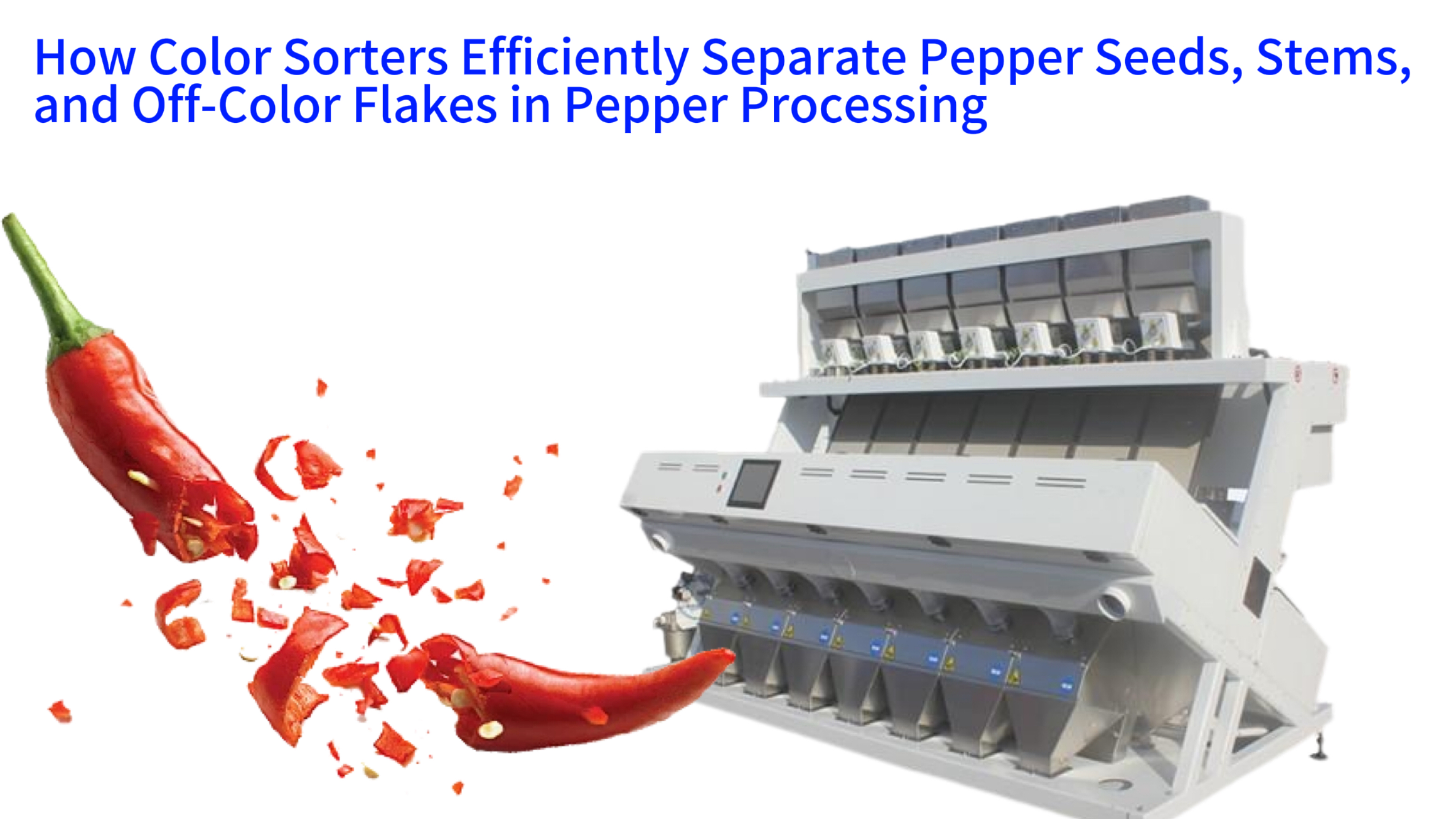
The vibrant red hue and uniform texture of ground pepper or pepper flakes are hallmarks of quality that consumers expect. Achieving this consistency is a significant industrial challenge, as the raw material—dried pepper pods—naturally contains a mixture of seeds, stems, and discolored flesh that must be removed. This article explores the sophisticated technology behind modern color sorters, the machines that perform this task with remarkable efficiency. We will delve into how these systems use light, cameras, and intelligent software to identify and eject unwanted material, ensuring the final product is pure, safe, and visually appealing. The process is a fascinating intersection of optics, high-speed mechanics, and computational analysis, transforming a labor-intensive manual job into a seamless, automated production line. By understanding this technology, one gains insight into a critical yet often unseen step in food manufacturing that safeguards quality on a massive scale.
The Sorting Challenge in Pepper Processing
Processing dried peppers into flakes or powder presents a unique set of quality control obstacles that are difficult to overcome with manual labor alone. The primary goal is to separate the desirable dried flesh from three main categories of waste: lightweight and often similar-colored seeds, tough and darker stems, and off-color or potentially moldy pepper flakes. These impurities not only affect the visual appeal and flavor concentration of the final product but can also pose textural issues or, in the case of mold, safety concerns. The sheer volume of material processed in commercial facilities makes manual sorting economically and practically unfeasible, necessitating an automated solution that can match human discernment at industrial speeds.
Pepper Sorting Core Challenges
Primary Impurities
Seeds (similar color/texture to flesh)
Stems (dark, irregular shape/size)
Off-color/mold-infected flakes
Operational Constraints
Commercial-scale processing (tons/hour) makes manual sorting economically & practically unfeasible. Requires multi-parameter analysis (color/shape/texture).
Furthermore, the physical characteristics of the materials add complexity. Pepper seeds are small, round, and can be close in color to certain pepper varieties. Stems are irregular in shape and size. Off-color flakes may have subtle differences from good product. A successful sorting system must therefore be capable of multi-parameter analysis, making decisions based on more than just simple color. It must distinguish between shades, assess shape and texture, and do so while the product is in free-fall or moving rapidly on a conveyor. This initial challenge defines the requirements for the advanced detection and decision-making systems at the heart of modern optical sorters.
Defining the Targets: Seeds, Stems, and Discoloration
The first step in automated sorting is teaching the machine what to look for. Pepper seeds, while sometimes similar in base color to the flesh, often have a different surface texture and a distinct shape that reflects light differently. Stems are typically darker, appearing as deep brown or black fragments against the red background, and have a woody, elongated structure. The most subtle defect is off-color flesh, which can range from pale, under-dried sections to dark, potentially scorched or mold-infected areas. Each of these defect types requires a specific detection strategy, often involving a combination of color cameras and advanced lighting to enhance contrast.
Modern sorters are programmed with acceptable color ranges and morphological parameters. For instance, the system learns that particles within a specific red spectrum and with a certain surface texture are "good product." Anything falling outside these parameters—like a dark, slender stem or a small, glossy seed—is flagged for rejection. This initial setup is crucial and is often done using machine learning algorithms in AI-powered sorters, which can analyze thousands of sample images to build a highly accurate model for separation, far surpassing static, pre-set thresholds.
The Economic and Quality Imperative for Automation
Implementing automated color sorting is driven by powerful economic and quality assurance factors. Manually removing seeds and stems is incredibly slow, costly, and inconsistent, leading to variable product quality and potential downstream complaints. An automated sorter operates continuously at high speeds, processing several tons of material per hour with a consistent level of accuracy often exceeding 99%. This not only reduces direct labor costs but also minimizes product giveaway—the accidental removal of good material—and maximizes yield by ensuring nearly all usable pepper is recovered.
From a quality perspective, automation provides a level of food safety and standardization that manual methods cannot. By reliably removing discolored flakes that may indicate mold or improper drying, the sorter mitigates microbial risk. Consistent color and purity enhance the brand's reputation and allow processors to meet stringent contractual specifications for major food manufacturers. The return on investment is realized through higher throughput, reduced waste, superior product quality, and a stronger competitive position in the market.
Core Technology: Optical Detection and Illumination
At the heart of every pepper color sorter is its optical system, a sophisticated array of components designed to "see" the product in extreme detail. This system must create a perfect environment for analysis, eliminating variables like ambient factory light to make consistent, accurate judgments. The process begins with specialized illumination. High-intensity, strobing LED lights, often in specific wavelengths like full-spectrum visible light or tailored RGB (Red, Green, Blue) combinations, illuminate the falling or conveyed pepper stream. This consistent lighting is critical for revealing true color and surface features, eliminating shadows and highlights that could confuse the detection software.
Optical System Specifications
Core Function: Illumination eliminates ambient light interference, multi-angle cameras capture 3D particle details to avoid hidden defects (e.g., seeds nested in flakes).
Once illuminated, the material passes in front of high-resolution CCD or CMOS cameras. These cameras act as the machine's eyes, capturing thousands of images per second. For comprehensive analysis, multiple cameras are typically used to view the product from different angles—often from the sides and from above. This multi-angle inspection is vital for pepper processing. A top-down camera might miss a seed nestled against a flake, while a side-view camera can see it. This configuration ensures a complete three-dimensional assessment of every particle, leaving no defect hidden. The captured image data is then converted into digital information for the real-time processor to analyze.
The Role of High-Resolution Cameras and Sensors
The cameras used in pepper sorters are industrial-grade devices far more capable than common digital cameras. They feature high-resolution sensors, sometimes with 2048 pixels or more per line, allowing them to detect minute color variations and tiny defects. Their exposure time is extremely fast, freezing the motion of high-speed particles to prevent blurring. Coupled with precise synchronized strobes, they capture crystal-clear images of each individual pepper flake, seed, and stem as it passes by. The sensitivity of these sensors can be tuned to enhance contrast between the red pepper flesh and the greenish-brown of a stem or the different gloss of a seed.
This sensor data forms the raw material for the sorting decision. In advanced systems, particularly those incorporating AI sorter technology, the cameras feed information into a neural network. This network doesn't just compare colors to a simple map; it analyzes complex patterns, learning the subtle visual signatures of a stem fragment versus a dark piece of acceptable flesh. This deep learning capability allows for much finer distinctions and adapts over time as the raw material changes slightly between batches, maintaining high accuracy without constant manual recalibration.
Advanced Lighting Systems for Maximum Contrast
Creating the ideal visual conditions is just as important as having good cameras. Pepper sorting relies on lighting systems engineered to maximize the contrast between good product and defects. Standard RGB LED arrays illuminate the product in a way that mimics human color perception, which is effective for most color-based sorting. However, for more challenging separations—such as detecting faint mold or differentiating between materials with very similar visible colors—sorters may use specialized lighting like near-infrared (NIR) or laser-induced fluorescence.
These advanced lighting techniques reveal characteristics invisible to the naked eye. For example, a pepper stem and a dark pepper flake may look similar under white light, but their molecular composition causes them to reflect NIR light differently. By integrating a NIR sorter module or a multi-spectral imaging system, the machine can detect this "chemical color" and make a perfect ejection decision. This multi-layered approach to illumination ensures that every possible visual and sub-visual clue is used to guarantee the purity of the final pepper product.
Intelligent Processing: From Image to Ejection Decision
Once the optical system captures an image, the critical task of analysis and decision-making begins in milliseconds. This is handled by a powerful industrial computer running specialized sorting software. The software analyzes the digital image pixel by pixel, comparing the color, shape, and size of each particle against the predefined acceptance parameters. For a pepper flake, it checks if the color values fall within the acceptable range of reds and if the structural signature matches that of flesh rather than seed or stem. This comparison happens for every single particle in the stream, which can number in the hundreds of thousands per minute.
Sorting Algorithm Comparison
The sophistication of this processing stage determines the sorter's accuracy and flexibility. Traditional systems use fixed algorithms and thresholds: any particle darker than X level is ejected. Modern, intelligent systems employ more complex analyses. They can evaluate texture, recognize the elongated shape of a stem versus the irregular shape of a flake, and even use statistical modeling to account for natural variation in the pepper. When an chute-type AI sorting machine is employed, this processing involves convolutional neural networks that have been trained on vast image libraries, enabling them to identify defects with a nuance that closely replicates—and often exceeds—human judgment.
Algorithms and AI: The Brain of the Sorter
The algorithms are the core intelligence of the sorter. In their most advanced form, they utilize artificial intelligence and machine learning. Instead of being explicitly programmed to reject "dark brown objects," an AI sorter is trained. Engineers feed it thousands of labeled images: "good pepper," "seed," "stem," "off-color." The AI model learns the complex patterns that distinguish these categories. Over time, it becomes exceptionally good at generalizing, correctly identifying defects it has never seen before if they share characteristics with the training data. This self-optimizing capability is a game-changer for pepper processing, where raw material can vary by season, origin, and drying method.
This intelligent processing also allows for multi-tiered sorting decisions. The system can be configured not just to separate good from bad, but to grade quality. For instance, it could sort premium red flakes into one channel, slightly lighter flakes into another, and eject all defects. The software provides a user-friendly interface where operators can adjust sensitivity, view real-time rejection statistics, and monitor performance, putting powerful control at their fingertips. The transition from simple color matching to intelligent, context-aware analysis represents the single biggest leap in sorting technology in recent years.
Real-Time Data Analysis and System Feedback
A key advantage of digital sorting is the wealth of data generated. The system doesn't just eject defects; it logs information about them. In real-time, operators can see metrics such as ejection rate, the proportion of seeds versus stems being removed, and even trends in off-color material that might indicate an issue earlier in the production line, such as inconsistent drying. This data feedback loop transforms the sorter from a passive filter into an active process control tool. If the percentage of stems suddenly increases, it could signal a problem with the destemming equipment upstream, allowing for immediate corrective action.
This analytical capability is enhanced in network-connected systems. Data can be aggregated to track quality over entire production runs, providing insights for process optimization and supply chain management. For example, analyzing defect data might reveal that peppers from a specific supplier have a higher seed content, informing purchasing decisions. This shift towards data-driven operation aligns with Industry 4.0 principles, where every machine contributes to a holistic view of factory efficiency and product quality. The sorter becomes a smart node in a connected ecosystem, ensuring consistent pepper purity through both mechanical action and intelligent oversight.
The Ejection System: Precision Removal of Defects
After a defect is identified, the sorter must physically remove it from the product stream with incredible speed and precision. This is the task of the ejection system, a marvel of high-speed pneumatics. The most common method uses precisely controlled jets of compressed air. When the processing computer identifies a seed, stem, or bad flake, it calculates the exact moment that particle will pass in front of a bank of nozzles. It then sends a signal to a specific solenoid valve, which opens for a fraction of a millisecond (often 1-5 ms), releasing a focused blast of air that knocks the defect out of the main stream and into a reject chute.
Ejection System Performance
1-5 ms
Valve Response Time
>99.9%
Sorting Accuracy
m/s
Particle Movement Speed
Ejection Mechanism: Solenoid valve-controlled air jets target defects with precise timing, minimizing "good product loss" (false ejection) while ensuring all impurities are removed from the product stream.
The timing and accuracy of this ejection are phenomenal. Consider that particles are moving at several meters per second and are spaced centimeters apart. The system must fire the correct nozzle at the exact microsecond to hit a single small seed without disturbing the good flakes before or after it. This requires not only fast valves but also sophisticated tracking algorithms that predict the particle's trajectory. The high-speed ejection system is the final, critical actuator that turns a digital decision into a physical result, directly determining the purity level of the finished pepper product.
High-Speed Solenoid Valves and Air Knife Technology
The core components of the ejection system are the solenoid valves. These are electromechanically operated valves designed for extreme speed and durability, capable of millions of cycles. They are arranged in a dense array, or matrix, along the width of the product stream, with each valve controlling one or a small cluster of nozzles. When energized by the electrical signal from the processor, the valve's plunger moves instantaneously, releasing compressed air from a reservoir. The latest valve technology minimizes "lag time" between the signal and the air burst, ensuring the ejection is perfectly synchronized with the particle's position.
Some systems utilize "air knife" technology, where a long, thin slit emits a continuous sheet of air. Deflector plates or other mechanisms are then used to momentarily disrupt this sheet at the precise location of a defect, pushing it out. This method can be advantageous for certain materials. For pepper processing, the individual nozzle matrix is typically preferred due to its ability to target very small, specific defects like a single seed nestled among flakes without wasting air or affecting surrounding good product. The choice of ejection technology is part of the engineering design to match the sorter's performance to the specific material characteristics.
Ensuring Accurate Trajectory and Minimizing Product Loss
A key performance metric for a sorter is its "good product loss" or "false ejection rate"—the amount of acceptable pepper that is accidentally thrown away with the defects. Minimizing this is a primary focus of ejection system design. It involves precise calibration of air pressure, valve timing, and nozzle alignment. The air pressure must be strong enough to deflect a dense stem but not so strong that it scatters good flakes or creates turbulence that pulls adjacent material into the reject stream. The timing must account for the delay between the camera's sighting, the processor's decision, the valve's activation, and the travel time of the air to the particle.
Advanced systems feature self-diagnostics and calibration routines to maintain this precision. They may use feedback sensors to monitor ejection accuracy or periodically run test patterns. Furthermore, the physical layout, such as the distance from nozzles to product stream and the angle of ejection, is carefully engineered. The goal is a clean, surgical separation. This precision directly impacts profitability; every gram of good pepper saved from false ejection adds to the yield. Modern sorters achieve remarkable accuracy rates of over 99.9%, meaning virtually no good product is lost while nearly all defects are removed.
Machine Configurations: Chute vs. Belt for Peppers
Color sorters for pepper processing come in two main mechanical configurations, each with distinct advantages suited to different stages of processing or product forms. The choice between chute-type and belt-type significantly affects how the pepper is presented to the detection system and handled during ejection. A chute-type sorter uses a vibrating tray or a gravity-fed chute to create a monolayer, cascading curtain of product. The peppers free-fall past the optical sensors, providing a completely unobstructed view from multiple angles. This configuration is typically extremely fast and is ideal for high-volume processing of smaller, free-flowing materials like pepper flakes or coarse powder.
Sorter Configuration Comparison
Chute-Type Sorter
High throughput (tons/hour) for flakes/powder
Free-fall product presentation (unobstructed view)
Simpler design, lower maintenance costs
Ideal for high-volume, small particle processing
Belt-Type Sorter
Gentle handling for fragile/large pepper pieces
Stable platform (longer inspection time)
Top/bottom surface inspection capability
Ideal for whole pods or premium crushed peppers
In contrast, a belt-type color sorting machine employs a fast-moving conveyor belt to transport the product. The peppers are spread in a single layer on the belt and carried under the inspection cameras. This method offers gentler handling, which can be crucial for larger, more fragile pepper pieces or whole dried peppers where maintaining structural integrity is important. The belt provides a stable platform, allowing for longer inspection times and potentially more complex analysis. The choice between chute and belt depends on factors like product size, fragility, throughput requirements, and the specific nature of the defects to be removed.
Advantages of Chute-Type Sorters for High-Volume Flakes
For the majority of processed pepper flake applications, chute-type sorters are the workhorse. Their primary advantage is throughput. Because the product is in free-fall, it can move at very high speeds, allowing a single machine to process several tons of material per hour. The cascading curtain presents every particle separately to the cameras, minimizing the chance of one defect hiding behind another. This configuration also simplifies the ejection process, as defects ejected by air jets have a clear path to the reject chute without interference from a moving belt. The mechanical design of a chute system is often simpler than a belt system, potentially leading to lower maintenance requirements.
Modern chute-type color sorting machine models are highly configurable. They can be equipped with different channel widths and multiple sorting stages. For pepper processing, this might mean one stage for removing large stems and another, finer stage for removing seeds and discolored bits. The vibration feeding system can be tuned to ensure an even, consistent flow of flakes, which is critical for maintaining detection accuracy. For facilities processing massive volumes of pepper into standardized flakes or powder, the speed and efficiency of a chute sorter make it the preferred and most cost-effective choice.
When to Choose a Belt-Type Sorter for Delicate Pieces
While chute sorters excel with flakes, there are pepper processing scenarios where a belt-type sorter is superior. If the final product is "crushed pepper" with larger, irregular pieces, or if whole dried peppers are being sorted for quality before grinding, the gentler handling of a belt is essential. The belt prevents the fragile pepper flesh from shattering upon impact, which can happen in a free-fall chute. This preserves the desired piece size and reduces the generation of fine dust. Furthermore, the stable, linear movement of the belt allows cameras more time to inspect each particle, which can be beneficial for identifying complex defects or for implementing very high-resolution inspection.
Belt sorters also offer advantages in terms of layout and integration into existing production lines. They can act as an inspection conveyor, easily fitting between other belt-driven processes. Some advanced belt-type AI sorting machine models can even perform sorting based on both top and bottom surface inspection, as the product can be flipped or viewed from beneath using specialized camera placements. For processors specializing in premium, whole-piece pepper products or for those who handle a wide variety of fragile dried vegetables and herbs, the flexibility and gentle action of a belt sorter provide the necessary quality control without compromising product integrity.
Impact on Final Product Quality and Industry Standards
Quality & Industry Impact
Product Quality
Consistent color/texture, elimination of bitter stems/seeds, uniform flavor profile.
Food Safety
Removal of moldy/off-color flakes, compliance with HACCP and international safety standards.
Sustainability
Maximized yield, reduced raw material waste, lower energy/labor costs.
The implementation of advanced color sorting technology has fundamentally raised the quality benchmarks for processed pepper globally. The most visible impact is on sensory attributes: the product boasts a consistent, vibrant color completely free of unsightly black stems or pale seeds. This visual purity translates directly to consumer confidence and brand perception. Beyond aesthetics, sorting ensures flavor consistency. Seeds and stems have different flavor profiles—often more bitter or woody—than the pure flesh. Their removal guarantees that the pepper's heat and flavor are uniform from batch to batch, which is critical for industrial food manufacturers who rely on precise flavor inputs.
Perhaps more importantly, sorting enhances food safety. Automated optical sorters are highly effective at removing not just physical defects but also biologically contaminated material. Discolored flakes that may indicate the presence of mycotoxins (from mold) are reliably detected and ejected. This proactive removal at the raw material stage is a key control point in a modern food safety plan like HACCP (Hazard Analysis Critical Control Point). By integrating such technology, pepper processors can meet the increasingly stringent safety and quality standards of international markets, enabling global trade and protecting public health.
Meeting Consumer Expectations for Purity and Safety
Today's consumers are more informed and have higher expectations than ever before. A single foreign object—like a pepper stem in a bottle of flakes—can lead to a product recall, brand damage, and loss of trust. Color sorters provide a critical line of defense against such incidents. Their 24/7 operation and objective, digital inspection eliminate the fatigue and inconsistency inherent in human visual inspection. This relentless vigilance ensures that every container reaching the store shelf meets the same high standard of purity. In an era where social media can amplify a single complaint, this consistent quality control is not just a production goal but a vital component of brand risk management.
The capability extends to meeting specific market-driven standards. For example, the organic food sector may have strict limits on allowable foreign material. A sorter can be calibrated to meet these exacting thresholds. Similarly, for pepper destined for spice extracts or oleoresins, the absence of stems and seeds (which contain different chemical compounds) is crucial for achieving the correct potency and profile. The sorter, therefore, is not just a cleaner but a precision tool for creating tailored products for diverse market segments, from bulk industrial seasoning to premium retail gourmet spices.
Contributing to Sustainable and Efficient Food Production
Beyond quality, modern color sorters contribute significantly to sustainability in food processing—a growing concern for both industry and consumers. First, by maximizing yield, they reduce raw material waste. More usable pepper is recovered from each ton of harvested pods, meaning less agricultural land and resources are needed to produce the same amount of final product. Second, the automation reduces the need for large teams of manual sorters, addressing labor shortages and reallocating human resources to more skilled tasks. Third, the machines themselves are becoming more energy-efficient, with optimized motors, LED lighting, and smart power management systems.
The efficiency gains also have a downstream effect. A purer raw material stream improves the performance of subsequent equipment, like grinders and packaging machines, by reducing wear from hard seeds or jams from stems. This leads to lower maintenance costs and less downtime. Furthermore, the data collected by intelligent sorters can help optimize the entire supply chain, identifying quality trends linked to farming practices or drying methods. In this way, the color sorter acts as a nexus for quality, efficiency, and sustainability, proving that advanced technology can be a cornerstone of responsible and profitable food manufacturing in the 21st century.